
Residential rental property · 1–4 units
Insurance for the owner of one to four rental units
Insurance for the owner of residential rental property with one to four dwelling units, leased to long-term tenants — the building, the rent it produces, and the liability of being someone’s landlord.
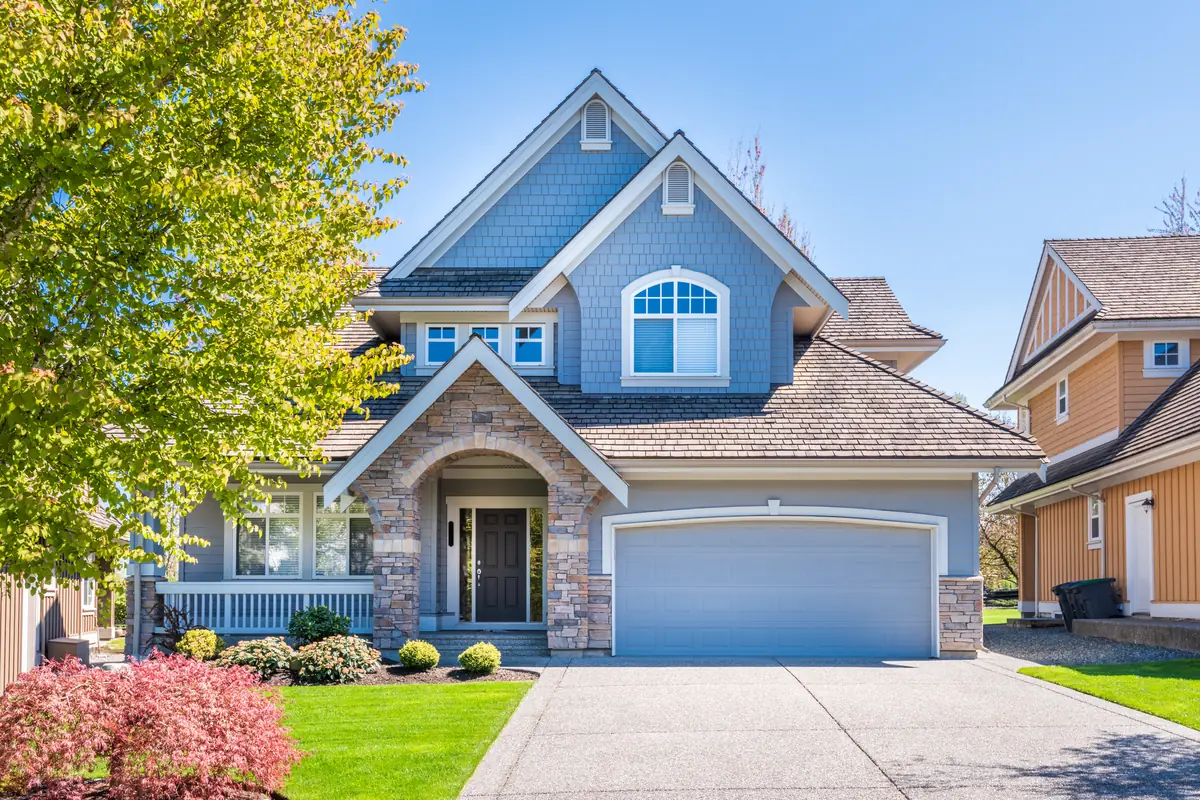
What we write
Four unit counts, one policy each. What changes between them is how many tenant relationships you are managing and how much of the rent a single loss can take out at once.
-
Landlord
A single rental has no partial vacancy. It is occupied or it is not, so the rent arrives in full or not at all, and there is no second tenant covering part of the note while you re-let the first.
-
Duplex
Two units under one roof usually means one roof, one foundation and often one furnace. A loss that reaches the structure reaches both incomes at the same time, which is the opposite of what a second door is supposed to buy you.
-
Quadplex
Four doors turn over often enough that re-letting stops being an event and becomes a standing cost. Four is also where this brand stops: a fifth unit is an apartment risk and belongs with our sister brand.
-
Triplex
Three units almost always introduces space that belongs to no one tenant — a shared entry, a stairwell, a basement with the laundry in it. That ground is yours, and it is where a liability claim usually starts.
Signature coverage
Loss of Rents
A fire does not only take the building. It takes the reason the building was worth owning. The repair has a contractor and a timeline; the mortgage has neither, and it arrives on the same day it always did.
Loss of rents answers one question and it is the question that decides whether a bad year is survivable: what happens to the income while the property cannot be lived in. It is the difference between a claim that costs you a building and a claim that costs you a season.
Signature coverage
Tenant Discrimination
Most owners think about the building and the people in it. This coverage is about the people who did not get in — an applicant who was turned down, a rule applied to one household and not another, an advertisement worded without much thought on a Tuesday afternoon.
A complaint of this kind does not look like a property claim. There is nothing burned, nothing flooded and nothing to photograph, and it can arrive long after the conversation that caused it. Defending one is its own kind of expensive, and it is the exposure most likely to be missing from a policy written as though a rental were just a house.
Coverage
Property Coverage answers what happens to the building itself; Loss of Rents answers what happens to the income while it is being put back; General Liability answers what happens when someone is hurt on the premises; and Tenant Discrimination answers what happens when the claim is about who was allowed to rent. One building, four separate questions.
- Property Coverage
what the policy does for the building itself, and how the structure is valued when a claim is settled.
- Loss of Rents
what happens to the rent while a covered loss keeps the units out of service.
- General Liability
what answers when someone is hurt on the premises — the stairs, the walkway, the common areas.
- Tenant Discrimination
what answers when a claim is about who was allowed to rent, and who was not.
Where we write
Rental property law is state law. These are the states we get asked about most.
Owner resources
Cost guides, coverage explainers and the questions owners actually send us. Read the library.
Who we are, and how we place rental property
Rental Guard Insurance is a Wexford Insurance, LLC brand, run by Nate Jones, CPCU, and Kami Jones. We place residential rental property coverage through 18 markets: Steadily, Honeycomb, Obie, Liberty Mutual, Secura, Grand River, Hastings, Goodville Mutual, Travelers, American Modern, Nationwide, Berkshire Hathaway Homestate, Cincinnati, CrossCover, Encova, Foremost, Openly, Westfield. That is the whole panel, not a shortlist drawn from a longer one.
The list is the point. Appetite in this class is narrower than it looks from outside it — a building with four units, or an older roof, or a stretch of vacancy between tenants will close some of these doors and leave others open, and which is which is not what an owner would guess. Knowing that map is most of the job. We review the panel quarterly and adjust it when a market moves.
Nobody buys a rental because they were looking forward to insuring it. They buy it for the rent. My job is to make sure the rent still shows up on the worst day the building ever has.
Verify our license before you send us anything
Rental Guard Insurance is a DBA of Wexford Insurance, LLC, an independent agency in Greenwood, Indiana. Our National Producer Number is 19887690, and you can check it yourself against the national registry at NIPR.com. We are licensed in 48 states — every state except Hawaii and Alaska.

Questions owners ask
What does a landlord policy cover that a homeowners policy does not?
A homeowners form is written for a building its owner lives in. It assumes your belongings are inside it and that nobody is paying you to be there. A rental policy replaces both assumptions: it treats the structure as something that produces income, it can replace that income while the building is out of service, and it covers the liability of being the person who set the terms somebody else lives under. Placing a rental on a homeowners form is one way an owner discovers at claim time that the wrong product was in force.
What happens to the rent if the building cannot be lived in?
That is what loss of rents is for. When a covered loss makes the property uninhabitable, the coverage is designed to stand in for the rental income while repairs are made, for the period your policy specifies. The repair has a contractor and a schedule; the mortgage has neither and arrives on the same day it always did. Loss of rents is what decides whether that gap is survivable, and the length of it is worth knowing before you need it rather than after.
Does my tenant’s own policy cover my building?
No. A tenant’s policy covers their belongings and their personal liability. It is not written to rebuild your structure and it does not stand in for your rent. Those are two different policies bought by two different people, and we write the owner’s side of that. Requiring your tenants to carry their own is still worth doing, because it keeps their losses off your policy — but it is not a substitute for insuring the building.
What if I own five units or more?
Then it belongs with our sister brand, Apartment Guard Insurance. Four units is where this brand stops. That is not a filing technicality: appetite, underwriting and the questions a market will ask all change at that line, and you are better served by the brand that writes those buildings every day.
Does it matter whether I own one unit or four?
It changes what a single loss can do to you. With one unit there is no partial vacancy — the rent is arriving or it is not. With two, one structural loss can reach both incomes at once. By three or four there is usually ground that belongs to no single tenant, which is where liability claims tend to begin, and turnover stops being an occasional event and becomes a running cost. The policy structure is broadly the same across all four; what changes is how much of your income one event can take.
How does getting a quote actually work?
You send us the building — where it is, how many units, how it is occupied, and anything that has gone wrong before. A licensed agent reads it, decides which markets are worth approaching for that specific risk, and comes back to you. There is no instant price on this site, because an instant price on a rental property is a guess wearing the costume of an answer.
Tell us about the building
One to four units, long-term tenants. A licensed agent reads what you send and comes back with real options — not an automated price.
Get a Quote