
What we write
Quadplex Insurance
Four units, four leases, one owner. The policy is the same one a smaller rental takes — what the fourth door changes is how much of it is in play at once.
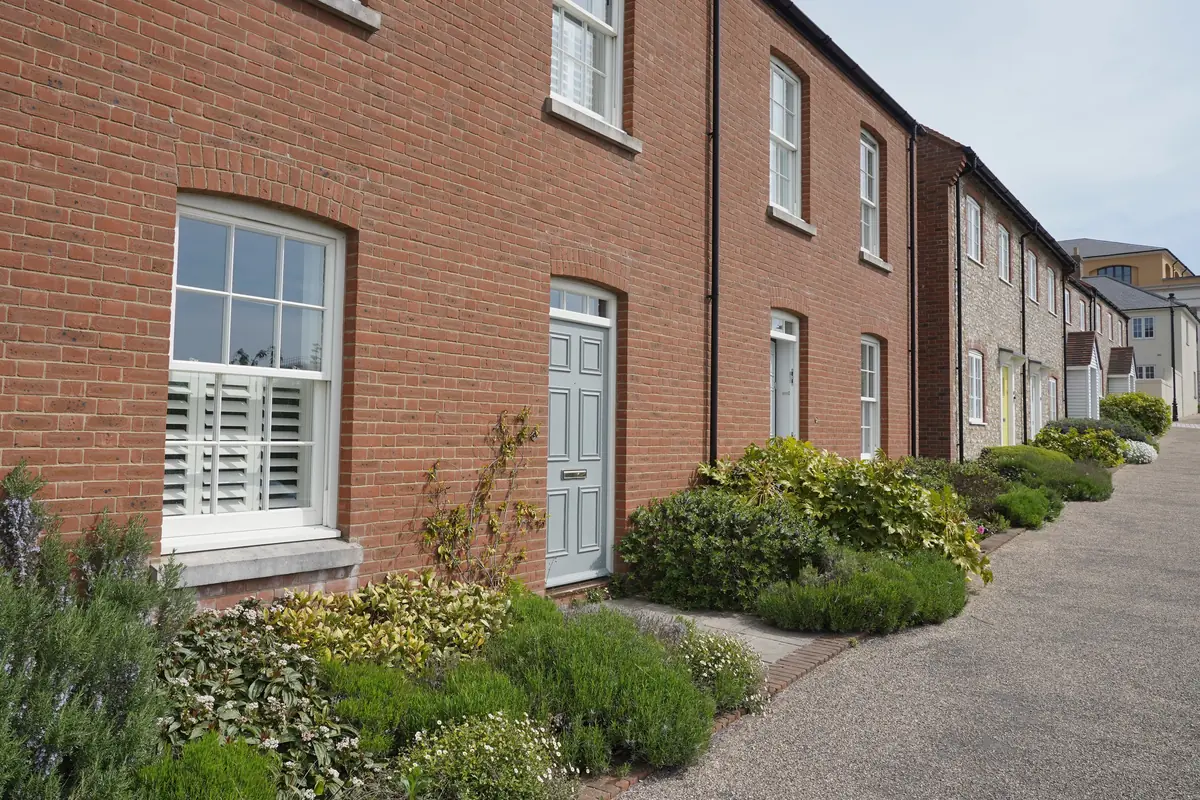

A quadplex is four separate dwelling units under one ownership — four front doors, four leases running on their own calendars, and one person whose name is on all of them. Owners and agents say fourplex just as often and mean the identical building; the two words are interchangeable and nothing in a policy turns on which one you use.
The insurance is not a separate species. A four-unit building is written on the same kind of policy that covers a rented house, and it carries the same four coverages in the same arrangement. That is the plain answer and it is worth giving before anything else, because a reader who arrived here after being told a quadplex is a different world deserves to know that it mostly is not.
What does move is arithmetic. Four tenant relationships are live at the same time instead of one. Some of the building — an entry, a stair, a hallway, a walk, a lot — is shared rather than let to a single household, so it stays yours to look after. And the rent roll now divides, which means a loss can take a piece of your income rather than all of it, or all of it rather than a piece, depending entirely on what the loss reached. That last one is why this page leans on the income side harder than it leans on anything else.
Below: what four doors change and what they do not, what sits on the policy, where this brand stops, what moves the price, and what an underwriter is going to ask you. The four coverages are named and linked; each has a page of its own that does the explaining.
What four doors change, and what they do not
Start with what they do not, because it saves you reading the rest of the internet on this subject. The policy form does not change at the fourth unit. The owner is the same owner, the lease is the same kind of lease, and the same four coverages answer the same four questions they answer on a two-unit building. Nobody has to sell you a distinction here, and this page is not going to invent one.
What genuinely differs is scale and shape, and both of them are consequences of the count rather than of the product.
- Four tenancies at once. Four leases means four renewal dates, four move-out inspections to plan for, four screening decisions and four sets of expectations about what gets fixed and how fast. None of that is exotic. It is simply more of the administrative surface on which a dispute can start.
- The rent roll divides. A single unit standing empty takes one of the four rents out of the month and leaves the rest arriving. Something that reaches the whole structure takes all four at the same time. Those are very different events for an owner carrying a note on the building, and the coverage that speaks to them is scoped by you, in advance, on a figure you chose.
- Shared parts belong to you. A common entry, an interior stair, a landing, a laundry area, the walk, the lot. Nobody is renting those, so nobody living in the building has been asked to maintain them, and every route a person takes through them is a route you own.
- The paperwork stops being casual. Four deposits held, four ledgers, four renewal letters. A rent-loss claim settles against records, and a building with four incomes has four sets of them to produce.
One more fact that lands specifically at this count: owners sometimes live in one of the four units themselves. If that is you, say so at the application. It changes what you are insuring, because your own belongings are now in the building, and it is a fact the tenant discrimination page treats directly and with its limits stated. Read it there rather than assuming it in either direction.
What sits on the policy
Four coverages, named here and linked. Each has a page that explains how it works, what it will not do, and what you have to decide about it; this one only tells you which is which.
- Loss of rents answers for the money while a unit or the whole building cannot be lived in. Read more
- Property coverage pays for the structure itself and the things you own inside it. Read more
- General liability responds when somebody is hurt on the premises and you are the one being asked about it. Read more
- Tenant discrimination responds when the complaint is about how an applicant or a tenant was treated. Read more
They are underwritten together on one policy and read separately at a claim. On a four-unit building the income coverage is the one to look at first, because it is the one whose figure you chose and the one most likely to have been chosen when the building had fewer tenants in it.
Where this brand stops
There are four edges around this page, and three of them lead somewhere inside the same family rather than nowhere.
Fewer than four units. A rented house, a two-unit building and a three-unit building are all ours, and the differences between them and this one are the ones described above — count, shared space, and how the rent roll splits. If you own several buildings at several sizes, start at the landlord insurance page, which covers the whole one-to-four range from the ground up.
A fifth unit. This is the edge that matters most on this page, because a quadplex owner is the one standing on it. Four is the top of what Rental Guard Insurance writes. Add a fifth and it is an apartment risk and belongs with our sister brand, Apartment Guard Insurance. That is not a filing convenience: the markets that want buildings of that size ask a different set of questions and want a different set of answers, and a broker who has that conversation every week will get further with them than one who has it occasionally. If you are converting rather than buying, tell us while it is a plan, not after the work is signed off.
Stays that end in days. If people are paying to stay in one of the units for a few nights at a time rather than living there under a term lease, the risk changes shape completely and it belongs with STR Guard Insurance. The test is the lease. A tenant signs one; somebody staying a weekend does not. Mixing the two inside one building is a real situation and it needs to be disclosed rather than averaged.
A business occupying the space. If one of the four units is occupied by a business rather than a household — a storefront on the ground floor, a workshop, an operation of any kind — the building is no longer purely residential rental and that occupancy belongs with Lessors Risk Guard Insurance. We do not write that exposure at any unit count.
What moves the price
There is no price on this page and there is not going to be one. Rates move by state, by market, by building and by year, and a figure typed here would be describing somebody else’s building. The list of things that move it is stable, though, and an owner who knows the list arrives ready.
- What it would cost to rebuild all four units — not what you paid and not what it would sell for. This is the largest single input, and it is the one most easily estimated from the wrong number on a building with several units in it.
- The rent roll — because the income side of the policy is scoped against it, and because a building earning from four units has more to lose per month of repair than one earning from fewer.
- The systems, and whether they are shared — one roof over four units, one service, one heating arrangement or four separate ones, one water line or several. A shared system means a single failure can reach every tenancy, and underwriters price that.
- The shared parts — interior stairs, exterior stairs, railings, lighting at the entry, the surface of the walk, the lot. These are the features a liability claim starts on, and they are also among the cheapest things on the building to put right.
- Occupancy history — how long the units have been rented, whether any of them have sat empty, and whether you live in one.
- Claims history — the count as much as the size. A pattern of small losses reads differently to an underwriter than a single large one, and a building with four units has four ways to generate the pattern.
- Who runs it — you, a manager, or a relative doing it as a favor.
What the claims look like
The claim file on a four-unit building is not dramatic. It arrives in three recognizable shapes, and each of them poses the same follow-on question: how many of the four units can still be lived in while the work is done.
Water arriving from above. A stacked building has units over units, so a failure on an upper floor does not stay on that floor. What starts as one unit’s problem becomes a ceiling in the unit beneath, then a tenancy that cannot continue, then two rents instead of one. Nothing about the loss is unusual; the geometry multiplies it.
Fire and smoke that outrun the unit they started in. A kitchen fire does not have to reach the whole structure to make the whole structure unlivable. Smoke moves through shared walls and shared air, the water used to put it out moves down, and a building can be emptied by damage confined to one corner of it.
Somebody hurt in the shared parts. An interior stair, a landing, an unlit entry, an untreated walk in winter. These look small on the day and turn into the long files, and they happen in exactly the parts of the building no tenant was ever asked to look after.
Notice that in the first two, the repair question and the rent question run on separate clocks. The structure can be fixed on a contractor’s schedule; the units come back onto the rent roll on their own.
What an underwriter will ask you
A four-unit submission asks more than a submission on a rented house, and the extra questions are not bureaucratic. Each one traces a route to a loss somebody has already paid for.
Expect to be asked how many units there are and whether the building was constructed that way or converted to it. What is shared and what is separate — the heating, the water, the electric service, the meters. What the roof is and when it was last done. Whether there are interior stairs, exterior stairs, a common laundry, a lot. Whether all four units are currently leased and how long any empty one has been empty. Whether you live in one of them. Whether every occupant is a household on a term lease. What the leases actually say about repairs and about insurance. Who manages the building, and what the losses have been.
Answering those with dates and specifics is worth real money, and not because underwriters reward neatness. A building described exactly can be shown to a market that wants exactly that; a building described vaguely goes to whoever will take an unknown, on worse terms.
The reasons a four-unit building gets declined or non-renewed are the ordinary ones. A roof at the end of its life. Maintenance that has become visible from the sidewalk. Units left empty without anybody being told. An occupancy in the building that is not what the application described.
Where the state you are in comes in
A great deal of what governs a four-unit rental is set where the building stands rather than nationally. So is the question this type’s owners ask us most: whether a building of this size is still treated as residential, and by whom.
This page does not answer that, deliberately. A single national sentence about it would be true in some places and quietly false in others, and the places where it was false are the ones where somebody would be relying on it. State-level detail is verified state by state against primary sources and published on the pages for those states. Until then, the answer for your own building is something we will go and confirm, with the building in front of us, rather than generalize at you.
Why Rental Guard Insurance
We write residential rental buildings with one to four units, leased to long-term tenants. That is not a department here; it is the whole book. The practical effect shows up on the buildings that are slightly unusual — a converted structure, a mixed set of leases, a claims record that needs explaining — where a generalist has a market or two and has to hope, and we have a panel with different appetites and can go and ask.
It also means the questions above are the ones we ask every week, so a first conversation starts further along than it would with somebody whose usual file is a house its owner lives in. And when the honest answer is the building has passed the fourth door, we hand it over rather than stretch for it. That is the whole point of standing at an edge and saying where it is, and the person who does the handing over is named here.
Questions owners ask
Is a fourplex insured differently from a duplex or a triplex?
Not in any way worth building a page around, and it is better to say that plainly than to dress it up. The same policy family covers a rented house, a two-unit building, a three-unit building and a four-unit one: the same four coverages, the same owner, the same kind of lease. What moves across that range is arithmetic — how many tenant relationships are live at once, how much of the building is shared rather than let to a single household, and how much of the rent roll one loss can stop. Anyone selling you a bigger difference than that is selling you the difference.
Somebody told me a four-unit building needs a commercial policy. Is that true?
You will hear it, and this page is not the place it gets settled. Where a four-unit building sits relative to any residential line — for a lender, for an assessor, for a state regulator — has a state-level answer, and a national page that generalized about it would be answering for a building it has never seen. So it does not. What we can tell you is that four dwelling units leased to long-term tenants is inside what this brand writes, and that for your own building we will look the answer up rather than improvise it.
One of the four units is empty. What does that do to my coverage?
Less than an empty single rental would, and it is still worth a call. Three households living in the building means it is occupied, heated and watched, which is a different situation from a building standing empty end to end. What changes is the income side, and whether the policy has anything to say about it depends entirely on why the unit is empty. A unit sitting between leases is an ordinary cost of owning the building. A unit nobody can live in because something happened to it is the loss of rents question, and that page owns the distinction.
I live in one of the four units myself. Does that change anything?
It does, and it is worth telling us at the application rather than at renewal. Your own belongings are in the building now, which is a different insuring question from a building where everything inside every unit belongs to somebody who pays you. Owner-occupancy also matters on the tenant discrimination side of the policy, and that page treats it directly, with its limits stated. Read it there rather than working from what you were told at a closing.
Do I need a separate policy for each unit?
No. One policy covers the building, and the units are described inside it rather than insured beside it. Owners arriving at a quadplex from a single rented house sometimes expect four of everything — four policies, four deductibles, four renewal dates — and that is not how the building is written. What your tenants buy for their own belongings is separate, and there are four of those, but they are theirs and none of them does anything for your building or your rents.
What happens if I add a fifth unit?
You leave this brand, and you get told so rather than quoted anyway. Four dwelling units is the top of what we write. A fifth changes which markets want the building and what they ask about it, and the honest response at that point is a referral to the sister brand built for that size rather than a stretched version of this policy. If the conversion is planned rather than finished, call while it is still a drawing — that is a far easier conversation than the one after the certificate is issued.
How much of the rent roll can one loss actually take out?
That is the right question for a building this size, and the answer is a spread rather than a figure. Something that goes wrong inside one unit may take that unit off the rent roll and leave the other three earning. Anything that reaches the structure itself can empty all four at once, and then the whole rent roll stops for as long as the repair runs. That spread is why loss of rents leads this page, and why the figure is worth scoping on purpose instead of inheriting whatever came across on the last policy.
The whole building, not one unit of it
Send us the building and the policy you have now. Tell us how many of the four are occupied today, what the leases run, and whether you live in one of them yourself.
Get a Free Quote