
What we write
Landlord Insurance
A house you own and somebody else lives in is a different risk from a house you own and live in yourself. This is the policy written for the second arrangement.
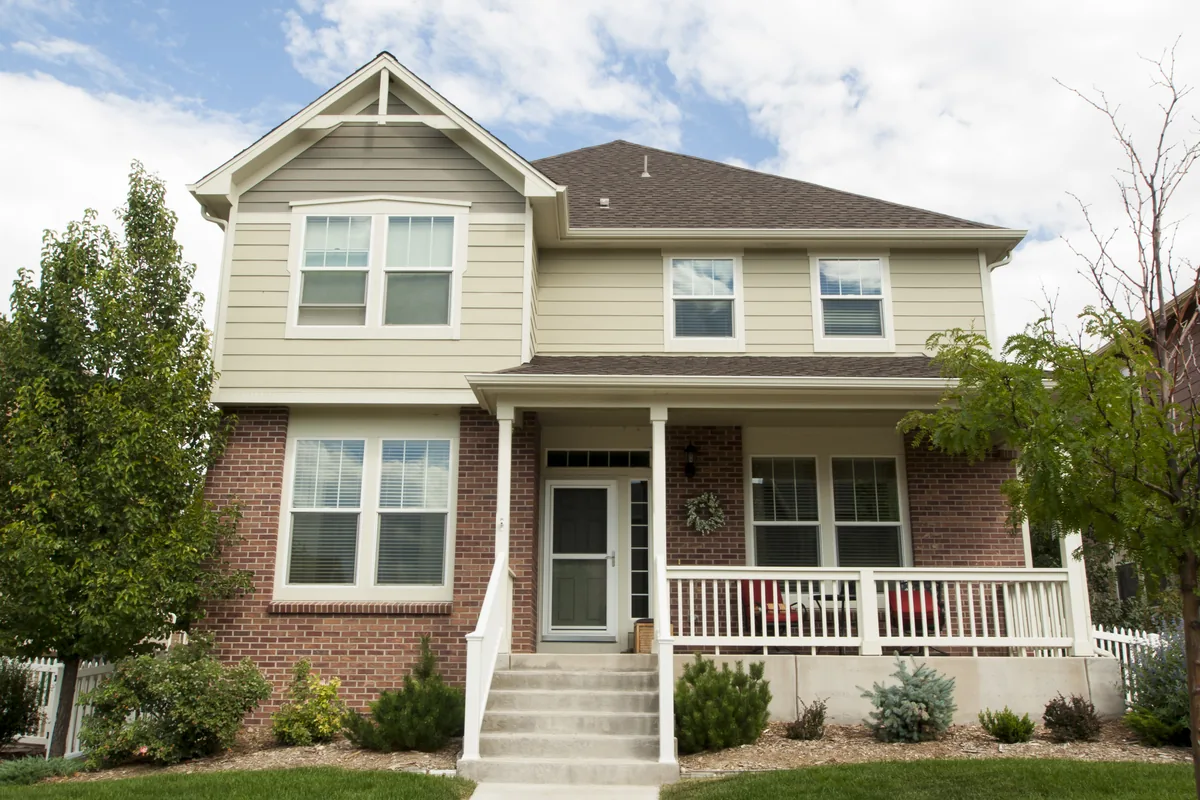

Most owners arrive at this subject the same way. There was a house. They lived in it, or they inherited it, or they bought it to fix and kept it instead. Then somebody else moved in and started paying every month, and the arrangement quietly became a business without ever announcing itself as one.
Landlord insurance is what a policy is called once that has happened. It covers a residential dwelling that its owner does not live in, leased to a tenant on a term — the ordinary year-long arrangement, not a stay measured in nights. It answers for the building, for the income the building produces, and for the liability that attaches to owning a place other people live.
The signature exposure of this particular archetype is concentration. One rented dwelling has one tenant relationship, one lease and one rent stream, which means it has no diversification of any kind: the vacancy is total or it is zero. A loss that would be an inconvenience across a larger holding takes out the entire income of this one, and the mortgage on it does not pause to find out why.
This page covers what the policy is, what changes when a dwelling stops being owner-occupied, what the policy is made of, and where it stops. Where the four coverages are concerned it points rather than explains — each one has its own page and its own detail.
What changes when the owner moves out
This is the section that earns the page, because it is where the real money is lost and it is the part owners are least often told.
The policy that covered the house while you were living in it was built around a household insuring itself. The person on the stairs was the insured. The person who noticed the loose railing was the insured. The contents were the insured’s, the maintenance was the insured’s, and there was no contract in the middle of any of it. Put a tenant in the building and every one of those facts changes at once, and they change on the day the lease starts rather than at the next renewal.
That is not a technicality about paperwork. It is a different risk, and the market treats it as one. North Carolina’s insurance regulator describes the dwelling family as the policies typically used for someone who does not make the building their primary residence, which is the plainest statement of the boundary you will find from a public source.
Three consequences follow, and each of them has caught an owner we have talked to.
- The contents are no longer yours. What you insure now is the structure and whatever you left in it — appliances, a furnace, a floor covering — and not the belongings of the people living there. Those belong to your tenants and to a policy they buy themselves.
- The income became insurable. When you lived there the building did not earn anything, so nothing stopped when it burned. Now it earns, and the earning can stop while the structure is being put back. That is a coverage in its own right and it has to be there on purpose.
- Liability is a different question entirely. The person using your stairs every day is not you, was never asked to maintain anything, and holds a contract with you. That changes who can bring a claim and what has to be arranged. It is worth confirming what your policy actually carries rather than assuming the arrangement came along with the building.
The failure mode here is not dramatic and it is very common: an owner leaves the old arrangement in place, tells nobody, and finds out how it reads only when there is a claim to read it against. The fix costs one phone call, made before there is anything to report.
Everything on this page assumes long-term tenants who signed a lease. If the people in your building are paying you for a few nights at a time, or if a business occupies the space rather than a household, you are looking at a different product — see below.
While the owner lived in it
The person on the stairs is the insured.
The belongings inside are the insured’s own.
The building produces nothing, so nothing stops.
Nobody holds a contract in the middle of it.
Once a tenant moved in
The person on the stairs is somebody else.
The belongings inside belong to the tenant.
The building earns, and the earning can stop.
A lease sits between the owner and the occupant.
What the policy is made of
Four coverages sit on a landlord policy and each answers a different question about the same building. This page names them and points; each one has a page of its own that does the explaining.
- Property coverage is the one that pays to put the building back. Read more
- Loss of rents is the one that keeps the income arriving while that work happens. Read more
- General liability is the one that answers when somebody is injured on the premises. Read more
- Tenant discrimination is the one that answers when the dispute is about who got the unit. Read more
They are bought as one policy and they settle as four separate questions. The most common gap we see is an owner who thought hard about the first one and never asked what the other three were doing.
Where this policy stops
A specialty brand is defined as much by what it declines as by what it writes, and there are four edges here. Three of them route to a sibling brand inside the same family, which means the answer to “not us” is never “good luck”.
More than one unit. Two, three and four units under one roof are still ours, and each has its own page, because what changes across that range is the number of tenant relationships and the fraction of the rent roll one loss can stop. This page is written for the single rented dwelling specifically.
A fifth unit. Four is where Rental Guard Insurance stops. A building with a fifth unit is an apartment risk and belongs with our sister brand, Apartment Guard Insurance. The difference at that line is real rather than clerical: the markets that want larger buildings ask a different set of questions and price a different set of answers, and you are better served by the brand that talks to them every day.
Stays measured in nights. If people are paying to stay in the building for a few nights rather than living there under a lease, that is a different risk with a different claims profile, and it belongs with STR Guard Insurance rather than here. The seam is the lease: a tenant signs one.
A business in the space. If the occupant is a business rather than a household, the building is not residential rental property however it is built, and it belongs with Lessors Risk Guard Insurance. We never touch that occupancy.
And one boundary that routes nowhere, because it is not an insurance product we sell at all: if you live in the building yourself and nobody is paying you rent, none of this applies to you and you should be talking to whoever writes the policy on the home you occupy.
What moves the price
We are not going to print a number on this page. Rates move by state, by market, by building and by year, and any figure printed here would be wrong somewhere the day it published. What is stable is the list of things that actually move it, and an owner who knows the list can have a useful conversation instead of a confusing one.
- What the building would cost to rebuild — not what you paid for it, and not what it would sell for. This is the single largest input and the one owners most often estimate from the wrong number.
- Age and condition of the systems — roof, wiring, plumbing, heating. What has been replaced, and when. Dates beat adjectives here by a wide margin.
- Where it stands — the perils that reach it and how often the market has paid for them nearby.
- What the rent is — because the income side of the policy is scoped to it.
- Your claims history — how many, not just how big. A run of small claims can read worse to an underwriter than a single large one.
- What is on the lot — a pool, a deck, outside stairs, a trampoline, a dog. Each is a route by which somebody gets hurt, and each one is a question you will be asked.
What the claims look like
The claim history on a single rented dwelling is unglamorous and fairly predictable. It arrives in three recognizable shapes.
Water that never came from outside. Plumbing gives way somewhere nobody can see it, and the damage is done by the time anything shows. These are seldom the losses that end a building, and they are the ones an empty unit makes worse, because the water runs until somebody walks in.
Fire and smoke. The loss owners actually picture, and the one that empties a building fastest. A kitchen fire does not have to reach the whole structure to make it unlivable — smoke and the water used to put it out travel further than the flame does, and the repair is measured in months.
Somebody gets hurt. A step, a stair, a walkway, ice that was not cleared. These do not look like much on the day and they are the ones that turn into the long, expensive files, because a person with an injury and a lease is in a very different position from a person who was visiting a friend.
What all three have in common is that the building is still standing and still yours, and the money stopped or started leaving anyway.
What an underwriter will ask you
A rental submission asks things a policy on your own home never asked, and the questions are not bureaucracy. Each one is a route to a loss that the market has already paid for more than once.
Expect to be asked how many doors there are, who occupies them, and on what terms. Whether anybody lives in the building besides tenants. Whether the lease is a real signed one. What the roof is and when it was last done. Whether there is a pool, a wood stove, outside stairs, a dog. How long the building has been rented and how long it has ever sat empty. Whether you manage it yourself.
Owners who can answer those with dates and specifics get a better placement, and it is not because underwriters reward tidiness. It is because a building described precisely can be put in front of a market that wants precisely that building. Vagueness routes a file to whoever will take it, which is rarely the best answer available.
The most common reasons a rental gets declined or non-renewed are equally unmysterious: a roof at the end of its life, deferred maintenance that has become visible, a claims run that suggests the next one is coming, or a building left standing empty without anybody being told.
One more that owners routinely leave off: how the building is held. Whether it sits in your own name, in a trust or in an entity changes who has to be named on the policy, and it changes who is actually covered when a claim is made. So does anybody else holding an interest in it. None of this is difficult and all of it is easier stated at the quote than corrected at a loss, because the name on the policy and the name on the deed disagreeing is the kind of problem that only surfaces when it is expensive.
How a schedule of buildings renews
An owner with several rentals learns something an owner with one never has to: a schedule does not renew as a schedule. It renews building by building, and the buildings do not move together. One address gets a rate change, one gets a re-inspection request, one gets a non-renewal, and one is quietly fine — all in the same month, all from the same book. Owners who have held rental property for a while recognize the pattern. Owners who have just bought into it often assume something has gone wrong with them specifically.
What it means practically is that the renewal conversation starts earlier than owners expect. If a building has been reclassified into a worse catastrophe zone, or a roof has aged past what a market will accept without photographs, or a claim has landed in the last few years, we would rather know two months out than be told when the notice arrives. Almost every bad outcome we see on a schedule is a timing problem rather than a coverage problem: the option that would have worked existed, and the window on it closed.
The second thing that shows up on a schedule and never on a single building is correlation. Buildings that look diversified on a spreadsheet — different cities, different vintages, different tenants — can sit inside one catastrophe footprint, and the first time an owner sees that clearly is usually when several renewals arrive together. Part of what we do looking at a whole book is say which of your buildings are actually the same bet.
Where the state you are in comes in
A great deal of what governs a rental is set where the building stands rather than nationally — the landlord-tenant frame, what a lease has to say, what notice is owed, which body hears a complaint, and what protections sit above the federal floor.
None of that is stated on this page, deliberately. It is not general enough to be true across the country, and a page that generalized about it would be wrong somewhere it mattered. State-level detail is verified state by state against primary sources and published on the pages for those states. In the meantime, if you want the answer for your own building, ask us and we will find it rather than guess at it.
Why Rental Guard Insurance
We write one thing. Residential rental property, one to four units, long-term tenants — not a line in a general agency’s book but the whole of ours. The practical difference is what happens to an unusual building: a generalist has one or two markets and the file goes wherever it fits, while we have a panel with different appetites and can go looking.
It also means the questions above are the ones we ask every day, so a first conversation with us starts further along than a first conversation with somebody who mostly writes homes their owners live in. And when the honest answer is that the building belongs with a sibling brand, you get told that instead of being quoted anyway. The agent behind that is named, with a license number, on this site.
Questions owners ask
I already insure the house. Why does renting it out change anything?
Because the policy you have was written on the assumption that the person living there is the person who owns it, and once that stops being true almost every assumption behind it moves. Who is on the premises, who is responsible for maintenance, who has a contract with whom, and what happens to the income if the building becomes unlivable are all different questions now. Telling your agent the day the lease is signed is the cheapest thing you will ever do about it.
Is one rented house really enough to need this?
One is the case with the least margin for error, not the most. An owner with several buildings has some diversification: one loss takes out part of the income. With a single rented dwelling the vacancy is total or it is zero, and there is nothing else in the portfolio to carry the mortgage while the repair runs. The exposure is smaller in dollars and far less forgiving in structure.
What do my tenants insure, and what do I insure?
You insure the building, the income it produces, and your own liability as its owner. Your tenants insure their own belongings and their own liability under a policy they buy themselves, and nothing in that policy does anything for your building or your rents. Requiring them to carry one is still worth doing — it settles arguments early — but it sits alongside your coverage rather than inside it.
Does it matter that the tenant is family, or a friend?
It matters to you and it does not change what the policy is. If somebody who is not the owner is living there under an arrangement to pay, the building is being rented, whatever the relationship. Owners get into trouble here by describing an informal arrangement as something other than what it is, and then discovering at claim time that the description on the application did not match the facts on the ground.
The building is empty between tenants. Is that a problem?
It is worth a phone call rather than a shrug. A policy does not treat a building standing empty the same way it treats one that is lived in, and a normal turnover is a different situation from a building held off the market for months. The detail lives on the loss of rents page, and the practical advice is the same either way: tell us while the gap is still hypothetical.
I use a property manager. Do I still need my own policy?
Yes. A manager acts for you; the building is still yours and so is the liability that comes with owning it. What the arrangement does change is who does what, and sometimes what a carrier wants to see. Bring the management agreement into the conversation rather than leaving it out of it, and we will look at how the two policies sit together.
How does a quote actually happen?
You send us the building — where it is, what it is, how many doors, who lives in them, what has been replaced and when — and a licensed agent reads it. We are independent, so it goes to the markets that actually want that building rather than to whichever company we happen to represent. You get options and the reasoning behind them, not a number with nothing attached to it.
One building, one conversation
Send us the building and the policy you have now. Tell us where it is, how many doors it has and who is living in it, and everything else is a question we will ask you.
Get a Free Quote