
Coverage line
General Liability
Someone falls on the stairs and the letter that arrives has your name on it, not the building’s. This is the coverage that answers it.
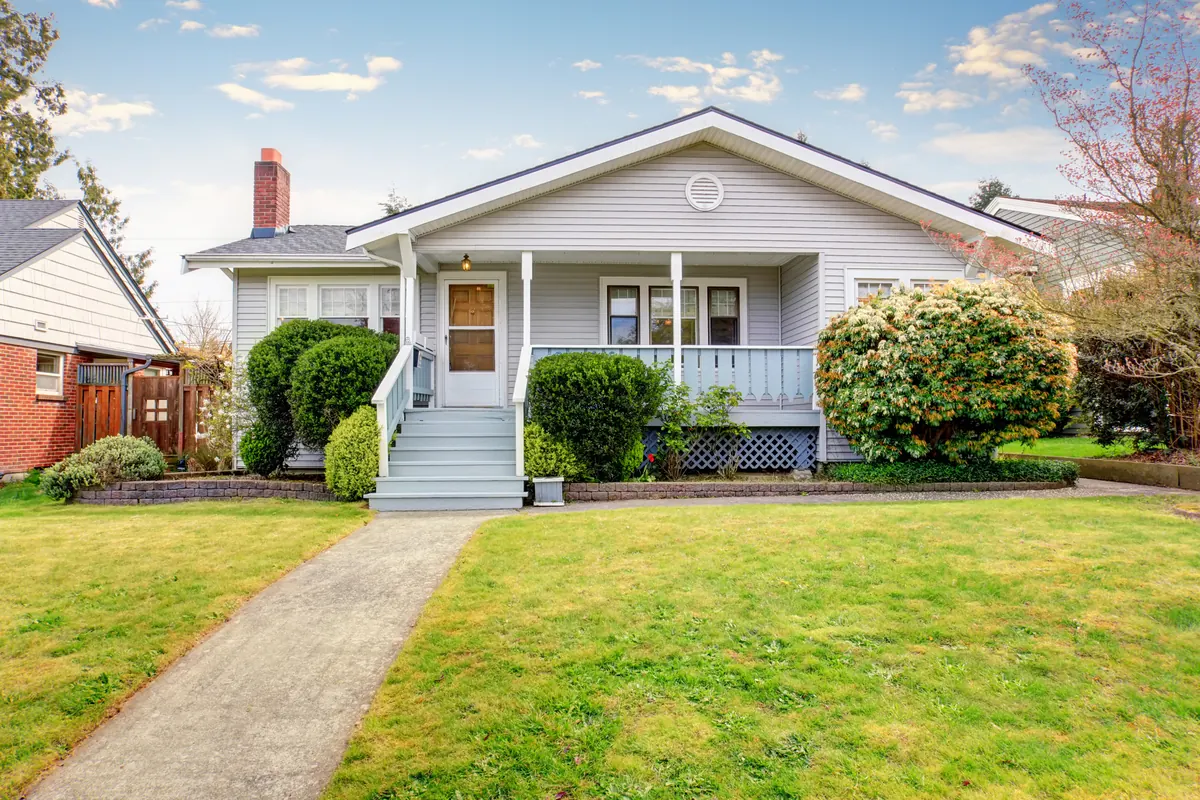

Most owners insure the building first and think about it hardest — the roof, the furnace, what it would cost to put the place back if it burned. The exposure that can actually take an owner apart is quieter: a person on the stairs, a step that has been wrong since the spring thaw, and an envelope from a lawyer.
General liability is the part of the policy that answers when somebody is hurt on the premises. It does two jobs. It pays what you become legally obligated to pay for bodily injury, or for damage to someone else’s belongings, and it pays to defend you against the claim that says you owe it — including a claim worth nothing at all.
The second job is the one owners undervalue, and it may well be the more valuable. A repair bill has a shape you can picture. A suit has counsel, a calendar, a deposition and an expert, and it starts spending money the day it arrives, whether or not anything you did caused the injury.
Defense is the half nobody prices
A liability claim against the owner of a small rental begins as an accusation, not a fact. Somebody fell. They say the tread was broken, the light was out, the ice had been there for days, the railing gave. You may know none of it is true. Knowing it is not the same as being finished with it.
Sorting that out costs money long before anyone decides whether you owe anything. Counsel is retained, the scene is examined, maintenance records are read by people looking for a gap, and somebody answers questions under oath. Where the liability section of your policy carries a duty to defend, the carrier retains and pays that counsel and the expense sits outside the money that would ever reach the injured person. Where it does not, the bill is yours. It is not uniform and it is not obvious from a declarations page.
It is also why a small nuisance claim matters more than owners expect. One that settles for very little can still consume months and real fees getting there, and coverage that shows up on day one for it does work no settlement figure records.
Liability is not automatic on a rental policy
Before anything else on this page, check this one. A policy written for a building its owner does not live in does not necessarily carry liability at all. The North Carolina Department of Insurance says so plainly to consumers, describing the dwelling fire family:
Dwelling policies typically do not provide liability coverage, like some homeowners policy forms, but they can provide other similar coverages to standard homeowners policies.
— North Carolina Department of Insurance, Dwelling Policies
Read that twice; it is the most useful sentence on this page. On a rental, liability is frequently something that has to be put there on purpose — endorsed on, written alongside, or carried separately — rather than something that arrives because you insured the building. Assuming the liability piece is in there somewhere is the exact assumption a state regulator is warning consumers not to make.
You will notice no form number on this page, no form edition and no coverage letter. That is on purpose. We write one line of business across a wide footprint through a panel of markets, and a designation correct on one contract is wrong on the next. The mechanism does not move much; the labels move constantly. Send us the policy with your name on it and we will read it with you.
Where the injuries actually happen
On a building with one to four units the claim history is thoroughly unglamorous. It is the parts of the building everybody walks over without looking at them.
- Stairs, inside and out — treads, risers, nosing, and above all the handrail.
- The walkway, the front steps, the path to the bins, the lip where the driveway meets the pavement.
- Snow and ice, which is the seasonal version of everything above it.
- Lighting, or its absence, exactly where people change elevation.
- Decks, balconies, porches, their railings, and whatever holds them onto the building.
- Shared space in a building with more than one door: the hall, the landing, the basement, the laundry.
Federal fall-prevention guidance is not written for owners, but it points at the same two features an adjuster will go looking for after somebody goes down a staircase. The Centers for Disease Control and Prevention tells households to:
Put railings on both sides of stairs. Make sure your home has lots of light by adding more or brighter light bulbs.
— Centers for Disease Control and Prevention, Preventing Falls and Hip Fractures
Railings and light: two of the cheapest features in any building, and two of the first things a complaint names. The coverage exists for the day the condition is contested, and the condition is far easier to answer for if somebody looked at it before anyone fell.
Which leads to the most practical habit here. Photograph the walking surfaces of your building, dated, at every turnover and again before winter, and keep the receipts — the tread, the bulb, the salt, the contractor who rebuilt the porch. An owner who can show what the premises looked like stands somewhere completely different from one who can only say it was fine.
Water on the premises
A pool, a hot tub or a spa changes the risk on a small residential rental more than almost anything else an owner is likely to add, and it changes the underwriting question with it. Some markets will not write a building with one; others will, with conditions attached. It is not a detail to leave off a submission.
The U.S. Consumer Product Safety Commission publishes barrier guidance for residential pools, and its framing is worth borrowing because it is about layers rather than one fix:
In addition to close supervision, CPSC recommends layers of protection, including barriers, such as a fence with self-closing, self-latching gates, completely surrounding pools to prevent unsupervised access by young children.
— U.S. Consumer Product Safety Commission, In-Home Drowning
What is actually required of you — barrier heights, gate hardware, alarms, covers — is set by state and municipal code and is not the same everywhere, so we will not tell you what yours are. We will tell you that a market asks, that the answer moves the terms, and that a safeguard already in place belongs in the submission.
One hazard with a federal rule attached
Almost everything governing the condition of a rental is state or local. On an older building one exposure has a federal obligation sitting on top, and it is worth knowing because it is a disclosure duty rather than an insurance question.
The U.S. Environmental Protection Agency requires sellers and landlords to disclose any known information about the presence of lead-based paint and lead-based paint hazards before a renter signs a lease, along with a warning statement and a federal pamphlet. The agency applies the rule to most pre-1978 housing, with a set of exceptions it lists on the same page.
Meeting that obligation is not the same as being covered for an injury connected to the hazard. How your own wording responds to a lead-related claim is a separate question, and one to ask rather than assume.
How the limits are shaped
A liability limit is not one number, and treating it as one is how owners get surprised. Set the amounts aside; the shape matters more than the size.
There is a per-occurrence ceiling: the most the policy will put behind a single incident. There is usually also an aggregate, a larger ceiling every claim in the policy period draws down together, so a year with several claims can consume capacity no single incident would. Above both, an umbrella can add a further layer once the underlying limit is exhausted — provided the underlying policy is the one it was written over.
That last condition is where owners get into trouble, and it involves no figures. An umbrella sits above named underlying policies. Move the underlying coverage to another carrier, let it lapse for a week, buy a building the umbrella has never heard of, and the layer above may not sit where you believe it does. If you own more than one building, or hold them in more than one entity, raise it deliberately.
No limit figures appear here. The right structure depends on the building, how many doors it has, what is on the premises, what else you own and what you would lose if a judgment went against you. A figure printed for every reader is a figure chosen for no reader.
What it is not written to answer
Every liability section has a set of things it was never built for, and the exact list lives in your policy rather than on this page. These are the categories owners are most often caught out by. Treat each as a question to ask out loud rather than as a fact about your contract:
- Anything done on purpose. This is built around accidents; deliberate acts sit outside it.
- Your own injuries, and typically those of the people who live with you. It answers to other people.
- An injury to somebody who works for you, which usually routes to an entirely different coverage. If anyone is on your payroll, raise it early.
- Advice or services given in a professional capacity, as distinct from owning and maintaining a building.
- Pollution, contamination and a family of related conditions, handled very differently from one contract to the next.
- Damage to the building itself, which is the property side of your policy.
- A claim about who was allowed to rent rather than who was hurt. Different coverage, different page.
How this fits with your other coverage
One building, more than one question, and which question a claim asks decides which part responds:
- Property Coverage — repairs the building.
- Loss of Rents — replaces the income while it is being repaired.
- General Liability — answers for someone being hurt in it.
- Tenant Discrimination — answers for who was allowed to live in it.
This page answers only the third. Damage to the structure and the rent that stops while it is repaired are the other two coverages doing their own work, and where a claim is about who was allowed to rent your units rather than about who was hurt in them, it belongs to Tenant Discrimination and not here.
Why Rental Guard Insurance
We write residential rental property with one to four units, leased to long-term tenants, and nothing else. An owner who buys a rental policy from somebody who mostly writes houses that people live in tends to end up with the liability piece assumed rather than checked, and on this coverage the checking is the job.
Independence matters differently on this coverage than on the others. A building that has had an injury claim, or that has a pool, a large dog on the premises or an exterior stair somebody has already complained about, is a risk several carriers will simply decline — and an agency with one market to offer will tell you that is the price. We would rather go looking. The other half of the job is unglamorous: reading what your liability section actually says about defense obligations and exclusions, before an injury makes it urgent. Meet the agent who would be reading it, or tell us about the building and we will do that reading with you.
Learn more
- Property Coverage — what the policy does for the building itself, and how the structure is valued when a claim is settled.
- Loss of Rents — what happens to the rent while a covered loss keeps the units out of service.
- Tenant Discrimination — what answers when a claim is about who was allowed to rent, and who was not.
- North Carolina Department of Insurance — what a policy on a building the owner does not live in typically does, and does not, include.
- Centers for Disease Control and Prevention — fall-prevention guidance, including railings and lighting on stairs.
- U.S. Consumer Product Safety Commission — layers of protection around residential pools and spas.
- U.S. Environmental Protection Agency — the lead-based paint disclosure rule and what it requires before a lease is signed.
- National Association of Insurance Commissioners — consumer resources and the route to your own state regulator.
Questions owners ask
Does my rental policy already include liability?
Do not assume it does. The North Carolina Department of Insurance tells consumers that policies written for a building the owner does not live in typically do not provide liability coverage the way some forms in the homeowners family do. On a rental it is frequently something that has to be present by design — endorsed on, written alongside, or carried separately — rather than something that arrived because the building is insured. Pull your declarations page and look for it. If you cannot tell, send it to us and we will tell you.
What does this coverage actually pay for?
Two things. It pays sums you become legally obligated to pay because somebody else was hurt or their belongings were damaged, and it pays to defend you against the claim that says you owe it. The second half runs from the day the claim arrives, before anyone has decided whether you did anything wrong, and it is the half owners consistently underestimate. Whether your own wording carries a duty to defend, and on what terms, is in the policy rather than on this page.
Someone fell on the stairs but has not sued me. Do I still report it?
Report it. Policies generally require you to give notice of an incident that could become a claim, and the requirement lives in your own wording rather than in your judgment about whether anything will come of it. A report made the week it happened preserves photographs, witnesses and the actual condition of the stair. A report made a year later, once a letter arrives, preserves none of that. Reporting an incident is not the same as making a claim, and it is the cheaper of the two mistakes.
My tenants carry their own coverage. Does that protect me?
It protects them. A policy in the tenant’s name answers for the tenant’s belongings and the tenant’s own liability. When a visitor falls on a shared stair and says the stair was the owner’s fault, that policy is not the one being asked to answer, and it will not repair your building or pay your defense. Requiring it is still worth doing — it gives an injured person a route that is not you when the tenant is at fault, and a tenant who will not buy one is telling you something before they move in.
Do I need an umbrella over this?
That depends on what you would lose if a judgment went against you, which is a conversation and not a formula. What is worth knowing in advance is how an umbrella works: it sits above specific underlying policies and adds a further layer once the underlying limit is exhausted. Change the underlying policy, move it to a different carrier, let it lapse, or add a building the umbrella does not know about, and the layer above may not sit where you think it sits. If you own more than one building, or hold them in more than one entity, raise it deliberately.
Will a pool or a dog make my building uninsurable?
Neither is automatically fatal, and both change the conversation. Some markets decline a building with a pool, some write it with conditions attached, and dogs move a risk on their own in either direction — yours or your tenant’s. The worse outcome is not a decline. It is a feature that arrives after the policy is bound and that nobody told the carrier about, because that is the version an owner is standing on when a claim comes in. Tell us at the quote.
What if the claim is about an applicant I turned down?
That is not a bodily-injury claim and it is not what this coverage was built to answer. A claim about who was allowed to rent your units, rather than about who was hurt in them, belongs to tenant discrimination coverage, which is a separate line with its own page. We are not going to characterize that law on a liability page. Ask us which of your policies, if either, is meant to respond to it.
Find out whether you are actually covered for this
Send us the building and the policy you have now. A licensed agent will tell you whether the liability piece is there, what it is doing, and whether it would hold.
Get a Free Quote