
What we write
Duplex Insurance
Two units, two leases, one structure. The policy is the same one a single rental takes; what moves is the arithmetic sitting underneath it.
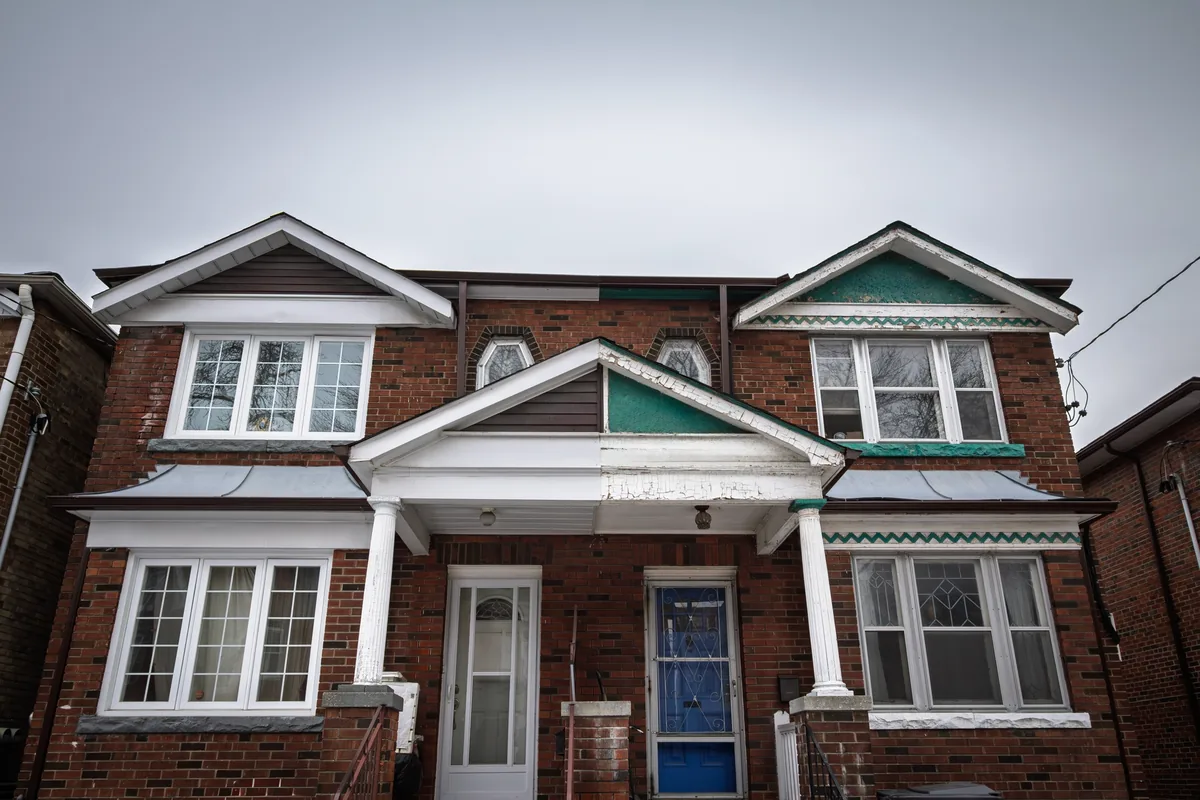

A duplex is one building with two dwelling units inside it — set beside each other across a wall, or stacked with one over the other. From the sidewalk it reads as a house. On a policy it is a rental with two doors, two leases and two rents arriving instead of one.
Duplex insurance is the landlord policy written on that building. It answers for the structure, for the income the units produce, and for the liability that comes with owning somewhere two households live. The second unit does not call for a different kind of policy. It changes what the policy is counting.
That sentence is the honest version of this whole page and it belongs near the top rather than buried at the bottom. An owner who came here looking for a separate product built for two-unit buildings will not find one, because there is not one to find. What there is instead is a set of numbers that move: how much of the rent roll a single loss can stop, how many tenant relationships are running at once, and how much of the building belongs to nobody in particular.
So this page covers the four things the second unit genuinely changes, the longer list of things it does not, what the policy is made of, and where Rental Guard Insurance stops writing. Each of the four coverages gets a clause here and a page of its own; the detail lives there, not here.
What the second unit actually changes
Four things move when a door is added, and every one of them is arithmetic rather than doctrine.
- The vacancy can be partial. With one rented dwelling the rent arrives in full or none of it arrives at all. Add a unit and a middle state exists: one side empty, one side paying, the note covered in part rather than not covered. That is a real improvement and it is the honest reason owners want the second door.
- The two incomes are not independent. One roof sits over both of them and one foundation sits under both. Fire on one side is smoke on the other. A roof that gives up gives up over two households at the same moment. An owner who mentally treats a duplex as two separate risks has counted a single roof twice, and the correction is not pessimism — it is what decides how large the income side needs to be.
- Two tenant relationships run at once. Two leases with two sets of terms, two renewal dates, two applications to decide on, and two households living against each other. When one of them has a complaint about the other, it does not go to the other. It comes to you.
- Some ground stops belonging to anybody. How much depends entirely on the building. Units set side by side with their own doors and their own drives may share a wall and nothing else. Stacked units can share an entry, a stair, a basement and the machines standing in it. Whatever is shared is left to you to look after, because neither household treats it as theirs.
Those four are the whole list, and they change what you should ask for — particularly on the income side, where a figure that fits one unit does not fit a building that can lose both at once.
What it does not change, and that is the longer list
A page selling a two-unit product would spend this section inventing differences. There are not many to invent, and the ones that are absent matter to you, because each is something you cannot get wrong.
- The policy is the policy. Same four coverages, bought together, on the same kind of form a single rented dwelling takes. Two doors do not put you on a different product or into a different corner of the market.
- The markets are the same markets. Carriers that want a rented house want a rented duplex. Nothing about the count sends the file somewhere unusual, which is why a quote on one should not take longer than a quote on the other.
- The losses are the same losses. Water, fire, and somebody getting hurt. What differs on a duplex is the accounting after the loss, not the loss itself.
- The things that move the price are the same things. Rebuild cost, age and condition, where the building stands, the rent, and the claims behind it. The list is read with two units in view rather than one; it is not a different list.
- The seam with your tenants is unmoved. They insure their own belongings and their own liability; you insure the structure, the rents and the liability of owning it. Two households means two of their policies and no change at all to yours.
None of that is a disappointment. It is the reason a specialist can place a duplex quickly: the questions are already known, and the answers already have somewhere to go.
What the policy is made of
Four coverages sit on it, and each answers a different side of the same building. Property leads on a two-unit risk, because one structure carries both tenancies and it is the thing that can take both down together.
- Property coverage — the building side, and what it takes to put one structure back when both halves were inside it. Read more
- Loss of rents — the money side, and what stands in for rent that stopped when one unit is out of service or both are. Read more
- General liability — the injury side, for somebody hurt on the walk, the stair or the ground both households cross. Read more
- Tenant discrimination — the selection side, for a complaint about which applicant was offered a unit and which was not. Read more
You buy them as one policy. On a duplex two of them can settle in halves and two of them cannot: the building side does not divide, because there is one structure and one loss to it, while the income side divides exactly as the rent does. That asymmetry is the core of what makes a two-unit building different to insure.
Who is living in the other unit
This is the question a duplex raises that a single rental does not, and it is worth putting plainly at the start of any conversation: who occupies each unit, and on what terms.
Sometimes the answer is two households on two leases, and everything above describes your building exactly. Sometimes one unit holds a relative, or is empty for now, or is occupied by you. Each of those changes how the building is described on a submission, what the income side is scoped to, and what an underwriter wants confirmed before quoting. None of it is a problem; all of it is worth saying out loud early, because a description corrected at claim time is not a correction, it is a dispute.
Living in one of the units also changes part of the picture on the fourth coverage. How far that reaches, and the several places it does not reach at all, is set out on the tenant discrimination page with the primary source attached. It is not a thing to reason out from first principles, and it is not summarized here on purpose.
Bring the second lease as well as the first. Two leases are two sets of terms, and the two sets are not necessarily the same.
What the claims look like on two units
The claim file on a duplex is not exotic. What is worth knowing is how each familiar shape lands differently once there are two units under it.
One loss, two households displaced. A fire, or the water used to stop one, makes a unit unlivable — and on a single structure it can make both unlivable at once. Two households out, two rents stopped, one repair schedule running for everybody. This is the case the income side exists for, and it is the one owners underprice, because they size it against a single unit’s rent.
Damage that crosses the wall. Something gives way in one unit and shows up in the other. The interesting part is not the plumbing; it is that the damage and the tenancies have different owners. Your building was damaged, one household caused it, another household is displaced by it, and both leases are suddenly part of the conversation. There is no equivalent of this on a one-unit building.
Somebody is hurt on shared ground. A common entry, a stair used by both, a drive nobody sweeps, a walk that neither household would describe as theirs. Shared ground is the part of a duplex with the least clear ownership in everyday practice and the clearest ownership on paper, and the gap between those two is where this kind of claim starts.
The two households disagree. Noise, parking, a dog, an accusation. Much of that is lease administration rather than an insurance question, and we would rather say so than sell you something for it. Written terms that anticipate it are cheaper than the argument.
What a submission asks, and what moves the price
There is no rate on this page. Rates move by state, by market and by building, and a national number would be an average of things that do not average. What is stable is the list of questions, and on a duplex the list is the single-dwelling list read twice.
- What one structure would cost to rebuild — the whole building, both halves, at what a contractor would charge now. Not what you paid, and not half of anything.
- Whether the systems are shared or doubled — one heating plant or two, one water heater or two, one service or separate meters. This is a plain fact about your building, and it is one an underwriter would rather have stated than inferred.
- Whether the entrances are separate — and what, if anything, both households cross to reach their own door.
- The rent on both units — both figures, not a combined one, because the income side is scoped to what actually stops.
- Age and condition — roof, wiring, plumbing, heating. When each was last done, rather than how each looks.
- Your claims history — on the building, and where the units have been let separately for a long stretch, on each side of it.
- What is standing on the lot — a deck, outside stairs, a pool, a dog, and which unit it belongs to.
A submission that answers those in one pass gets read faster, and it reads as a building somebody has actually walked around.
Where this policy stops
There are four edges here, and three of them hand you to a brand inside the same family rather than to a search engine.
One unit. Take a door away and it is a single rented dwelling, which is this policy with the arithmetic on this page removed. It has a page of its own: landlord insurance.
Three units, or four. Add a door or two and it is still ours to write. Each unit count has its own page, because what shifts across that range is the number of tenant relationships and how much of the rent roll a single loss can reach.
A fifth unit. Four is the last count Rental Guard Insurance writes. Beyond four the building is an apartment risk and belongs with our sister brand, Apartment Guard Insurance. That is not a clerical line. The markets above it ask a different set of questions, and you are better served by people who answer them daily.
Stays by the night. If people are paying to stay in either unit for a night at a time rather than living there under a lease, the risk and the claims behind it are different, and it belongs with STR Guard Insurance. What separates the two is not the building. It is the agreement.
A business in one of the units. If a business rather than a household occupies either half, the building has left what this brand means by residential rental property, whatever it looks like from the street, and Lessors Risk Guard Insurance is the brand that writes it. That occupancy sits outside our book entirely.
One more case routes nowhere, because there is nothing to route: if you live in one unit and the other is not let to anybody, there is no rent roll and no tenant, and nothing on this page is describing your building.
Where the state you are in comes in
A great deal of what governs a rented duplex is set where the building stands rather than nationally — the landlord-tenant frame, what a lease has to contain, what notice is owed, who hears a complaint, and whether a two-unit building is treated any differently from a one-unit building for any of it.
This page says none of it, on purpose. Those answers are true one state at a time, and a national page that averaged them would be handing you a fact that applies to nobody. State-level detail is verified state by state against primary sources and published where it belongs. Until then, ask us about your own building and we will go and look it up rather than round it off.
Why Rental Guard Insurance
We write residential rental property, one to four units, long-term tenants. That is the whole book rather than a section of it.
The practical effect on a two-unit building is that the shared-or-separate questions above are the ones we ask every day, so you are not explaining what a duplex is before anybody can quote it. We are independent, so the submission goes to the markets picked for that building rather than to the one company we happen to represent. And when the honest answer is that it the building is not ours to write, we say so and point rather than quote. Two units is a small enough risk that the wrong placement is easy to make and easy to avoid, and the person who would place it is not anonymous.
Questions duplex owners ask
Is duplex insurance a different policy from landlord insurance?
No, and it is worth answering that plainly rather than dressing it up. It is a landlord policy written on a building that has two dwelling units in it. The same four coverages apply, the same markets write it, and the same questions get asked. What changes is what the numbers underneath are counting: two leases rather than one, two rents rather than one, and one structure that both of them depend on. An owner shopping for a separate two-unit product is looking for something that does not exist.
One side is empty between tenants. Is my building vacant?
That depends on the wording you actually hold, which is exactly why it is worth a call rather than an assumption. One unit occupied and one standing empty is a different situation from a building nobody is living in, and policies do not all draw that line in the same place. The income side of it belongs to the loss of rents page. The practical answer does not change either way: tell us while the gap is still hypothetical instead of after somebody has walked in on the damage.
I live in one unit and rent out the other. Does that still work?
It is an ordinary arrangement and it deserves an accurate description rather than a glossed one. Which unit you occupy, whether the other is let on a signed lease, and who else has access all shape how the building goes to market and what the income side is scoped to. Living in one of the units also changes part of the picture on the fourth coverage, and the tenant discrimination page sets out how far that goes and where it stops. Read it there rather than reasoning it out from first principles.
Do I need two policies, one for each unit?
One building, one policy, with both units described on it. Splitting a single structure across two policies creates a question about which one answers when a loss crosses the wall, and that is not a question anybody wants live at the moment of a claim. If you have ended up with two through separate purchases at different times, send both and we will look at where they overlap and where they leave a seam.
Both my tenants carry their own policies. Does that help my building?
It helps them. Each household’s policy covers that household’s belongings and that household’s own liability, and two of them do not add up to anything that rebuilds your structure or replaces your rents. Requiring both to carry one is still worth doing, and applying the same requirement to both units is simpler to administer than running two different ones. It sits alongside your policy; it is not a piece of it.
Does it matter whether the units are side by side or stacked?
Yes, and the answer takes one sentence to give. Stacked units share a floor, and they can share an entry, a stair and a basement with the machines in it. Side-by-side units can share nothing but a wall and a roofline, with separate doors and separate ground. Those are different buildings to insure even though both are duplexes, and stating which one you own saves a round of questions.
If half the building burns, do I get half the rent?
The income side is scoped to the rent that actually stopped rather than to a fraction of the building, so the real question is which units could not be lived in and how long the repair keeps them that way. On one structure it is entirely possible the answer is both, because smoke, water and an opened roof do not respect the wall between two units. What the coverage pays against, and for how long, is on the loss of rents page and in the wording you hold.
Both halves, one submission
Send us the building and the policy you have now. A licensed agent will read it with both units in view and tell you what the second one is doing to your coverage.
Get a Free Quote