
States we serve · Alabama
Alabama landlord insurance
Alabama asks a rental schedule two wind questions instead of one — hurricane wind off the Gulf, tornado wind over the Tennessee Valley — and answers them through different markets. The money side has its own trap: a one-month deposit cap with three doors cut through it.
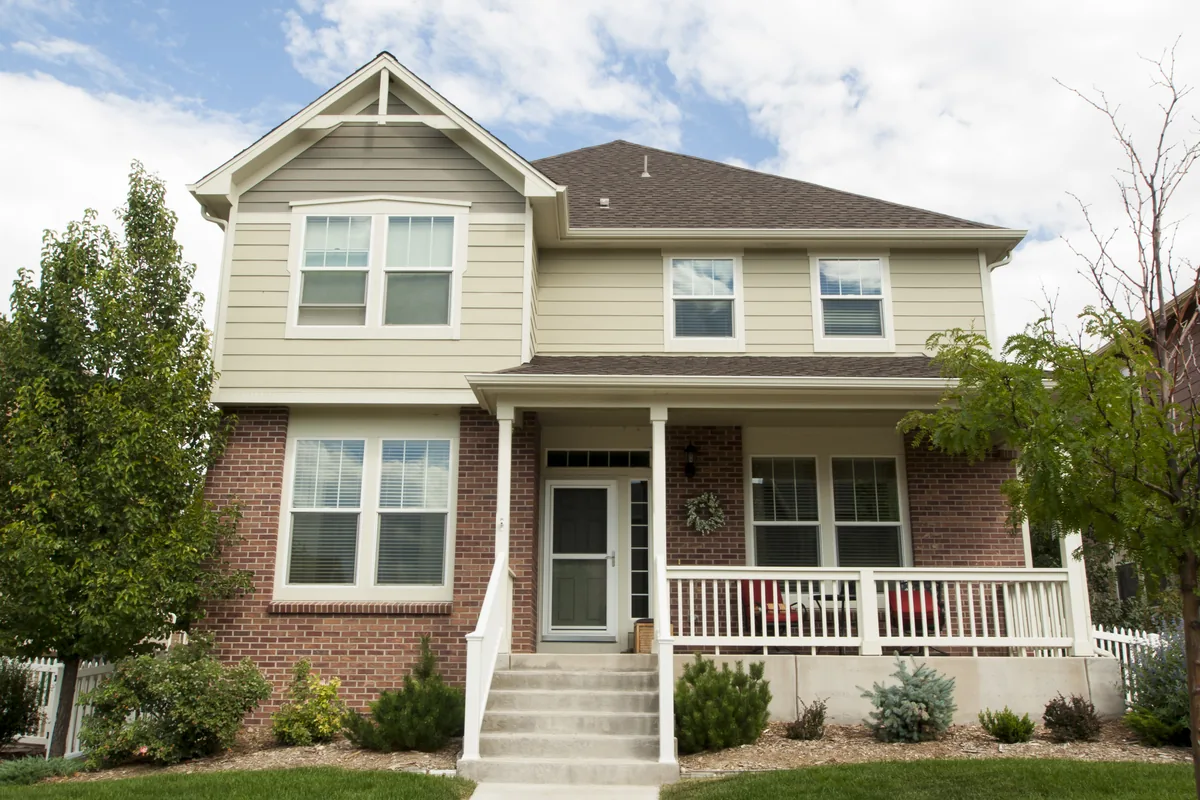

What Alabama landlord insurance costs
Ask what an Alabama rental costs to insure and the honest first move is a question back: where does the building stand? This state runs far enough north to south that the wind peril changes character on the way down, and the market that answers it changes with it. Two buildings, one in the north and one on the water, can be the same age, the same size and the same construction and still be two entirely different submissions.
After the address come two questions Alabama underwriting returns to on nearly every file. The first is the roof — its covering, its age, and whether anything has been done to hold it down rather than merely hold water out, because in a state where a named storm and a tornado season both reach the same book, roof attachment earns more attention than roof appearance. The second is the deductible structure, which on a coastal placement is not one number but two, and owners routinely read the wrong one. The landlord insurance pillar carries the part of this that is the same wherever the building stands: what the four coverages are, and how they fit together into one policy.
Alabama landlord regulations and licensing
An Alabama owner’s duties around the tenant’s money sit in Title 35, Chapter 9A of the state code, and they are unusual in two directions at once. The cap on what you may hold is tighter than owners expect, the window for giving it back is longer than almost anywhere else, and the penalty for missing that long window is severe enough that the length of it becomes the hazard.
One month — and three doors cut through it
Alabama caps the deposit and then puts three named doors through the cap.
Under Ala. Code § 35-9A-201(a), (d), the security an Alabama owner may demand is capped at one month’s periodic rent — and that phrase is doing work, because the measure is the rent for the period the tenancy runs on rather than any annual figure. Then come the carve-outs, and they are the reason this rule cannot be quoted from its opening clause. Money taken for pets, money taken for changes the tenant wants made to the premises, and money taken because of activities that increase the risk of liability may each sit above the cap. Anything else taken above it has nowhere to live.
What Alabama actually requires of you
- Cap the security at one month’s periodic rent, then name which of three doors any excess goes through — pets, changes to the premises, or increased liability risk. Nothing else survives above the cap. Ala. Code § 35-9A-201(a)
- Send the written itemized notice with the amount due within sixty days of the tenancy ending and possession coming back. Ala. Code § 35-9A-201(b)
- Itemize the amounts withheld inside that same sixty days whenever you are not refunding the whole deposit. Ala. Code § 35-9A-201(c)
- Post it by first-class mail to the last address you have, or to the property itself, if the tenant left no written forwarding address. Ala. Code § 35-9A-201(d)
- Treat sixty days as a hard edge: miss it and you owe the tenant double the original deposit. Ala. Code § 35-9A-201(f)
Put that list beside a working month and it stops being a question about law and becomes one about bookkeeping. A pet deposit nobody labeled as one is, at a dispute, simply an over-cap deposit. So is a sum collected for a modification the tenant asked for and nobody wrote down. The statute is not asking you to justify the amount after the fact; it is asking that each dollar above the cap already belong to one of three named things at the moment you took it.
Sixty days is the long window, and long is the danger
Most owners hear a sixty-day return window and relax. It is the wrong reaction. A thirty-day duty gets done because it is still in front of you; a sixty-day duty gets filed behind a turnover, a repair schedule and a new tenancy, and the price of losing track of it here is double the original deposit rather than double what you withheld. Nothing on any policy responds to that. The control is a diary entry made on the day the keys come back, and it costs nothing at all to put there.
What that means for you: Separate the money and name which carve-out each dollar above one month’s rent belongs to — pets, changes to the premises, or increased liability risk — because nothing else survives above the cap.
Fair housing: the exemption stops at the advertisement
Alabama follows the federal four-unit owner-occupied line, but the exemption expressly does not reach the advertising prohibition.
This one is worth reading slowly, because the order of the words changes the answer. The exemption subsection in Ala. Code §§ 24-8-7(a), (l), 24-8-4(3) does not begin by granting anything. It begins by taking something back out: the prohibition on discriminatory advertising is expressly excepted from the exemption that follows. So an owner living in a building of four units or fewer can be outside part of the statute for the purposes of selection and squarely inside it for the purposes of the advertisement that drew the applicant in. An exemption read from its first clause is wider than the exemption you actually have.
What that leaves an owner with is a standard to run to rather than an authority to argue with. Write one set of criteria, apply it to every applicant in the same order, keep the notes, and write your advertisements as though nothing exempted them. The coverage side — what answers a housing complaint once one has been made, and what defending it involves — sits on the tenant discrimination page.
What that means for you: Assume your listing is covered even where your selection is exempt — and note Alabama expressly permits application questions Ohio bans.
Forms, rates and carrier conduct are filed with and answered to the Alabama Department of Insurance, and a complaint about a company belongs there. What no department will do is hand you a market. Whether a company wants a building close to the water is an appetite question, and appetite is the part an agent exists to work.
Common Alabama landlord risks
A standard property form answers for windstorm, hail, fire and lightning. Alabama carries two distinct wind exposures rather than one — Gulf hurricane wind concentrated on the coast, and inland tornado risk reaching the northern half of the state — so a placement in Huntsville and a placement on the coast are answering different questions. Flood and storm surge are excluded throughout and are their own placement through the National Flood Insurance Program or a private flood market; earthquake is a separate purchase. The Alabama Insurance Underwriting Association, the coastal Beach Pool, is the residual wind market in the eligible territory.
Two wind exposures rather than one is the sentence to sit with, because it decides how a schedule is built. On the coast the wind question is a named storm, and it usually arrives as a second deductible struck against the building limit rather than as a flat sum — so a storm that reaches several coastal buildings triggers the deductible on each of them, and an owner who budgeted for one is short before the first invoice. Inland the wind question is a tornado, which behaves in the opposite way: rare on any given address, and near total when it arrives. That is an insurance-to-value problem rather than a deductible problem. A limit set with partial losses in mind is a limit a total loss finds short.
Hail sits underneath both and is the quiet one. It does not empty a building, it ages a roof in a single afternoon, and the argument it produces later is whether a covering is being replaced or merely restored to the condition the last storm left it in. Dates and photographs settle that argument. Memory does not.
A standard property form in Alabama answers for Named-storm wind, Tornado, Hail, and Fire and lightning — two of those names are wind, and they reach opposite ends of the state. Written on their own paper, and never picked up by that form: Flood and storm surge · Earthquake. When the form does respond, the lines paying are property coverage, loss of rents, general liability.
Where the open market steps back from a coastal building, the mechanism Alabama built is the Alabama Insurance Underwriting Association, the Beach Pool. Wind-and-hail-only cover, plus a limited homeowners form — so on most coastal placements it is paired with a separate policy rather than standing alone. Eligibility is settled address by address rather than by county: the association resolves a building to a rating zone, will not write above the 31st parallel, and excludes property in a federal Coastal Barrier Resources Act zone outright. Both limits in that sentence are load-bearing. A fire-and-extended-coverage policy with no liability cover is a building policy with one of the four core coverages simply absent, so the liability has to be written somewhere else and it has to be written deliberately. A wind-and-hail-only policy is a component rather than a program: it sits alongside a form that has had wind stripped out of it, and the seam between the two is where an uncovered loss hides. The authority is Alabama Insurance Underwriting Association — zone eligibility determination.
Between the storms, the loss that costs Alabama owners most often is water that never came in from the sky — a supply line behind a wall, a water heater at the end of its life, a condensate line on a system that runs most of the year in this climate. Humidity does the rest, and what starts as a repair becomes a remediation if it is found late. What it does to the building is property coverage; what it does to the money while the unit cannot be let belongs to loss of rents.
Common Alabama landlord claims we see
Wind and roof claims arrive here in two different shapes, and an owner with buildings at both ends of the state is exposed to both. On the coast a named storm empties a submarket at once: adjusters, roofers and materials are rationed regionally for months, and the rebuilding timetable belongs to the region rather than to your file. Inland the same peril arrives as a narrow track — one street ruined and the next one untouched — which is a faster claim to settle and a far harder one to have budgeted for.
Interior water is the quieter part of the book and behaves unlike either. There is no weather event to point at, no regional surge to explain the timing, and no neighbor reporting the same thing on the same day. It runs for hours or days before anyone notices, and in this climate the unit stays out of service longer than the repair itself takes because the drying has to finish before the rebuilding starts.
Liability claims turn up off the walking surfaces on older divided houses — an exterior stair, a porch rail, a walkway with a lip in it that everyone has learned to step over except the person visiting for the first time. What settles one of these is paperwork nobody enjoys keeping: the date a rail was last checked, the date it was fixed, the name of whoever did the work. Almost every owner remembers more than they can produce. General liability is the part of the policy that gets involved when someone is hurt on ground you own.
Why Alabama rental property owners choose Rental Guard
Alabama is the state that carries two distinct wind exposures rather than one — Gulf named-storm on the coast, inland tornado reaching the northern half — so one book answers two different questions, which means the mitigation question is worth asking out loud on every submission rather than hoping a rater notices. One to four units is the whole of what we place, so the coastal territory question, the two-deductible question and the deposit-labeling question all come up while there is still time to do something about them. A licensed agent reads every submission, the agency NPN is printed at the bottom of this page, and you can see who you would be dealing with before you send anything.
Major Alabama rental markets
- Birmingham. Jefferson County holds the state’s deepest run of divided pre-war houses — Southside, Avondale, Woodlawn, Ensley — and it sits far enough inland that wind stays inside the base form instead of going out to a separate market. What decides the file here is roof covering and roof age, because everything the sky does to a building in central Alabama arrives at the roof first.
- Huntsville. Madison County lets to a federal and contractor payroll around Redstone Arsenal and Cummings Research Park, so tenancies renew on program cycles rather than on a season. The Tennessee Valley exposure is tornado and hail, not a named storm, which means a submission from here opens on a different question than one filed from the coast — and an underwriter who reads it as coastal will price it wrong in the expensive direction.
- Madison. A separate city straddling Madison and Limestone counties, built out in phases rather than accreted over a century, which puts identical roofs of identical age along whole streets. An owner holding four houses inside one phase does not hold four independent roofs — one hail line finds all of them inside the same week, and the deductible applies to each.
- Mobile. The port city, and the first place a schedule meets the named-storm deductible as a figure struck against the building limit rather than a flat sum. Oakleigh Garden and De Tonti Square carry stock whose rebuilding cost has parted company with its market value, so insurance-to-value is the number to settle before the deductible is even discussed.
- Daphne. Baldwin County is the second of the two counties the state’s coastal pool reaches at all — but the pool is drawn in territories rather than county lines, so an eastern-shore address and a Gulf-front address in the same county are not the same placement. Confirm which territory an address falls in before assuming either answer.
- Montgomery. Capital tenancy runs on posting and transfer cycles, and the older stock around Cloverdale rewards an owner who can show what has been replaced rather than what has been inspected. Far enough inland that a decaying tropical system arrives as wind and rain, which matters because water through a roof the wind opened and water rising from outside are two different claims, and only one of them sits on the policy you already hold.
- Tuscaloosa. Tuscaloosa County, where demand from the University of Alabama sits on top of a housing stock rebuilt in patches, so roof cohort changes street by street rather than district by district. A schedule priced off a district average here will be wrong in both directions at once, and the correction only shows up at a claim.
- Dothan. Houston County and the Wiregrass, close enough to the Florida line that systems coming ashore on the Gulf still reach it carrying enough wind to lift roofs — which regularly surprises owners who bought inland specifically to leave the coastal question behind. Read the deductible schedule on an inland placement down here rather than assuming the named-storm provision stopped at a county line further south.
Related reading
Alabama landlord insurance FAQs
How much can I take as a security deposit in Alabama?
One month’s periodic rent is the cap in Ala. Code § 35-9A-201(a), and the subsection immediately puts three doors through it. Money taken for pets, for changes the tenant wants made to the premises, or for activities that increase the risk of liability can sit above the cap. Nothing else can. The practical consequence is bookkeeping rather than law: if you take more than one month, the excess has to belong to one of those three named things, and it has to be identifiable as belonging to it.
How long do I have to return an Alabama deposit?
Sixty days, running from the end of the tenancy and the return of possession, with a written itemized notice of what you are keeping and why. That is a long window compared with most states, and length is exactly what makes it dangerous — a sixty-day obligation is one you can genuinely forget about twice before it falls due. Put the date on a calendar the day the keys come back rather than trusting yourself to remember it.
What happens if I miss the sixty days?
You owe the tenant double the original deposit. Not double what you withheld — double the deposit itself, under Ala. Code § 35-9A-201(f). That is the single most expensive administrative mistake available to an Alabama owner, it is not insurable, and it is entirely avoidable with a calendar entry. It is also why we ask about your move-out process on a submission: a schedule that turns over often is a schedule running that clock several times a year.
The tenant left without giving me a forwarding address. What do I do?
You still send it. Ala. Code § 35-9A-201(d) tells you to post the notice by first-class mail to the last address you have for the tenant, or to the premises themselves, when no written forwarding address was left. The obligation does not lapse because the tenant went quiet, and neither does the sixty-day clock. Send it, keep proof that you sent it, and file the proof where you can find it.
I live in one of my Alabama buildings. Am I exempt from fair housing?
Partly, and the part that is not exempt is the part owners forget. Alabama follows the federal owner-occupied four-unit line, but the subsection granting that exemption opens by carving the advertising prohibition back out of it. So the exemption can reach how you select and it does not reach what you published to attract applicants. Write every advertisement as though no exemption existed, because as to the advertisement none does.
No market will quote my coastal building. Is the Beach Pool the answer?
It may be part of one, and it is worth understanding what it actually issues before you count on it. The Alabama Insurance Underwriting Association writes a fire-and-extended-coverage policy carrying no liability cover at all, and a wind-and-hail-only policy. Its territory is settled by address rather than by county — it resolves a building to a rating zone, will not write above the 31st parallel, and excludes property in a federal Coastal Barrier Resources Act zone outright. So it is not a statewide fallback, and neither of its policies is a finished program on its own — the liability has to come from somewhere else, and so does everything the wind-only form leaves out.
Does my Alabama policy cover flood, storm surge or earthquake?
None of the three. Flood and storm surge are excluded throughout the state and are placed on their own paper, through the National Flood Insurance Program or a private flood market. Earthquake is a separate purchase as well. Surge is the one that catches coastal owners: it arrives with the same storm as the wind, on the same night, and it is answered by a different policy than the wind is — which is why the two have to be bought in the same conversation rather than in the same form.
Get an Alabama landlord insurance quote
Send us the building and the policy you have now. and we will start from where each building actually stands.
Get a Free Quote