
States we serve · Maine
Maine duplex insurance
Two doors, one roof, and a state that wrote two different exceptions turning on the same fact — whether one of those doors is yours. Most of what follows works out from that answer.
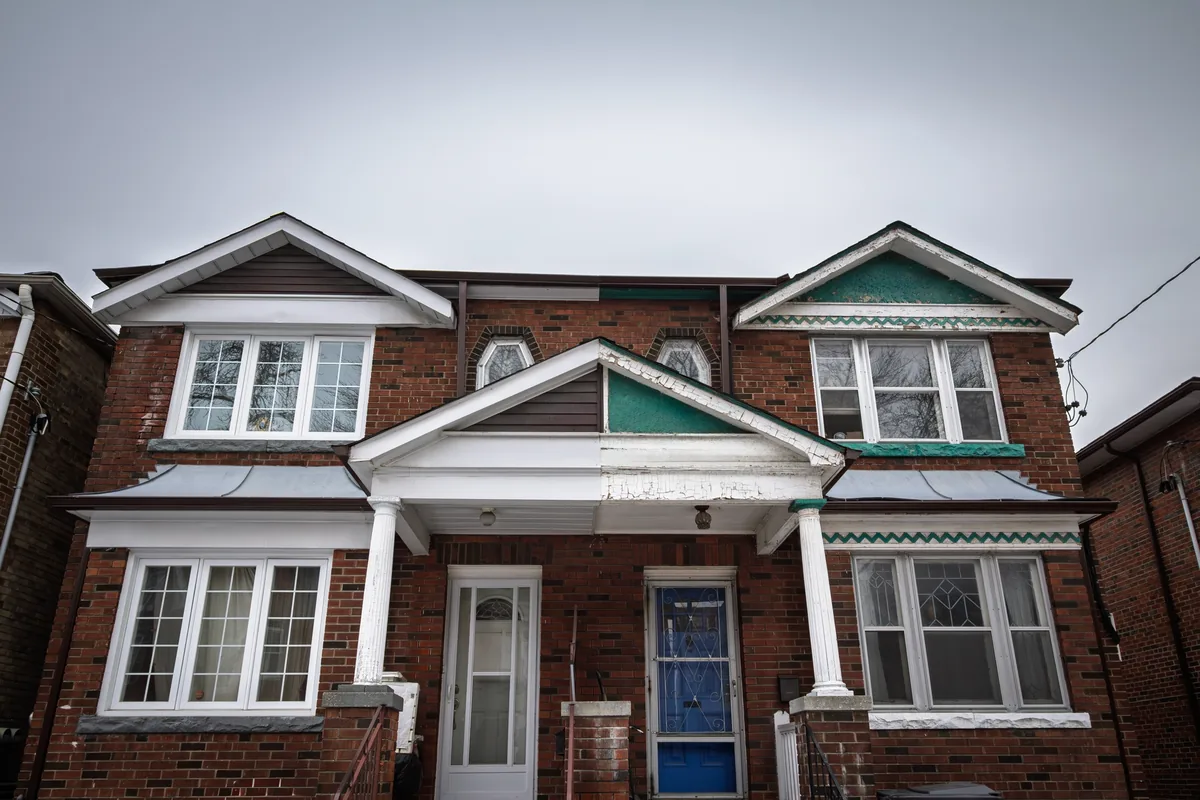

Maine duplex regulations and licensing
Maine regulates the tenancy rather than the person holding the deed, and on a building with two units the first thing worth settling is not the roof, the age or the wiring. It is whether one of the two doors is yours. Maine has written that single question into two separate statutes, in two separate titles, at two different unit counts — and the answers do not line up with each other.
Where you sleep decides which deposit rules reach you
Two chapters of Title 14 govern a Maine tenancy and they do not switch off together. Chapter 710-A, which holds the deposit cap, the return deadlines and the trust-account rule, stops entirely at § 6037(2) for a tenancy in a structure of no more than five dwelling units where the landlord occupies one of them. The rental-property duties in chapter 710 and the entry-and-detainer duties in chapter 709 — the total price disclosure, the ceiling on what may be collected to start a tenancy, the notice a rent increase requires — carry no matching exemption and reach the same owner.
Open 14 M.R.S. § 6037(2); § 6033(2)(A)–(B), (3); § 6038(1) and the operative words are flat: this chapter shall not apply. Not applies later, not applies on a longer clock — the whole of chapter 710-A steps back from a tenancy in a structure holding no more than five dwelling units where the landlord occupies one of them. A duplex with an owner behind one of its doors is well inside that description. The same duplex with both sides let is outside it, and the ceiling at 14 M.R.S. § 6032 — no security deposit greater than the rent for two months — applies again along with the rest of the chapter.
Nothing about the structure decides that. An owner who takes one of the two units to live in changes which body of law governs money they are already holding, and an owner who lets both sides again changes it back. The answer can be different at two renewals of the same lease on the same building, and the statute is indifferent to how recently it moved.
What Maine actually requires of you
- State a deposit-return deadline inside every written rental agreement you sign. § 6033(2)(A) enforces the period stated in the agreement and treats thirty days only as the outer limit on what you may state, so a lease that names no period leaves you defending a deadline you never set — and § 6033(3) forfeits your right to withhold any portion at all if you miss the one that applies. 14 M.R.S. § 6033(2)(A), (3)
- Treat a tenant’s seven-day notice of intent to sue as your last cure window rather than as the opening of a dispute. § 6034(1) presumes wrongful retention if the entire deposit is not back with the tenant inside those seven days, and § 6034(3) then puts the burden on you — not on the tenant — to prove the withholding was not wrongful. 14 M.R.S. § 6034(1), (3)
- Bank every deposit with a bank or other financial institution on terms that place it beyond the claim of your creditors — § 6038(1) names a foreclosing mortgagee and a trustee in bankruptcy — and never carry it as an asset that may be commingled with your own. One escrow account may hold every tenant’s deposit, and it may span separate buildings held by different entities where those entities are substantially controlled or owned by a single landlord; name the institution and the account number to any tenant who asks. 14 M.R.S. § 6038(1)
- Settle the deposit accounting at the closing table when you sell. § 6035(1) requires the accounting and the transfer of funds to occur no later than at the real estate closing and requires written proof of both to be handed to your successor there, while the tenant separately gets mailed notice of the transfer, the transferee’s name and address, and a copy of the accounting. 14 M.R.S. § 6035(1)(A) and the flush text following § 6035(1)(B)
- Cap what you collect to start a tenancy at the first full month of rent, the security deposit § 6032 allows, and any mandatory recurring fee you properly disclosed under § 6030-J. § 6022-A permits nothing else at signing — no last month up front, no move-in fee — and it has been in force since the first day of two thousand twenty-five. 14 M.R.S. § 6022-A(1)
- Sign a total price disclosure with the prospective tenant before the lease or tenancy at will agreement is entered, covering the total cost of rent, every mandatory recurring fee, every optional recurring fee, utility service costs, and any other cost the tenant will carry. § 6030-J(2) requires it to be plain and readily understandable by the general public, signed by both parties, with a copy provided to each. 14 M.R.S. § 6030-J(2)
Sort that list by chapter and the shape of a two-unit file appears. Sections 6033, 6034, 6035 and 6038 all sit inside chapter 710-A, which means an owner-occupied duplex is released from every one of them at once — the stated return deadline, the seven-day cure window, the closing-table accounting and the creditor-proof account. Sections 6022-A and 6030-J do not. They sit in chapter 710, they carry no owner-occupied exception, and they apply to the owner living upstairs exactly as they apply to anyone else.
That asymmetry is worth holding on to, because the release is easy to over-read. An owner who learns that the deposit chapter does not reach them frequently concludes that Maine has stepped back from the tenancy generally. Maine has not. It has stepped back from one chapter and left two others where they were.
The duties that do not switch off
Three of them are worth naming, because each is a document rather than a habit and each has to exist before the tenancy starts. Section 6022-A(1) caps what you may require at the moment of signing: the rent for the first full month of occupancy, the deposit section 6032 permits, and any mandatory recurring fee you disclosed properly. That is the closed list. Section 6030-J(2) requires a written total price disclosure, signed by both of you with a copy to each, before the agreement is entered — the rent, every mandatory recurring fee, every optional one, the utility service costs and anything else the tenant will carry. And section 6015 sets the notice an increase requires: at least forty-five days in writing, and at least seventy-five where the increase reaches ten percent, including where increases inside a twelve-month period add up to it.
On a duplex those three arrive in an odd order for an owner who has just been told the deposit chapter does not apply to them. The paperwork obligation is heavier at the start of the tenancy than at the end of it, which is the reverse of the shape most owners are braced for.
What that means for you: Settle first whether you live in the building, because that single fact decides whether the deposit chapter reaches you at all; then write your own return deadline into every written lease rather than assuming a statutory one, hold each deposit in a financial-institution account placed beyond your creditors’ reach, and put the deposit accounting on the closing agenda if you sell.
The second exception is written on a two-family building
Maine has a fair-housing exception for an owner-occupied building as well, and it is not the same exception, does not sit in the same title, and is not drawn at the same count. It reaches the rental of one unit of a two-family dwelling where the owner occupies the other — a description that fits a duplex exactly and fits nothing larger. What that paragraph actually releases, and the three provisions it makes itself subject to, is set out further down this page, because it is the question owner-occupants get wrong most often and it deserves the room.
Enforcement of the housing provisions sits with the Maine Human Rights Commission. What a complaint costs to defend, and which part of a rental policy answers for it, belongs to the tenant discrimination page rather than to this one. The insurers and the forms themselves are regulated by the Maine Bureau of Insurance, Department of Professional and Financial Regulation.
Common Maine duplex risks
The Bureau of Insurance describes the residential property form in three widths, and the width an owner buys decides how the winter lands. A basic form answers for fire and lightning and picks up windstorm and hail through extended perils; a broad form adds theft, damage from falling objects, the weight of ice or snow, and freezing; a special form insures the property against every peril the policy does not specifically exclude. That last clause is where the Maine exposure actually sits, because the bureau names flood and earthquake as the perils most commonly excluded from it. Flood is the one that reaches a rent roll. The bureau states that homeowners and commercial property insurance policies in general exclude coverage for flood and sends owners to the National Flood Insurance Program and to the insurers that write through it — the live question on the tidal reach behind Portland, South Portland, Saco and Biddeford, and along the rivers that carry the interior markets at Lewiston, Auburn, Augusta and Bangor. The Superintendent has put it to consumers directly: most homeowner and business policies do not cover flooding, whether from rising ground water or overflowing waterways, and an owner should be cautious about relying solely on federal cash assistance after one. Winter is the other half of the file, and on rental property it is a maintenance question before it is a coverage question. The bureau’s resiliency material points owners to state emergency-management guidance on preventing and thawing frozen water pipes and, in the same breath, tells them to check whether their policy contains a water damage exclusion. On a building standing empty between tenancies through a long cold season, those are not two pieces of advice.
Read that as a two-unit owner and the width question stops being abstract. A basic form and a special form are not two grades of the same product on a building where one incident reaches every tenancy you have. Whatever the form does not answer for, it does not answer for across the whole structure at once.
Flood is the clearest case. Because it is a separate placement rather than a section of the property form, buying it is a single decision made for the entire building — there is no half of a duplex you could sensibly leave out, and the tidal and river addresses the bureau points at do not distinguish between the two leases inside them. An owner holding one two-unit building carries the whole of that exposure on one address.
Winter is the more distinctively two-unit exposure, and the reason is occupancy rather than weather. A duplex between tenancies is rarely empty; it is half occupied. One side has somebody in it noticing that a room has gone cold, and the other side has nobody, often on the same heating system or on a thermostat somebody turned down to save a bill. A supply line in a party wall or a shared basement does not care which lease it sits under. What a freeze does to the structure is property coverage; what it does while both halves are unusable is loss of rents, and on a two-unit building that is the whole of the rent roll rather than a fraction of it.
In Maine the perils a standard property form answers are Windstorm and hail, Fire and lightning, Weight of ice or snow, and Freezing. Flood and Earthquake are written separately and are not picked up by that form, and the coverage that responds is property coverage, loss of rents, and general liability.
Common Maine duplex claims we see
The file we open most often on a Maine two-unit building starts with water that arrived cold. A line freezes in an exterior wall or an unheated basement, thaws, and releases into a structure that was framed as one house. On a stacked duplex it finds the ceiling of the lower unit before anyone upstairs has finished working out where the sound is coming from. The repair is one repair, the schedule is one schedule, and both tenancies are inside it.
Snow load and ice are the same season with a longer fuse. A roof carrying weight it was not maintained for, or a dam at the eaves backing meltwater under the shingles, does not present as an event — it presents as staining in one unit and a smell in the other. On a duplex the roof is a single asset serving two incomes, so the question of when it was last worked on is not maintenance trivia. It is the difference between a covered sudden loss and a bill.
Fire behaves the same way. An ordinary cooking fire confined to one half routinely makes the other half uninhabitable through smoke and through the water used to put it out, because the two units share air, share a roof and frequently share a basement. There is no version of that loss where one lease keeps paying.
Liability claims arrive from the ground both households cross — the walk, the shared stair, the drive, the parking pad, and in Maine above all the surface of each of those between December and March. General liability answers a claim of injury on the premises, and on a two-unit building the useful early question is which parts of the ground neither lease hands to one tenant alone, because those are the parts that stay yours to clear.
Why Maine duplex owners choose Rental Guard
Maine is the state where an owner living in a building of five or fewer units drops out of the security deposit chapter entirely, yet still owes the total price disclosure and the rent increase notice, and a two-unit owner meets both ends of that on one building. This is the owner a specialist agency is actually useful to: one person, one structure, two leases and no leverage anywhere. We write residential rental buildings of one to four units and nothing above that, which makes a duplex the middle of the book rather than the small end of it — the landlord, duplex, triplex and quadplex pillars set out what does not change from state to state. We will also say plainly when a Maine rule works in your favor and when it stops doing so, which the deposit chapter does the moment the second door stops being yours. Every quote is placed by a licensed agent we name on this site, under the agency NPN printed in the footer.
Owner-occupied, or both units let
This decides more about a Maine duplex than any physical fact about the building, and it decides it twice — once in Title 14 for the money and once in Title 5 for the choosing of a tenant. It also changes the submission. Which markets will look at the building changes when one unit is the owner’s home. What the income side is scoped to changes, because only one rent is at risk. And the practical questions change with it: who holds keys, whether the entrances, the basement and the laundry are shared, whether there are separate meters and separate heat.
With both sides let, the building is straightforwardly rental property and the entire rent roll answers to a single loss. That is the version where loss of rents does the heaviest work, because there is no half still earning while the other half is put back.
Two exceptions sit at § 4581(4). Paragraph A releases the rental of a dwelling owned, controlled or operated for other than a commercial purpose by a religious corporation to its membership, unless that membership is restricted on account of race, color or national origin. Paragraph B releases the rental of a one-family unit of a two-family dwelling with the owner occupying the other unit, and the rental of not more than four rooms of an owner-occupied one-family dwelling. Paragraph B is not a clean release: it is expressly subject to § 4581-A(1)(C), the ban on making, printing or publishing any notice, statement or advertisement indicating a preference, limitation or discrimination, and to § 4581-A(2) and (3), which govern brokers and salespersons and the making of loans or other financial assistance. Those three are the whole of the carve-back. § 4581-A(4), which makes it unlawful to refuse to rent to, or impose different terms of tenancy on, a recipient of federal, state or local public assistance including medical assistance and housing subsidies primarily because of that status, is not among them.
Two things in that are easy to lose. The first is that paragraph B is drawn on a two-family building specifically, so an owner-occupant of a duplex has an exception here that an owner-occupant of a larger building simply does not — and it does not arrive automatically, it is something raised in answer to a complaint that has already been made. The second is that the carve-back list is short and closed, and the public-assistance rule is not on it. An owner who reads paragraph B and stops at its first clause has a wider exception in mind than the one Maine actually wrote.
Neighboring states draw the same line in places Maine does not, which is why an exception learned across a border is worth re-checking here. A Massachusetts duplex sits under an owner-occupied exemption written twice, in two subsections, both of which stop at two units; a Vermont duplex answers to an exception drawn at three or fewer units and to deposit rules a town may add to; and a Connecticut duplex has no small-owner exit from the deposit statute at all, because that statute governs any property containing one or more residential units.
The operative text here is 5 M.R.S. § 4581(4)(A)–(B); § 4581-A(1)(C), (2), (3), (4), and it is short enough to read in full before you screen anyone for the other half.
What that means for you: Count the units and settle whether you occupy one before you rely on any exception, then keep your listings and advertisements clean whichever side of the line you land on, because the advertising ban is one of exactly three provisions the exception is made subject to — and read the cross-reference in § 4581(4)(B) yourself rather than a summary of it, because what the exception reaches and what it does not turns entirely on that list.
Owners move between the two positions more often than they expect to — occupy for a few years, then move out and let both sides, or buy the building next door and move into that one instead. Tell us when it happens rather than at the renewal after it. In Maine that single fact moves the deposit chapter, moves the fair-housing exception and changes what the policy is being asked to cover, all at once.
Major Maine duplex markets
- Portland. Much of the peninsula housing that now carries two leases began as one household with a stair added, so the supply runs, the stack and often the heat were laid out for a single home and later asked to serve two — and the tidal reach the Bureau of Insurance sends owners to the federal program for is a decision about the whole structure, not about one side of it.
- South Portland. Owner-occupied halves are ordinary here, which puts a great many two-unit buildings inside the deposit exemption and outside it in the same decade, depending on who is living behind the second door that year.
- Lewiston. Mill-era wood frame along the Androscoggin was built close and built tall, and on a stacked two-unit building a failure on the upper floor is not a claim on one unit — it arrives downstairs before anyone has called it in.
- Auburn. The other bank of the same river, and the same building type, with one difference that matters to a small owner: a duplex here is very often the building the owner lives in, which is the fact Maine hangs two separate statutes on.
- Biddeford. Two-unit conversions of older mill housing frequently share a chimney, a basement and a single service entrance, and a shared basement is where a freeze in an empty half becomes a repair in the occupied one.
- Saco. Directly across the river and inside the same tidal question, where an owner holding one two-unit building carries the entire flood decision on that one structure rather than spreading it over several.
- Augusta. Capital-area tenancies turn over on their own calendar, and a two-unit building that loses one tenancy going into a Maine winter is a building half heated by whoever is left — which is a maintenance question long before it is a claim.
- Bangor. Interior winters put the weight of ice and snow on one roof over two households at once, so the roof conversation on a duplex is never about a single tenancy, and the freeze guidance the bureau publishes is aimed squarely at the half nobody is living in.
Related reading
Maine duplex insurance FAQs
I live in one half of my Maine duplex. Do the deposit rules still reach me?
Largely not, and the wording is unusually blunt about it. Section 6037(2) says the chapter shall not apply to a tenancy in a structure of no more than five dwelling units where the landlord occupies one of them. That is the whole of chapter 710-A — the two-month ceiling, the return deadlines, the escrow duty, the pre-suit notice. A duplex with you behind one door sits inside that description. What does not fall away are the duties in the other two chapters, and those are the ones owners are most surprised by.
What changes if I move out and let both sides?
The deposit chapter comes back, and it comes back for deposits you are already holding rather than only for the next tenant. From that point the ceiling in section 6032 applies, the money belongs in an account beyond the reach of your own creditors, and a return deadline has to exist and be met. Nothing about the building changed. The only fact that moved was where you sleep, and Maine wrote that fact into the statute rather than into a rule about size.
Does living in one unit exempt me from Maine fair housing law?
It reaches a two-family building by name and it is not a clean release. Section 4581(4)(B) covers the rental of a one-family unit of a two-family dwelling where the owner occupies the other, but the paragraph opens by making itself subject to three other provisions, and the advertising rule is one of them. So the exception can be yours and a carelessly worded advertisement can still be a violation. Read the cross-reference in the paragraph itself before you rely on any summary of it, including this one.
How much can I ask for before a new tenant moves in?
Section 6022-A(1) caps the initial payment at the rent for the first full month of occupancy, a security deposit as limited by section 6032, and any mandatory recurring fee you properly disclosed. Nothing else is permitted at that moment — not a last month collected up front, not a separate move-in charge. That section sits in chapter 710 and has no owner-occupied exception, so it reaches you whether or not you live in the other half.
One side will be empty over the winter. What should I tell you?
Tell us before the heat is turned down rather than after the pipe lets go. A two-unit building with one side unoccupied is not the same submission as an empty building and not the same as a full one, and policies differ on where they draw that line — the wording you actually hold decides it. The bureau pairs its frozen-pipe guidance with an instruction to check the policy for a water damage exclusion, and on a half-occupied duplex those two instructions belong in one conversation.
Is duplex insurance a different product from landlord insurance?
No, and there is nothing to gain from pretending otherwise. It is a landlord policy on a building with two dwelling units in it, written by the same markets, with the same four coverages doing the same jobs. What is genuinely different in Maine is which statutes reach you, because two of them turn on owner occupancy and one of those is drawn on a two-family building. The law changes. The policy is the same animal with two leases attached to it.
I want to raise the rent on one side. How much notice does Maine require?
Section 6015 asks for at least forty-five days of written notice for an increase in rent or in a mandatory recurring fee. Where the increase reaches ten percent, or where increases inside a twelve-month period add up to ten percent, the notice becomes at least seventy-five days before the increase that crosses that line. Three categories of subsidized housing are carved out. This sits in chapter 709 and carries no owner-occupied exception at all.
Get a Maine duplex insurance quote
Send us the building and the policy you have now. and tell us which of the two doors is yours, because in Maine that answer moves more than the premium.
Get a Free Quote