
States we serve · Connecticut
Connecticut duplex insurance
Two units, one roof, and a state that hands an owner-occupied duplex a fair-housing exit its neighbor with three doors does not get — while its deposit statute reaches every rental in Connecticut and makes no allowance at all for owning small.
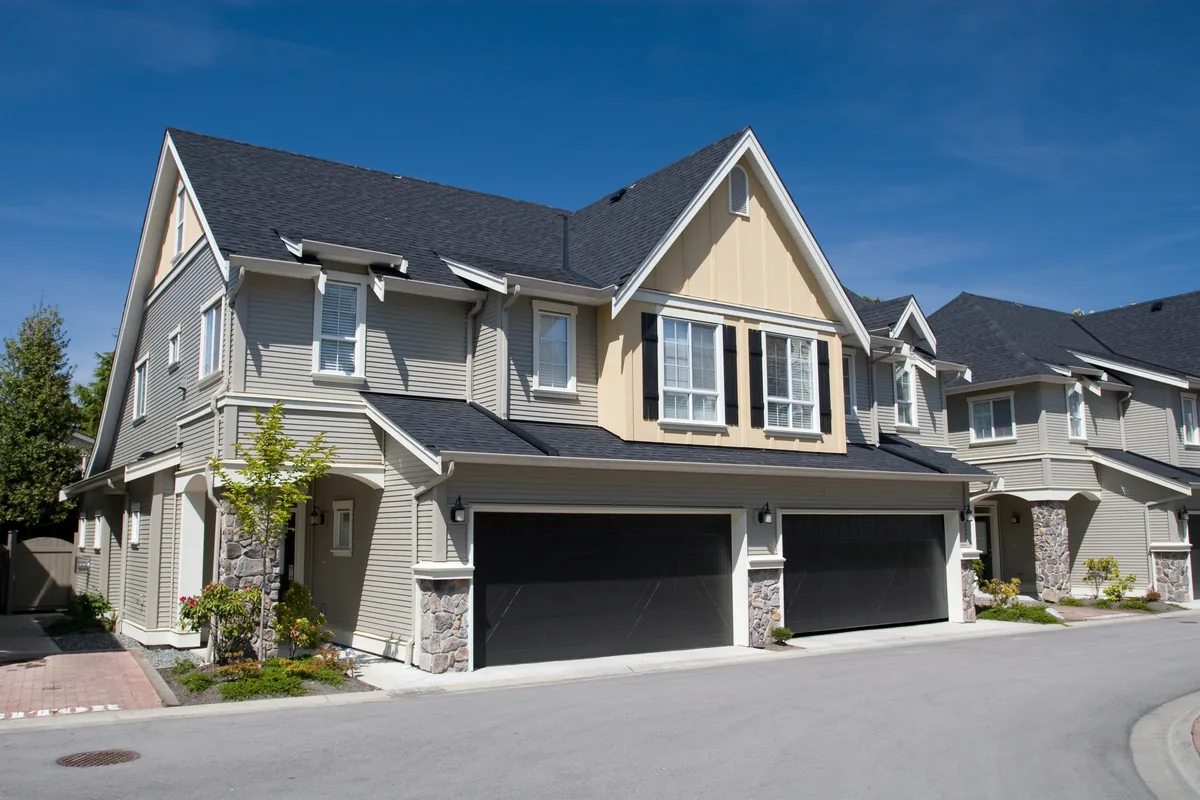

Connecticut duplex regulations and licensing
Connecticut regulates the tenancy rather than the owner, and a two-unit building meets two of its statutes in opposite ways. One reaches every residential rental in the state and gives a small owner nothing. The other stops at two families and hands an owner-occupied duplex an exit the three-family house down the street does not get. Owning two units is a disadvantage under the first and, on a condition, an advantage under the second — so the useful question is never how big the building is but which statute the decision in front of you belongs to.
The deposit statute that has no small-owner exit
Connecticut makes the owner an escrow agent and indexes the interest annually.
Under Conn. Gen. Stat. § 47a-21(b), (d)(2), (h), (i) a residential security deposit is capped at two months’ rent, and at one month once the tenant is sixty-two or older. On a duplex those two caps can apply to one building at the same moment: one side held at two months, the other at one, and a sitting tenant who reaches sixty-two mid-tenancy able to ask for the difference back. The cap follows the tenant, not the structure, so a two-unit owner administers two of them.
What the statute does next is the part that catches owners of small buildings. The money is not yours to hold. It is escrowed at a financial institution in Connecticut, in an account your own creditors cannot execute against, and the tenant is told in writing which institution holds it. Connecticut is the state with no small-landlord exit — its deposit statute governs any property containing one or more residential units, so a single-unit owner is an escrow agent under banking supervision — and a duplex owner is exactly the owner that description was written about.
What Connecticut actually requires of you
- Cap the deposit at two months’ rent, and at one month once the tenant is sixty-two or older — refunding the difference on request where they reach sixty-two mid-tenancy. Conn. Gen. Stat. § 47a-21(b)(1)–(2)
- Escrow the money at a financial institution in Connecticut, in an account your own creditors cannot execute against. Conn. Gen. Stat. § 47a-21(a)(3), (5)
- Check the Banking Commissioner’s deposit index each year and pay or credit at least that rate on the tenancy’s anniversary. Conn. Gen. Stat. § 47a-21(i)
- Hold back interest only for a month the tenant ran more than ten days late, and only where you charged a late fee for it — and never raise the rent to recover what the interest costs you. Conn. Gen. Stat. § 47a-21(i)
- Return the deposit with accrued interest, or the balance with a written itemization, within twenty-one days of termination or fifteen days of getting their forwarding address in writing, whichever falls later. Conn. Gen. Stat. § 47a-21(d)(2)
- Budget the failure at twice the deposit — or, where the only slip is unpaid interest, ten dollars or twice that interest, whichever is greater. Conn. Gen. Stat. § 47a-21(d)(2)
Two of those duties double on a two-unit building rather than merely applying to it. The annual interest is looked up once and paid twice, on each tenancy’s own anniversary, which on a duplex are rarely the same date. And the return clock runs per tenant: twenty-one days from termination or fifteen days from a forwarding address given in writing, whichever falls later, which means two clocks started by two people on two different days. An owner who administers one of them from memory and the other from a calendar will eventually get the memory one wrong.
What that means for you: Escrow every deposit at a financial institution the day it arrives, tell the tenant in writing which institution holds it, and look up the Banking Commissioner’s deposit index each year to pay or credit that year’s interest.
Two fair-housing lines, and they do not sit at the same unit count
This is where a Connecticut duplex genuinely stops resembling a larger rental, and it is worth reading the operative words rather than a summary of them. Conn. Gen. Stat. § 46a-64c carries an exemption at subdivision (b)(1)(B), and the section does not apply to “a unit in a dwelling containing living quarters occupied or intended to be occupied by no more than two families living independently of each other, if the owner actually maintains and occupies the other such living quarters as his residence.” Two families, and the owner living in the other set of quarters. Meet both and the section does not reach that unit. A triplex fails the first condition on its own.
Subdivision (b)(4) then draws a second line somewhere else entirely. It relieves the familial-status prohibition alone — not the section — for a unit in a dwelling with quarters for no more than four families living independently where the owner resides in one of them. So the count at which Connecticut’s line falls is not fixed by the building. It is fixed by the decision: the same address can sit outside the act for one protected class and inside it for another, and the two boundaries stand two units apart.
For a duplex owner who occupies, the narrower exemption already does the work, and the wider one changes nothing while you stay at two units. It starts to matter the moment anything moves — you buy a third unit, or you move out, or a decision you are making touches a class the exemption you were relying on never covered. That is why the check below is a habit rather than a one-time finding.
Two cautions before anyone leans on this. The exemption speaks to that section — whether some other body of law reaches the same decision is a separate question and one worth putting to counsel before you rely on it. And enforcement of what remains sits with the Commission on Human Rights and Opportunities, while the forms and rates on the policy answering a complaint are regulated by the Connecticut Insurance Department. Which part of a policy is even capable of responding is set out on the tenant discrimination page.
Common Connecticut duplex risks
A standard property form answers for fire, wind, hail, weight of ice and snow, and freeze-related water damage, with winter loss and coastal wind driving most of the placement conversation; properties near Long Island Sound commonly carry a separate named-storm deductible alongside the all-other-perils deductible. Flood and storm surge are not on that form at all and are their own placement through the National Flood Insurance Program or a private flood market, and earthquake is likewise a separate purchase. Owners who cannot place coverage in the voluntary market apply to the Connecticut FAIR Plan, which writes basic named-peril coverage on an actual-cash-value basis and administers the Coastal Market Assistance Program for shoreline properties.
None of that knows how many front doors the building has. What the second unit changes is the arithmetic underneath it. One structure carries one dwelling limit and one deductible; a shoreline duplex with a separate named-storm deductible has both leases standing behind the same figure, and the repair that follows runs on one schedule governing two households. The building does not come apart into halves that can be fixed and re-let independently, so an event that reaches the structure reaches the whole of what the structure earns.
Winter is the peril Connecticut delivers most reliably, and on a two-unit building it finds the seam. Weight of ice and snow is a whole-roof problem. Ice damming above one unit puts water into the ceilings of both when the wall between them is shared and the framing runs through. Freeze damage is the one that turns on occupancy: an unheated half of an otherwise heated building is where a supply line lets go, and the loss arrives in the unit that was still paying you.
Where the voluntary market will not write it, Connecticut’s insurer of last resort is the Connecticut FAIR Plan. Very basic named-peril cover on an actual cash value basis rather than replacement cost, and it does not answer for theft, freezing or water damage. Eligibility runs to 1-4 family owner or tenant occupied dwellings — but liability cover reaches only 1 to 3 family dwellings, so the fourth unit is the line — read as two ceilings rather than one, a duplex clears both with room to spare. Connecticut FAIR Plan — coverages and general information
What that basic form leaves out is the part to plan around. Actual cash value rather than replacement cost is a different settlement on the same roof, and freezing and water damage sitting outside it removes the two perils a Connecticut winter is most likely to bring. It is a place to stand while a better placement is found, not a destination.
In Connecticut the perils a standard property form answers are Named-storm wind, Weight of ice and snow, Freeze damage, and Fire and lightning. Flood and storm surge and Earthquake are written separately and are not picked up by that form, and the coverage that responds is property coverage, loss of rents, general liability.
Common Connecticut duplex claims we see
The claim we see most on Connecticut two-unit buildings is winter water. A pipe in an exterior or party wall freezes and splits during a cold snap, and because the halves of a duplex were never separated internally the water crosses. Where one side was empty between tenants and the heat had been turned back, the split usually starts there and the damage lands next door. On a larger building that is one unit out of several. Here it is frequently both, settled on one claim and repaired on one schedule.
Ice damming is the same story with a slower fuse. Snow melts over the heated half, refreezes at a cold eave, and backs water under the shingles into whatever is beneath — which on a side-by-side duplex is often the ceiling of the unit that did not cause it. What it does to the structure is answered by property coverage; what it does to the money while both halves are being dried out is answered by loss of rents, and on two units that is the entire rent roll rather than a slice of it.
Liability arrives from the ground both households cross, and in this state it usually arrives frozen. The walk, the shared steps, the drive, the spot at the bottom of the gutter where meltwater refreezes overnight — a fall on any of them is a claim against the owner, and general liability is the coverage that takes it up. It is why we ask early which parts of the lot both leases actually give a tenant the right to walk on, and who has been clearing them.
Why Connecticut duplex owners choose Rental Guard
A Connecticut two-unit owner is usually one person with one building, an escrow account, two anniversary dates and no leverage — and the state has written its deposit law as though that person had a back office. Our book is buildings with one to four dwelling units, so a duplex is not the small end of what we place; it is the middle of it. We will tell you when the size of your building helps you, which under § 46a-64c(b)(1)(B) it does while you live in the other half, and we will tell you when it does not help you at all, which is everywhere the deposit statute is concerned. Every quote goes to a licensed agent we name on this site, placed under the agency NPN in the footer.
Owner-occupied, or both units let
Connecticut splits by protected class — two units generally, four as to familial status.
Everything above turns on a fact about where you sleep, and the statute is exact about it: the owner must actually maintain and occupy the other living quarters as a residence. Not own them. Not keep them empty for visits. Not intend to move in later. A duplex whose owner lives elsewhere and lets both halves gets none of the exemption, and that is the ordinary case rather than the unusual one — it carries the full weight of the act on both tenancies.
Owners move between the two arrangements more often than they expect to. You occupy for a few years, then move out and let both sides, or you buy the building already tenanted and move into a unit when it comes free. The exemption travels with the occupancy in both directions, and it does so on the day the occupancy changes rather than at the next renewal or the next lease signing.
What that means for you: Check which protected class a decision touches before assuming any exemption reaches it.
The insurance side moves on the same fact and in its own way. When one unit is yours, the building is partly a home and partly a rental, only one rent is exposed to a loss, and the set of markets willing to look at it is not the same set. When both are let, it is straightforwardly rental property and the whole of the income sits behind one structure. Tell us on the day it changes. It is a short conversation in advance and an expensive discovery afterwards.
Major Connecticut duplex markets
- Bridgeport. Black Rock and the blocks running down to Long Island Sound put two-unit stock inside the shoreline wind band, where a separate named-storm deductible commonly attaches to the dwelling limit rather than to a unit — so both leases sit behind one deductible instead of two.
- New Haven. Two-family houses through East Rock and Fair Haven are frequently owner-occupied on one side with an academic-year tenancy on the other, and two turnover calendars running on one building is a question underwriters raise before they get to the roof.
- Hartford. The capital anchors the Capitol Region planning area, and its older wood-frame two-family stock commonly runs one heating plant and one service entrance for both halves — a single point of failure that produces a loss in two units at once.
- Stamford. Fairfield County rebuild costs mean a modest two-unit building can carry a dwelling limit its owner did not expect, because the limit is set by what it would cost to put the structure back rather than by how many front doors it has.
- Norwalk. South Norwalk and the tidal reach of the Norwalk River sit in mapped flood territory, and flood is a separate placement written on the whole structure — there is no half of a duplex an owner could sensibly leave out of it.
- Waterbury. Naugatuck Valley two-family houses are old enough that original service entrances and shared risers still turn up at inspection, and a finding in a shared chase is often what decides which market will look at the building at all.
- New Britain. Whole blocks in Hartford County run two-family and three-family houses side by side, which is where the state fair-housing line becomes visible from the sidewalk — the same owner-occupancy fact that puts one of them outside § 46a-64c leaves the one beside it inside.
- New London. Duplexes above the Thames River waterfront carry shoreline wind and winter freeze on the same structure, so an owner here is buying against two seasons rather than picking the one that worries them more.
Related reading
Connecticut duplex insurance FAQs
Is my owner-occupied Connecticut duplex outside the state fair-housing act?
If you genuinely live in the other half, yes — and the exemption is unusually clean. Conn. Gen. Stat. § 46a-64c(b)(1)(B) says the section does not apply to a unit in a dwelling containing living quarters occupied or intended to be occupied by no more than two families living independently of each other, where the owner actually maintains and occupies the other such living quarters as his residence. Two conditions carry it: two families, and you living in the other set of quarters. A triplex fails the first. A duplex you own but do not live in fails the second.
I own the duplex and rent out both sides. Does any of that reach me?
No, and this is the common case rather than the exception. Every part of § 46a-64c(b)(1)(B) turns on the owner actually maintaining and occupying the other quarters as a residence. Rent both halves and there is no occupancy to point at, so the act reaches the building the same way it reaches a larger one. Screen with one written process, keep the record, and treat the exemption as something that belonged to a different arrangement.
Why do I keep seeing a four-unit figure as well as a two-unit one?
Because Connecticut runs two lines at once and they sit at different counts. The two-family exemption at § 46a-64c(b)(1)(B) takes the whole section off an owner-occupied duplex. Separately, § 46a-64c(b)(4) relieves only the familial-status prohibition, and it reaches further — a dwelling with quarters for no more than four families living independently, where the owner resides in one of them. So the same building can be outside the act for one protected class and inside it for another. Which line applies to you depends on which class the decision touches, not on the building.
How much deposit can I take on each side, and where does the money go?
Connecticut caps a residential security deposit at two months’ rent, and at one month once the tenant is sixty-two or older — which on a duplex can mean two different caps on one building at the same time, and a refund of the difference on request when a sitting tenant reaches sixty-two. Wherever it lands, the money is escrowed at a financial institution in Connecticut in an account your own creditors cannot execute against, and you tell the tenant in writing which institution holds it. Nothing in that scales down for a small building.
When do I have to return it, and what does the interest work out to?
The deposit and its accrued interest, or the balance with a written itemization, are due within twenty-one days of termination or fifteen days of getting the tenant’s forwarding address in writing, whichever falls later. Two tenancies means two clocks, and they start on whatever dates those two tenants hand over an address. The rate is not yours to pick: you look up the Banking Commissioner’s deposit index each year and pay or credit at least that rate on each tenancy’s anniversary, so one building carries two anniversary dates.
One side is empty over the winter. Does that change anything?
It can, in two separate ways. Weight of ice and snow and freeze-related water damage are the perils a Connecticut winter actually delivers, and an unheated half of a heated building is where a supply line gives way. Separately, policy wording on unoccupied and vacant premises does not treat one empty unit the same way every form does, and the wording you hold is what decides it — half of a two-unit rent roll is a far larger share than half of a larger one. Tell us while the gap is still hypothetical rather than after the thaw.
My shoreline duplex was declined. What is left?
The Connecticut FAIR Plan is where owners go when the voluntary market will not write it, and a two-unit building sits comfortably inside its eligibility. Read the two ceilings separately, because they are not the same: the property side reaches one-to-four-family owner or tenant occupied dwellings, while the liability side reaches only one-to-three-family dwellings. A duplex clears both. The cover itself is basic named-peril on an actual cash value basis and it does not answer for theft, freezing or water damage, so most owners treat it as a floor and build back from there. Send us the declination before the date on it.
Do two units mean two policies?
No. One building, one policy, one dwelling limit and one deductible — the second unit shows up in the leases and in the rents, not in the number of policies. What the second unit does change is arithmetic: a single covered loss to the structure can stop all of the income the building produces, where a larger property would still be earning from the units that were not touched. That is the whole of the difference, and it is worth stating plainly rather than dressing a duplex up as a different animal.
Get a Connecticut duplex insurance quote
Send us the building and the policy you have now. and tell us which half of the building you sleep in — in this state that single fact moves the answer.
Get a Free Quote