
States we serve · Ohio
Ohio duplex insurance
One building, two tenancies, and an Ohio duty that comes due while your tenants are still living there — on two dates that almost never line up.
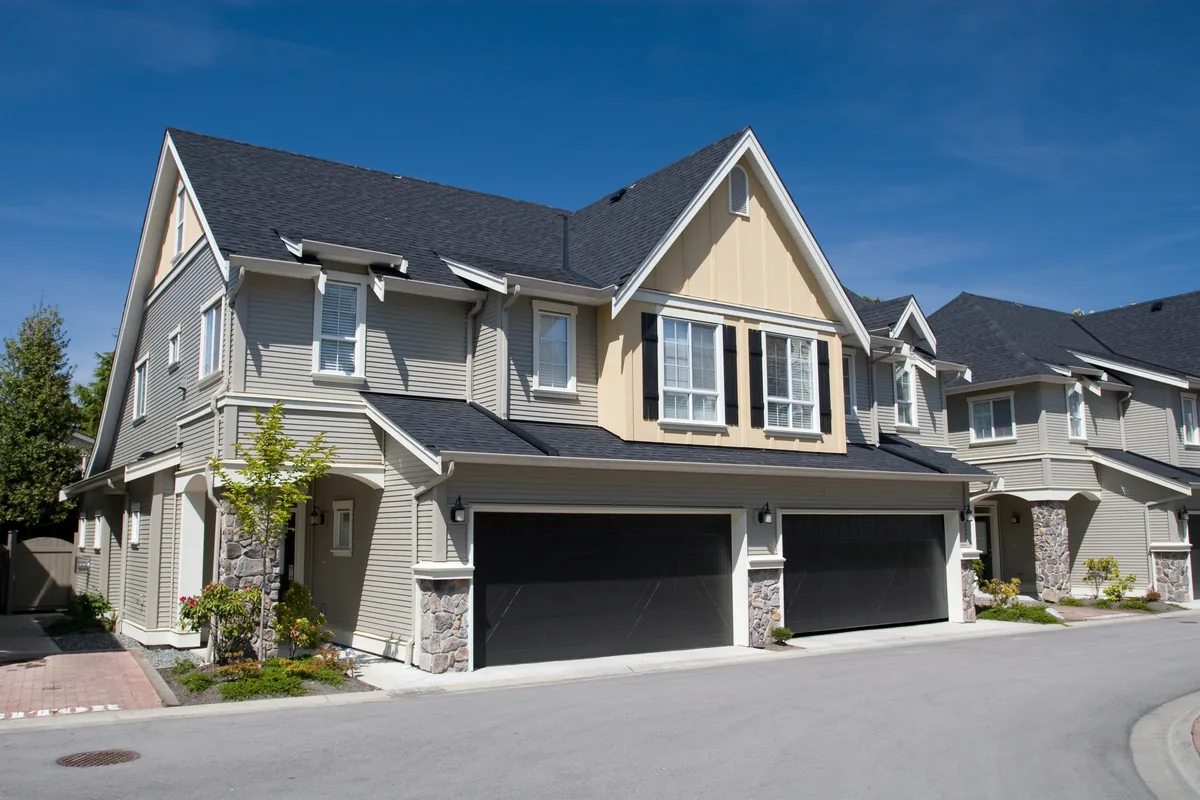

Ohio duplex regulations and licensing
Two chapters of Ohio law reach a two-unit owner in full. Chapter 5321 governs the tenancy and the money you hold for it; Chapter 4112 governs how you choose the person who signs the lease. Neither one counts doors, and that is the honest starting point. What a second unit changes is not the rule — it is that you are running every one of these rules twice, on two schedules that were set by whenever each half last turned over.
Interest that comes due while the tenant is still there
Ohio runs an interest obligation during the tenancy rather than only an accounting at the end of it.
Under Ohio Rev. Code § 5321.16(A)–(C) the duty is narrow and specific, and it is narrower than most summaries of it. Interest runs at five percent a year on the part of the deposit above the greater of fifty dollars or one month’s rent — on that excess alone, never on the whole sum — and only once the tenant has been in place six months or more. Because one month’s rent is almost always the larger of the two figures, a deposit held at or below one month’s rent produces nothing. And the payment is annual, during the tenancy, rather than an adjustment you settle at the end of it.
What Ohio actually requires of you
- Calculate interest at five percent a year on the part of the deposit above the greater of fifty dollars or one month’s rent — on the excess only, and only once the tenant has stayed six months or more. Ohio Rev. Code § 5321.16(A)
- Pay that interest out annually during the tenancy rather than holding it back to move-out. Ohio Rev. Code § 5321.16(A)
- Itemize every deduction in a written notice and deliver it with the amount due within thirty days after the rental agreement ends and possession comes back. Ohio Rev. Code § 5321.16(B)
- Ask the tenant in writing for a forwarding address before they go — the statute puts that duty on them, and your notice still has to reach somewhere. Ohio Rev. Code § 5321.16(B)
- Treat the thirty days as the whole exposure: miss it and the tenant recovers what was withheld, the same amount again as damages, and reasonable attorney fees. Ohio Rev. Code § 5321.16(C)
Now put two tenancies inside one building and watch that arithmetic split in half. Each unit carries its own rent, so each carries its own threshold and its own excess; if one side has been redone and the other has not — which is the usual condition of an Ohio double — the two thresholds are different figures, and one half can owe interest while the other owes none at all. Each unit also has its own start date, so the six-month qualification is reached on two different days. And each has its own annual anniversary after that.
Those anniversaries are where this goes wrong on a duplex rather than on a single rental. A two-unit building that turned over in different seasons has two payment dates in the calendar year, neither of which is your policy renewal and neither of which announces itself. Owners who treat the deposits as one pot and settle once a year are usually late on one side of the building and early on the other. Two ledgers, two dates, one structure — and the statute is indifferent to the fact that it is all one address.
Thirty days, and a miss that is charged twice
The end of a tenancy is its own clock and it does not begin at the same moment as the lease term. The itemized notice and any balance are due within thirty days after the rental agreement ends and possession comes back to you — both, not whichever came first. On a duplex that clock also starts twice, in whatever months the two halves happen to empty, and the notice has to reach a forwarding address the tenant is the one obliged to give you.
What a miss costs is set out in the same section and it is doubled by design: the tenant recovers the amount wrongfully withheld, that same amount again as damages, and reasonable attorney fees. That is worth reading twice on a two-unit building, because the exposure is not one deposit — it is whichever of your two deposits was handled late, and the two are handled on separate dates by the same person.
What that means for you: Calculate interest each year on the part of the deposit above the threshold — not on the whole deposit — and pay it out annually rather than at move-out, then itemize every deduction in writing within thirty days of the tenant leaving.
Who regulates which part of this
Carriers, forms and rates sit with the Ohio Department of Insurance, which is the body to reach on a non-renewal or a coverage-form question. The housing provisions of Chapter 4112 are enforced by the Ohio Civil Rights Commission. What a complaint costs you and which part of the policy responds to it belongs to the tenant discrimination page. The screening rule that matters most to a duplex owner is in the owner-occupancy section below, because that is where it does its real damage.
Common Ohio duplex risks
A standard property form answers for the severe convective storm season — hail, straight-line wind including derecho events, and tornado — plus snow and ice load on older low-slope roofs and freeze damage when a vacant unit loses heat. Flood and earthquake are their own placements and are not on the property form; flood is written through the National Flood Insurance Program or a private flood market. The Ohio FAIR Plan Underwriting Association is the basic-property market of last resort, and the Ohio Mine Subsidence Insurance Underwriting Association backs mine subsidence coverage, which the statute positions three different ways depending on where the building stands: included by operation of law in twenty-six counties, offered for the owner to elect in eleven more, and neither in the rest of the state.
Read the mine-subsidence clause in that paragraph carefully, because it does not resolve to one answer. Where the statute mandates the cover it is not something you elect and not something an agent has to remember to add. Where it only requires an offer, the opposite holds: the building is uncovered by default and stays that way unless somebody took it. And across most of the state neither duty applies at all. Your job is to find which of the three your county sits in and what the cover is written at, which is a different task from shopping for it. And subsidence does not respect a party wall: one structure moves, both tenancies stop, and one settlement has to answer for the whole building.
When the standard market declines an Ohio two-unit building, the fallback is the Ohio FAIR Plan Underwriting Association. Basic property and homeowners cover for property that could not be placed in the normal market, written on the Dwelling Property Basic Form. Eligibility reaches 1-4 family dwellings, tenant-occupied or owner-occupied, under the Dwelling Property form — note that the ceiling names owner-occupied buildings in the same breath as tenant-occupied ones, so living in half of the building you own does not put you outside it. Ohio Rev. Code § 3929.43; Ohio FAIR Plan Underwriting Guidelines eff. 4/2026
The separate placements work the same way. Flood and earthquake are each their own decision, and on a two-unit building each is a decision you make once for the entire structure — there is no half of it you could sensibly leave out and no way to buy the exposure down for one tenancy only.
The perils a standard property form answers in Ohio are Hail, Straight-line wind, Tornado, and Snow and ice load. Flood and Earthquake are placed on their own and that form does not reach them. Where it does respond, the coverage doing the work is property coverage, loss of rents, general liability.
What is distinctly two-unit about an Ohio winter is that the empty half is not a separate building. Snow and ice load presses on one roof over two households. A furnace or a service serving both sides is common in stock of this age, and where it is shared, a failure in it is not a one-unit event. And when a unit sits empty between tenants through an Ohio January, the pipes that freeze in the cold half run through the same walls as the half that is still paying you.
Common Ohio duplex claims we see
Wind and hail lead the file, and on a duplex they lead it in a specific way: the storm damages one roof, and one roof means one claim, one deductible and two tenancies waiting on the same contractor. Owners who have held a policy on a single rental are used to a roof claim being a roof claim. Here it is also an income event on both halves at once, which is what loss of rents is scoped to answer and property coverage is not.
Winter water is the second one and it is the most avoidable. Ice damming at the eave, a burst line in an unheated half, a failure in a shared stack — each of them moves through the structure rather than stopping at the lease boundary, so damage that began in one unit is repaired in two. The report from the adjuster reads as one loss because the building is one building; the tenants experience it as two.
Liability arrives from the ground both households cross. On the stacked doubles of northeast Ohio that means the exterior stair and the upper porch, which are the upstairs tenancy’s route to the street and the downstairs tenancy’s ceiling. On side-by-side doubles it is the shared walk, the drive and the basement laundry. General liability answers a claim of injury on the premises, and the question we ask early is which surfaces both leases let both households use.
Why Ohio duplex owners choose Rental Guard
Ohio is the state that regulates the rental application form itself, not only the decision made from it, and on a duplex that rule finds you where you are also the neighbor. We write residential rental buildings of one to four units and nothing larger, so a two-unit file is ordinary work here rather than an exception to look up. We will tell you where a second door changes nothing — the perils are the state’s perils, the dwelling form is the same form — and where it genuinely changes something, which on the deposit clocks it does. Every quote is read by a licensed agent we name on this site, under the agency NPN in the footer.
Owner-occupied, or both units let
An owner-occupied duplex is two things at once: it is where you live and it is the building your income comes out of. That split changes which markets will look at it, what the income side of the policy is scoped to replace — one rent, not two — and a list of practical questions that only exist because you are on site. Whether the entrances, the basement and the laundry are shared. Whether there is a separate meter. Who holds a key to what.
If both halves are let, the building is straightforwardly rental property and the whole of the rent roll depends on the same roof, the same service and the same driveway. That is the version where loss of rents is doing the most work, because a repair that empties the structure empties all of your income rather than part of it.
Ohio grants no owner-occupied building exemption. R.C. 4112.024 carries six exemption divisions and none of them is owner-occupancy.
The section that grants those exemptions is captioned for religious organizations, which is exactly why its heading cannot be trusted to describe it — the divisions underneath cover other ground entirely, and owner-occupancy is not among them. An Ohio owner who has read about the federal small-building carve-out and assumed the state followed it has assumed wrong.
Then comes the part that is genuinely Ohio’s, and it is stricter than the exemption question. The operative text is Ohio Rev. Code § 4112.02(H)(8), and what it reaches is the asking. Not the refusal, not the reason you wrote in your file — the inquiry itself, made in writing or made at the kitchen table. An owner choosing a portfolio tenant fills in a form. An owner choosing the person who will share their wall has a conversation, and the questions that feel most natural in that conversation — who else will be living there, whether there are children, where the family goes on Sunday — are the ones the statute is aimed at. Being close to the applicant does not soften this rule. It is the condition that makes breaking it easy.
What that means for you: Keep the protected-class questions off the application form itself, not merely out of the decision.
Owners also move between the two arrangements — occupy for a few years, then let both halves. Tell us at the point the decision is made rather than at the renewal that follows it. It changes what the policy is insuring and what the income side is scoped to, and both are cheaper to change in advance than to argue about afterward.
Major Ohio duplex markets
- Cleveland. The Cleveland double stacks one unit above the other and stacks the porches with it, so the upstairs tenancy reaches the street across the downstairs tenancy’s roof. The porch deck and that exterior stair are read early on a two-unit submission here, and rebuilding them is one of the few improvements that moves a file on its own.
- Lakewood. Dense two-family ground on narrow lots, with doubles built close enough together that the distance to the building next door is a live rating question rather than a formality. That exposure belongs to the setback you bought, not to anything you can repair, so it is worth knowing before an inspection raises it.
- Cincinnati. Brick two-family on hillside lots frequently sits behind a retaining wall older than the building it holds up. Wall movement damages one structure and interrupts both tenancies at once, and it is the finding most likely to push an otherwise ordinary two-unit file toward a harder market for reasons unrelated to the roof.
- Columbus. Much of the two-unit stock is a large older house divided into an up and a down at some point after it was built, which means an older policy may still describe a one-family dwelling. The mismatch renews quietly for years and surfaces at the first claim that involves the second kitchen.
- Toledo. Frame doubles take the convective season off open water with little terrain in front of them, and lake-effect snow settles on the low-pitch porch roofs these buildings almost all carry. One roof over two households means the hail deductible is a single decision applied to the whole of your rent roll.
- Akron. Worker doubles built in rows for the rubber trade are still much of the older rental stock, and they were built with one furnace, one electrical service and one stack serving both halves. Separating those systems is expensive; leaving them shared is what the inspection report will describe, and it is the honest answer on most of these buildings.
- Dayton. Two-unit stock sits close to the Great Miami and Mad River corridors, where flood is a separate placement whatever the levees behind it do. Tornado through the Miami Valley is the other half of the file, and an owner rebuilding one structure here is rebuilding the whole of the income it produced.
- Youngstown. Vacancy is the first underwriting conversation rather than the last one, and on a duplex it arrives half at a time — one side let, one side standing empty. That is not the same condition as an empty building, and the wording you hold decides whether it is treated as one.
How other states answer the same questions
An owner living in one half of an Ohio duplex gets no exemption from the discrimination code. Three more states that also decline to carve out the owner-occupied building, from the state coverage index:
- Duplex insurance in California — the Fair Employment and Housing Act reaches an owner-occupied duplex, triplex and fourplex alike, so the building size never changes the answer.
- Duplex insurance in Wisconsin — the Open Housing Law carries no owner-occupied exemption and the legislature said so on purpose, extending the law in its intent paragraph to owner-occupied single-family residences.
- Duplex insurance in Colorado — no general owner-occupied exemption either, and the part is written to reach an owner living in one half of a duplex across a named list of protected classes.
Related reading
Ohio duplex insurance FAQs
When do I owe my Ohio tenants interest on their security deposits?
Once a tenant has stayed six months or more, and only on the part of the deposit above the greater of fifty dollars or one month’s rent. The rate is five percent a year, it runs on that excess rather than on the whole deposit, and it is paid out annually while the tenant is still living there. Because one month’s rent is almost always the greater of the two figures, a deposit at or below one month’s rent produces no interest at all. The rule is R.C. 5321.16(A), and it is a tenancy rule rather than a building rule.
Both halves are rented. Is that one interest calculation or two?
Two, and they are unlikely to agree with each other. Each tenancy has its own rent, so each has its own threshold and its own excess. Each has its own start date, so one side can clear the six-month qualification months before the other does. And each has its own annual anniversary, which is the part owners miss — a duplex that turned over in different seasons pays out twice a year on two dates, and neither of them is your renewal date.
I live in one half of my duplex. Does Ohio exempt me from fair-housing rules?
No. Ohio grants no owner-occupied building exemption, and the exemption section carries six divisions of which none is owner-occupancy. Owners are sometimes misled by the section heading, which reads as though the whole section were about something narrower than it is. The sharper Ohio point is R.C. 4112.02(H)(8): the state reaches the inquiry itself, not only the decision you make from it. Asking the question is the violation, whether or not it changed your mind about the applicant.
One side is empty over the winter. What should I tell you?
Tell us the date it went empty and whether the heat is still on in that half. An Ohio duplex with one unit occupied and one standing empty is a condition policies describe in different ways, and half a rent roll is a much larger share of your income than one unit out of a larger building would be. Freeze is also not contained by the party wall: a line that fails in the cold half runs through the same structure the paying half lives in.
Is duplex insurance a different policy from landlord insurance in Ohio?
No, and it is better to say that plainly than to dress it up. It is a landlord policy on a building that happens to hold two dwelling units. The perils are Ohio’s perils either way, the FAIR Plan writes the same dwelling form, and the thirty-day itemization deadline is written about tenancies rather than about buildings. What genuinely changes is that you run every one of those tenancy rules twice, on two schedules, over one structure whose roof, furnace and service both tenants depend on.
My duplex was declined. What does the Ohio FAIR Plan actually write?
Basic property and homeowners cover on the Dwelling Property Basic Form, for buildings that could not be placed in the normal market. Eligibility runs to one-to-four family dwellings and names owner-occupied buildings alongside tenant-occupied ones, so living in half your duplex does not put you outside it. It is narrower than a standard form, which is why it is a fallback rather than a preference. Send us the declination or non-renewal notice while the date on it is still ahead of you.
Is mine subsidence something I have to buy for my duplex?
It depends which county the building stands in, and there are three answers rather than two. In twenty-six counties the statute puts the Ohio Mine Subsidence Insurance Underwriting Association’s cover on the policy and you do not elect it. In eleven others the insurer only has to offer it, so it is there if someone accepted it and absent if nobody did. In the rest of the state — Hamilton County among them — the statute imposes neither duty. So the first move is reading the declarations rather than shopping. On a duplex whichever answer applies covers one structure and therefore both tenancies, because subsidence does not damage half a building.
Get an Ohio duplex insurance quote
Send us the building and the policy you have now. and we will work out which of your two deposit anniversaries falls next.
Get a Free Quote