
States we serve · Colorado
Colorado duplex insurance
A hail state that puts its worst peril in the deductible rather than in the declinations, and a deposit statute rewritten in January 2026 to stop asking what you meant by it.
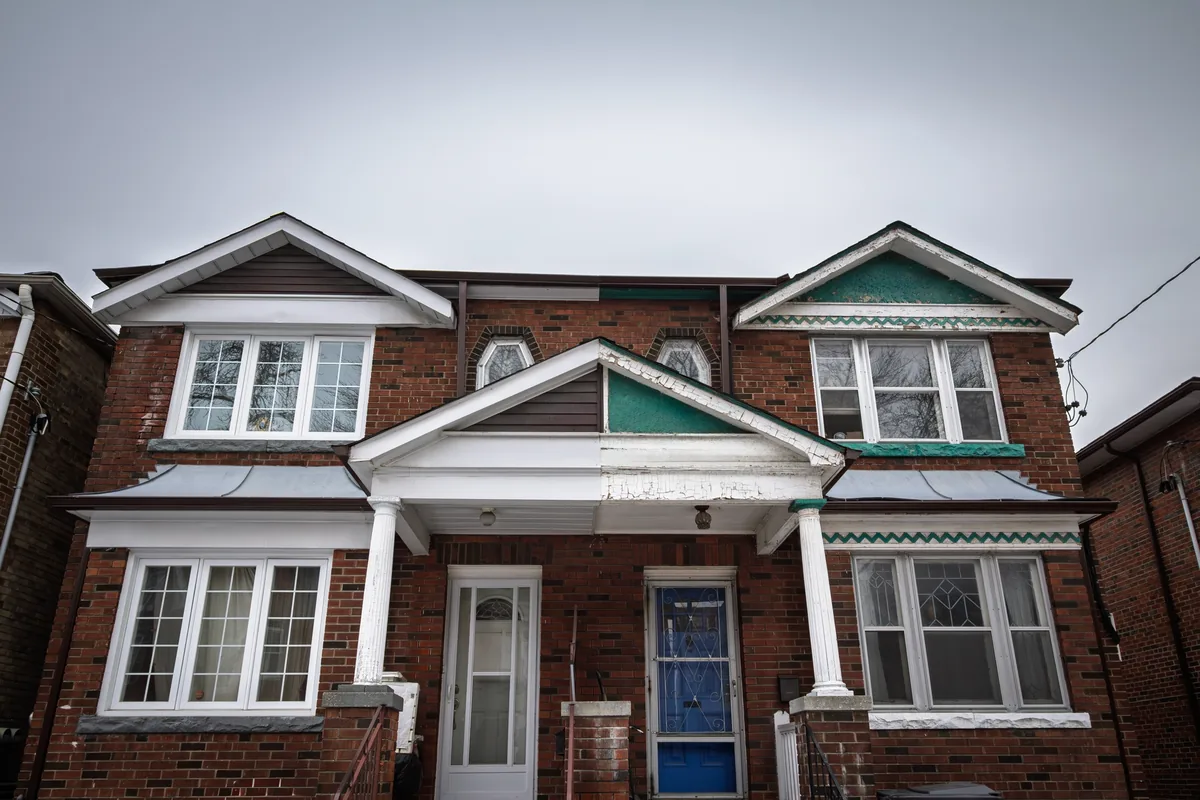

Colorado duplex regulations and licensing
There is no statewide landlord license in Colorado and no state rental registry, so a two-unit owner has nothing to apply for and nothing to renew at the capitol. What the state regulates is the tenancy, and it has just finished regulating the one part of the tenancy that most often ends in a lawsuit over a small building.
The deposit statute Colorado rewrote, and what it now demands
Colorado rewrote its deposit statute effective January 2026, and the change removed the willfulness screen.
The operative text is C.R.S. § 38-12-103, as amended by HB25-1249 (eff. 1 Jan 2026), and the change worth reading twice is not the deadline. It is the standard. The treble-damages trigger used to be willful retention, which left an owner room to argue about what they meant. From the effective date it is wrongful retention, which asks only whether what you kept was allowed and whether you showed your work. Intent has stopped being a defense because it has stopped being an element.
What Colorado actually requires of you
- Count thirty days from the lease ending or the premises being surrendered, whichever falls last — a lease may lengthen that window, but never past sixty days. C.R.S. § 38-12-103(1)(a)
- Keep only what the four listed causes allow: unpaid rent, unpaid utilities, other lawful charges named in the lease, or repair of damage beyond normal wear and tear that did not predate the tenancy. C.R.S. § 38-12-103(1)(b)
- Draft the written statement so it lists the exact reasons, and send the money and the documentation you hold — photographs, inspection forms or reports, receipts, invoices or estimates — along with it. C.R.S. § 38-12-103(1)(a), (8)
- Offer the walk-through inspection before termination or surrender whenever either of you asks for one, at a time that suits you both. C.R.S. § 38-12-103(1.5)
- Treat a statement sent without its documentation as wrongful on its face — from 1 January 2026 the treble-damages trigger is wrongful retention, not willful retention, and that screen is gone. C.R.S. § 38-12-103(2.5)(a), (3)(a), as amended by HB25-1249
- Start the seven-day clock the moment a written demand arrives — that is the window before a tenant may sue for treble damages, attorney fees and costs, and you carry the burden of proving the withholding was not wrongful. C.R.S. § 38-12-103(3)(b)–(c)
Read that list as a small owner rather than as a portfolio and the weight lands differently. A duplex is generally two tenancies signed within weeks of each other and ending within weeks of each other, so the thirty-day clock tends to run on both halves at the same time, against one set of photographs taken on one afternoon, by one person who is also the one fixing the drywall. There is no office to route it to. The statute does not care about that, and neither does the seven-day demand window once it opens.
Two other states put that same line somewhere else entirely. An owner of a duplex in Arkansas can fall out of the deposit statute altogether while their household and entities hold five or fewer dwelling units, which is an exit Colorado simply does not offer at any size. A duplex in Pennsylvania runs a thirty-day clock too, but missing it there costs the owner the right to sue the tenant for the damage at all — the same deadline, a completely different penalty attached to the far end of it.
The documentation is the deduction
Under the amended section the paperwork is not evidence supporting the deduction. It travels with it. A written statement that lists the exact reasons, sent alongside the money and alongside the photographs, inspection reports, receipts, invoices or estimates you are relying on, is what the section describes; a statement that arrives on its own is not a slower version of the same thing. And the burden of showing the withholding was not wrongful sits with the owner, so the file you build at move-out is the file you will be reading from later.
On a duplex this is more awkward than the rule makes it sound, because the walk-through inspection either of you can ask for happens in a building you may live in, with someone you have shared a driveway with for a year. Do it anyway, and do it at a time you both agreed on. The version of this that goes wrong is the one settled verbally over the fence.
What that means for you: Send the money, the written statement and the supporting photographs and invoices in one envelope within thirty days — a statement without its documentation is wrongful withholding on its face, and there is no willfulness screen left to argue behind.
Where Colorado draws its owner-occupied line
Colorado’s housing part does contain one owner-occupancy carve-out, and it is much narrower than the owners who have heard of it assume. Section 24-34-502(8)(a)(II) lifts the part for rooms or units in a dwelling holding no more than four families living independently of each other, where the owner actually maintains and occupies one of those living quarters as a residence. But subsection (8)(a) opens by scoping itself — with respect to familial status — and it reaches nothing beyond that. Every other class the section names still applies to the half you rent out, whether you are next door or across the state.
Enforcement sits with the Colorado Civil Rights Division, which investigates complaints under the state anti-discrimination act. What a complaint costs an owner and which part of the policy answers it belongs to the tenant discrimination page. Insurance carriers and the forms they use are regulated separately, by the Colorado Division of Insurance.
Common Colorado duplex risks
Hail is the peril that defines Colorado property placement — the Division of Insurance calls it the number one cost driver of insurance in the state — and it shows up in the policy as a separate wind-and-hail deductible taken off the dwelling limit rather than as a flat amount, and as roof settlement narrowed to actual cash value or a payment schedule that depreciates by roof age. Wildfire in the wildland-urban interface, straight-line wind and winter freeze round out what the standard form answers. Flood is not on that form and is its own placement through the National Flood Insurance Program or a private flood market; earthquake is a separate purchase. Owners turned away by the standard market can reach the Colorado FAIR Plan Association, the state’s last-resort property writer.
Read that back with two units in mind and the deductible is the sentence that matters. A wind-and-hail retention taken as a share of the dwelling limit rather than as a flat figure scales with the building, and a duplex is a bigger building than the single house an owner may be comparing it to — so the number you keep is larger in absolute terms even though the risk you are keeping feels the same. There is also no second address to spread it over. One storm, one roof, one retention, and both rents sitting underneath it.
Roof age does the rest of the work. Where settlement is narrowed to actual cash value or put on a schedule that depreciates by age, the gap between what a new roof costs and what the policy pays is a gap the owner funds — and on a two-unit building that repair is not optional in the way it might be on a detached garage, because both tenancies are underneath it. Knowing the roof’s age before the quote is the cheapest underwriting work an owner can do in this state.
That makes the submission itself worth preparing rather than assembling on the day. Roof age, roof material, whether it has been replaced since the last impact event, whether the two halves were re-roofed together or one at a time, and what the last inspection said: those are the answers that decide which markets will look at a Colorado duplex and on what terms. Owners who have them ready get a range of options. Owners who do not get whatever the market’s default assumption about an undocumented roof happens to be, which is never the generous one.
Ask what the form does about building code as well. A roof that has to come off entirely is the point at which the rebuild stops being a like-for-like repair and starts meeting whatever the current requirements are where the building sits, and whether the policy pays toward that difference is a coverage question with a specific answer on each form rather than something to assume in either direction. It is a question worth asking once for a two-unit building and never worth discovering during the reroof.
Where the admitted market declines it, Colorado’s last-resort writer is the Colorado FAIR Plan Association. Property and commercial property insurance where the admitted market will not write it — created in 2023 and open to residential applications only since April 2025, which makes it the newest of these plans by a wide margin. Colo. HB23-1288
That newness is worth knowing rather than glossing. An owner who was declined a few years ago and gave up was, at the time, being told something true about the options; it is no longer true, and a building that was hard to place then deserves a second submission now. It is also worth treating the last-resort route as a parallel track rather than a fallback you turn to after everything else has failed — the declination that makes a building eligible is a document with a date on it, and dates expire while an owner is deciding what to do next.
The exposure that belongs to two units specifically is the one running through the middle of the building. Colorado hands it a particular trigger: a hard freeze in a wall shared by an occupied half and an empty one, where nobody is standing in the cold room to notice. What that does to the structure is property coverage; what it does while neither half can be lived in is loss of rents, and on a duplex the rent that stops is the whole of it rather than a share.
In Colorado the perils a standard property form answers are Hail, Wildfire, Straight-line wind, and Winter freeze. Flood and Earthquake are written separately and are not picked up by that form, and the coverage that responds is property coverage, loss of rents, and general liability.
Common Colorado duplex claims we see
Hail leads, and on two-unit buildings it usually arrives as a roof claim that turns into an argument about age. The storm is not in doubt; what gets negotiated is whether the settlement is replacement cost or a depreciated figure, and how much of the retention the owner is carrying before either number applies. Owners who photographed the roof at purchase settle these faster than owners reconstructing its history from an inspection report they no longer have.
Freeze losses are the second pattern, and they cluster on buildings where one side is between tenants. Water finds the coldest run, which is often the one boxed into the wall between the units, and once it goes it rarely stays on one side of that wall. A single supply failure in a shared cavity puts both halves out at once, and the repair is scheduled as one job whether the owner wanted it to be or not.
Adjusting a two-unit loss has a shape worth expecting. One adjuster walks one building and writes one scope, which is efficient — but the income side is not one number. Two tenancies can be at different rents, on different lease dates, with one side occupied and one side empty on the day of the loss, and the rent that has to be replaced is calculated on each of them separately. Owners who can produce both leases and a current rent record in the first week of a claim shorten that part considerably; owners reconstructing it from memory do not.
Liability follows the snow. Colorado duplexes tend to share the walk, the drive and the steps to the door, and the freeze-thaw cycle along the Front Range makes those surfaces the ones people fall on. General liability is what answers an injury claim there, and it is why we ask early who is actually clearing the shared ground — the owner, one tenant, both by informal habit, or nobody in particular.
Why Colorado duplex owners choose Rental Guard
Two things make this state its own placement problem, and they belong in the same sentence: Colorado is the state where the dominant peril is written into the deductible rather than into the declinations, and where a deposit statement sent without its documentation is wrongful withholding on its face. A duplex owner meets both on one building and one lease cycle, which is a narrower base to absorb either one on than a schedule gives you. We place landlord insurance on single rental houses, duplex insurance on two-unit buildings like this one, and triplex insurance and quadplex insurance above that — and nothing larger than four dwelling units, which means a two-unit building is not the floor of our appetite but the center of it. Every quote is placed by a licensed agent named on this site, under the agency NPN in the footer.
Owner-occupied, or both units let
Whether you live in half of it changes more about a Colorado duplex than the building does. If one unit is yours, part of the structure is a home and part of it is a rental, and those halves are not underwritten the same way. Which markets will look at it narrows. What the income side is scoped to shrinks, because only one rent is ever at risk. And the everyday questions — separate meters, whose keys open what, whether the laundry and the drive are shared — stop being trivia and start being underwriting.
If both sides are let, the building is plainly rental and the whole rent roll rides on one loss, which is the version where loss of rents earns its place on the schedule. Nothing is left producing income while the roof is replaced.
There is a middle case that catches people out, and it is common on duplexes: the owner lives in one half but is not there for part of the year, or has moved out and not yet let the second side. That building is neither of the two arrangements above for as long as the gap lasts, and vacancy is the condition Colorado winters punish hardest. Tell us what the building is actually doing, not what the deed says it is.
Where the fair-housing line falls is a state-by-state answer rather than a national one, and it moves by exactly the distance that matters here. A duplex in New Jersey that the owner occupies sits outside that state’s Law Against Discrimination entirely, because New Jersey draws its line at two units rather than at the federal four. Colorado’s carve-out reaches a two-unit owner-occupied building too — but only with respect to familial status, and not one class further.
Colorado grants no general owner-occupied building exemption — the part reaches an owner living in one half of a duplex on race, color, religion, sex, disability, national origin, ancestry, marital status and sexual orientation alike. The one carve-out runs to familial status only: § 24-34-502(8)(a)(II) lifts the part for rooms or units in a dwelling occupied by no more than four families living independently, where the owner actually maintains and occupies one of them as a residence. So an owner-occupied duplex is outside the part on familial status and inside it on everything else.
The operative text is C.R.S. § 24-34-502, and subsection (8)(a) is the part to read before you screen anyone for the other half — it is the subsection that says how far the carve-out goes, and it is not as far as most owners have been told.
What that means for you: Treat every unit you rent as covered, whatever the building size and whether or not you live in it.
Owners move between the two arrangements more often on duplexes than on anything else we write — occupy for a few years, then move out and let both sides, or the reverse when a child moves back. Tell us when it happens rather than at the renewal that follows. It changes what the policy is covering, and it is a short conversation in advance and an expensive discovery afterwards.
Major Colorado duplex markets
- Denver. The pre-war blocks north and west of downtown hold real side-by-side two-unit stock rather than singles chopped in half, and a hailstorm meets one roof spanning both tenancies — so the deductible arithmetic further down is a whole-building question asked once, not a per-unit question asked twice.
- Colorado Springs. The west side runs straight into the wildland-urban interface, and a two-unit building is underwritten on the address it occupies rather than on how much of it there is, which is how an owner of one modest building meets the appetite an owner of thirty meets.
- Aurora. Postwar stock here sits deep in the hail corridor, and the roof-age question that decides whether a settlement arrives at replacement cost or on a depreciation schedule is answered once for the whole structure and lands on both rents at the same time.
- Fort Collins. Rental demand around the university tends to start and end both tenancies on the same academic calendar, so a two-unit owner turns the whole building over in one window rather than staggering vacancies across the year.
- Boulder. Two-unit buildings tucked against the foothills sit at the brush edge with very little rental supply behind them, and owner-occupied halves are common enough that what the income side is actually scoped to needs answering before a submission goes out rather than after.
- Pueblo. Older stock carries original supply runs and original heating, which is what a winter freeze finds first — and a pipe inside a party wall does not pick a side of it to fail on.
- Longmont. Building along the St. Vrain corridor puts flood squarely in view, and flood is its own placement rather than something the property form reaches; on one structure holding two tenancies that decision is made once and binds both of them.
- Grand Junction. Appetite for two-unit residential risk on the Western Slope does not always track appetite along the Front Range, so a duplex out here is worth marketing on its own rather than assuming the answer a Denver building got will travel.
Related reading
Colorado duplex insurance FAQs
How long do I have to return a deposit on my Colorado duplex?
Thirty days, counted from the later of the lease ending or the premises being surrendered. A lease may lengthen that window by agreement, but it can never push it past sixty days. The clock is the same whether you hold one duplex or a schedule of buildings, and on a duplex it usually runs on both halves at once because the tenancies were signed together.
What changed in Colorado on 1 January 2026?
The willfulness screen came out of the deposit statute. Until then a tenant chasing treble damages had to reach willful retention; from 1 January 2026 the trigger is wrongful retention, and a statement sent without the documentation behind it is wrongful on its face. The practical effect is that the argument you used to be able to make about intent is no longer there to make. HB25-1249 carries the amendment.
What actually has to go in the envelope?
The money you are returning, a written statement listing the exact reasons for anything you kept, and the documentation you hold that supports it — photographs, inspection forms or reports, receipts, invoices or estimates. All of it together. Sending the statement now and promising the paperwork later is the shape the amendment was written to stop.
I live in one unit and rent the other. Does Colorado let me off anything?
Almost nothing, and the one exception is narrower than owners expect. Section 24-34-502(8)(a)(II) lifts the housing part for rooms or units in a dwelling holding no more than four families living independently where the owner actually maintains and occupies one of those quarters — but subsection (8)(a) opens by scoping itself to familial status, and it reaches no further. Every other protected class the section lists applies to your rented half exactly as it would if you lived somewhere else.
Why is hail a deductible problem rather than a coverage problem?
Because in Colorado it is usually written into the deductible rather than into the declinations. Expect a separate wind-and-hail deductible taken as a share of the dwelling limit instead of a flat dollar figure, and expect roof settlement to be narrowed to actual cash value or to a schedule that depreciates by roof age. On a duplex both of those attach to one roof over two rents, so there is no second building to spread the retention across.
One side is empty between tenants. What should I be watching?
The heat, first. A half-empty duplex through a Colorado winter is the classic freeze claim, because nobody is in the vacant side to notice a cold room before a supply line lets go in the wall the two units share. Tell us before the gap opens rather than after — vacancy wording differs between forms, and what replaces the stopped rent is set out on the loss of rents page.
My duplex was turned away by the standard market. What now?
Colorado now has a last-resort property writer of its own, which it did not for most of the years the owners asking this question have been in business. The Colorado FAIR Plan Association was created by HB23-1288 and has been open to residential applications only since April 2025. Send us the declination or non-renewal with the date still on it and we will work both tracks at once.
Get a Colorado duplex insurance quote
Send us the building and the policy you have now. and we will read the hail deductible on your current declarations before you renew it.
Get a Free Quote