
States we serve · New Jersey
New Jersey duplex insurance
Two New Jersey statutes stop counting at two units, and both of them stop on the building you own. They are not the same rule, they do not switch on and off together, and which side of each one you stand on depends on whether you live here.
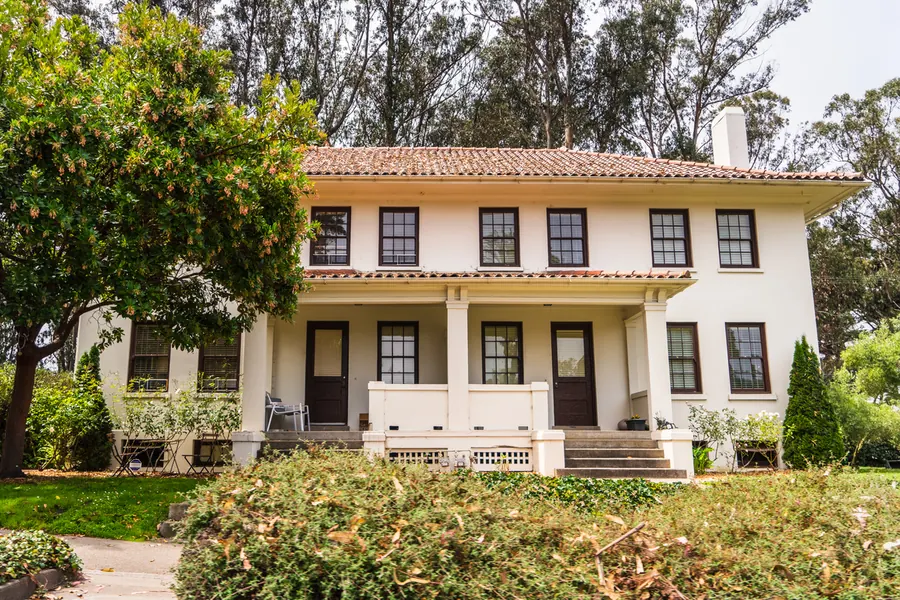

New Jersey duplex regulations and licensing
Most of what a New Jersey rental owner has to get right is the same at two units as it is at one or at four. The exception is unusually sharp here, and it is the reason this page is longer than the building is big: two separate New Jersey statutes each draw a boundary at two units, and a duplex sits exactly on both of them at once. They come from different titles of the statutes, they test different things, and they are read one at a time.
Two statutes, two lines at two units — and they are not one rule
The first is the Rent Security Deposit Act, which at N.J.S.A. § 46:8-26 does not apply to owner-occupied premises of not more than two rental units — unless the tenant gives thirty days’ written notice requiring it to apply. That test is about occupancy and about how many units are let, and the tenant holds the switch.
The second sits in the Law Against Discrimination, which draws its own line at two units with its own carve-out attached. It is a different statute answering a different question, and it is set out with its citation further down this page, in the section on occupancy, because that is where it belongs. What matters here is the negative: standing outside one of these lines tells you nothing whatever about the other. They are not two consequences of a single rule and this page never treats them as one.
The deposit act, and the building it may not reach at all
New Jersey ties the deposit to a named in-state institution and to a written notice every time anything moves.
Under N.J.S.A. §§ 46:8-19(a)–(c), 46:8-21.1, 46:8-26 New Jersey builds a complete apparatus around a residential security deposit: a ceiling on the amount, a named account at a named institution, a written notice every time the money moves, a thirty-day return, and a doubling penalty behind all of it. Section 46:8-26 then lifts the whole apparatus off one kind of building — owner-occupied premises of not more than two rental units — until a tenant of one of those units serves thirty days’ written notice requiring it to apply. Live in one half of your duplex and let the other, and that is the building the section describes.
What New Jersey actually requires of you
- Check first whether the Act reaches you at all: an owner-occupied building with not more than two rental units sits outside it unless the tenant invokes it by giving you thirty days’ written notice. N.J.S.A. § 46:8-26
- Cap the deposit at one and a half times one month’s rent, and keep any annual top-up to ten percent of what is already held. N.J.S.A. § 46:8-21.2
- Open an in-state insured interest-bearing account rather than a money-market fund where you take deposits on fewer than ten rental units — the money-market route is written for the larger owner. N.J.S.A. § 46:8-19(a), (b)
- Notify the tenant in writing of the institution, the type of account, its current rate and the amount — within thirty days of taking the deposit, within thirty days of moving it, at every annual interest payment, and within thirty days of the building changing hands. N.J.S.A. § 46:8-19
- Return the deposit plus the tenant’s share of the interest, less itemized charges, by personal delivery or registered or certified mail within thirty days of the lease ending. N.J.S.A. § 46:8-21.1
- Budget the penalty as doubling: a court finding for the tenant awards double the sum due, full costs, and reasonable attorney’s fees at its discretion. N.J.S.A. § 46:8-21.1
That list is worth reading twice — once in each of the two positions a duplex owner can occupy. Let both halves and every line of it is yours from the first dollar you take. Live in one half and none of it is yours by default, and all of it becomes yours thirty days after a written notice arrives. Nothing in between, and nothing you decide.
One thing worth saying plainly: none of the machinery in that list is a duplex rule. The cap, the trust duty, the account, the notices and the thirty-day return are what New Jersey asks of any landlord holding a residential deposit, whatever the size of the building. The genuinely two-unit fact is the threshold question above it — whether the Act reaches you at all.
If the Act does reach you, small is the narrower position
There is an inversion here worth knowing before you open an account. Section 46:8-19 splits its requirement by size, and the flexible half goes to the larger owner: the money-market route in subsection (a) is written for an owner taking deposits on ten or more rental units. Take deposits on fewer than ten and you are in subsection (b) instead, which asks for an insured interest-bearing account at an institution located in New Jersey. A duplex owner is comfortably inside the smaller group, so the in-state account is the requirement rather than the option.
The amount is capped at one and a half times one month’s rent, and where you top a deposit up annually that addition is capped at ten percent of what you already hold, under section 46:8-21.2. The money is held in trust and never mingled with your own. The written notice naming the institution, the type of account, its current rate and the amount is owed within thirty days of taking the deposit, within thirty days of moving it, at every annual interest payment, and within thirty days of the building changing hands.
The return is where the money is. Section 46:8-21.1 asks for it within thirty days of the lease ending, by personal delivery or by registered or certified mail, with the interest and an itemization of anything you kept. Where a court finds for the tenant it awards double the sum due, together with full costs, and reasonable attorney’s fees at its discretion. On a two-unit building that is a dispute with the person on the other side of your wall, which is a reason to be exact rather than a reason to be informal.
What that means for you: Open the account in New Jersey — the money-market route is reserved for ten-unit-plus owners, so a small owner must use an in-state interest-bearing account — then serve written notice naming the institution and the amount every time the money is taken, moved, or the building changes hands.
What this page does not tell you
Whether your building has to be registered, and with whom, is not answered here. We have not verified that question for New Jersey to the standard the rest of this page is written to, and a confident wrong answer about a filing is worse than no answer. Ask us and we will find it out with you in writing before you rely on it. Carriers and policy forms, separately, are regulated by the New Jersey Department of Banking and Insurance, and fair-housing enforcement sits with the Division on Civil Rights.
Common New Jersey duplex risks
A standard property form answers for fire, wind, hail, weight of ice and snow, and freeze-related water damage, with tropical and named-storm wind along the shore and nor’easter wind statewide driving the placement; coastal counties commonly carry a separate named-storm deductible taken off the dwelling limit rather than as a flat amount. Flood and storm surge sit outside that form entirely and are their own placement through the National Flood Insurance Program or a private flood market — the Department of Banking and Insurance states plainly that homeowners policies exclude flood — and earthquake is a separate purchase. Owners shut out of the voluntary market apply to the New Jersey Insurance Underwriting Association, the state FAIR Plan, which writes basic property coverage without theft or personal liability in its base form.
Take the coastal half of that first. A separate named-storm deductible taken off the dwelling limit is a percentage of the whole structure, and a duplex is one structure. So the retention you agree to at the shore stands in front of both rents simultaneously — there is no second building absorbing the loss while this one is repaired. Owners who have only ever carried a flat deductible are usually surprised by the size of the number, and the place to be surprised is at the quote.
The inland half is the winter. Weight of ice and snow on one roof over two tenancies, and freeze damage in whichever half happens to be empty between leases, are the two that produce claims on New Jersey two-unit buildings when the shore is quiet. On a duplex an empty side is half the building, which makes the vacancy wording in the policy you hold worth reading in advance rather than at the loss — and worth telling us about while the gap is still hypothetical.
Where the open market declines it, New Jersey’s insurer of last resort is the New Jersey Insurance Underwriting Association, the FAIR Plan. Basic property coverage for homes, rental units and most commercial buildings; the base policy carries neither theft nor personal liability, and theft has been available only as an optional attachment since 2009. New Jersey Department of Banking and Insurance — FAIR Plan
We do not publish an eligibility ceiling for that plan, because we have not verified one and a guessed number would be worse than the gap. What is worth planning around is the shape of the base policy rather than its limits: with neither theft nor personal liability included, a two-unit owner who lands there is looking at a placement that has to be completed with other pieces rather than one that finishes the job.
Everything in this section reaches a duplex the way it reaches any other New Jersey rental of similar age and construction. Wind does not know the unit count. What the second unit changes is the arithmetic sitting behind it: one structure, one deductible, two leases, and a single repair schedule governing both.
In New Jersey the perils a standard property form answers are Named-storm wind, Nor’easter wind, Weight of ice and snow, and Freeze damage. Flood and storm surge and Earthquake are written separately and are not picked up by that form, and the coverage that responds is property coverage, loss of rents, general liability.
Common New Jersey duplex claims we see
Winter water is the one we see most on New Jersey two-unit buildings, and it usually starts in the half nobody is living in. A tenancy ends in November, the heat in that side comes down or goes off, a supply line freezes and lets go, and the damage travels into the occupied half through the floor or the shared wall. The occupied tenant is displaced by a failure in a unit they never entered, and one lease is producing income while the other has not yet started.
Stacked buildings produce their own version. Where one unit sits directly over the other rather than beside it, an escape of water upstairs is a ceiling loss downstairs, and the repair sequence runs top to bottom — which means the lower tenancy is out for the length of the upper repair plus its own. On a two-unit building that is the whole rent roll offline in series rather than in parallel. What the structure needs is property coverage; what the stopped rent needs is loss of rents, scoped against two leases rather than one.
Wind claims split by geography rather than by unit count. Along the shore it is a named-storm event and the deductible does the deciding. Inland it is a nor’easter taking part of a roof, and the roof is over both households, so the building has one claim and two displaced tenancies. Ice damming after a heavy snow behaves the same way for the same reason.
Liability claims arrive from the ground both households cross — the walk, the steps, the shared drive, the path to the bins — and in a New Jersey winter that ground is icy for months. General liability answers a claim of injury on the premises, and on a two-unit building the awkward part is that the claimant is frequently your own tenant or their visitor, in a building where you may also be the person who shovels.
Why New Jersey duplex owners choose Rental Guard
New Jersey is the state that draws two different lines at two units, and they do not describe the same building — an owner-occupied triplex is inside the fair-housing act and outside the default deposit statute at the same moment. A two-unit building is where both lines land at once, and both answers change the day you move in or out. We write one-to-four-unit residential rental buildings and nothing above that, so a New Jersey two-family is the middle of our book, not its small end. We will tell you which of the two statutes you stand outside of today, and what would put you back inside. Every quote is read by a licensed agent named on this site.
Owner-occupied, or both units let
In most states this question changes how a duplex is underwritten. In New Jersey it does that and moves you across two statutory lines at the same time, by two unrelated mechanisms — which is why it gets its own section here rather than a sentence.
Start with the deposit side, because it is already stated above and it is the blunter of the two. Live in one unit and let the other and section 46:8-26 puts the entire Rent Security Deposit Act outside your building until a tenant serves thirty days’ written notice. Let both units and the building is not owner-occupied, the section does not exempt it, and the Act applies with nothing left to invoke.
New Jersey draws the Law Against Discrimination line at two units, not the federal four — an owner-occupied two-family dwelling is outside the act and a triplex is not, except as to publicly assisted housing.
Read the opening words of that as carefully as the number. The carve-out is written except as to publicly assisted housing, so where the housing is publicly assisted the two-unit exemption is not available at the outset. We are not going to define publicly assisted housing for you on an insurance page — that is a question for the statute and for counsel, and a paraphrase of it here would be the kind of confident summary that gets an owner into trouble.
Now put the two side by side, because the difference is in how each one ends. The deposit exemption is switched off by your tenant, in writing, thirty days out, on a building that has not changed at all. The fair-housing carve-out is switched off by what the housing is — publicly assisted housing sits outside it from the start, and no notice from anybody changes that either way. Two statutes, two tests, two different people holding the switch. Qualifying under one is not evidence about the other, and the only safe way to read them is separately.
The operative text of the second is N.J.S.A. § 10:5-5(n), and it is worth reading before you advertise the other half or turn anybody down for it.
What that means for you: Count the units before assuming the act reaches you, and check whether the housing is publicly assisted before relying on the exemption at all.
The insurance side of the same question is simpler and still worth getting right. With one unit occupied by you, part of the building is your home and part of it is a rental, the income at risk is one rent rather than two, and the questions that decide the placement are practical ones — separate meters, separate entrances, whose name the utilities are in, who holds keys. Let both halves and the whole rent roll sits behind a single structure, which is where loss of rents earns its place.
Owners cross this line more often than they expect — they occupy for a few years and then move out, or move back in. In New Jersey that is not only a change to what the policy is covering; it is a change to which statutes reach you. Tell us when it happens rather than at the renewal after it.
Major New Jersey duplex markets
- Newark. The two-family house is the ordinary rental building here rather than the unusual one, and it is commonly stacked — one unit over the other rather than beside it. The first thing we ask is where the bathrooms and the risers sit, because on a stacked building an upstairs escape of water lands in the downstairs tenancy and both leases end up inside one claim.
- Jersey City. Frame two-family houses on narrow lots sit very close to the buildings on either side, so a meaningful part of the underwriting question is about the structures you do not own. Separation distance and the neighboring construction decide more here than the size of your own building does.
- Paterson. Older wood-frame two-unit stock is where original wiring and an original heating plant still turn up, and where both halves are often fed from one chase. An electrical or heating finding in shared space is the condition that decides whether a two-unit building places easily or with conditions attached.
- Elizabeth. The question we ask first is how many units are actually in use. Where a finished basement or attic has quietly become living space, the unit count on the policy and the unit count in the building have to be the same number — a mismatch there is discovered at the claim rather than at the quote.
- Hoboken. Rowhouse and brownstone two-unit buildings share party walls left and right and one roof over both tenancies, so a roof or party-wall loss is a whole-building loss with no unaffected half. Owner-occupancy is common here, and that single fact moves the building across both of the statutory lines set out above.
- Camden. On older two-family stock we ask early whether one heating plant serves both halves, because a two-unit building can stand half empty between tenancies and a winter gap in the empty side is a freeze exposure to the whole structure. The vacancy wording in the policy you hold is what settles that, and it is worth reading before the gap opens.
- Atlantic City. Barrier-island placement is where the separate named-storm deductible shows up, taken off the dwelling limit rather than set as a flat sum. On a two-unit building that is one retention standing in front of both rents at once, which is a different arithmetic from carrying it across a schedule of buildings.
- Toms River. Bayfront and near-bay two-unit buildings carry a wind exposure and a surge exposure that are placed separately, and after a coastal event the repair queue is long. That length is the part owners underestimate: the loss-of-rents period has to run on both leases at once, not on one.
How other states answer the same questions
A two-unit line rather than the federal four is not unique to New Jersey, but no two states draw it the same way. Three that also stop at two units, from the state coverage index:
- Duplex insurance in Michigan — the same two-family line, drawn twice: the Elliott-Larsen Civil Rights Act lifts its housing prohibitions only for a building holding accommodations for two.
- Duplex insurance in Massachusetts — the exemption written twice in two different subsections, both stopping at two units, while the number that actually decides an owner’s exposure sits in the definitions rather than in the operative section.
- Duplex insurance in Rhode Island — an owner-occupied line drawn THREE times at three different unit counts, each lifting a different protected class rather than the chapter as a whole.
Related reading
New Jersey duplex insurance FAQs
I live in one half of my New Jersey duplex. Does the security deposit law apply to me?
By default, no. Section 46:8-26 says the Rent Security Deposit Act does not apply to owner-occupied premises of not more than two rental units — and that is the whole Act, not part of it. The cap, the trust duty, the account rules, the written notices, the thirty-day return and the doubling penalty all sit outside your building while you live in one of the two units.
My tenant sent me a letter asking for the deposit law to apply. What happens now?
That is the opt-in the same section provides for. The exemption for an owner-occupied two-unit building runs unless the tenant gives thirty days’ written notice requiring the Act to apply. Once that notice has run, you are inside the whole statute: the one-and-a-half-month cap, the in-state interest-bearing account, the written notices, the thirty-day return, and the double-damages exposure if the return is wrong.
Both of my units are let. Does anything change?
Two things, and they change for two different reasons. The building is no longer owner-occupied, so section 46:8-26 does not exempt it and the Rent Security Deposit Act applies with nothing left for a tenant to invoke. Separately, the Law Against Discrimination carve-out at section 10:5-5(n) turns on the owner occupying the other unit, so letting both halves ends that too.
Are the fair-housing two-unit line and the deposit two-unit line the same rule?
No, and treating them as one is the mistake this page exists to prevent. They are separate statutes with separate tests and separate ways of switching off. The deposit exemption at 46:8-26 is ended by a tenant’s written notice. The Law Against Discrimination carve-out at 10:5-5(n) opens with an exception as to publicly assisted housing, which no tenant controls.
Where does New Jersey say a duplex deposit has to be held?
If the Act reaches you, section 46:8-19 splits the answer by size, and small owners get the narrower option. The money-market route in subsection (a) is written for an owner taking deposits on ten or more rental units. Below that, subsection (b) applies: an insured interest-bearing account at an institution in New Jersey. A duplex owner is plainly in the smaller group.
What happens if I get the return wrong?
Section 46:8-21.1 sets the shape of it: within thirty days of the lease ending, by personal delivery or registered or certified mail, with the interest and an itemization of anything you kept. Where a court finds for the tenant it awards double the sum due together with full costs, and reasonable attorney’s fees at its discretion. On a two-unit building that tenant is the person on the other side of your wall.
My duplex is at the shore and I was quoted a separate named-storm deductible. Why?
Coastal counties commonly carry one, and it is taken off the dwelling limit rather than written as a flat amount. Flood and storm surge are not on the property form at all and are a separate placement. On a two-unit building both of those decisions are made once, for one structure, with both rents standing behind whatever you choose.
Get a New Jersey duplex insurance quote
Send us the building and the policy you have now. and we will tell you which of the two statutes your building is standing outside of today.
Get a Free Quote