
States we serve · Michigan
Michigan duplex insurance
Two tenancies, one roof, and a deposit statute that puts the same custody duties on a single small building as it puts on a schedule of them. Occupying one half of it changes which of those duties reach you — and it changes the insurance too.
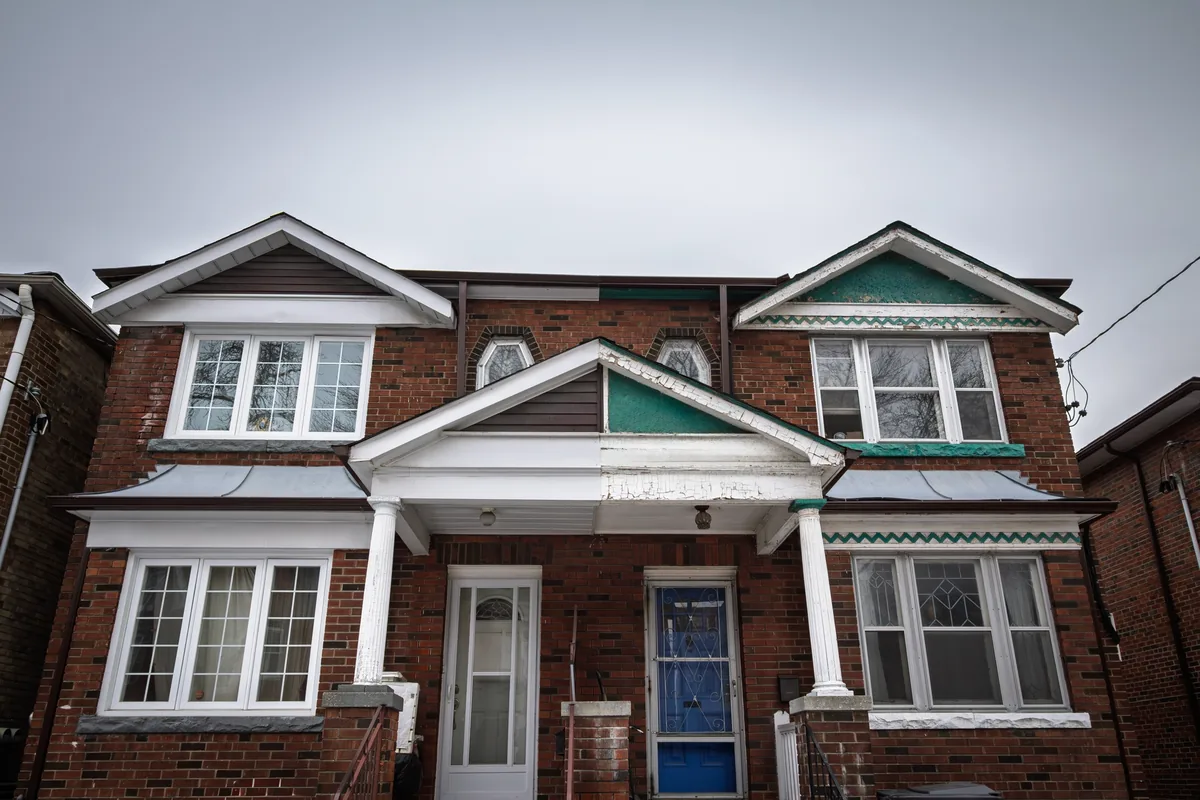

Michigan duplex regulations and licensing
Michigan’s landlord-tenant act does most of its work on a single subject: the money a tenant hands over before moving in. That is worth saying plainly to someone who owns a single two-unit building, because it is the part of this business you can get badly wrong without a claim ever being filed, without a tenant ever complaining, and without anyone telling you until the sum has doubled.
Michigan does not run one deposit deadline; it runs a chain of them, each started by a different event, and the last one is a court filing rather than a letter.
The operative text runs through Mich. Comp. Laws §§ 554.602–554.613 (Landlord and Tenant Relationships Act, 1972 PA 348). It is not one deadline with one penalty attached. Different events start different clocks — taking possession, occupancy ending, a forwarding address arriving — and two of the most consequential ones run simultaneously from the same day.
Where the money lives, and why that is a real decision at two units
Michigan gives a deposit two lawful homes. It sits in a regulated financial institution, or you file a cash or surety bond with the secretary of state, acceptable to the attorney general, securing the deposits you hold on the scale the clauses below set out. The second route exists for owners holding a great many deposits and is sized accordingly. Someone with one duplex is holding one deposit, or two, and is realistically taking the first route — at which point the discipline is unglamorous and entirely practical. The account is separate. It is not the account the mortgage comes out of, and the deposit is not the money that pays for the furnace it will eventually be argued over.
Michigan’s deposit clauses, one at a time
- Put two blank copies of a move-in inventory checklist in the tenant’s hands on a form identical to the one you will use at move-out, with the seven-day boldface instruction printed at the top of the first page, and itemize everything in the unit you own down to the carpeting, draperies, shelves and paint. Mich. Comp. Laws § 554.608(2), (3) and (4)
- Disclose the custodian in writing within fourteen days of the tenant taking possession — your own name and address for communications, the name and address of the financial institution or surety holding the money, and the tenant’s four-day forwarding-address duty set in twelve-point boldface at least four points larger than the body of the notice. Mich. Comp. Laws § 554.603
- Decide before you spend a dollar of it: the deposit stays in a regulated financial institution unless you file a cash or surety bond with the secretary of state, acceptable to the attorney general, securing the entire deposits up to fifty thousand dollars and a quarter of any amount above that. Mich. Comp. Laws § 554.604(1)
- Send the itemized damages list and the check or money order for the difference in one envelope within thirty days of occupancy ending, leaving out anything already claimed on the termination checklist of the tenant before this one — missing that thirty days counts as your agreement that no damages are due and obliges you to remit the whole deposit at once. Mich. Comp. Laws §§ 554.609 and 554.610
- Start the court action within forty-five days of occupancy ending if you mean to keep a disputed amount, because retaining it without a money judgment is allowed only where the tenant gave no forwarding address, never answered the damages notice, agreed in writing, or the claim is purely unpaid rent — and falling short of that section waives every claimed damage and makes you liable for double the amount you kept. Mich. Comp. Laws § 554.613(1)(a)–(d) and (2)
- Write the domestic-violence release language into the lease itself, or post it where a reasonable person in a management office would see it and hand it to the tenant at signing — the wording has to be identical to the statute, and a one-to-four unit owner with no office is left with delivery at signing. Mich. Comp. Laws § 554.601b(1)
Two of those read differently when the tenant is the person on the other side of your own wall. The inventory checklist is the first: two blank copies, a form identical to the one you will use at the end, and an itemization reaching the carpet, the shelves and the paint. It is precisely the document an owner who knows the tenant socially decides is unnecessary, and precisely the document a disputed deduction turns on. The second is the domestic-violence release language, which the statute expects either in the lease or posted where a reasonable person in a management office would see it. A two-unit owner has no such office. That leaves the lease and the moment of signing, and nothing else.
Forty-five days, and the clause that doubles
Retaining a disputed amount without going to court is permitted in four situations and no others: the tenant left no forwarding address, never responded to the damages notice, agreed in writing, or the claim is nothing but unpaid rent. Outside those, keeping the money means starting an action inside forty-five days of occupancy ending. Falling short does not simply return you to where you started — it waives every damage you claimed and makes you liable for twice the amount you held on to.
That clause lands differently depending on how many tenancies you run. An owner with a schedule of buildings meets it as a standing process, priced into overhead and handled by whoever handles it. An owner of one duplex meets it once, over one tenant, for a sum small enough that filing suit feels wildly disproportionate to the amount — which is the exact circumstance the doubling clause was written to address.
What that means for you: Hold the money as the tenant’s property from the day it arrives — put it in a regulated financial institution or file a bond with the secretary of state, bracket the tenancy with matching move-in and move-out checklists, and expect to file suit within forty-five days if you mean to keep any disputed part of it.
The two-family line, and what occupancy does to it
Federal fair-housing law puts its owner-occupied exception at four units. Michigan puts its own at two, and the operative text sits at Mich. Comp. Laws § 37.2503(1)(a); § 37.2502(3)–(4); § 37.1503. Two families is the ceiling of that exception, so a building with two units in it sits exactly on the line rather than somewhere inside it — and occupancy is the switch that decides whether you are on it at all. The exception reaches a building where you, or a spouse, parent, child or sibling, live in one of the two units. Let both halves and there is nothing left to be inside.
Complaints are investigated by the Michigan Department of Civil Rights. Whether a defense is in force before any finding is ever made is a separate question with its own answer, set out on the tenant discrimination page. The insurance side of the whole subject sits with a different agency again: the Michigan Department of Insurance and Financial Services regulates the forms and the companies writing them.
Common Michigan duplex risks
A standard property form answers for the severe convective season — hail, straight-line wind and tornado — and for a winter load the state’s own hazard analysis splits between two halves of the state: the deepest snowfall in the Upper Peninsula and along the Lake Michigan shoreline where lake-effect squalls run, and the greater ice-storm risk in the south, where temperatures cycle across freezing on far more days and where the largest cities sit. Flood is its own placement through the National Flood Insurance Program or a private flood market, and back-up of sewers and drains is an endorsement rather than base cover — the regulator’s consumer sheet on the residual writer warns that even the optional water-damage buy-back may still leave it out. Ground subsidence sits outside the form as well, the hazard analysis says so plainly, and the old workings behind it run through the copper and iron ranges of the Upper Peninsula and the salt beds under Detroit. The Michigan Basic Property Insurance Association is the pool of last resort behind all of it.
Both halves of that geography reach a two-unit owner through a single structure. A duplex has one roof plane, one attic run and, more often than not, one heating plant for the whole building. Snow load does not stop at a party wall and an ice event does not choose a side. What it does to the fabric is property coverage; what it does to the income while a contractor works is loss of rents, and on this building both rents stop on the same morning.
Michigan Basic Property Insurance Association stands behind the market when nothing else will take the risk. Basic property insurance — the perils of a fire policy plus extended coverage and vandalism and malicious mischief — for any person with an insurable interest in real or tangible personal property at a fixed location. The pool issues only after the property has been inspected by the inspection bureau within the preceding six months and the applicant has made a good faith, diligent effort to place the risk with authorized insurers, and every policy runs a one-year term. The unit count is where owners guess wrong, and the distinction is worth reading twice: The four-unit line belongs to the pool’s home-insurance arm only: qualified property there is an owner-occupied multiple unit dwelling of not more than 4 residential units, and the applicant must be an owner-occupant or a tenant-occupant. Qualified property for basic property insurance is defined without any unit count at all. Mich. Comp. Laws § 500.2901(c), (f), (g); § 500.2920(1); § 500.2925
For one duplex that produces two answers to the same question the fair-housing exception turns on. Live in one half and the home-insurance arm is available to you. Let both halves and it is not — what remains is basic property insurance, narrower cover with no unit count to fail. Either route wants an inspection carried out inside the preceding six months and evidence that the open market was genuinely tried first, so the refusals you were sent are worth keeping rather than deleting.
The exposure that is distinctively about owning two units in this climate is that the systems keeping the building above freezing are usually shared. One furnace or one boiler. One service entrance. Supply runs inside a party wall. A failure at any of them is not a failure in one unit — it is a cold building with two households in it, and in January the gap between cold and a burst supply line is measured in hours. What two units change about a rental policy in any state is set out on the duplex insurance page; what Michigan adds to it is the season.
Two of the separate placements deserve naming for a small building. Back-up of sewers and drains is an endorsement rather than base cover, and it is the peril that finds finished lower-level space, which a great many two-unit buildings in this state have. Ground subsidence is the other, and it reaches further here than owners expect — old workings run beneath the copper and iron ranges in the north of the state and the salt beds under Detroit.
Stated plainly: a standard Michigan property form answers Hail, Straight-line wind, Tornado, Snow load, and Freezing rain and ice. It does not answer flood, sewer or drain back-up, ground subsidence or earthquake — each of those is its own purchase — and the lines that pay when the form does respond are property coverage, loss of rents, general liability.
Common Michigan duplex claims we see
The claim we watch for through a Michigan winter is a freeze in the empty half. One side turns over in November, the heat comes down in a unit nobody is paying for, and a supply line in an exterior wall lets go during the first genuinely hard week. Water does not respect the party wall. Both units come out of service, and the half that was still producing rent stops producing it too.
Freezing rain works on a longer timescale and is much easier to miss. Ice at the eave pushes water back under a covering that was laid decades ago, and it announces itself as a stain on a ceiling in the occupied unit while the other side says nothing at all. One roof over two leases means one repair on one schedule, which is efficient right up to the point where it means neither household can stay while it happens.
Straight-line wind and hail arrive as a street rather than as a building. Every roof on the block is damaged in the same afternoon, and a two-unit owner is calling the same contractors and waiting behind the same houses as everyone else on it — owning one small building buys no priority. What the form pays for that damage is property coverage, and what it pays is decided by the valuation basis on the declarations rather than by the size of the building.
The liability exposure sits outside both units entirely. A single walk serves two front doors. One drive, one basement stair, one laundry. From November there is snow and ice on all of it, and clearing it is a job somebody has to actually have done. General liability is the line that funds a defense and pays a judgment when someone is hurt there, and the question we ask early is which of those surfaces you clear yourself and which the lease hands to a tenant. How those four coverages settle is common to any let building and is set out on the landlord insurance page.
Why Michigan duplex owners choose Rental Guard
Michigan is the state that draws its owner-occupied fair-housing exemption at two families rather than the federal four, so a resident owner of a triplex sits inside the state acts that the federal line would have let out. Read from the other end, the same sentence says that a resident owner of a two-family building is inside an exception the federal line would also have allowed — and that it is occupancy rather than the deed that keeps you there. We write buildings with one to four dwelling units and do not write above that line, so a two-unit submission arrives here as ordinary work rather than as the small end of anything. If the next building has three doors or four, the triplex and quadplex pages are the same agency and the same markets. Every quote is placed by a licensed agent we name on this site, under the agency NPN in the footer.
Owner-occupied, or both units let
Nothing else about a Michigan duplex forks as hard as this one question, and the sharper edge of the fork is not the insurance side of it.
Michigan draws the owner-occupied line at two families rather than the federal four, and it draws it twice. The Elliott-Larsen Civil Rights Act lifts its housing prohibitions only for a building holding accommodations for not more than two families living independently where the owner or an immediate family member — spouse, parent, child or sibling — lives in one of them. Disability is not among the characteristics Elliott-Larsen lists, and the separate Persons with Disabilities Civil Rights Act carries the same two-family exception in nearly identical words. The source-of-income prohibition effective April 2025 draws a third line again: it does not reach a landlord of fewer than five rental units in this state, counted across every entity under common control.
Read that carefully, because two different things are being counted. The owner-occupied exception counts the families a building holds, which is a fact about the structure in front of you. The source-of-income rule counts rental units you hold anywhere in the state, added across every entity under common control, which is a fact about you. One duplex is two units. Two duplexes are four, still under the line. A third duplex puts you at six and inside the rule, and no individual building will have changed at all.
What that means for you: Count twice before relying on either line — the families the building holds, for the owner-occupied exception, and every rental unit you hold statewide across related entities, for the source-of-income rule.
The same fork does separate work on the insurance. Living in one half changes which markets will look at the building, changes what the income side of the policy is scoped to cover — one rent exposed instead of two — and decides whether the pool’s home-insurance arm is open to you, since that arm asks for an owner-occupant or a tenant-occupant. Letting both halves makes it straightforwardly rental property and puts the entire rent roll behind a single loss.
None of that is a fixed position. A parent moves into the unit that was let. A mortgage settles and the owner moves out. A sibling takes the upstairs for two years and then leaves. Each of those flips the fair-housing answer and each changes what the policy is actually covering. Say so in the week it happens.
Major Michigan duplex markets
A two-unit building is a recognizable type in each of these places, and what changes between them is how the halves were divided and which household ended up in the second of them. Owners who also hold a single rental house in the same city will find that side of the book on the landlord insurance page.
- Detroit. The brick two-family flat — one unit over the other, one stair, one basement holding a single boiler and a single service entrance — is the city’s characteristic two-unit building, and a fault in any of those three shared things is a fault in both tenancies at once. It is also one of the places the state’s own hazard analysis puts old workings underneath — the salt beds — and ground subsidence is a separate purchase or no purchase at all.
- Grand Rapids. Two-unit conversions of large older houses sit close in to the center here, on the side of the state where lake-effect squalls put the deepest loads on a roof. A duplex carries that load on one roof plane over both leases, so the question at renewal is the age of the covering rather than the number of doors under it.
- Ann Arbor. Two-unit rentals here are let on an academic calendar, which means both halves can start and end in the same August week. A duplex whose tenancies are synchronized empties completely rather than partially, and it does it on a date you can see coming — a vacancy question to raise with us before the wording is tested rather than after.
- Dearborn. Two-unit houses commonly hold a multigenerational household in one half and a leased tenancy in the other. That arrangement is exactly what Michigan’s owner-occupied exception is drafted around — it reaches a building where the owner or a spouse, parent, child or sibling lives in one of the two units — and it is worth knowing which of those two facts your building actually meets.
- Warren. Postwar Macomb County stock includes side-by-side brick duplexes built as pairs, with separate front doors, a single roof plane and a shared drive. Straight-line wind and hail reach a whole street of them in one afternoon, which turns a two-unit repair into a scheduling problem as much as a coverage one.
- Kalamazoo. A great deal of the two-unit stock in southwest Michigan is a divided single house rather than a purpose-built pair, so one furnace, one panel and sometimes one meter still serve both halves. An older policy may also still describe the building as a single dwelling, which is a mismatch that surfaces at the claim rather than at renewal.
- Southfield. Inner-ring suburban two-unit buildings frequently have finished lower-level living space, which is where a back-up of sewers or drains does its damage. That peril is an endorsement rather than base cover, and the regulator’s own consumer material on the pool warns that even an optional water-damage buy-back can still leave it out.
If you also hold a duplex outside Michigan
- Duplex insurance in Ohio — interest running during the tenancy on the part of the deposit above a threshold, paid out annually rather than accounted for at the end, which is a duty Michigan does not put on the money at all.
- Duplex insurance in New Jersey — the state that inverts the usual small-owner advantage, reserving the more flexible money-market route for ten-unit-plus owners and pushing a two-unit owner into an account at an institution physically in the state.
- Duplex insurance in Connecticut — an escrow duty with an interest rate the Banking Commissioner re-indexes every year, and a deposit cap that halves once the tenant reaches sixty-two.
Related reading
Michigan duplex insurance FAQs
Can I hold my duplex tenant’s deposit in my own bank account?
Not in an ordinary personal account you also run the building through. Michigan gives you a regulated financial institution or a cash or surety bond filed with the secretary of state, and the bond secures every deposit you hold — machinery sized for a large owner. With one or two deposits the practical route is a separate account at a regulated institution, kept apart from the money the mortgage comes out of.
What actually happens if I miss the thirty days after move-out?
The statute reads the silence as your agreement that no damages are owed, and you have to remit the whole deposit at once. There is no partial credit for a late itemization. Send the itemized damages list and a check or money order for the balance together, in one envelope, within thirty days of occupancy ending.
I want to keep part of the deposit and the tenant disputes it. Now what?
You have forty-five days from the end of occupancy to start a court action, unless the tenant gave no forwarding address, never answered your damages notice, agreed in writing, or the claim is nothing but unpaid rent. Keep a disputed amount outside those situations without a money judgment and you waive every damage you claimed and owe double what you kept.
I live in one half of my duplex. Does Michigan fair-housing law still reach me?
The Elliott-Larsen exception lifts the housing prohibitions for a building holding not more than two families living independently where you or a spouse, parent, child or sibling occupies one of them. Two separate things narrow that: disability sits under its own act, which carries a near-identical two-family exception in its own words, and the source-of-income rule counts units, not buildings.
How does the source-of-income rule count my units?
It counts every rental unit you hold in Michigan, added up across every entity under common control — not the units in the building in front of you. One duplex is two. Two duplexes are four, still under the line. A third duplex puts you at six and inside the rule, without any single building having changed at all.
Everyone declined my duplex. Can the state pool write it?
Basic property insurance from the Michigan Basic Property Insurance Association is defined without any unit count, so a duplex is not too large for it. The pool’s home-insurance arm is the part with the four-unit line, and that arm also asks for an owner-occupant or a tenant-occupant. Either route needs an inspection inside the preceding six months and evidence you genuinely tried the open market.
I have no management office. Do I still owe the domestic-violence notice?
Yes, and the absence of an office decides how. The statutory wording has to appear in the lease itself or be posted where a reasonable person in a management office would see it. An owner of a two-unit building has nowhere to post it, so the practical route is putting the language into the lease and handing it over at signing.
Get a Michigan duplex insurance quote
Send us the building and the policy you have now. and we will tell you what living in one half of the building is doing to the answer.
Get a Free Quote