
States we serve · Pennsylvania
Pennsylvania duplex insurance
One roof, one foundation, two tenancies — and in Pennsylvania the two tenancies keep their own calendars, so the same building can hold one deposit still at the first-year ceiling and another already sitting in a regulated bank account.
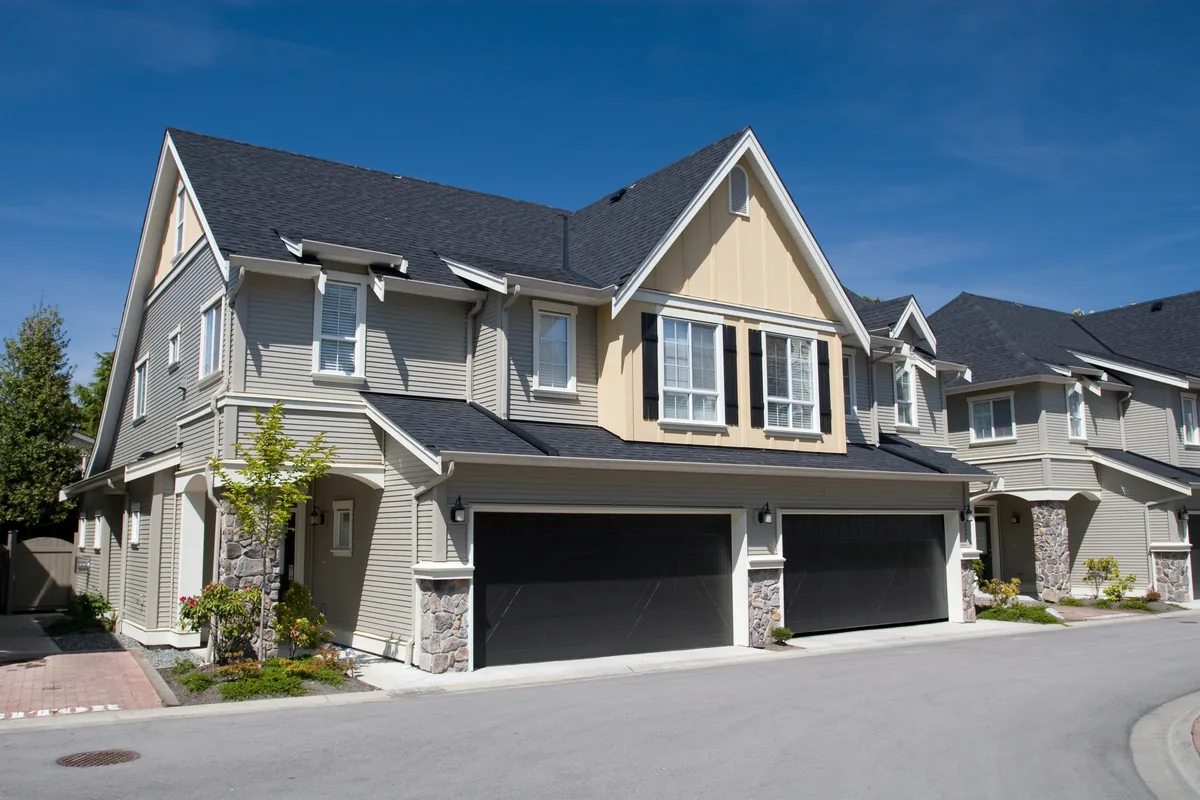

Pennsylvania duplex regulations and licensing
Most of what Pennsylvania asks of a two-unit owner during the tenancy itself sits in one statute, and all of it concerns money you are holding for somebody else: how much you may take, where it has to sit once you have held it a while, what you owe the tenant while it sits there, and what you have to put in writing at the end. Read the sections in order and one feature keeps recurring — every duty counts tenancies, not buildings. On a duplex that means the whole machine runs twice, on two calendars that started on different days.
Two deposits, two calendars, one ceiling that steps down
Pennsylvania’s Landlord and Tenant Act of 1951 steps the deposit ceiling down as the tenancy ages, and moves the money into a regulated escrow account once it has been held past its second anniversary.
The operative text is Landlord and Tenant Act of 1951 §§ 511.1–511.3, 512; 68 P.S. §§ 250.511a–250.511c, 250.512. Two months’ rent is a first-year figure and one month is what you may hold from the second year onward — and because the step attaches to the tenancy, a duplex whose upstairs tenant signed in the spring and whose downstairs tenant has been in place four years is one building carrying two deposits under two different ceilings on the same morning. Nothing about owning a single structure lets you run them as one account, and the statute voids any attempt to have a tenant contract out of the step.
The duties Pennsylvania attaches to money you are holding
- Stop requiring more than one month’s rent the moment the lease enters its second year or renews — two months’ rent is a first-year ceiling and nothing more, and any attempt to have the tenant waive that by contract is void. Landlord and Tenant Act § 511.1(a), (b), (f); 68 P.S. § 250.511a(a), (b), (f)
- Raise the rent on a tenant who has held possession five years or longer without raising the deposit to match — the statute cuts the link between the two, so an increase carries no concomitant deposit increase with it. Landlord and Tenant Act § 511.1(d); 68 P.S. § 250.511a(d)
- Bank anything over one hundred dollars in an escrow account at an institution regulated by the Federal Reserve Board, the Federal Home Loan Bank Board, the Comptroller of the Currency or the Pennsylvania Department of Banking once the money has passed its second anniversary with you — the statute names the regulators the bank must answer to rather than the bank, and it says in terms that none of this section applies before that anniversary. Landlord and Tenant Act § 511.2(a), (c); 68 P.S. § 250.511b(a), (c)
- Write to every tenant who put money in as soon as those funds go into the escrow account, naming the banking institution, giving its address and stating the amount held — the notice runs off the deposit into the account, and it is owed whether that account bears interest or not. Landlord and Tenant Act § 511.2(a); 68 P.S. § 250.511b(a)
- Take one percent a year of the escrowed money as your administrative expense and pay the rest of the interest to the tenant on each anniversary of the lease commencing — that one percent stands in lieu of every other administrative and custodial charge you might have wanted to bill. Landlord and Tenant Act § 511.2(b); 68 P.S. § 250.511b(b)
- Post a guarantee bond instead of escrowing at all if you would rather not hold tenant money: a bonding company authorized to do business in Pennsylvania guarantees the escrow funds back, less the cost of necessary repairs and with interest, when the lease ends. Landlord and Tenant Act § 511.3; 68 P.S. § 250.511c
Work down that list with two units in mind and the practical shape of it appears. The escrow duty opens at the second anniversary of the money, so a duplex can have one deposit inside the banking rules and the other outside them, because the clock runs on the money rather than on the building. The written notice naming the bank, its address and the amount held is owed per deposit, not per building. The one percent you may keep and the interest you owe on each anniversary are figured per tenancy. And the guarantee bond in § 511.3 is a route out of holding tenant money at all — a live choice for somebody with two deposits to think about, and worth pricing before the second tenancy starts rather than after.
The thirty-day list is the whole of your remedy
When a tenancy ends, a written list of the damages you are claiming has to reach the tenant within thirty days of the lease term ending or the keys coming back, whichever is first, and the balance of the escrow goes with it. Miss it and you do not merely lose the argument about the deposit — you lose the right to bring the damage claim at all, which means the repair bill stops being recoverable and becomes an owner expense. Section 512(c) adds a second exposure on top: double the amount by which the deposit exceeds the actual damages, with the burden of proving those damages sitting on you.
There is one relief, and it is narrower than owners hope. Section 512(e) lifts liability under the section where the tenant never put a new address in writing. That is a real provision and a thin thing to build a habit on, because relying on it means being able to show later what you were and were not handed at move-out.
This is the duty a two-unit owner is most likely to skip, and the reason is not carelessness. You have been sharing a driveway with this tenant for three years. You already know what the back door looks like. A formal written list of claimed damages to somebody whose parents you have met feels like a performance — and it is the only thing standing between you and losing the claim entirely.
What that means for you: Get the written list of claimed damages into the tenant’s hands within thirty days of the lease ending or the keys coming back, whichever happens first, and send the balance of the escrow with it — miss that and you give up both the right to keep a dollar of the deposit and the right to sue for the damage itself.
The same instinct runs through the front end of a tenancy. Owner-occupants screen the neighbor they are about to acquire, not an applicant, and the informality that makes sense socially is what leaves nothing on file when a rejected applicant asks why. Our tenant discrimination page covers the exposure that opens there. Forms, rates and the companies writing them answer to the Pennsylvania Insurance Department.
Common Pennsylvania duplex risks
A standard property form answers for the severe convective storm season — hail, straight-line wind and tornado — together with snow and ice load on older low-slope roofs and freeze damage when a vacant unit loses heat. Flooding along the Susquehanna and Delaware corridors, including the inland rainfall that arrives with remnant tropical systems, is not on that form and is placed through the National Flood Insurance Program or a private flood market; earthquake is its own purchase as well. Mine subsidence is a third separate placement, and the Commonwealth answers it itself rather than leaving it to the market: the Coal and Clay Mine Subsidence Insurance Fund writes voluntary coverage, and every structure located within the coal and clay regions of the Commonwealth is eligible for it, so a building standing over old underground workings is uncovered until an owner goes and buys the policy. Owners the normal market turns away can reach the Pennsylvania FAIR Plan, formally the Insurance Placement Facility of Pennsylvania, for basic property insurance.
One line in that paragraph changes shape entirely on a two-unit building: freeze damage when a vacant unit loses heat. A vacancy in a duplex is half the building, and the empty half is precisely the half with nobody in it to notice that the heat has gone off in a January cold snap. Pipework does not respect the line you drew between the units — a burst inside a common wall drains into whichever side is lower, so the occupied half is in the repair too, and the tenant who did nothing wrong is the one calling you. The building damage runs through property coverage; the stopped income runs through loss of rents, and here that is never a fraction — the smallest version is half of everything you collect.
Snow and ice load works the same way. Two units share one roof structure, so the winter that overloads it does not overload part of the building — and the low-slope porch and rear-addition roofs that came with a lot of this housing stock are where the weight sits longest. None of that is peculiar to this state; it is what a two-unit policy answers anywhere. What Pennsylvania adds is the length of the season it has to answer for.
Pennsylvania keeps a statutory backstop for buildings the open market turns away: the Pennsylvania FAIR Plan — the Insurance Placement Facility of Pennsylvania. Basic property insurance as the Fair Plan Act defines it: the perils of the standard fire policy plus the extended coverage endorsement, with vandalism and malicious mischief written alongside. Habitational risks take the Dwelling Property Basic Form DP-0001, with the Broad Form DP-0002 for qualifying risks. The act frames its territory as the “urban area”, and it defines that term municipality by municipality rather than by county line — a municipality carrying a blighted, deteriorated or deteriorating area that the United States Secretary of Housing and Urban Development has approved as eligible for an urban renewal project, or one the facility itself designates with the Insurance Commissioner’s approval. No risk is written at a surcharge or turned down for basic property insurance until a physical inspection has been made and the property judged on its own underwriting characteristics. Habitational business is written as one-to-four family dwellings on the Dwelling Property forms. Two units is squarely within that description, so being small is not what keeps you out. Pennsylvania Fair Plan Act §§ 103(2), 103(4), 202(1), 40 P.S. §§ 1600.103, 1600.202; Pennsylvania FAIR Plan, Coverages Provided
The three separate placements are where owning exactly one structure costs you flexibility. Each of flood, earthquake and subsidence is a yes-or-no answered once for the entire building, and a wrong answer has nothing beside it to absorb the consequence. Subsidence is the one that most often goes unanswered, because eligibility is all the Commonwealth extends and eligibility pays nobody — somebody has to go and buy the policy.
Against a standard property form in Pennsylvania, the perils that respond are hail, straight-line wind, tornado, snow and ice load, freeze. Flood, Earthquake and Mine subsidence sit outside it and are placed separately, and the lines that answer a covered loss are property coverage, loss of rents, general liability.
Common Pennsylvania duplex claims we see
Winter water leads. A pipe in a common wall or an unheated crawl space lets go, or an ice dam backs meltwater under a shingle course, and the loss travels along the building rather than stopping at a unit boundary that was drawn on paper long after the framing went up. Two tenancies then wait on a single repair schedule, and neither one restarts until the contractor finishes — which is the whole arithmetic of loss of rents on a two-unit file.
Fire concentrates the same way. A kitchen fire on one side makes the other side uninhabitable through smoke and water long before the structure is threatened, because two units under one roof share air, share a stairwell in the stacked buildings, and share the roof itself.
Liability comes off the ground the two tenancies share, and in this state it comes off ice. A front walk serving two doors, an exterior stair to the upper unit, a drive cleared once for two cars: a fall on any of them is an owner’s claim, and general liability is the line that answers it. Settle who shovels, and by when, in both leases before the first hard freeze. Owner-occupants routinely do the clearing themselves out of habit and have written the opposite into the lease, which is the version that gets read aloud later.
Why Pennsylvania duplex owners choose Rental Guard
Pennsylvania is the state where a landlord who misses the thirty-day damage list forfeits not only the right to withhold the deposit but the right to sue the tenant for the damage at all — and the person who absorbs that forfeiture is normally one individual with one building, two lease dates and nothing in reserve. Our book stops at four dwelling units, so a two-unit file is routine work here rather than an exception somebody squeezes in. Say the rest plainly too: nothing about the policy itself is exotic. It is a rental dwelling form on a building holding two units, from the same markets and on the same four coverages that answer for a single rental house. The differences are concentration and a statutory calendar that runs twice, and both are real without being mysterious. Quotes are handled by a named licensed agent, under the agency NPN printed at the bottom of this page.
Owner-occupied, or both units let
This decides more about a Pennsylvania duplex than anything about the building does, and it decides two separate things at once — how the risk goes to market, and whether one of the state’s civil rights statutes reaches the half you rent.
Start with the insurance side. Living upstairs makes the building two things at once — a residence and a rental — and underwriters do not treat those halves alike. Fewer markets will look at it, and the income figure we scope has one rent behind it rather than two. From there the questions turn practical fast: who holds keys to what, whether the entrances, the laundry and the heat are genuinely separated or merely shared politely, whether anyone ever split the meters. Let both halves instead and the building becomes a plain rental, one loss can stop everything it earns, and loss of rents carries the most weight on the policy it has anywhere on this brand.
Pennsylvania grants no exemption clause at all. The Human Relations Act defines the building out of the covered term instead: a “personal residence” is living quarters occupied or intended to be occupied by no more than two individuals, two groups or two families living independently of each other and used by the owner or lessee as a bona fide residence, and a personal residence offered for rent by its owner is not a “housing accommodation”. A building holding three or four independently living households is outside that definition and stays covered whether or not the owner lives in one of them — a narrower shelter than the federal Fair Housing Act’s, which reaches dwellings occupied by no more than four families living independently of each other. Separately, the rental of rooms in a landlord-occupied rooming house with a common entrance is carved out of the housing clause.
Notice what that definition is built out of. It is not a clause forgiving a small owner; it is a description of a building, and it holds only while you are actually using the place as a bona fide residence. The shelter is attached to your living there, not to the deed. An owner who moves out and lets both halves has changed what the building is under the definition, and the change happens on the day the moving van leaves rather than at the next renewal.
Several other things move on that same date: what the policy is actually insuring, what number the income side has to be built on, and whether the casual process you used to pick the neighbor now has to serve for two units. Call us on the way out, not at the renewal that follows. The text to read first is Pennsylvania Human Relations Act §§ 4(h), 4(i), 4(k), 5(h)(1), 5(h)(1.1), 5(h)(10); 43 P.S. §§ 954, 955(h), and read it before an applicant is in front of you. Enforcement belongs to the Pennsylvania Human Relations Commission. A complaint filed there is defended out of your file, and the coverage side of that sits on our tenant discrimination page.
What that means for you: Keep age out of the screening decision as squarely as you keep race out of it — the housing clause lists age as a protected characteristic and the Act defines age as any person forty years of age or older — and never start an eviction inside the lease term because a tenant is pregnant or has just had a child.
One more count worth doing before you buy anything else. The definition above turns on households living independently of each other, so adding a third door to the building is not the same building any more — a three-unit or a four-unit version of the same address is a different question with a different answer, and the answer is worth having before the framing goes in rather than after.
Major Pennsylvania duplex markets
- Philadelphia. Older rowhome stock converted to two units carries its original supply and waste runs inside a common wall, so the failure that soaks the upstairs kitchen comes through the downstairs ceiling on the same afternoon and there is no second address to move a tenant to.
- Pittsburgh. Hillside lots make a two-unit building a stacked one far more often than a side-by-side, which turns a drainage or footing problem into a whole-building problem — and where the coal region reaches, eligibility for the Commonwealth’s subsidence policy is all an owner gets until somebody actually buys one.
- Allentown. Lehigh Valley two-family stock was largely built to be heated as one house and split into two long afterwards, so a single boiler and a single service still feed both halves — one machine whose failure stops both rents rather than half of them.
- Erie. Lake-effect winter loads one roof that is carrying two households, and the low-slope porch and rear-addition roofs common in this stock are exactly where snow and ice sit longest before anybody notices what they weigh.
- Reading. Conversions here frequently kept one meter and one heating plant when the second kitchen went in, and an owner who has never established which utilities are genuinely separated learns the answer during the first vacancy rather than at the inspection.
- Scranton. The paired houses the anthracite towns were built out of were two dwellings from the day they were framed rather than singles chopped in half later, and an owner here carries the whole of the region’s ground exposure on that one building with nothing beside it to spread the answer across.
- Harrisburg. The Susquehanna corridor keeps flood outside the property form on a building that has no unaffected half left earning while the wet half dries, so the flood decision gets made once for the whole structure and covers everything or nothing.
Related reading
Pennsylvania duplex insurance FAQs
My two tenants signed a year apart. Can I hold two months from each?
Only from the one whose tenancy is still in its first year. Section 511.1 puts the two-month ceiling on the first year and one month from the second year onward, and it attaches to the tenancy rather than to the building. So a duplex can sit at two different ceilings on the same day, and the tenant who renews steps down whether or not you send a new lease. An attempt to have a tenant waive that by contract is void, so there is no paperwork route around it.
When does deposit money have to go into a bank account?
Once it has been with you past its second anniversary, and anything over one hundred dollars then belongs in an escrow account at an institution answering to the Federal Reserve Board, the Federal Home Loan Bank Board, the Comptroller of the Currency or the Pennsylvania Department of Banking. Section 511.2 says in terms that none of it applies before that anniversary. On a duplex that means one unit can be inside the escrow rules while the other is not, and it is the date the money arrived that decides, not the date you bought the building.
What actually happens if I miss the thirty-day list?
You lose the right to keep any part of the escrow and you lose the right to sue the tenant for the damage itself. Those are two separate losses and the second one is the one summaries drop: the repair bill does not become a claim you can still bring, it becomes yours. Section 512(c) adds a further exposure of double the amount by which the deposit exceeds actual damages, with the burden of proving those damages on you.
The tenant left no forwarding address. Am I still on the clock?
Section 512(e) relieves a landlord of liability under the section where the tenant never provided a new address in writing. That is a genuine relief and it is a thin thing to rely on, because it turns on being able to show what you were and were not given. Keep the written record of what the tenant handed you at move-out, and where you do have an address, work to the thirty days rather than to the exception.
I occupy the upper unit and let the lower one. Does the Human Relations Act reach that tenancy?
Possibly not, and Pennsylvania gets there by a route worth understanding. The Act writes no exemption clause. It defines a personal residence as living quarters for no more than two individuals, two groups or two families living independently and used by the owner or lessee as a bona fide residence, then drops a personal residence offered for rent by its owner out of housing accommodations. The definition turns on your actually living there. Move out and let both halves, and what sheltered the building moves out with you.
One side is empty over the winter. What should I be watching?
The heat in the empty half. Freeze damage in a vacant unit sits on the covered side of a standard property form, but water released inside a common wall drains toward whichever side is lower, so your paying tenant is usually in the loss as well. Wordings also disagree about when a half-empty building counts as vacant, and half of a duplex is fifty cents of every dollar it earns. Call us before the unit is empty, not after.
My duplex was turned down by the open market. What are my options?
The Pennsylvania FAIR Plan — formally the Insurance Placement Facility of Pennsylvania — writes basic property insurance, and its habitational business goes on the Dwelling Property forms for one-to-four family dwellings, which describes your building exactly. Nothing there is surcharged or refused until a physical inspection has happened and the building has been judged on what the inspector found, so it is worth having the roof, the panel and the heating plant ready to be looked at. Forward the declination letter to us while it is still current.
Get a Pennsylvania duplex insurance quote
Send us the building and the policy you have now. and we will check which of your two deposits is already under the banking rules.
Get a Free Quote