
States we serve · Wisconsin
Wisconsin duplex insurance
Two dwelling units, one structure, and a state that asks for its paperwork at the start of a tenancy rather than the end of it. If you occupy one half, the largest part of what follows is work you will do on a building you already stand in.
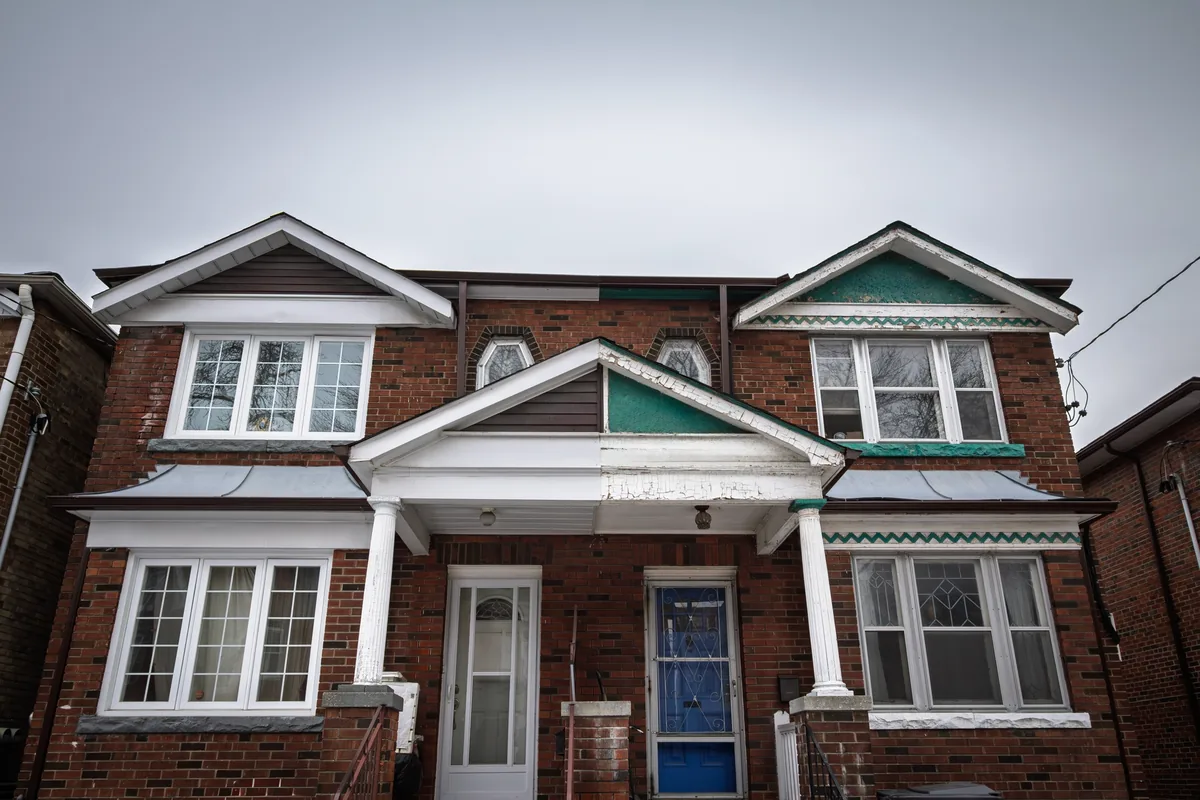

Wisconsin duplex regulations and licensing
Wisconsin issues no landlord license and keeps no statewide roll of rental buildings, so there is no annual filing waiting for you here. The obligations are dated instead of registered, and almost all of the dates fall at the beginning of a tenancy. For an owner of two units that has a practical consequence worth stating up front: you run the whole sequence twice on one address, and on whichever schedule each half happens to turn over.
Wisconsin asks for the paperwork first, not last
Wisconsin splits a rental owner’s duties between Wis. Stat. ch. 704 and ch. ATCP 134 of the administrative code, a Residential Rental Practices rule promulgated by the Department of Agriculture, Trade and Consumer Protection — and the duties that bite before a tenancy starts live in the code rather than in the statute.
Under Wis. Admin. Code ATCP §§ 134.04(2), 134.06(1)–(4); Wis. Stat. §§ 704.28, 704.44 the first document in the sequence is a written check-in notice, and it is owed before you accept the deposit rather than at signing. It has to tell the tenant they may inspect the unit and report preexisting damage or defects, and it has to carry a deadline you may not set earlier than seven days into the tenancy. A second duty sits even further forward: before the agreement is entered into, and before you take earnest money, you disclose any uncorrected code violation you actually know of that threatens health or safety, together with the habitability conditions a reasonable inspection would have shown.
Read that standard as a resident owner and it changes shape. What you actually know of is a low bar for someone who has been living behind the same furnace and walking the same back stair for years. You are not guessing at a building from a condition report — you are writing down the sticking basement door and the slow drain you have been working around, before anyone signs. That is the most useful half-hour a two-unit owner spends on this statute, and it is spent before there is a tenancy to protect.
What Wisconsin actually requires of you
- Hand the tenant a written check-in notice before you accept the deposit at all: it has to tell them they may inspect the unit and report preexisting damage or defects, and it has to name a deadline you are not allowed to set earlier than seven days into the tenancy. Wis. Admin. Code ATCP § 134.06(1)(a)(intro.), (1)(a)1.
- Produce the previous tenant’s damage list when this tenant asks for it, repaired or not, within thirty days of the request or within seven days after you tell the previous tenant what you withheld, whichever of the two falls later. Wis. Admin. Code ATCP § 134.06(1)(a)2., (1)(b)
- Disclose, before the agreement is entered into and before you take earnest money or a deposit, any uncorrected code violation you actually know of that reaches the unit or a common area and threatens health or safety, along with the habitability conditions a reasonable inspection would have shown you. Wis. Admin. Code ATCP § 134.04(2)(a), (2)(b)
- Re-date the twenty-one-day return the moment you re-rent early — where the tenant leaves or is evicted before the agreement would have ended and a new tenancy begins first, the clock runs from that new tenancy’s start rather than from the date on the old lease. Wis. Admin. Code ATCP § 134.06(2)(b)
- Strip the provisions Wisconsin voids out of the lease before anyone signs, and carry the domestic-abuse notice if the lease lets you end a tenancy over a crime tied to the building — the sanction reaches the whole agreement, not merely the offending clause. Wis. Stat. § 704.44 (intro.), (10)
- Segregate any deduction reason outside the listed ones into a separate written document headed NONSTANDARD RENTAL PROVISIONS, and identify each of those provisions with the tenant before they enter the agreement. Wis. Admin. Code ATCP § 134.06(3)(b)
Two of those repay a second reading on a small building. The re-dating rule turns the twenty-one-day return into a moving deadline: fill the vacancy quickly, as owners of one or two units usually can, and the clock you owe the departing tenant starts from the new tenancy instead of from the old lease. And the nonstandard provisions document is a separate sheet with its own heading, identified with the tenant in person before they enter the agreement — which, on a building where you will be sharing a wall with them, is a conversation rather than an enclosure.
What that means for you: Do the paperwork before the tenancy rather than after it: the check-in notice, the code and habitability disclosure and the prior-damage list are all owed at or before the moment you take the deposit, not at move-out.
Screening for the other half runs under the Wisconsin Department of Workforce Development, Equal Rights Division, which investigates housing complaints in this state; what a complaint costs to answer, and which part of the policy picks it up, is set out on the tenant discrimination page. Forms, rates and the carriers writing them are supervised by the Wisconsin Office of the Commissioner of Insurance.
Common Wisconsin duplex risks
A standard property form answers for the severe convective storm season — hail, straight-line wind and tornado — and for the winter load a Wisconsin roof carries: snow and ice weight on older low-slope decks, ice damming at the eaves, and freeze and burst damage to plumbing, which is the exposure that grows while a unit sits vacant between tenancies. Buildings near the Lake Michigan shore take wind off open water on top of that. Flood and earthquake are their own placements and are not on the property form, and backup of sewer or drain is an endorsement rather than part of the base form. Where the open market declines a building, the Wisconsin Insurance Plan is the mandatory risk-sharing facility for basic property insurance.
The freeze clause in that paragraph is the one to sit with on a two-unit building, because the vacancy it describes is half your income and half your structure at once. A duplex is rarely wholly empty and rarely wholly full; the ordinary state is one side let and one side between tenants. Heat on your side of a party wall does very little for the supply lines running through the outside walls of the empty side, and the loss it produces is a whole-building water loss rather than a one-unit one. What that does to the structure is property coverage; what it does to the rent that stopped is loss of rents.
Snow and ice load works the same way on the way in. One deck carries the winter for both tenancies, and where the units are stacked, the eave and the attic above the upper unit are the only ones there are. That geometry is also why the distinctively two-unit condition is shared mechanicals: one furnace, one water heater, one service panel, one stack. Each is a single point whose failure is a two-unit failure, and each is a question we ask before quoting rather than discover at a claim. The drivers that do not change from one state to the next are set out on the duplex insurance pillar.
Where the open market declines the building, Wisconsin’s facility is the Wisconsin Insurance Plan. Basic property insurance on the Dwelling Property program, which is property coverage only — written on the basic form with a modified loss settlement endorsement, with fair rental value riding as an extension of the dwelling limit rather than as an additional amount of insurance, and with no liability coverage in the program at all. Eligibility runs to 1 to 4 family tenant or owner-occupied residences and dwellings; commercially rated buildings go to the separate Commercial Property program — a two-unit residence sits inside the first of those. Wis. Admin. Code § Ins 4.10(1); Wisconsin Insurance Plan Producer Guidelines, revised 01/2025, Dwelling Property Program
Both of those limits bite harder on two units than on twenty. Fair rental value riding as an extension of the dwelling limit means the money that replaces two stopped rents is drawn from the same figure that has to rebuild the structure those rents came out of. And no liability in the program at all means the walk, the shared stair and the drive have to be answered somewhere else — general liability placed separately, on a building where both households cross the same ground every day.
In Wisconsin the perils a standard property form answers are Hail, Straight-line wind, Tornado, Snow and ice load, and Freeze and burst pipe. Flood, Sewer and drain backup, and Earthquake are written separately and are not picked up by that form, and the coverage that responds is property coverage, loss of rents, general liability.
Common Wisconsin duplex claims we see
Winter water is the claim we see most on Wisconsin two-unit buildings, and it arrives by two routes that look identical on the ceiling. One is the dam at the eave: meltwater backs up under the shingles and comes through above whichever tenancy sits under that stretch of roof, which on a stacked duplex is the upper unit and, once it has run far enough, the lower one as well. The other is a burst supply line, usually in the half nobody was heating.
Hail and straight-line wind produce a different shape of file. The damage is to one roof and one envelope, so there is one adjuster, one contractor and one schedule — and both tenancies wait on all three. On a larger building a re-roofing schedule can be staged; on two units there is nothing to stage against, and the sequence a landlord insurance file would spread over several addresses lands on one.
Liability arrives from the ground both households cross: the walk that has to be cleared after every snowfall, the shared back stair, the drive. On an owner-occupied duplex the person who did or did not shovel is usually the owner rather than a contractor, which is a materially different conversation when a claim is made. It is also the reason we ask early which parts of the lot are let to a tenant and which stayed with you.
Why Wisconsin duplex owners choose Rental Guard
Wisconsin is the state where a rental owner’s deposit and disclosure duties sit in a consumer-protection administrative code written by the agriculture and consumer protection department, not in the landlord-tenant statute alone, and the practical effect of that split is felt hardest by owners with the least administrative machinery — one building, two leases, no office and no property manager reading the code for them. A duplex is not the small end of what we place; it is the ordinary size. Our appetite runs from a single rental house up to four units, so the questions we ask about shared mechanicals, an owner-occupied half or a vacancy over winter are routine here rather than an exception being made. Every quote goes to a licensed agent we name on this site, placed under the agency NPN in the footer.
Owner-occupied, or both units let
For the policy, this is the question that decides most. Occupy one half and the structure is partly a residence and partly a rental, only one rent is exposed to a loss, and your own belongings are inside the building rather than a tenant’s — all three change which markets will look at it and what the income side is scoped to replace. Let both halves and the whole rent roll rides on a single event, which is the version where loss of rents carries the most weight.
For Wisconsin fair-housing law, it decides nothing at all, and this is where resident owners are most often misinformed.
Wisconsin’s Open Housing Law carries no owner-occupied building exemption, and the legislature said so on purpose: the intent paragraph extends the law to cover single-family residences that are owner-occupied. The nearest carve-out asks whether you share the dwelling unit itself, and it stops at a residence occupied by more than five persons.
Note where that carve-out is actually drawn. It asks about the dwelling unit you share, not the building you share — and two units divided by a wall are two dwelling units however friendly the arrangement is. So the screening you apply to the household on the other side of that wall is the same screening the law would ask of an owner living three counties away, and it is worth doing in writing precisely because you will be seeing that person every day.
The operative text is Wis. Stat. § 106.50(1), (5m)(em)1., and it repays a read before you advertise the other half.
What that means for you: Treat every unit you rent as covered even when you live in the building — the carve-out turns on whether you share the unit with the tenant, never on how many units you own or how small the building is.
Owners move between the two arrangements more often on a duplex than on anything larger — they occupy one side for a few years, then move out and let both. Tell us when that happens rather than at the renewal after it. It changes what the policy is covering, and it is a short call in advance against an expensive discovery later. If the plan is to add a second building rather than move out of this one, the quadplex insurance and triplex insurance pillars set out what changes at three and four units.
Major Wisconsin duplex markets
- Milwaukee. The two-flat is an ordinary house type here rather than a conversion, and where the units stack, the eave and the attic are shared the whole length of the building — an ice dam forming above one tenancy drains into the ceiling of the other.
- Madison. Near-campus two-unit buildings turn over on the same August week every year, which puts the check-in notice, the deposit and the prior-damage list on both halves inside the same fortnight rather than spread across the calendar.
- Racine. Shoreline buildings take wind off open water on top of the ordinary convective season, and on a two-unit building that wind arrives at one roof covering both leases rather than at a schedule of separate roofs.
- Kenosha. Older lakefront two-unit stock frequently runs one furnace and one water heater for both halves, and a mechanical room serving two tenancies is the single condition that most changes how the building is underwritten.
- Green Bay. Deep-winter snow load sits on a roof that has to carry it for both units at once, and a resident owner here is usually the person who notices the ceiling stain first — which is the difference between a repair and a claim.
- Eau Claire. Long freeze spells make the vacant half of a duplex the real exposure, because a heated unit on one side of a party wall does nothing for the supply lines running through the outside walls of the other.
- La Crosse. Bluff-and-river siting means flood is a separate placement decided once for the whole structure, since a two-unit owner has no part of the building they could leave out of that decision.
- Appleton. Fox Valley duplexes are often owner-occupied on one side and let on the other, and that arrangement changes what the income side of the policy is scoped to replace before it changes anything else.
Related reading
Duplex insurance in other states
- Duplex insurance in Ohio — an interest obligation that runs during the tenancy rather than only at the end of it, and only on the part of the deposit above the statutory threshold.
- Duplex insurance in Connecticut — a deposit statute reaching any property containing one or more residential units, which makes even a single-unit owner an escrow agent under banking supervision.
- Duplex insurance in New Jersey — a state where being small closes an option off: the money-market route is reserved for ten-unit-plus owners, so a two-unit owner must use an in-state interest-bearing account.
Wisconsin duplex insurance FAQs
What do I have to give my tenant before I take the deposit?
A written check-in notice, and the sequence matters: it is owed before you accept the deposit rather than at signing or afterwards. It has to tell the tenant they may inspect the unit and report any preexisting damage or defects, and it has to name a deadline for doing so that you are not permitted to set earlier than seven days into the tenancy. Wis. Admin. Code ATCP § 134.06(1)(a) is the operative subdivision.
I live in one half of my duplex. Does that exempt me from fair-housing rules?
No. Wisconsin’s Open Housing Law carries no owner-occupied building exemption, and the legislature extended the law to owner-occupied single-family residences on purpose. The nearest carve-out asks whether you share the dwelling unit itself with the person renting, and it stops at a residence occupied by more than five persons. Two separate units in one building are not a shared dwelling unit, so your rented half is covered exactly as it would be if you lived elsewhere.
Do I have to show a new tenant what the last one damaged?
If they ask, yes — repaired or not. You produce the previous tenant’s list of damage within thirty days of the request, or within seven days after you tell that previous tenant what you withheld, whichever of the two falls later. On a duplex this comes up more than owners expect, because a prospective tenant standing on the porch can see the other unit and often asks about the building rather than just the unit.
The unit I rent out is empty for the winter. Is that a problem?
It is the exposure the property form worries about most in this state. Freeze and burst damage grows while a unit sits vacant between tenancies, and living in the other half does not protect it — supply lines in the outside walls of the empty unit are on the cold side of the building regardless of how warm your own rooms are. Tell us while the unit is still empty rather than afterwards.
If I re-rent early, when is the deposit due back?
Sooner than the old lease would suggest. Where the tenant leaves or is evicted before the agreement would have ended and a new tenancy begins first, the twenty-one-day clock runs from the start of that new tenancy rather than from the date written on the old lease. On a two-unit building where you fill a vacancy quickly, that re-dating is the deadline most often missed. Wis. Admin. Code ATCP § 134.06(2)(b).
My duplex was declined. What is the Wisconsin Insurance Plan?
It is the mandatory risk-sharing facility for basic property insurance, and its Dwelling Property program runs to one-to-four family tenant or owner-occupied residences, so a duplex is eligible. Read what it does not do before you rely on it: there is no liability coverage in the program at all, and fair rental value rides as an extension of the dwelling limit rather than as an additional amount of insurance.
Is a duplex policy different from an ordinary landlord policy?
Not as a product. It is a rental-property policy on a building holding two dwelling units, written by the same markets from the same four coverages. What differs is arithmetic and timing: one structure carries both rents, so a single repair stops all of your income, and a two-unit building runs two sets of Wisconsin’s front-loaded paperwork on one address. Those are real. A separate species of policy is not.
Get a Wisconsin duplex insurance quote
Send us the building and the policy you have now. and we will tell you what the vacant half is doing to the placement.
Get a Free Quote