
States we serve · Montana
Montana duplex insurance
Two leases under one roof, in a state that keeps the deposit rules in a chapter of their own and hands an owner-occupant a partial waiver rather than an exemption. The paperwork runs twice; the building only burns once.
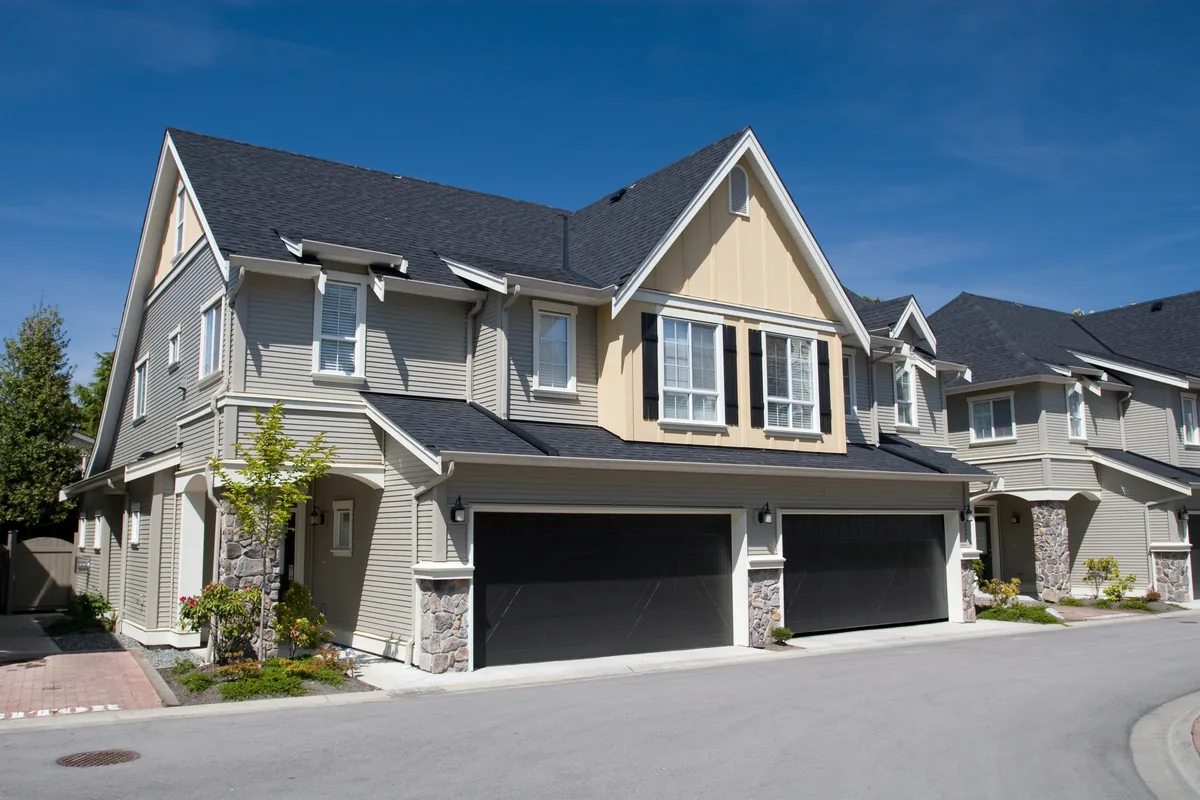

Montana duplex regulations and licensing
Montana puts the money and the tenancy in two different chapters of its code and then tells you to read them together. One carries habitability, notice and the detector duties; the other carries the deposit and everything you may take out of it. On a duplex you are running both of them twice over, against two leases that almost never begin or end on the same day. Next door, Idaho duplex owners work from a state that runs no unified residential tenancy act at all and keeps its deposit rule inside the eviction chapter instead.
The deposit chapter, and the two clocks it closes on
Montana keeps security deposits in a chapter of their own and then tells you to read that chapter and the tenancy act together, because neither one is complete on its own.
Under Mont. Code Ann. §§ 70-25-201(3), 70-25-202(1), 70-25-203 the chapter fixes what you may charge a tenant for, what the written accounting at the end has to contain, and when it has to be in the tenant’s hands. The last of those is where Montana differs from the way most owners have been taught to think about a move-out: there is not one deadline, there are two, and the walkthrough decides which one you are on.
Where the inspection turns up damage, cleaning to charge for, or rent still owing, you have thirty days to deliver an itemized list of the rent, damage and cleaning charges you are holding back. Where it turns up none of those three, and the tenant can demonstrate that the utilities are paid, the deposit goes back whole inside ten days. A duplex runs that fork twice, on two tenancies that started at different times, which is how one building ends up with two closeouts on two different footings in the same month.
What Montana actually requires of you
- Furnish a separate written statement of the present condition of the premises, signed by you or your agent, in conjunction with executing the lease — and on the tenant’s written request hand over the damage-and-cleaning list you gave the immediately preceding tenant. Skip either and you are barred from recovering anything for damage or cleaning unless you can establish by clear and convincing evidence that this tenant caused it. Mont. Code Ann. § 70-25-206(1), (3)
- Notify before you charge for cleaning rather than after: the notice has to name the cleaning the tenant did not accomplish and the additional amount and type or types of cleaning needed to bring the unit back to its condition at renting, and the tenant then has twenty-four hours to do the work — three days where you served the notice by certified mail. Mont. Code Ann. § 70-25-201(3)(a), (3)(b)
- Count any cleaning or damage fee as a security deposit no matter what the lease calls it. Montana presumes a fee or charge for cleaning and damages, however designated, to be a deposit, and any lease provision contrary to the chapter — or any attempted tenant waiver of it — is invalid. Mont. Code Ann. § 70-25-101(4); § 70-25-103 (which carries no subdivisions)
- Split the closeout ledger before you withhold anything. Failing to deliver the written list forfeits all rights to withhold any portion of the deposit for damages or cleaning charges, and the forfeiture reaches only those two categories — unpaid rent, late charges, utilities, lease penalties and other money owing survive it. Mont. Code Ann. § 70-25-203 (which carries no subdivisions), read against § 70-25-201(1)
- Retain the deposit liability when you sell. A good-faith sale to a bona fide purchaser relieves you of rental-agreement liability only as to events occurring after written notice of the conveyance reaches the tenant, and you remain liable to that tenant for all security recoverable under the deposit chapter and for all prepaid rent. Mont. Code Ann. § 70-24-304(1)
- Verify at the commencement of every rental agreement that both the approved carbon monoxide detector and the approved smoke detector in the unit are in good working order — Montana routes the two devices to two different rulemaking agencies, the Department of Labor and Industry for carbon monoxide and the Department of Justice for smoke, and hands the duty to maintain them to the tenant for the rental period. Mont. Code Ann. § 70-24-303(1)(g)
Read down that list and the pattern is hard to miss: almost every one of them is a document you create before anything has gone wrong, and almost every one carries a consequence that lands only at the end. Montana is unusually blunt about what happens when the paperwork is missing — not a reduced recovery, a barred one.
The condition statement, and the notice that comes before the cleaning
The condition statement is the cheapest of them and the one most often skipped. It is a separate signed document, not a clause in the lease, and it goes across in conjunction with executing the agreement. Miss it and the burden at the end is not the ordinary one — you have to establish by clear and convincing evidence that this tenant caused the damage you are charging for. A Kansas duplex owner does this jointly instead: the statute there puts landlord and tenant through the unit together within five days of occupancy, both signing one inventory.
The cleaning notice runs the same way — it has to arrive before the charge, not with it, and it has to be specific enough for the tenant to act on. That the tenant then gets a day to put it right themselves is the part owners forget, and on a duplex it is the part that stings, because the person you have just served may be living on the other side of a shared wall from the tenant who is staying.
What that means for you: Hand the tenant a separate signed statement of the unit’s present condition at lease signing, put the cleaning notice in writing before you charge for any cleaning, and then run whichever of two closeout clocks the walkthrough puts you on — thirty days to deliver the itemized list of rent, damage and cleaning charges, or ten days to return the whole deposit where the inspection finds no damage, no cleaning needed and no rent owing and the tenant can demonstrate no unpaid utilities.
Where a Montana fair-housing complaint goes, and who regulates the policy
Montana’s fair-housing lines are not drawn where an owner-occupant expects them, and the shape of them is set out further down this page under owner-occupancy. What belongs here is the practical geography of a complaint. The advertising prohibition sits in its own subsection, which the sleeping-room exclusion never reaches, so how you write the vacancy is governed whatever else is or is not lifted. Complaints are taken by the Montana Human Rights Bureau. Defense costs, and which section of a rental policy has to be endorsed before any of them are payable, are worked through on the tenant discrimination page. Insurer conduct and policy forms are a separate jurisdiction entirely, and that one belongs to the Office of the Montana State Auditor, Commissioner of Securities and Insurance.
Common Montana duplex risks
Montana property placement is a wildfire and severe-winter conversation before it is anything else. The state’s FEMA-approved central-region mitigation plan puts wildland and rangeland fire and severe winter weather at the top of its significance table — both extensive in area, both rated highly likely — with hail, windstorm and tornado ranked highly likely across an extensive area just below them. A standard property form answers for those: fire, hail, wind, the weight of ice and snow on a roof, and pipes that freeze in a unit standing empty between tenancies. It does not answer for flood, and the Commissioner of Securities and Insurance says so in its own consumer guidance, pointing owners to the National Flood Insurance Program or a private flood market instead. It does not answer for earthquake either, and that matters more here than an owner east of the divide might assume — the Intermountain Seismic Belt runs the width of western Montana from the Flathead country south to Yellowstone, and small earthquakes are an everyday occurrence along it. Montana statute also gives an owner room to move before a carrier walks: an insurer that does not intend to renew has to mail or deliver written notice ahead of the policy’s expiration date and copy the producer, it may not refuse to renew on a single loss unless it disclosed in writing beforehand that a single loss is among its nonrenewal criteria, and a coverage inquiry that produced no payment, no reserve and no written denial may not be treated as a claim, used to decline or reprice, or reported to a consumer reporting agency.
Those last protections are worth reading as an owner’s tools rather than as trivia, because a two-unit owner has one placement and no second building to spread across. Keep the nonrenewal notice and the envelope it came in. Check whether a single-loss criterion was ever disclosed to you in writing before you accept that reasoning. And ask the question you have been avoiding — an inquiry that produces no payment, no reserve and no written denial is not a claim, and it cannot be turned into one.
Both placements that sit outside a property form are all-or-nothing on a building like this. An earthquake decision and a flood decision are taken once, for a single frame that neither lease owns a share of, and there is no arrangement under which the tenancy you worry about is protected and the other one is not. Property coverage answers for what the structure loses; loss of rents answers for what stops arriving while it is unusable, and on two units that is everything the building earns rather than a slice of it.
The exposure that is genuinely about the number two is the shared middle of the building. One furnace run, one stack, one panel, one attic that was never divided when the second unit was framed: each is a single component whose failure produces a two-tenancy loss. The national duplex insurance pillar sets out how those components are underwritten; what Montana adds to them is the winter they have to survive.
A standard property form written on a Montana duplex answers for Wildfire, Hail, Windstorm, Weight of ice and snow, and Frozen pipes. It does not reach Earthquake and Flood, each of which is placed on its own, and the cover that responds when the form does answer is property coverage, loss of rents, and general liability.
Common Montana duplex claims we see
The winter claim is the one that arrives most often and the one a duplex is built to suffer. A unit stands empty between tenancies with the heat turned down; the occupied half is warm and nobody notices anything; a supply run in the cold wall lets go and the water finds the ceiling of the tenancy that was never vacant. Half the building caused it and the whole building is out of service. The weight of ice and snow works slower and reaches the same place — one roof over two households means a load problem is never confined to the half it started over.
Fire and wind concentrate the same way. Hail that opens a roof opens the only roof there is; a wind event that takes the envelope takes it over both leases at once. A wildland fire is not a partial event on a building this size at all, and the honest planning question is not which unit is at risk but what the whole structure and both rents together would cost to replace at what a builder would charge this season rather than at whatever number the declarations page has been carrying unexamined.
Liability on a Montana duplex is mostly a winter story too. Ice on the walk, the shared drive, the step down from a landing that both households use, and the question of who was responsible for clearing it — that is where the injury claim starts, and it starts on ground that no lease hands to either tenant exclusively. That is what general liability is there to answer, and it is why the snow-clearing clause in your leases is a question we raise at submission rather than after somebody has fallen.
Why Montana duplex owners choose Rental Guard
Montana is a state where a rental outside a municipality that comes with hunting, fishing or agricultural privileges falls outside the residential tenancy act altogether, and with it the security deposit chapter. A two-unit owner can meet that line without ever having gone looking for it — a duplex on a place at the edge of a town boundary, a lease that threw in the right to fish the creek, and the rules governing the tenancy are suddenly a different set. A specialist asks that question at submission instead of discovering the answer at a closeout, which is why we would rather read the lease than a summary of it. Two units is not the thin end of our book — one to four units is the whole of it, so a Montana duplex arrives here as an ordinary file rather than as an exception somebody has to argue for. A licensed agent named on this site handles the submission, under the agency NPN printed in the footer.
Owner-occupied, or both units let
Answer this one before anything else, because it gets answered twice over — once by Montana’s code and once by an underwriter, and the two answers are independent. An owner living behind one of the two doors is asking a market to write a building that is half residence and half rental, which narrows the set of markets willing to look and reshapes what the income side of the policy is scoped around, since a single rent is all that can stop. The rest of it is plumbing and habit: shared or separate entrances, one meter or two, who has keys to which door, and whether the utility room in the middle belongs to a lease at all.
Let both doors and the classification is simple, while the concentration gets worse: the building is rental property end to end, and any covered event large enough to empty it stops the entire income stream on one date. That is the version of this building where the limit you set on loss of rents deserves an afternoon rather than a shrug, because nothing keeps earning during the repair.
Montana draws two lines here and neither of them is a plain owner-occupied unit count. The only outright exclusion from the housing prohibitions is the rental of sleeping rooms inside a private residence designed for single-family occupancy in which the owner also resides, and it stops at three sleeping rooms — a room count, not a unit count, and one that never reaches a purpose-built duplex at all. A separate provision reaches a dwelling whose living quarters are occupied by no more than two families living independently where the owner actually maintains and occupies one of them, but it lifts only the prohibitions against age and familial-status discrimination and leaves every other protected class untouched.
Two lines, and neither is the one owner-occupants expect. The narrow exclusion is counted in sleeping rooms inside a single-family residence, so a purpose-built duplex is outside it however you occupy the place. The provision that does reach an owner living in one of two units is a partial waiver of two prohibitions, not a door out of the statute — every other protected class applies to your one tenant exactly as it would to fifty. The same arrangement reads differently across the map: Michigan duplex owners get a state owner-occupied exemption drawn at two families rather than the federal four.
The operative text is Mont. Code Ann. § 49-2-305(1), (2), (3), (11), and it is worth reading in full before you screen anyone for the other half.
What that means for you: Read the two-family provision as a partial waiver rather than an exemption — sex, marital status, race, creed, religion, color, national origin and physical or mental disability all still bind an owner-occupied duplex — and write every listing as though no exemption existed, because the advertising prohibition sits in its own subsection that the sleeping-room exclusion, which reaches only the first subsection, never touches.
Owners cross between those two arrangements — a few winters upstairs, then a move and a second lease on the half they had been living in. That crossing changes what the policy is insuring and which fair-housing subsections reach you, so it is a call to make in the week you decide rather than a line item discovered at the renewal after it.
Major Montana duplex markets
- Billings. Montana’s largest city sits where hail and windstorm are the ordinary claim rather than the rare one, and on a two-unit building the hail that finds the roof finds the only roof there is — both leases go into the same repair, on the same schedule, at the same time.
- Missoula. Wildland fire exposure here is scored at the address rather than at the county line, so a single duplex on the wrong side of a valley edge can meet the same underwriting question a much larger holding meets, and with only one building to place there is no averaging across the rest of a schedule.
- Bozeman. Winter loading is a whole-structure question rather than a per-unit one: the weight of ice and snow bears on one roof and one frame carrying two households, so what a heavy season does to the building is never confined to the half it started over.
- Kalispell. The Flathead country sits at the north end of the seismic belt the state’s own geologists trace south to Yellowstone, and earthquake is not part of a property form — it is a separate decision, taken once, for the whole of a structure that cannot be half-placed.
- Great Falls. A hard winter is the reliable exposure, and a duplex gives it the one condition it wants: a unit standing empty between tenancies, unheated behind a shared wall, while the household on the other side never notices the pipe that is freezing.
- Butte. Butte is a consolidated city-county, which makes the first question we ask about any Montana rental — whether the building stands inside a municipality — one to confirm rather than assume, because the answer decides which statutes reach the tenancy at all.
- Helena. A duplex whose owner keeps one of the two units meets Montana’s fair-housing code at a line drawn around precisely that arrangement, and finds that the line lifts two prohibitions while leaving the rest of the protected classes in force over the half that is let.
- Belgrade. A duplex here shares the Gallatin Valley’s hail and wind exposure with the larger market beside it, and a two-unit owner competing for the same roofers after the same storm waits in the same queue with twice as much rent stopped behind it.
Related reading
Montana duplex insurance FAQs
How long do I have to close out a deposit on a Montana duplex?
It depends which of two clocks the move-out inspection puts you on. Where there is damage, cleaning to charge for, or rent owing, you have thirty days to deliver the itemized list of what you are keeping and why. Where the inspection turns up no damage, no cleaning needed and no rent owing, and the tenant can demonstrate that the utilities are paid, the whole deposit goes back within ten days. Two units means two inspections and two clocks, and they rarely start on the same day.
Do I have to give the tenant a written condition statement?
Yes, and it is separate from the lease. Montana wants a written statement of the present condition of the unit, signed by you or your agent, handed over in conjunction with executing the lease. If the tenant asks in writing, you also hand over the damage-and-cleaning list you gave the tenant immediately before them. Skip either step and you are barred from recovering anything for damage or cleaning unless you can establish by clear and convincing evidence that this tenant caused it.
Can I keep a cleaning fee if the lease calls it nonrefundable?
No. Montana presumes a fee or charge for cleaning and damages to be a security deposit however the lease designates it, and a lease term contrary to the deposit chapter — or a tenant’s attempt to waive it — is invalid. There is also a notice step before any cleaning charge: you have to name the cleaning that was not accomplished and the additional amount and type or types of cleaning needed to return the unit to its condition at renting, and the tenant then gets twenty-four hours to do the work themselves, or three days where you served the notice by certified mail.
I live in one unit and rent the other. Am I exempt from fair housing?
Only partly, and the part that lifts is narrow. The provision that reaches a dwelling occupied by no more than two families living independently, where the owner maintains and occupies one of them, lifts the prohibitions on age and familial-status discrimination and nothing else. Sex, marital status, race, creed, religion, color, national origin and physical or mental disability all still bind you as to the half you let. The separate exclusion for renting sleeping rooms inside an owner-occupied single-family residence is a room count, and it does not reach a purpose-built duplex at all.
My duplex is outside city limits and the lease includes hunting rights. Does that change anything?
It can change a great deal. A rental outside a municipality that comes with hunting, fishing or agricultural privileges falls outside the residential tenancy act altogether, and the security deposit chapter goes with it. That is a statutory line worth confirming against your own arrangement before you rely on it either way, because it decides which rules the tenancy is running under. Tell us about it when you send the building over: it does not change what a property form answers for, and it changes a lot about how the tenancy is papered.
My carrier is talking about not renewing. What does Montana require of them?
More than most owners expect. An insurer that does not intend to renew has to mail or deliver written notice ahead of the policy’s expiration date and copy your producer. It may not refuse to renew on a single loss unless it disclosed in writing beforehand that a single loss sits among its nonrenewal criteria. And a coverage inquiry that produced no payment, no reserve and no written denial may not be treated as a claim, used to decline or reprice you, or reported to a consumer reporting agency. Send us the notice the day it arrives, not the week the policy lapses.
Is a duplex policy a different product from a landlord policy?
It is a landlord policy issued on a building that happens to hold two dwelling units, and saying anything grander than that would be inventing a difference. The four coverages are the four coverages. What is genuinely different in Montana is the paperwork the deposit chapter puts in front of you twice instead of once, the fair-housing provision that turns on whether you occupy one of the two units, and the fact that one winter or one fire reaches both rents rather than a fraction of them.
Get a Montana duplex insurance quote
Send us the building and the policy you have now. We will read the deposit paperwork alongside it and say which closeout clock your next move-out puts you on.
Get a Free Quote