
States we serve · North Carolina
North Carolina duplex insurance
One structure, two tenancies, and two determinations that are made off the leases and the parcel rather than off the size of the building. Most of what follows is about those two determinations.
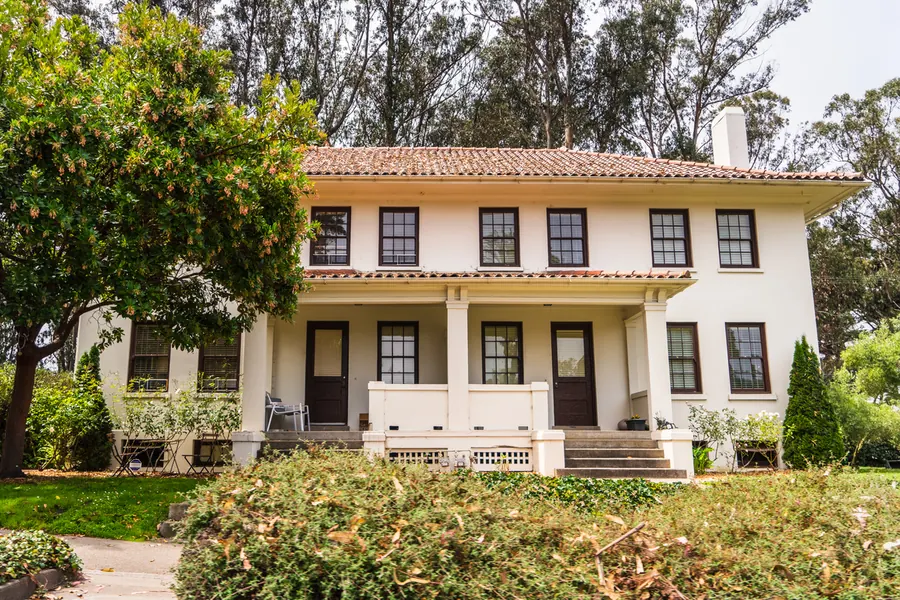

North Carolina duplex regulations and licensing
Most of what North Carolina asks a two-unit owner to do concerns money that is not theirs to hold. The deposit statute reaches where the money sits, who has to be told about it, and how quickly it has to be accounted for — and each of those duties runs once per tenancy. On a duplex that means twice, on schedules the two tenants set rather than the owner.
Where the deposit lives, and the ceiling that moves with the lease
North Carolina regulates where the deposit lives, not merely when it comes back.
The operative text is at N.C.G.S. §§ 42-50, 42-51, and it does two separate things. It puts the money outside your own accounts and requires you to name the place holding it. Then it sets the maximum you may hold — and it sets that maximum from the term of the lease, not from the building the lease is written on.
What North Carolina actually requires of you
- Bank the deposit where it stops being yours — a trust account at a licensed, federally insured institution authorized in North Carolina, or a bond from an insurer licensed here. N.C.G.S. § 42-50
- Tell the tenant the name and address of that institution, or the insurer behind the bond, within thirty days of the lease term starting. N.C.G.S. § 42-50
- Set the ceiling by term length: two weeks’ rent week to week, one and a half months’ rent month to month, two months’ rent for anything longer. N.C.G.S. § 42-51(b)
- Itemize the damage in writing and send it with the balance within thirty days of termination and delivery of possession — and where you genuinely cannot total the claim by then, send an interim accounting at thirty days and a final one within sixty. N.C.G.S. § 42-52
- Split any pet charge out as a reasonable nonrefundable fee rather than folding it into the deposit. N.C.G.S. § 42-53
- Keep the bond, trust-account and notice duties current: a willful failure on any of them voids your right to retain any part of the deposit at all. N.C.G.S. § 42-55
Read the third clause on that list next to a duplex and the consequence is immediate. A building with one half on an annual lease and the other renewing month to month is a building carrying two different lawful maximums at one address. Nothing about the structure has changed. The number you may lawfully be holding has, on one side only, and it changes again the day either tenant moves onto a different term.
That is the arithmetic worth doing before a renewal rather than after a dispute. An owner who sets one figure for the whole building and leaves it there will eventually be over the line on one half — and the last clause on the list is written so that a willful failure costs the retention right entirely, rather than in proportion to the mistake.
What that means for you: Bank the deposit somewhere it is not yours — a trust account at a licensed North Carolina institution or a bond from a licensed insurer — and tell the tenant the name and address of the institution holding it within thirty days of the term starting.
Owner-occupancy, screening, and who enforces it
The single most common misreading among owner-occupants is that living behind one of the two doors converts the letting of the other into a private arrangement. It does not convert anything. It changes which markets will look at the building and what the income side of the policy is scoped to, and it leaves the screening of the household on the other side of the wall exactly where it was. Enforcement sits with the North Carolina Human Relations Commission. What a complaint costs to defend and which part of the policy answers belongs to the tenant discrimination page. Carriers, forms and rate filings are supervised by the North Carolina Department of Insurance.
Common North Carolina duplex risks
A standard property form answers for windstorm, hail, fire and lightning, with coastal placements typically carrying a separate named-storm deductible. Flood is excluded and is its own placement through the National Flood Insurance Program or a private flood market — a point the western mountains made as forcefully as any barrier island has, because the damage that reached them was freshwater flood rather than wind. North Carolina runs two residual mechanisms side by side: the North Carolina Insurance Underwriting Association, the Coastal Property Insurance Pool, for the beach and coastal areas, and the North Carolina Joint Underwriting Association, the FAIR Plan, statewide.
What that does to a two-unit owner is concentrate it. A schedule of buildings spreads a named-storm deductible across several structures and several rent rolls; a duplex owner meets the whole of it on one roof, and the deductible is answered once for a building that produces two incomes. The same is true in the other direction, which is the part worth hearing: one determination, made once, settles the placement for both tenancies.
Where the open market declines it, North Carolina’s residual insurer is the North Carolina Joint Underwriting Association, the FAIR Plan. Dwelling fire and commercial fire in every part of the state except the beach area, which is served instead by the North Carolina Insurance Underwriting Association, the Coastal Property Insurance Pool. The coastal area sits inside both — the FAIR Plan reaches it, and the Pool writes the windstorm cover there. N.C.G.S. § 58-46-1(b), incorporating the beach area defined at § 58-45-5(2)
Two residual mechanisms, and the line that decides which one you meet
The wind half of that picture runs through a second body. The North Carolina Insurance Underwriting Association, the Coastal Property Insurance Pool answers for windstorm and hail, and the statute sorts the state into tiers rather than treating it as one market.
- The Pool is the market of last resort for windstorm here, and the FAIR Plan does not reach it at all — a building inside this line is outside Article 46 entirely. All of the state south and east of the inland waterway from the South Carolina line to Fort Macon at Beaufort Inlet, then south and east of Core, Pamlico, Roanoke and Currituck sounds to the Virginia line — the Outer Banks. It is a line drawn off the waterway and the sounds, not a list of counties, and it cuts through the coastal counties rather than following their borders. N.C.G.S. § 58-45-5(2), § 58-46-1(b)
- The Pool writes the windstorm cover and the FAIR Plan also reaches the territory, so an owner here has both mechanisms behind the admitted market rather than one. The statute names Beaufort, Brunswick, Camden, Carteret, Chowan, Craven, Currituck, Dare, Hyde, Jones, New Hanover, Onslow, Pamlico, Pasquotank, Pender, Perquimans, Tyrrell, and Washington. The statute subtracts from these eighteen counties whatever part of each falls inside the beach area, so a single county can sit in both tiers at once. N.C.G.S. § 58-45-5(2b), (2c)
The rest of the state is ordinary FAIR Plan territory: wind stays bundled in the base form and no separate wind mechanism applies.
For a duplex owner the practical consequence is small and sharp. A schedule spread across the state can straddle all three positions at once and average them. One building cannot straddle anything — it occupies one position, and that position decides how both halves get written. Confirm it from the parcel before a renewal quote is built on an assumption about the county. Read the definitions section the tiers are drawn from.
Neighboring states answer the same question with different machinery, which is worth a glance if you own across a state line. Georgia runs one association behind the admitted market and writes its dwelling fire form for one- to four-family buildings, with a commercial fire program above that size. Tennessee puts the same separate-purchase question on earthquake rather than on wind, with seismic zones described under both ends of the state. Mississippi also splits its residual market by geography, but the split is between two associations whose statutes name different county sets, rather than a line cutting through a single set.
The risk that is genuinely about the number two is shared construction. A supply line in a party wall, one water heater plumbed to serve both halves, an original service feeding two panels: none of these is a two-unit problem until the day it fails, and then it is nothing else. What it does to the building is property coverage; what it does while both halves are unusable is loss of rents, answered for a building where the two rents are the entire income rather than a share of it.
A standard North Carolina property form answers for Named-storm wind, Hail, and Fire and lightning. Flood and Earthquake are not on that form at all and are their own placements. What answers on the policy itself is property coverage, loss of rents, and general liability.
Common North Carolina duplex claims we see
Water from a shared system is the claim that arrives most often on two-unit buildings here. An aging supply run inside a party wall, or one heater plumbed to serve both halves, gives way and the damage crosses a wall that was never built to stop it. On a larger building that is one tenancy interrupted. On a duplex the repair schedule and the loss of income are the same schedule, and both tenants are waiting on the same contractor.
Wind claims sort themselves by where the building stood rather than by how it was built. Inside the beach area the wind half of the loss and the rest of the loss can be answered by two different policies, which is a coordination problem long before it is a coverage problem — and it is a coordination problem the owner runs, not the tenants. Freshwater flood is the other pattern, and the mountain losses put it beyond argument: the water that reached those buildings was never on the property form to begin with.
Liability claims come off the parts of the lot no lease assigns to either household — the shared walk, the drive, the step down from a common porch, the meter side of the building. General liability answers a claim of injury on the premises, and on a two-unit building the early question is which surfaces both tenancies actually use, because those are the ones nobody treats as theirs to maintain.
Why North Carolina duplex owners choose Rental Guard
North Carolina is the state where residential property rates are filed for the whole market by a rate bureau whose own statutory scope stops at four housing units. A duplex is two housing units, so it sits inside that scope as a matter of the statute’s own arithmetic — a fact about this state, not a reason a two-unit building needs a different kind of policy. What it does mean is that the leverage in a placement here is rarely in the filed rate. It is in which market will look at a two-unit building at all, on which mechanism, at which address.
That is the owner a specialist agency is genuinely useful to: one person, one building, two leases and no scale to negotiate with. Our appetite starts at one dwelling unit and stops at four, so a two-unit submission is not the small end of the book. Every quote is handled by a licensed agent named on this site and placed under the agency NPN in the footer. The national duplex insurance pillar sets out what is true of two-unit buildings everywhere; this page is what North Carolina adds.
Owner-occupied, or both units let
This is the question that changes most about a North Carolina duplex, and it is worth answering precisely because the two answers are underwritten differently. Live in one half and the building is partly a home and partly a rental: the set of markets narrows, the income side of the policy is scoped to one rent rather than two, and the practical questions start — who holds keys, whether the entrances and the laundry are shared, whether the two halves are separately metered.
Let both halves and the building is straightforwardly rental. There is then no unit still producing while the other is repaired, which is the version where loss of rents carries the most weight and where the named-storm deductible is met against income that has stopped completely.
North Carolina follows the federal four-unit owner-occupied line.
The line that posture names is drawn at four units and a duplex is two, which puts an owner-occupied two-unit building on the small side of the count. That is exactly the position in which written screening records stop being kept, and it is exactly the position in which they are hardest to reconstruct later — the applicant you turned down lives two streets away and the tenant you accepted shares your wall. The operative text is N.C.G.S. § 41A-1 et seq., and it repays a read before you screen anyone for the other half.
What that means for you: Run one written screening process and keep the record, whatever the building size.
Owners move between the two arrangements more often than they tell anyone — occupy for a few years while the mortgage settles, then let both sides. Tell us at the point of the move, not at the renewal that follows it. What the policy is covering has changed, and the version of that conversation that happens first is the inexpensive one.
Major North Carolina duplex markets
- Charlotte. Older streetcar-suburb blocks hold side-by-side two-unit buildings that were never separated onto their own services, and where a single supply run or a single panel feeds both halves, one repair order stops both rents in the same afternoon.
- Raleigh. Where both halves run on annual leases, both sit on the longest of the three statutory ceilings and the deposit math is identical on each side — the easy case, and the reason the mixed case a few miles away is the one worth checking.
- Durham. Tenancies that turn on an academic or hospital calendar frequently leave one half on an annual lease and the other renewing month to month, which puts two different lawful deposit maximums inside one building at one address.
- Greensboro. This is ordinary FAIR Plan territory rather than wind-pool territory, so wind stays inside the base form and the placement conversation for a two-unit building turns on the condition of the structure instead of on a statutory line.
- Wilmington. New Hanover is one of the counties the statute enumerates, and the beach-area line cuts through those counties instead of tracing their borders — so the mechanism behind a two-unit building here is settled by the parcel, once, for both tenancies.
- Asheville. The western mountains took freshwater flood rather than wind, and a two-unit owner buys that placement outside the property form for the whole structure, whatever the wind conversation elsewhere in the state looks like.
- Fayetteville. Where both halves re-let inside a single year, the thirty-day notice naming the institution holding the deposit falls due twice on one building, and it is the second one an owner with two tenancies most often lets slide.
- Greenville. Eastern two-unit buildings sit near enough to the enumerated coastal set that an owner should confirm which tier the address falls in rather than infer it from the region, because that answer decides which market writes the wind.
Related reading
North Carolina duplex insurance FAQs
How much deposit can I hold on each half of my North Carolina duplex?
The ceiling is set by the term of each lease rather than by the building, so a duplex can carry two different lawful maximums at one address. Week to week is two weeks’ rent, month to month is one and a half months’ rent, and anything longer than that is two months’ rent. Work it out per lease, not per structure, and rework it whenever one side changes term.
Where does a North Carolina deposit have to sit?
Somewhere it stops being yours. That means a trust account at a licensed, federally insured institution authorized to do business in North Carolina, or a bond from an insurer licensed here. You then tell the tenant the name and address of that institution, or the insurer behind the bond, within thirty days of the lease term starting — and on a duplex that notice is owed to each tenancy separately.
I live in one unit and rent the other. Does that change the fair-housing position?
North Carolina follows the federal four-unit owner-occupied line, and a duplex is two units. What that arithmetic does not do is change what you should actually do next: the state’s own instruction to owners is one written screening process and a kept record, whatever the building size. The record is worth more to an owner-occupant than to anyone, because the person on the other side of the wall is the one who would complain.
My duplex is near the coast. Which mechanism stands behind it?
Two mechanisms run side by side and they do not overlap evenly. Inside the beach area the Coastal Property Insurance Pool is the market of last resort for windstorm and hail, and the FAIR Plan does not reach that area at all. In the enumerated coastal counties both stand behind the admitted market. Everywhere else the FAIR Plan is the residual and wind stays bundled in the base form. Which of the three applies is a fact about the parcel.
Is duplex insurance a different product from landlord insurance?
No, and there is no advantage in pretending otherwise. It is a landlord policy on a building holding two dwelling units, written by the same markets on the same four coverages. What North Carolina adds is real enough without being a separate product: a deposit ceiling computed per lease rather than per building, and a residual determination made once for a structure that carries two rents.
How long do I have to account for the deposit after a tenant leaves?
Thirty days from termination and delivery of possession to send the itemized damage statement and the balance. Where you genuinely cannot total the claim inside that window, the statute lets you send an interim accounting at thirty days and a final one within sixty. On a duplex the clock runs from each tenancy’s own end date, so the two halves are almost never on the same schedule.
Do I need flood cover on a duplex that is nowhere near the coast?
It is worth pricing rather than assuming. Flood is excluded from the property form statewide and is its own placement through the National Flood Insurance Program or a private flood market. The point was made in the western mountains as forcefully as on any barrier island, because the damage that reached them was freshwater flood rather than wind — and a two-unit owner buys that cover for one whole structure.
Get a North Carolina duplex insurance quote
Send us the building and the policy you have now. and we will tell you which residual mechanism your address actually sits behind.
Get a Free Quote