
States we serve · Georgia
Georgia duplex insurance
Two units, one roof, and a state whose rules for a small owner are switches rather than settings. Most of what follows is about which Georgia duties reach you and which of them let go.
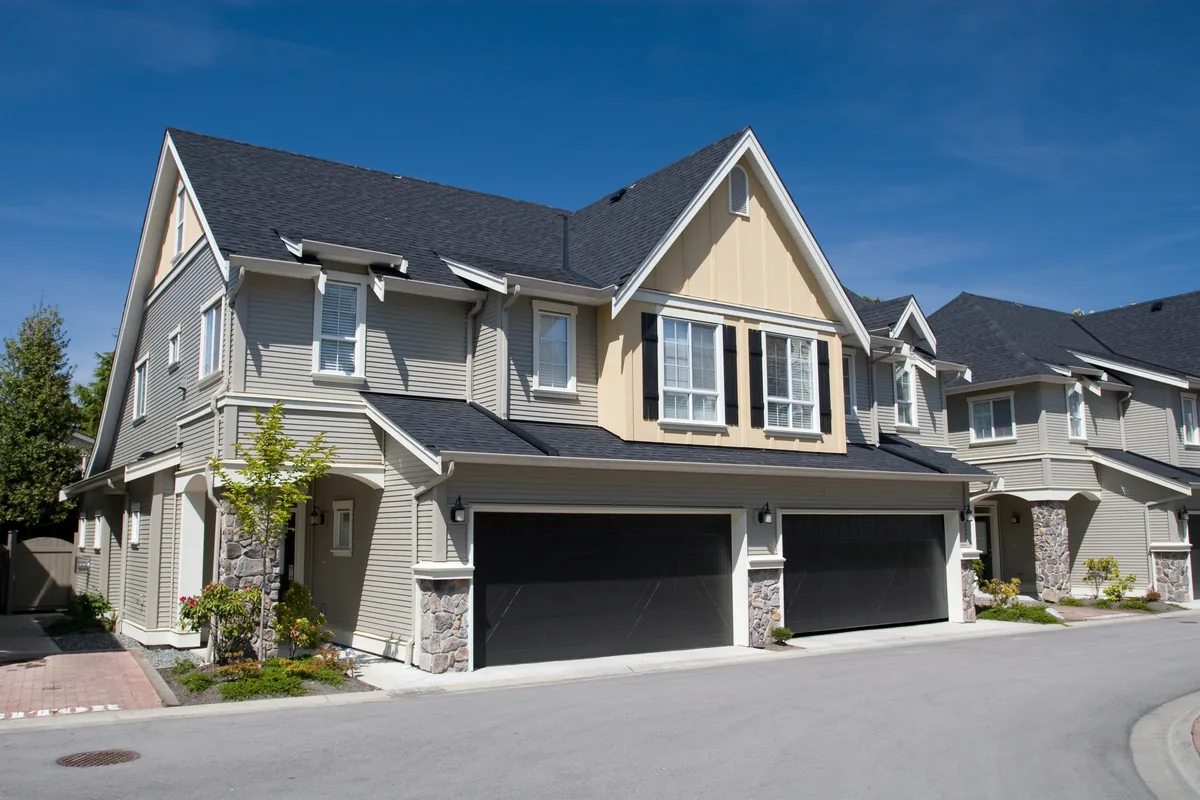

Georgia duplex regulations and licensing
Georgia writes a great deal of its rental law conditionally, and a two-unit owner can sit inside three conditions at once. One article of the landlord-and-tenant chapter switches off for an owner of a particular shape. A section added in 2025 switches a licensing requirement on for an owner who lives somewhere else. And the fair-housing article hands an owner-occupant a carve-out that is real, narrower than its own headline, and easy to over-read. Working out which of the three describes you is most of the compliance work on a Georgia duplex. The building is the simpler half.
The deposit article that switches off — and the owner it switches off for
Georgia files its deposit rules in an article of their own inside the landlord-and-tenant chapter, then exempts most of that article for a small self-managing owner — and the 2024 Safe at Home Act dropped two duties on top of the chapter that no exemption reaches, a statutory ceiling on the deposit and a habitability provision deemed written into every dwelling agreement. Neither of those, nor the deposit article itself, can be contracted away: O.C.G.A. § 44-7-2(b) lists Article 2 of the chapter among the provisions a landlord or a tenant may not waive, assign, transfer or otherwise avoid.
The operative sections are O.C.G.A. §§ 44-7-30.1, 44-7-34(a), 44-7-36. The exemption turns on three conditions holding together: the units are owned by a natural person; that person, a spouse and minor children collectively hold ten or fewer rental units; and no third person is paid a fee to manage the units or collect the rent. Miss any one and the article applies in full.
For a two-unit owner the ceiling is almost never what decides it. A duplex is two of the ten, and a second duplex is four — there is real headroom in the count, which is the opposite of the position an owner with a larger book is in. The two conditions that actually decide it are the ones that have nothing to do with size. Title held in an entity fails the first clause before the count is ever reached, because a limited liability company is not a natural person however small it is. And paying anyone a fee to run the building fails the third, which is the clause an owner-occupant trips by hiring someone to place a tenant in the half they do not live in.
Georgia is not the only state that writes an exit for a small owner, and the exits are cut to different measurements. Arkansas switches its deposit statute off where an owner’s household and entities hold five or fewer dwelling units, and switches it back on the moment a paid third party collects the rent. Connecticut writes no exit at all — its deposit statute governs any property containing one or more residential units, so a single-unit owner there is an escrow agent under banking supervision. Georgia sits between the two: a generous threshold, and two qualifying clauses that are easy to fall out of without noticing.
What Georgia actually requires of you
- Work out first whether the article reaches you at all. Code Sections 44-7-31, 44-7-32, 44-7-33 and 44-7-35 do not apply to rental units owned by a natural person where that person, the spouse and the minor children collectively own ten or fewer rental units — and the exemption drops the moment management, rent collection included, is performed by third persons for a fee. Nothing in it touches Code Section 44-7-34. O.C.G.A. § 44-7-36 (which carries no subdivisions)
- Cap the deposit before you ask for it. No landlord may demand or receive a security deposit in an amount that exceeds the equivalent of two months’ rent, and the duty attaches by the lease date — the act applies to residential lease agreements entered into or renewed on or after July 1, 2024, not to the owner’s size or self-management. O.C.G.A. § 44-7-30.1, enacted by 2024 Ga. L. Act 392 (HB 404) § 4, applicability at § 6
- Account within thirty days of obtaining possession, in writing, whatever your size. Where there is actual cause to retain any part of the deposit, hand over a written statement identifying the exact reasons — with the comprehensive damage list attached where damage is the reason — and send the difference with it. Mailing statement and payment to the tenant’s last known address by first-class mail is compliance; you may not retain anything for ordinary wear and tear absent negligence, carelessness, accident or abuse. O.C.G.A. § 44-7-34(a)
- If the exemption does not reach you, list the unit twice. Present the incoming tenant with a comprehensive list of existing damage BEFORE the deposit is tendered, and let the tenant keep it permanently. Then inspect and compile the closeout damage list within three business days of the lease terminating and the premises being vacated, or of surrender and acceptance, whichever comes first. Missing either list, or missing the § 44-7-34 timing, forfeits every right to withhold any portion of the deposit and to sue the tenant for damage to the premises. O.C.G.A. § 44-7-33(a), (b)(1); § 44-7-35(b)
- Station a licensed broker in the deal if you live outside Georgia. A landlord who is not a resident of this state and owns or operates single-family or duplex residential rental properties here must employ a broker licensed under Chapter 40 of Title 43; if that broker is also non-resident, the broker must employ at least one person located inside Georgia responsible for receiving, coordinating, managing and responding to tenant communications about maintenance and other issues. The owner-and-employee licensing exemptions at § 43-40-29(a)(7) and (8) no longer reach you. O.C.G.A. § 44-7-25(a), (b), enacted by 2025 Ga. L. Act 315 (HB 399) § 2, effective July 1, 2025
- Treat fitness for human habitation as a term of the agreement you did not draft and cannot delete. Every contract, lease, license or similar agreement, oral or written, for the use or rental of real property as a dwelling place is deemed to include a provision that the premises is fit for human habitation — and § 44-7-2(b) puts the repair duty, the failure-to-repair liability and the whole of the deposit article on the list neither side may waive, assign, transfer or otherwise avoid. O.C.G.A. § 44-7-13(b), as revised by 2024 Ga. L. Act 392 (HB 404) § 2; § 44-7-2(b)(1), (2), (6)
Two of those duties reach every owner in the state and no exemption touches either. The ceiling on what you may demand is one: no landlord may take a deposit exceeding the equivalent of two months’ rent, and because the duty attaches by lease date rather than by owner size, a renewal signed after July 1, 2024 carries it onto a tenancy that started without it. The written accounting is the other: thirty days from obtaining possession, in writing, with the exact reasons for anything retained and the balance sent with the statement. That one is the trap inside the exemption, because several plain-English summaries describe small Georgia owners as exempt from the security-deposit law full stop — and the accounting is precisely the duty the exemption does not lift.
There is a second reason to know which side of the line you are on. If the article does reach you, missing either damage list, or missing the accounting deadline, forfeits the right to withhold any part of the deposit and the right to sue the tenant for the damage at all. That is a hard consequence on a two-unit building, where a single unit turning over badly is half of what the building earns.
What that means for you: Count the units before you count the days. If you are a natural person and you, your spouse and your minor children collectively own ten or fewer rental units, and nobody is paid a fee to manage or collect rent on them, the escrow account, the move-in and move-out damage lists and the forfeiture penalty do not reach you at all — but the thirty-day accounting still does, and so does the two-month ceiling on what you may demand. Put a paid manager on the building and every one of those obligations comes straight back.
Living outside Georgia: the broker the 2025 session now requires
This one is worth reading twice, because it is new, it is narrow, and it names the kind of building it applies to. Code Section 44-7-25, enacted by HB 399 and effective July 1, 2025, requires a landlord who is not a resident of Georgia and who owns or operates single-family or duplex residential rental property in the state to employ a broker licensed under Chapter 40 of Title 43. Where that broker is also a non-resident, the broker must in turn employ at least one person located inside Georgia responsible for receiving, coordinating, managing and responding to tenant communications about maintenance and other issues. Subsection (b) is the part that closes the door: the owner-and-employee licensing exemptions at Code Section 43-40-29(a)(7) and (8), which an out-of-state owner would otherwise have self-managed under, no longer reach you.
Two sections now meet at a place worth checking before you sign anything. The deposit exemption drops where management, rent collection included, is performed by third persons for a fee — and a broker of the kind the newer section requires is ordinarily paid. Whether your particular arrangement crosses that line is a question for your own facts and your own attorney; what this page can tell you is that the two rules are pointed at each other and an out-of-state owner should not assume both answers stay the same after the arrangement changes.
It matters on the insurance side too, for a duller reason. Underwriting asks who is on the ground, how quickly a maintenance report becomes a repair, and who holds keys. An owner two states away with a named local broker answers those questions well. The same owner with nobody nearby answers them badly, and on a building where one failure can empty both units the answer is worth more than it looks.
Advertising is governed even when the rest of the section is not
Owner-occupants read about the four-family exemption and reasonably conclude that a duplex they live in half of is outside Georgia’s fair-housing article. Part of that is right and one part of it is emphatically not. The exemption’s own opening words carve the advertising prohibition back out of it, which means every notice, sign, listing and message you put in front of a prospective tenant for the other half is governed exactly as it would be if you lived elsewhere. Write the advertisement as though no exemption existed, because for that purpose none does.
Enforcement in this state sits with the Georgia Commission on Equal Opportunity. Advertising cases reach owners who believed themselves outside the article altogether; the coverage side of that sits on the tenant discrimination page. Carriers, forms and rates in Georgia are regulated by the Office of the Commissioner of Insurance and Safety Fire.
Common Georgia duplex risks
Georgia is two placements wearing one state outline, and which one an owner is in depends on how far the building sits from the Atlantic. GEMA/HS’s current Georgia Hazard Mitigation Strategy puts inland flooding, tornadoes and hurricane wind at the top of its natural-hazard total-risk ranking, with severe winter weather, drought and severe weather immediately behind them in the same high band, coastal hazards, extreme heat, wildfire and wind in the medium band, and seismic and geologic hazards at the bottom. The same chapter says severe weather — thunderstorm, lightning and hail — remains the most frequent hazard event that occurs in Georgia, while tornadoes and hurricane wind created the largest losses, and that tornado events produced more injuries and fatalities than all the other hazards combined. A standard property form answers for most of that: the tornado, the hurricane and tropical-storm wind that reaches Valdosta and Vidalia as readily as it reaches the barrier islands, the hail and lightning that come with an ordinary Georgia summer afternoon, the wildfire the plan profiles in the south of the state, and the weight of ice and snow that arrives in the north in the same storm system as the lightning. It does not answer for flood, and the Commissioner of Insurance and Safety Fire says so plainly on its own consumer pages — most policies do not cover losses from natural disasters like floods or earthquakes, and an owner of a traditional site-built dwelling buys federal flood coverage in addition to a standard policy, available only where the community participates in the National Flood Insurance Program. Earthquake is a separate placement on the same authority, even though the mitigation plan ranks seismic hazard low. What changes on the coast is not the peril list but who will write it: the Georgia Underwriting Association, the association that administers this state’s Fair Access to Insurance Requirements Plan, publishes wind-and-hail-only forms available only in the six coastal counties where wind has been excluded from the underlying placement, will not accept any application at all while a hurricane underwriting restriction is in effect, and treats a recently built structure inside its windstorm and hail area as uninsurable unless the owner produces written proof it was built to the design-wind requirements of the applicable code.
What that ranking changes for a two-unit owner is not the peril list but the arithmetic sitting behind it. One envelope, one roof, one service drop, one set of systems — and two rents standing behind all of them. A hail event that opens the roof opens the cover over both leases in the same afternoon, and the repair that follows is one schedule with two tenancies waiting on it rather than one tenancy waiting while the rest of a building keeps paying.
Where the open market declines it, Georgia’s insurer of last resort is the Georgia Underwriting Association. The association administers Georgia’s Fair Access to Insurance Requirements Plan and describes itself as a market of last resort — its own agent material says coverage should not be eligible in the voluntary market before an application is made. A landlord’s placement is the dwelling fire form: fire or lightning, windstorm or hail, explosion, riot or civil commotion, aircraft, vehicles, smoke, volcanic eruption and vandalism or malicious mischief. Liability and water damage are not in that base form at all — each is an optional coverage bought for additional premium — and theft is not offered on it. On the coast the association also publishes wind-and-hail-only forms, available where wind has been excluded from the underlying placement. No application for a new policy or for increased coverage is accepted while a hurricane underwriting restriction is in effect. Vacancy, overcrowding and general deterioration are named underwriting standards a risk can be declined on, though the plan forbids declining a risk for neighborhood or area location or for an environmental hazard beyond the owner’s control. On eligibility, the dwelling fire form is written for a one- to four-family dwelling only; a building of five or more families is written on the commercial fire program instead — so a two-unit building is inside the residential program rather than at the edge of it. O.C.G.A. § 33-33-1; Georgia Underwriting Association Plan of Operation (Amended and Restated, effective January 1, 2019), Section III ¶¶ 8, 13.A and 16, Section IV ¶ 1 and Section VI ¶ 2(b), (e); GUA Quick Quote Guide; GUA Dwelling Fire application instructions ¶ 12
The windstorm area, and the proof it asks for before it will write you
The association draws a Windstorm and hail area of its own, and inside it the demand is documentary rather than geographic: a two-unit building does not qualify by sitting in the right county, it qualifies by proving how it was built.
- Bryan, Camden, Chatham, Glynn, Liberty, and McIntosh Counties. Produce written proof of design-wind compliance or the association will not write the building. A structure located in the windstorm and hail area, constructed within the ten years before the application, and not built in compliance with the applicable International Code Council code including its design-wind requirements, is not an insurable risk of the association. The applicant furnishes the proof with the application, as a letter from a local building inspector, contractor, engineer or architect. The plan draws this area TWO ways and the county list is only the second of them. Limb A enumerates twenty-three named offshore islands individually — Cumberland, Jekyll, Ossabaw, Sapelo, Sea Island, Tybee and Wassaw among them — and limb B then reaches "all other properties, wherever located" in the six counties above. The island limb is written separately from the county limb in the association’s own text and is not merged into it here. Georgia Underwriting Association Plan of Operation (effective January 1, 2019), Section VI ¶ 2(e)
- Bryan, Camden, Chatham, Glynn, Liberty, and McIntosh Counties. Place the wind separately where the voluntary form has already dropped it. The association publishes dwelling and commercial wind-and-hail-only policies, and its own agent guide states they are limited to the six coastal counties where wind is excluded from the underlying placement. Georgia Underwriting Association Quick Quote Guide, program list; Plan of Operation Section III ¶ 13.A(ii)
The plan names no other windstorm area. Everywhere else in Georgia the association’s own material keys neither the design-wind proof requirement nor the wind-and-hail-only forms to a location, and the association’s underwriting rules separately forbid declining a risk for area location as such.
What that means for you: find out which side of that line the building sits on before you need the cover, and put your hands on the design-wind documentation while the building is still standing — it is far harder to assemble after a storm than before one. The plan of operation is published in full.
Read the base form carefully before assuming it is a like-for-like replacement. Liability and water damage are optional purchases on that dwelling form rather than parts of it, and theft is not offered at all — three gaps that matter more on a building let to tenants than on one nobody lives in. Owners who end up there usually pair it with cover that puts back what it leaves out.
Timing is the other thing to get right, and it is unforgiving on the coast. No application for a new policy or for increased coverage is accepted while a hurricane underwriting restriction is in effect, so the week the forecast turns is the week the door is already shut. A building put up within the ten years before an application also needs written proof it was built to the applicable design-wind requirements — a letter from a local building inspector, contractor, engineer or architect — before it counts as an insurable risk inside the windstorm and hail area at all.
In Georgia the perils a standard property form answers are Tornado, Hurricane wind, Hail, Lightning, Wildfire, and Weight of ice and snow. Flood and Earthquake are written as their own placements and are not picked up by that form, and the coverage that responds is property coverage, loss of rents, and general liability.
Where a duplex genuinely differs from a rental house is the number of tenancies standing behind a single component. The panel feeding both halves, the roof over both, the supply line running under the party wall: each is one thing whose failure is a two-lease event. What it costs to put the structure back is property coverage; what replaces the money while both halves are unusable is loss of rents, and with two units there is no third rent still arriving to soften the month.
Common Georgia duplex claims we see
Wind and hail lead, and they lead everywhere in this state rather than only on the coast. A single storm cell opens a roof, water follows it down through whichever half was under the failure, and the half that was not still loses its ceiling to the same repair scaffolding. Coastal owners have the additional question of which form the wind is on — a building whose wind sits on a separate placement has two claims to notify rather than one, and the two do not necessarily run at the same speed.
Frozen pipes, and the weight of ice and snow the state’s own plan places in the north, are the other half of the story and are routinely underestimated by owners who came south to be rid of both. A line in an exterior or party wall lets go, and on a duplex the water rarely respects the wall it let go inside: the unit that had no failure gets the water anyway. Both tenants report it, both units come out of service, and the reinstatement is one job with two completion dates that need to line up.
Liability arrives from everything neither lease hands to one tenant on its own — the walk to both doors, the shared drive, the step both households use, the meter and the bins. General liability is what answers a claim of injury on the premises, and on a two-unit building we ask early which parts of the ground both tenancies actually cross, because the answer is almost never what the lease drawings suggest.
Then there is the half-empty building, which is a Georgia risk with a residual-market edge on it. One unit let and one standing empty is not the same thing as a building nobody lives in, and policies do not all set that boundary in the same place. The association’s own underwriting standards name vacancy — along with overcrowding and general deterioration — as a ground a risk can be declined on, so an owner whose voluntary market has already gone can find the fallback narrowing at exactly the wrong moment. Tell us during the gap rather than after it.
Why Georgia duplex owners choose Rental Guard
Georgia is a state that lifts the deposit escrow, the two damage lists and the forfeiture penalty for a natural person who with a spouse and minor children owns ten or fewer rental units and pays nobody to manage them, while leaving the thirty-day accounting and the two-month ceiling binding on every owner regardless, and a two-unit owner meets every one of those switches on a single building. That owner is usually one person with one address, one mortgage and no leverage with anybody — which is precisely who a specialist agency is worth having. We write residential rental property of one to four dwelling units and nothing larger, so a duplex is not the small end of our book; it is the middle of it. We will also tell you plainly when a Georgia rule works in your favor and what would end that, because on this state’s statutes the answer changes with an entity filing or a management agreement rather than with the building. Every quote goes to a licensed agent we name on this site, placed under the agency NPN in the footer.
Owner-occupied, or both units let
On a Georgia duplex this question does more work than any other single fact about the building. If you live in one unit, the building is half home and half rental, and the two halves are underwritten differently: which markets will look at it changes, what the income side is scoped to changes because only one rent is at risk, and the practical questions change — keys, entrances, whether the laundry is shared, whether there is a separate meter. If both units are let, the whole of what the building earns is standing behind one structure, and a single loss reaches all of it at once.
Georgia’s owner-occupied carve-out is at O.C.G.A. § 8-3-202(b)(1)(B) and it reaches "rooms or units in dwellings containing living quarters occupied or intended to be occupied by no more than four families living independently of each other, if the owner actually maintains and occupies one of such living quarters as his or her residence" — a unit count, not a room count, and one that does reach an owner-occupied duplex, triplex or fourplex. A companion carve-out at (b)(1)(A) covers a single-family dwelling sold or rented by an owner who does not own or hold an interest in the proceeds of more than three such dwellings at one time and who uses no broker, agent or salesman, with (b)(2) limiting a non-resident owner to one such sale in any twenty-four month period. But the exemption opens "Nothing in this Code section, other than paragraph (3) of subsection (a) of this Code section, shall apply to" — and paragraph (a)(3) is the advertising prohibition, expressly written back in. Two earlier sections then narrow what is left. Section 8-3-201(8) defines a discriminatory housing practice as an act unlawful under Code Section 8-3-202, 8-3-203, 8-3-204, 8-3-205 or 8-3-222 — five sections, of which the exemption reaches exactly one. And § 8-3-200(c) directs that the article "shall be broadly construed" to further its stated purposes.
So the honest reading is a narrow one. The four-family line does reach an owner-occupied duplex, and it lifts one Code section — while the definition of a discriminatory housing practice is supplied by five, the advertising paragraph is handed straight back, and the article carries its own instruction to be broadly construed. An owner who screens the other half on a written, consistent process is not doing more than the law asks; they are doing the thing that makes the rest of it survivable.
Where the line falls is a state-by-state matter and the differences are not small. Michigan draws its owner-occupied exemption at two families rather than four, so a resident owner of a three-unit building there is inside acts that Georgia’s line would have let out. Reading one state’s answer onto another is how owners end up confident and wrong.
The operative text is O.C.G.A. § 8-3-202(b)(1)(A), (b)(1)(B), (b)(2), read against § 8-3-202(a)(3) and against §§ 8-3-201(8) and 8-3-200(c), and it repays being read before you advertise the other half rather than after.
What that means for you: Write every listing as though no exemption existed, because for advertising none does — the carve-out hands the advertising paragraph straight back. Then read the four-family line as covering one Code section and no further: the access-and-membership prohibition, the residential real-estate-related-transaction prohibition, the religious-and-older-persons section and the standing bar on coercing, intimidating, threatening or interfering with anyone exercising a right under the article all continue to bind an owner-occupied duplex in full, on the definition an earlier section supplies. And confirm you are the person the exemption describes before relying on it — it turns on an owner who actually maintains and occupies one of the living quarters as a residence, not on the number of doors.
Owners move between the two states of this question more often than they expect — they occupy for a few years, then move out and let both sides, or the reverse. Tell us when it happens rather than at the renewal that follows. It changes what the policy is covering and it can change which of Georgia’s conditional rules currently reach you, and both are cheap conversations in front and expensive discoveries behind.
Major Georgia duplex markets
- Atlanta. Own an Atlanta two-unit building from an address outside the state and two of the sections below land on you at the same moment — the broker requirement by your residency, and the deposit article’s exit by whoever you pay to run the building.
- Savannah. Chatham County is one of the six coastal counties the Georgia Underwriting Association’s own plan places inside its windstorm and hail area, which is where a two-unit building meets the design-wind proof requirement and where wind can end up on a form of its own, separate from everything else the structure carries.
- Augusta. Augusta sits inland, where the hazard that heads the state’s own total-risk ranking is flooding rather than wind — and flood is the placement the property form does not make. On one structure that is one decision: there is no half of a duplex you could protect against water and leave the rest out.
- Macon. Tornado and hurricane wind produced the largest losses in Georgia’s own hazard accounting and neither of them stops short of the middle of the state, so a Macon duplex carries that exposure on a single roof with two leases underneath it.
- Athens. Where both halves of a building turn over within days of each other, an owner the deposit exemption does not reach is working two closeout clocks rather than one — the three-business-day damage list attaches to a lease ending, and two leases ending in one week is two lists.
- Roswell. North of Atlanta the weight of ice and snow arrives in the same storm system as the lightning, and it is a peril the standard form answers; what it reaches on a two-unit building is one roof with two households sleeping under it.
- Warner Robins. One half standing empty between tenants is where a small owner meets the residual market’s underwriting standards early: vacancy is named there as a ground a risk can be declined on, and half of a duplex is a far larger share of the building than one door in a bigger one.
- Columbus. A consolidated city-county government on the Alabama line, and squarely inside the hazard Georgia’s plan calls its most frequent event — thunderstorm, lightning and hail. One afternoon, one roof, one service drop, and two tenancies waiting on the same repair.
Related reading
Georgia duplex insurance FAQs
Does Georgia’s small-landlord exemption reach my duplex?
It reaches the owner, not the building, so the answer is about you rather than about the two units. Code Section 44-7-36 lifts four sections of the deposit article — the escrow account, the two damage lists and the forfeiture penalty — where the units are owned by a natural person and that person, a spouse and minor children together hold ten or fewer rental units, and where nobody is paid a fee to manage the units or collect the rent. A duplex is two of those ten, so the count is rarely what decides it. The other two conditions usually are.
How large a deposit may I take on a Georgia duplex?
No more than the equivalent of two months’ rent. That ceiling came in with Code Section 44-7-30.1, enacted by the 2024 Safe at Home Act, and it applies to residential lease agreements entered into or renewed on or after July 1, 2024. It is not one of the sections the small-owner exemption lifts, so it binds a self-managing owner of one duplex exactly as it binds anyone else — and because the trigger is the lease date, a renewal can bring the ceiling onto a tenancy that began without one.
The duplex is in an LLC. Does that change the exemption?
On the plain words of the section, yes, and it changes it before the unit count is ever reached. Code Section 44-7-36 describes rental units owned by a natural person; a limited liability company is not one, however few units it holds and however personally you run it. An owner who moves title into an entity for other good reasons should expect the escrow account, the move-in and move-out damage lists and the forfeiture penalty to come back with it. Worth pricing that against whatever the entity was for.
I live in one unit and rent the other. Am I inside the fair-housing carve-out?
Very likely, and it is worth knowing exactly what it does and does not do. The carve-out at Code Section 8-3-202(b)(1)(B) reaches units in a dwelling containing living quarters for no more than four families living independently of each other where the owner actually maintains and occupies one of them — an owner-occupied duplex sits inside that. But the exemption opens by handing back the advertising paragraph, so your listing is governed whatever your occupancy, and it reaches one Code section out of the five that supply the definition of a discriminatory housing practice.
I live outside Georgia and own one duplex here. Do I need a broker?
The 2025 session says so in terms. Code Section 44-7-25, enacted by HB 399 and effective July 1, 2025, requires a landlord who is not a resident of this state and who owns or operates single-family or duplex residential rental property here to employ a broker licensed under Chapter 40 of Title 43 — and where that broker is also a non-resident, the broker must employ at least one person located inside Georgia to receive, coordinate, manage and respond to tenant communications about maintenance. The self-management licensing exemptions an out-of-state owner used to rely on no longer apply.
My coastal duplex was refused wind cover. What are the options?
The Georgia Underwriting Association administers this state’s Fair Access to Insurance Requirements Plan and publishes wind-and-hail-only forms for the six coastal counties where wind has been excluded from the underlying placement, alongside a dwelling fire form written for a one- to four-family dwelling. Two timing points matter more than the paperwork: no application for a new policy or increased coverage is accepted while a hurricane underwriting restriction is in effect, and a building put up within the ten years before the application needs written proof it was built to the applicable design-wind requirements. Send us the refusal before either clock bites.
Is duplex insurance a different product from landlord insurance?
No, and pretending otherwise would not help you. It is a landlord policy written on a building with two dwelling units, from the same markets, on the same four coverages. What Georgia changes is not the product but which of its rules reach you — whether the deposit article switches off, whether the broker section switches on, and where the fair-housing line falls for an owner who lives in one of the units. Those questions have different answers for a duplex than for a rental house. The form on which the answer is written does not.
Get a Georgia duplex insurance quote
Send us the building and the policy you have now. and we will tell you which of this state’s conditional rules your building is currently inside.
Get a Free Quote