
States we serve · South Carolina
South Carolina duplex insurance
Two units under one roof, in a state where a boundary written into the code decides whether that roof is covered by one policy or by two. Most of what follows is about how the building is assembled, and who that decision belongs to.
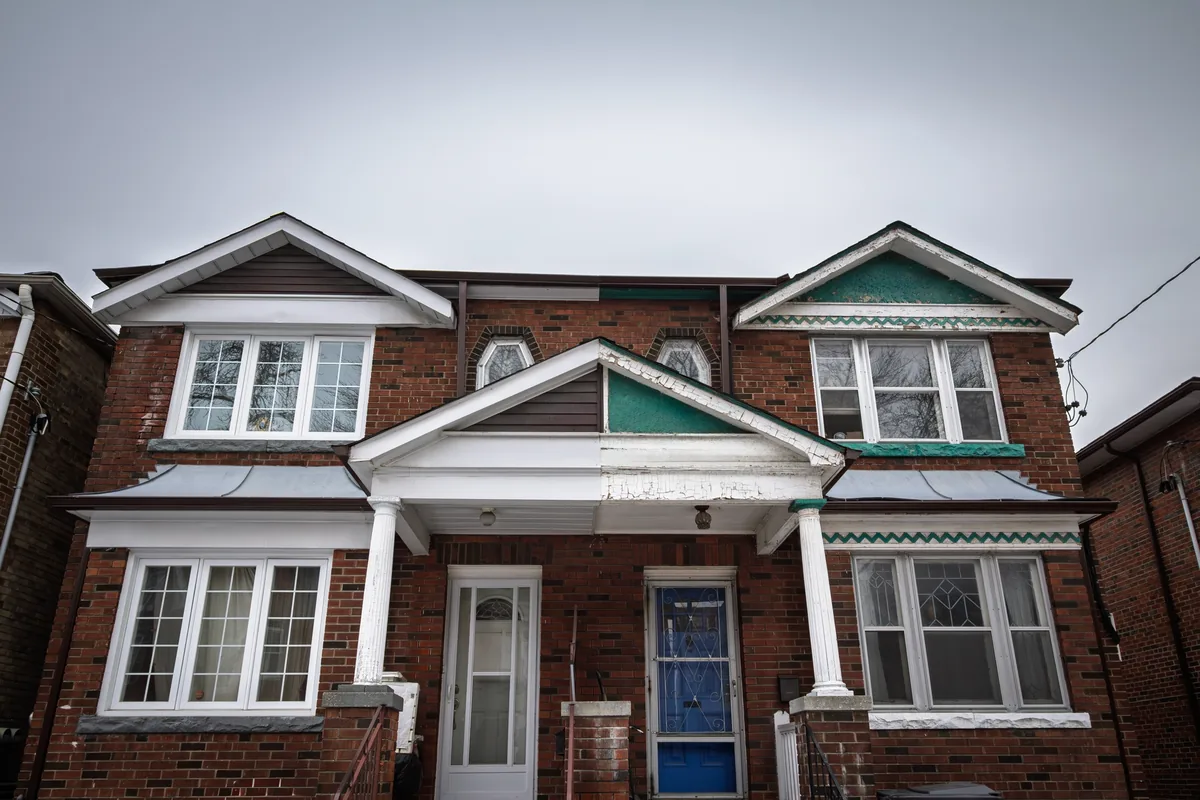

South Carolina duplex regulations and licensing
What South Carolina writes down in detail is the tenancy — what has to be itemized, how quickly the money goes back, and what it costs to get that wrong. One of those duties switches on at a unit count, and where a two-unit building stands relative to that count is a plain question with a plain answer.
The disclosure duty that needs two conditions at once
South Carolina attaches a disclosure duty that switches on at a unit count this brand sits directly beneath.
Under S.C. Code § 27-40-410(c); (a) itemized notice; (b) treble damages the duty to publish how you calculate deposits attaches only where two things are true together: you rent more than four adjoining units on the one premises, and you set deposits at different amounts for different tenants. Both have to hold. A two-unit building does not satisfy the first, so the second is never reached.
The wording is worth reading closely, because it counts adjoining units on the premises. That is a different question from how much you own. An owner with three duplexes in three neighborhoods is asking about each premises separately, while an owner who adds a fifth adjoining unit to one lot has changed something about that lot on the day it is let. The second half of the test — pricing one tenant differently from another — is the ordinary thing a small owner does without thinking about it, so the unit condition is what is actually holding the duty off.
What South Carolina actually requires of you
- Itemize deductions in a written notice with the amount due within thirty days — running from termination, delivery of possession and the tenant’s demand, whichever of the three comes last. S.C. Code § 27-40-410(a)
- Post it to the last address you have where the tenant gave no forwarding address, and keep the proof — done that way, their failure to give one costs them the damages under this subsection. S.C. Code § 27-40-410(a)
- Post the deposit-calculation standards conspicuously, or hand them to each prospective tenant before signing, but only once you both rent more than four adjoining units on the premises and price deposits differently between tenants. S.C. Code § 27-40-410(c)
- Check that duty against your own building: below either condition it does not attach at all, and this agency writes one-to-four-unit property that sits directly beneath the unit half of it. S.C. Code § 27-40-410(c)
- Budget the failure at three times the amount wrongfully withheld plus reasonable attorney’s fees. S.C. Code § 27-40-410(b)
Thirty days, and a duplex has two of them
The return duty above belongs to a tenancy rather than to a building, and a duplex carries two tenancies. Two halves that empty a month apart are running two separate counts from two separate sets of events, and the same owner can be comfortably inside the window on one side of the party wall and past it on the other. Nothing about sharing a roof merges them.
What the statute puts at risk for getting it wrong is a multiple of the money, not a return of it, and the attorney fees ride along behind. That is a lot of exposure for a dispute over a few hundred dollars of cleaning, and it is settled almost entirely by whether a written itemization went out and can be produced. Owners who live in the other half tend to handle the last tenancy informally, by conversation. The statute does not read the conversation.
What that means for you: Post the deposit calculation standard before signing, but only once you both rent more than four adjoining units on one premises and price deposits differently between tenants — below either condition the duty does not attach at all.
Where the fair-housing side is decided, and by whom
The owner-occupancy question is the one two-unit owners ask first, and South Carolina answers it in the section on owner-occupied buildings further down this page rather than here — the posture is a fact about the statute, and it deserves to sit next to what you should do about it. The operative text is S.C. Code § 31-21-10 et seq.. Enforcement sits with the South Carolina Human Affairs Commission. Whether a policy answers a complaint at all, and what defending one costs, is set out on the tenant discrimination page. Forms, and the companies that write them, answer to the South Carolina Department of Insurance.
Common South Carolina duplex risks
A standard property form answers for windstorm, hail, fire and lightning, with named-storm wind typically carrying its own deductible along the coast. Flood and storm surge are excluded and are their own placement through the National Flood Insurance Program or a private flood market. South Carolina then draws a hard statutory line down the map: inside the designated coastal area wind and hail can be stripped out of the standard placement and written separately through the South Carolina Wind and Hail Underwriting Association, the residual wind market, while inland placements keep wind bundled in the base form.
For a two-unit owner the consequence of that split is about assembly rather than about price. The boundary reaches the building, not the door, so both halves are placed the same way and the wind decision is made once for the whole structure. There is no arrangement in which one tenancy sits on the wind policy and the other does not, and no way to hold the wind cover on the half that is easiest to insure.
South Carolina Wind and Hail Underwriting Association
The territory for wind and hail is not one line drawn one way. The statute uses a different drafting method in each part of it, and which method applies decides how precisely you can answer the question about your building before an underwriter answers it for you.
-
Wind and hail can be stripped out of the standard placement and written separately through the association, so a building here is assembled from two policies rather than one. S.C. Code § 38-75-310(5)(a), (c)
Counties reached: Beaufort, Colleton, and Horry.
In Beaufort and Colleton the line is the west bank of the Intracoastal Waterway; in Horry it is U.S. Highway No. 17 or By-Pass 17, whichever runs farther west. Both are inside the county, not around it.
A Horry address west of the highway is in the county and outside the area. The road is the boundary.
-
The same wind-and-hail split applies, but membership is settled parcel by parcel rather than by a single line. S.C. Code § 38-75-310(5)(b), (d)
Counties reached: Georgetown and Charleston.
Georgetown runs from the Harrell Siau Bridge to the Horry border east of a line paralleling U.S. Highway No. 17, plus Cedar, North and South Islands. Charleston is a roster — Edisto, Edingsville Beach, Kiawah, Botany Bay, Folly, Seabrook and Morris Islands, everything north of the City of Charleston east of the waterway’s west bank, and three SUB-ISLAND lines on James, John’s and Wadmalaw.
On James, John’s and Wadmalaw the statute divides a single island, so two neighbors can sit in different markets.
Inland of those lines wind stays bundled in the base form and the association does not write. A SECOND, WIDER TERRITORY EXISTS AND IS NOT THIS ONE: § 38-75-310(7) defines a "seacoast area" of eight whole counties, including Berkeley, Dorchester and Jasper, which the coastal area does not reach.
The operative text is at the state code, and reading it once for your own address is worth more than any summary of it. For a duplex that reading is a single reading: one parcel, one determination, and it holds for both units.
Where the wind cannot stay inside the standard placement, the market that takes it is the South Carolina Wind and Hail Underwriting Association. Wind and hail only — not fire, not personal liability, not loss of use and not flood — so it is paired with a separate dwelling policy rather than standing alone. Its territory is the statutory coastal area, and that line is drawn inside four counties rather than around them: an address in Beaufort, Colleton, Georgetown, Horry or Charleston can sit on either side of it. S.C. Code § 38-75-330
Two policies over one building is not a worse outcome than one — it is a different shape, and the shape has consequences a duplex owner should know before a storm rather than after. The two documents have their own deductibles and their own claim handlers, and a single event can put damage on both of them at once. What it costs to put the structure back is property coverage. What replaces the money the building was earning until it is habitable again is loss of rents — and with two units out at the same moment, that is the whole of your rents rather than a fraction of them.
Flood and earthquake sit outside all of it. Neither the standard form nor a wind-and-hail policy reaches either one, so each is bought on its own, from its own market, on its own terms. On a two-unit building both are single decisions about a single structure: there is no version of a flood placement that covers the half you live in and stops at the party wall, and none of an earthquake placement that answers for one lease and not the other. Coastal owners tend to settle the flood question early and leave the other one open. Both are the same kind of decision, and both are easier to make before a binder than after a renewal offer lands.
Neighboring states answer the same coastal problem differently, which is worth a glance if you own across a state line. Georgia lifts its deposit escrow and forfeiture duties entirely for a natural person who self-manages under a unit ceiling, where South Carolina keeps every owner inside the same accounting duty. Alabama carries two distinct wind exposures rather than one, with Gulf named-storm on the coast and tornado reaching the northern half of the state. Delaware makes owner-occupancy decide something else again — its declination and non-renewal protections reach a building of four units or fewer only where the owner lives in one of them.
A standard property form in South Carolina answers for Named-storm wind, Hail, and Fire and lightning. Outside that form sit Flood and storm surge, and Earthquake, each bought on its own paper, and the lines that answer a covered loss are property coverage, loss of rents, and general liability.
Common South Carolina duplex claims we see
The claim that defines two-unit buildings on this coast is a named storm reaching the roof. One roof, one deck, both units underneath it: the loss is a single loss and the repair is a single schedule, while the income that stops is all of the income. Where the wind cover was written separately, that same event produces two files in two places, and the parts of the damage have to be sorted between them before anything settles.
The second shape is the repair carried out around a tenant. A loss that damages one half leaves the other half occupied, so contractors are working alongside a household that is still paying you and still entitled to quiet enjoyment of what it rents. Access, noise and the length of the schedule are what decide whether that second tenancy survives the claim, and an owner who plans for it keeps half the rent roll that an owner who does not may lose.
Liability claims come off the parts of the site that serve both households. General liability answers an injury claim on the premises, and on a duplex the premises is the whole parcel — the approach, the steps, the drive, the meter side, the bins. We ask early which of those a lease hands to a tenant and which stay with you, because the answer is rarely written down until somebody needs it.
Why South Carolina duplex owners choose Rental Guard
South Carolina is the state where access to the residual wind market is decided by a legislated coastal boundary rather than by carrier appetite. A boundary set by the legislature does not adjust itself for the size of the building standing behind it, so an owner with one duplex reads exactly the statute an owner with thirty buildings reads, and gets exactly the same answer for the address in question. An owner in that position gets very little out of scale and a great deal out of somebody who has read the boundary before: one building, one submission, and nothing to negotiate with. Two-unit buildings are the ordinary work here rather than the small end of it, and nothing larger than four dwelling units is written at all. A licensed agent whose name appears on this site reads every submission, and the agency NPN is in the footer of every page.
Owner-occupied, or both units let
This decides more about a South Carolina duplex than anything about the building itself. Living in one half makes the structure two things at once, and it is underwritten as two things: the side you occupy is not being asked the same questions as the side you let. The set of markets willing to quote it narrows. The income the policy is asked to stand behind is one rent instead of two. And a group of small practical facts starts to matter that nobody raises about a building its owner never enters — where the keys are, whether the front steps and the laundry are shared, whether the two halves run off one meter or two.
With both halves let, nothing about the building is anything other than a rental, and one event reaches every dollar it produces. That is where loss of rents carries the most weight on a two-unit building: nothing is still earning while the rest of it is under repair.
South Carolina follows the federal four-unit owner-occupied line.
Read that carefully, because it is a fact about a count and about occupancy at the same time, and only one of the two is fixed. The count does not move — a duplex has two dwelling units this year and next. The occupancy moves the moment you take a job in another city and let both sides. An owner who has been relying on where that line falls has to notice the day the facts underneath it change, and nobody sends a reminder.
What that means for you: Run one written screening process and keep the record, whatever the building size.
Let us know the week you move, not at the renewal after it. That change alters what the policy is actually covering and which markets are the right ones to be in front of, and saying so early is the difference between an endorsement and an argument.
Major South Carolina duplex markets
- Charleston. Two-unit stock here runs from peninsula houses divided into upper and lower flats to postwar side-by-sides further out, and the statute writes this county as a roster of named islands and drawn lines instead of one edge — which makes the wind placement a determination about the parcel, made once, for the whole structure.
- North Charleston. Single-story side-by-side duplexes are the common form and both halves are usually let, so there is no unit still earning while the other is repaired. That puts the weight of the file on what replaces stopped rent rather than on the structure figure.
- Myrtle Beach. Grand Strand two-unit buildings are frequently let on both sides through the year, and where the wind cover is written separately the owner ends up holding two policies over one roof with a single rent roll standing behind both of them.
- Hilton Head Island. An island address in Beaufort County is measured against a line the statute runs down a waterway, and a two-unit building there needs the wind question, the flood question and the dwelling question all answered for one structure, because there is nothing else to answer them against.
- Summerville. Inland, wind normally stays inside the base form, so the same two leases and the same building are underwritten as one policy rather than as a pair. Owners moving out from the Lowcountry usually meet that difference on their first renewal after a purchase.
- Columbia. Midlands duplexes are ordinarily a one-policy building on the wind side, which moves the whole conversation onto the ordinary things — the age of the roof, the panel, the plumbing runs, and whether one half is occupied by the owner.
- Greenville. Hail sits inside the standard form statewide, and on a duplex it arrives at one roof with two tenancies underneath it. The repair is a single repair on a single schedule, and both leases live through the whole of it.
- Rock Hill. Owners this far north often hold buildings on both sides of the state line. The deposit rules and the return clock change at that line while the building does not, and a duplex owned in each state is two sets of duties on two near-identical structures.
Related reading
South Carolina duplex insurance FAQs
Does the deposit-posting rule apply to my South Carolina duplex?
Almost certainly not, and the reason is worth knowing precisely. The duty in section 27-40-410(c) needs two things to be true at the same time: you rent more than four adjoining units on the one premises, and you set deposits at different amounts for different tenants. A two-unit building does not meet the first, so the second is never reached. Buying a larger building is what changes that answer.
When does the deposit have to go back after a South Carolina tenancy ends?
Within thirty days, with a written itemization of anything you are holding back — and the thirty days do not start at the moment you expect. Three separate events can start the count and the statute waits for the last one to happen. On a duplex that duty belongs to each tenancy rather than to the building, so two halves that emptied a month apart are on two separate counts.
I live in one unit and rent the other. Does that change the fair-housing position?
It can, because South Carolina follows the federal four-unit owner-occupied line and a duplex you live in sits under that count. What it does not change is what you should be doing: one written screening process, applied the same way each time, with the record kept. Occupancy is a fact you would need to be able to show, and it is a fact that changes the day you move out.
My coastal duplex was quoted as two policies. Why?
Because inside the statutory coastal area wind and hail can be taken out of the standard placement and written through the residual wind association instead. That association writes wind and hail and nothing else, so the rest of what a rental building needs stays on a separate dwelling policy. Two documents, one structure — and both of them sit over both units.
My duplex is in one of the named counties. Is it in the coastal area?
Being in the county is not the same as being in the area, because the statute draws that boundary through those counties rather than around them. Waterways, a highway and a roster of islands do the work, and on three islands the line runs across the island itself. Send us the street address and we will tell you which side of it your building stands on.
Does the wind policy or the standard policy pay for flood?
Neither. Flood and storm surge are excluded from a standard property form in South Carolina and are bought separately, through the National Flood Insurance Program or a private flood market. On a two-unit building that is a decision you make once for the whole structure — there is no half of a duplex you could sensibly leave out of it.
Is duplex insurance a different product from landlord insurance?
No, and pretending otherwise would not help you. It is a landlord policy on a building with two dwelling units in it, and the same markets write both. What South Carolina changes is how many pieces of paper the building is assembled from, and that turns on where it stands rather than on how many doors it has. The product is the same; the assembly is not.
Get a South Carolina duplex insurance quote
Send us the building and the policy you have now. and we will tell you whether the wind on your building is written inside the policy or beside it.
Get a Free Quote