
States we serve · Florida
Florida duplex insurance
Two units, one structure, and a Florida deposit rule whose switch is thrown for the building rather than for the tenant who happened to ask about it.
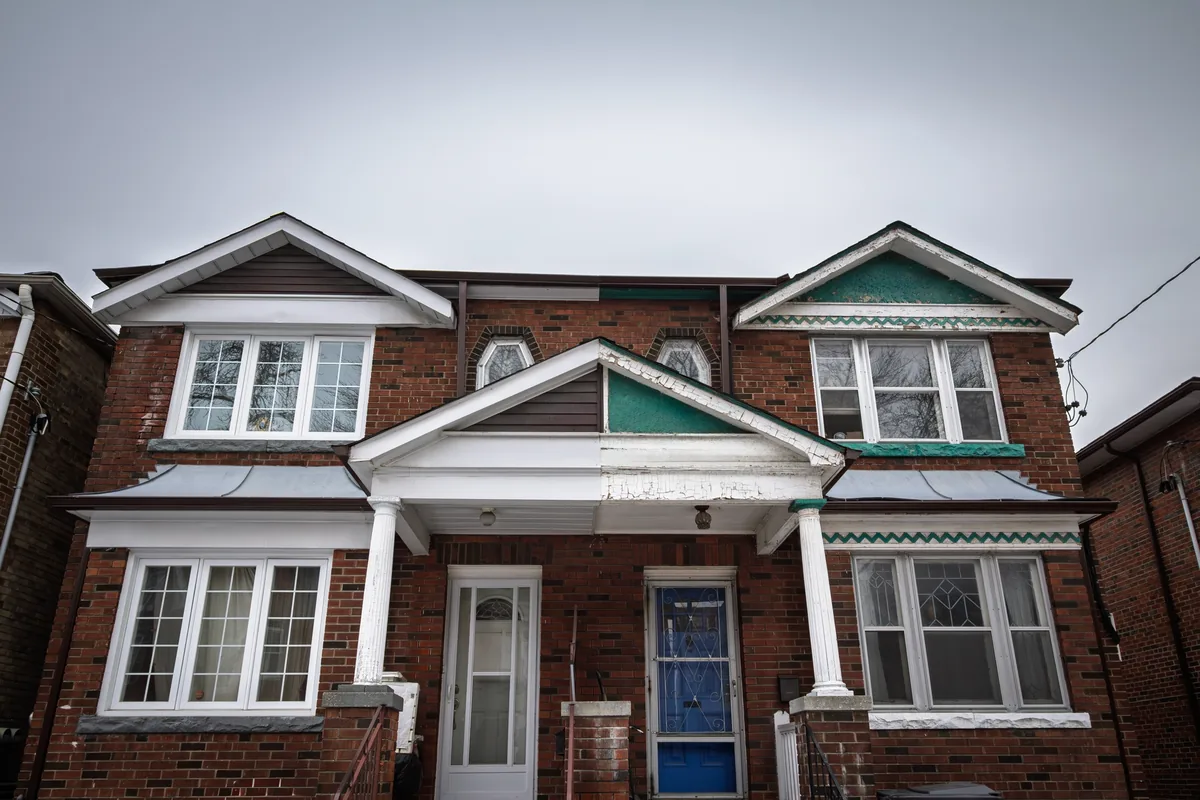

Florida duplex regulations and licensing
The money you take from a Florida tenant is governed by two adjacent sections of the same law: one for a deposit you hold, and one for a fee you may offer instead of holding anything. Neither section counts doors. What a second door changes is that you make the offer decision once for a building that contains exactly one other tenancy, and then run the holding rules twice on dates the two halves set for you.
The fee Florida lets you offer — and why it is a building decision
Florida codified a fee in lieu of a security deposit, and made the choice a premises-level switch rather than a per-tenant one.
Read that as an operating rule rather than a technicality. Under Fla. Stat. § 83.491(2)–(3), (7) the switch is set at the level of the premises, so once you have offered the fee to one tenant there, every new tenant on that same premises is owed the same offer. On a large holding that is a decision you can stage building by building. On a duplex there is no staging available: the premises is the building, the building has one other door, and the first offer you make commits the whole of it.
Then comes the part owners are most often surprised by, and it works in your tenant’s favor rather than yours. The choice between the fee and a deposit belongs to the tenant, which means one duplex can run both arrangements at the same time — a fee on one side, deposit money held on the other, under one owner and one address. And you may never use that choice as a screening criterion. You cannot prefer the applicant who volunteers to put money down, and you cannot hold the other answer against anybody. On a two-unit building you are choosing one household rather than filling a schedule, which is precisely the condition that makes this rule easy to break without intending to.
What Florida actually requires of you
- Open one of three homes for the money before the first tenant moves in — a separate non-interest-bearing Florida account, a separate interest-bearing Florida account, or a surety bond with the clerk of the circuit court — and never commingle it with your own funds. Fla. Stat. § 83.49(1)(a)–(c)
- Pay interest on two of the three routes, not one. On the interest-bearing account pay at least seventy-five percent of its annualized average rate or five percent simple at your election; on the surety bond pay five percent simple regardless. Only the non-interest-bearing account owes nothing. Pay or credit it at least once a year. Fla. Stat. § 83.49(1)(b)–(c), (9)
- Disclose the deposit in the lease or within thirty days of receiving it, and notify the tenant again within thirty days of moving it. Fla. Stat. § 83.49(2)
- Decide first whether you are claiming anything at all — no claim means the whole deposit goes back within fifteen days of termination, with interest where it is owed. Fla. Stat. § 83.49(3)(a)
- Send any notice of intent to impose a claim by certified mail within thirty days of termination — miss that and you forfeit the right to claim against the deposit at all, left suing for damages after returning it. Fla. Stat. § 83.49(3)(a)
- Hold off every deduction until the tenant’s fifteen days to object have run. Fla. Stat. § 83.49(3)(b)
Every clause above is written about a tenancy. On a duplex where both halves pay deposits, that means you are running all of them twice over one address, on two calendars that were set by whenever each side last turned over. The money has to sit somewhere that is not your own account. The disclosure clock starts at the lease or at receipt. And the notice clock starts at termination — separately, for each half, in whatever months those two happen to fall.
The clause worth reading twice is the certified-mail notice of intent to claim, because missing it does not reduce what you can keep — it removes the right to claim against that deposit at all and leaves you returning the money and suing for the damage afterwards. Owners who treat a duplex as one file and settle both sides on one afternoon are the ones who discover that the two terminations did not fall in the same month and only one of them was answered in time.
What that means for you: Decide whether to offer the fee in lieu of a deposit at all — offer it to one tenant on the premises and you owe it to every new tenant there, and you may never use a tenant’s choice between fee and deposit as a screening criterion.
Who regulates which part of this
Carriers, forms and non-renewals sit with the Florida Office of Insurance Regulation, which is the body to reach when the question is about the paper rather than about the tenancy. Florida’s housing provisions are enforced by the Florida Commission on Human Relations. What a complaint about screening costs you, and which section of the policy answers it, belongs to the tenant discrimination page rather than to this one.
Common Florida duplex risks
A standard property form answers for windstorm, hail, fire and lightning, with hurricane losses running through a separate hurricane deductible rather than the all-other-perils deductible. Flood and storm surge sit outside that form entirely and are their own placement through the National Flood Insurance Program or a private flood market. Florida then splits earth movement in two: catastrophic ground cover collapse is coverage every authorized property insurer must provide, while sinkhole loss is optional coverage the insurer must merely make available for additional premium. Citizens Property Insurance Corporation stands behind the admitted market as the residual insurer.
Take the deductible sentence in that paragraph on its own for a moment, because it is where a duplex differs from a rental house in a way you can feel. Hurricane losses do not come off the all-other-perils deductible; they come off a separate one. A named storm that opens the roof triggers that deductible once, against one structure, on one policy. The income side does not behave the same way. Both leases stop, the same contractor is working on the same roof for both of them, and the whole of what you collect is waiting on one schedule.
Then take the earth-movement sentences, and keep the two terms apart, because Florida does. Catastrophic ground cover collapse is coverage an authorized property insurer must provide — it is on the policy because the law puts it there. Sinkhole loss is optional coverage the insurer must merely make available for an additional premium, so it is on the policy only if somebody accepted the offer. One is a duty to cover; the other is a duty to offer. A summary that says sinkhole for both has collapsed the only distinction that decides whether you are covered.
And this is where a duplex inverts the state’s own pattern. Two rentals on one street can end up on different sides of that election, because they are two policies. A duplex cannot: one structure, one policy, one election, made once for the half you live in and the half you let together. If you buy the sinkhole cover you buy it for both. If you decline it you decline it for both. There is no half of the ground under a party wall that belongs to only one lease.
Where the admitted market will not write the risk, Florida’s residual insurer is Citizens Property Insurance Corporation. The state residual market for personal and commercial residential property, reached where the admitted market will not write the risk. Fla. Stat. § 627.351(6)
Flood and storm surge behave the same way as the ground does. They are placed on their own paper through the National Flood Insurance Program or a private flood market, and the decision attaches to the structure. A larger holding can be selective about which addresses carry it. A duplex offers nothing to be selective with — the water reaches one building, and one building is every dollar of income the address produces.
A Florida property form answers for Named-storm wind, Hail, Fire and lightning, and Ground cover collapse. What sits outside it is flood and storm surge, which is its own placement altogether, and sinkhole loss, which reaches the policy only where the offer was accepted. Where the form does answer, the sections doing the work are property coverage, loss of rents, general liability.
Common Florida duplex claims we see
Wind leads the file, and on a duplex it leads it in a particular shape. The roof covering lifts at an edge or a ridge, water follows the opening down into the structure, and the structure was never divided above the ceiling line — so the half that lost shingles and the half that did not are both wet by the time anyone gets on the roof. That is one claim, one hurricane deductible, and two households in temporary housing. Property coverage answers for the building; loss of rents is the section scoped to the money that stopped while it was open.
The quiet one in Florida is water that never came from the sky. Much of this stock sits on slab, and supply lines run under the floor of both halves without regard for which lease is above them. A leak announces itself in one unit and is repaired by opening the floor of whichever unit it actually runs beneath, which is frequently the other one. Owners are startled by that every time: the damage and the excavation are in different halves of their own building, and both tenants are inconvenienced by a failure that belongs to neither of them.
Liability arrives from the parts of the lot no lease hands to one tenant — the walk, the carport slab, the shared laundry, the steps down from a raised entry. General liability is the section that responds when somebody is hurt there, and the question we ask early on a two-unit submission is which surfaces both leases let both households use, because on a duplex that list is short enough to actually answer.
Why Florida duplex owners choose Rental Guard
Florida is the state that splits earth movement into a coverage that must be provided and one that must merely be offered, so two rentals on one street can carry different ground-movement protection — and a duplex is where that street-level variation stops being possible, because two rentals sharing one structure share one election and one answer. Buildings of one to four dwelling units are the whole of this agency’s book, so a two-unit submission does not have to be explained before it can be read. Where a second door changes nothing, we say so: Florida’s perils are Florida’s perils, and the deposit clauses are written about tenancies rather than about buildings. Where it changes the arithmetic — on a deductible you retain once and on a fee switch that reaches your only other tenancy — we say that too. A licensed agent named on this site reads every submission, and the placement sits under the agency NPN printed in the footer.
Owner-occupied, or both units let
Living in half of your duplex changes the file before it changes anything else. Which markets will look at the building changes. What the income side is scoped to replace changes, because only one rent is at risk. And a short list of practical questions exists only because you are on site: whether the entrances, the carport and the laundry are shared, whether the two halves are separately metered, and who holds a key to what.
With both halves let, no part of the building is anything but rental property, and the whole of the rent roll stands on one slab under one roof. That is the arrangement where loss of rents is asked to do the most, because nothing is still earning while the repair runs.
Florida follows the federal four-unit owner-occupied line.
Note where that line falls. It is drawn at four units, which is above a duplex rather than through one — a two-unit building sits on the same side of it as a triplex or a fourplex, and a second door is not what moves you across it. Owners sometimes work backwards from the door count to a conclusion about themselves, and the door count is not the whole of the test. What that line reaches in a particular tenancy is a question for the operative text, which is Fla. Stat. ch. 760, part II, and it is worth reading before you rely on it rather than afterwards.
What that means for you: Run one written screening process and keep the record, whatever the building size.
That instruction reads as overkill on a building where you will know the tenant by name within a week, and it is the same instruction either way. Being close to the person you are screening is what makes a written record valuable: it is the only part of the decision that will still exist in a year, and on a duplex the conversation that produced it happened at a kitchen table rather than on a form.
One last piece of arithmetic joins the two halves of this page. While you occupy one side, the premises carries a single tenancy, so the fee-or-deposit decision only has to answer for one door. Move out and let both halves, and the offer you made to that one tenant is owed to the next one as well. Tell us at the point you decide to move out, not at the renewal that follows it — it changes what the policy is insuring and it changes what you owe the person who signs next.
Major Florida duplex markets
- Tampa. The bungalow blocks through Seminole Heights and Tampa Heights hold a great deal of two-unit stock that began as one large house and was divided later, which means an older Hillsborough County policy may still describe a single-family dwelling. That mismatch renews quietly and surfaces at the first claim that involves the second kitchen.
- St. Petersburg. Two-unit stock in the Old Northeast and Kenwood sits on a peninsula with open water on two sides, so there is no sheltered elevation to point an underwriter at. One roof over two households means the hurricane deductible is a single figure applied to the whole of your rent roll rather than to a share of it.
- Miami. Duplexes through Little Havana and Shenandoah are read on their wind-mitigation features first — opening protection, roof covering, roof-to-wall connection — and those features belong to the structure, not to either lease. In Miami-Dade an owner improving one half improves the file for both, and an owner who defers on one half defers for both.
- Hialeah. Much of the two-unit stock here is owner-occupied with extended family in the other half under a written lease, which is a real arrangement rather than an edge case. It changes what the income side of the policy is scoped to replace, and it is the fact most often left off a submission because it does not feel like a tenancy.
- Orlando. Inland Orange County stock is far enough from the coast that storm surge is not the conversation, which leaves the earth-movement election as the decision an owner actually has to make. On a duplex that election is made once, on one policy, for a structure that both households are standing on.
- Lakeland. Polk County sits on the ridge between the two coasts, and ground movement is the finding most likely to turn an otherwise ordinary two-unit file into a harder one. A duplex cannot split the difference — the ground under the party wall is the same ground under both leases, and one settlement has to answer for the whole building.
- Jacksonville. Divided older houses through Riverside and Springfield sit in a Duval County drainage network that the St. Johns and its creeks run through, so flood is a separate placement on a great deal of in-town two-unit stock. One structure means one flood decision, taken on behalf of two tenancies that never got a vote.
- Cape Coral. Purpose-built side-by-side duplexes on Lee County canal lots are a genuine two-unit housing type rather than a conversion, and the canal frontage that makes them lettable is the same frontage that puts flood and surge outside the property form. Both halves share the seawall, the slab and the answer.
Related reading
Florida duplex insurance FAQs
Can I offer my Florida duplex tenants a fee instead of a security deposit?
You can, and the thing to understand before you do is that Florida made it a decision about the premises rather than about the person asking. Offer the fee to one tenant on the premises and you owe the same offer to every new tenant there. A duplex is the smallest building on which that has any consequence at all, and the consequence is total: there is one other door, so one offer commits the whole of your rent roll. Decide it as a policy for the building, not as an accommodation for whoever is sitting across the table.
One of my tenants wants the fee and the other wants to pay a deposit. Do I have to pick one?
No. The choice belongs to the tenant, so a two-unit building can run both arrangements at the same time under one owner and one address. What you may not do is treat that choice as a screening criterion — you cannot prefer the applicant who offers to put money down, and you cannot hold the other answer against anybody. On a duplex you are usually choosing one household rather than filling a schedule, which makes this the easiest rule in Florida to break without meaning to.
Does the hurricane deductible apply once to my duplex, or once per unit?
The policy is written on the structure, so the deductible is the structure’s. A named storm that opens the roof takes one hurricane deductible — which is a separate deductible from the all-other-perils one, not the same figure applied to a different peril — and it takes it once. What does not happen once is the income loss. Both leases stop while the same contractor works on the same roof, so you are paying a single retention against the interruption of every rent you collect.
Is sinkhole coverage already on my Florida duplex policy?
Two different things are in play and they are not the same word. Catastrophic ground cover collapse is coverage an authorized property insurer must provide, so it is there because the law puts it there. Sinkhole loss is optional coverage the insurer must merely make available for an additional premium, so it is on the policy only if somebody bought it. Read the declarations rather than assume, and note that on a duplex there is one policy on one structure — you cannot carry sinkhole cover on the half you live in and skip it on the half you let.
Is flood covered on a Florida duplex?
Flood and storm surge sit outside the property form entirely, and they are their own placement through the National Flood Insurance Program or a private flood market. That is true of a duplex exactly as it is true of a rental house — the difference is what a yes or a no costs you. A duplex gives you nothing to trade off, because the water reaches one structure and one structure is all of your income here. Tell us where the building sits and what is under it before the season, not during it.
I live in one half of my duplex. Does that change how Florida expects me to screen?
Not in any way that should change what you do. The line Florida follows is drawn at four units, which is above a duplex rather than through one, so the unit count on its own does not tell you what that line reaches in a particular tenancy — that is a question for the operative text, not for arithmetic on doors. What the state does expect is unchanged either way: one written screening process, and the record of it kept. Living next to the person you are choosing makes that record more useful, not less.
Is duplex insurance a different product from landlord insurance in Florida?
No, and it is more useful to say that plainly than to dress it up. It is a landlord policy on a building that holds two dwelling units. The perils are Florida’s perils either way, the deposit clauses are written about tenancies rather than about buildings, and flood sits outside the property form no matter how many doors the building has. What genuinely differs is concentration: one structure, one hurricane deductible, one flood decision, one ground-movement election — and two rents that all four of those things can stop at once.
Get a Florida duplex insurance quote
Send us the building and the policy you have now. and we will start with which arrangement each side of the building is on.
Get a Free Quote