
States we serve · Missouri
Missouri duplex insurance
One building, two leases, and a state whose fair-housing exemption is counted in families rather than in doors. Most of what follows turns on that count and on a thirty-day clock that starts without anyone asking you to start it.
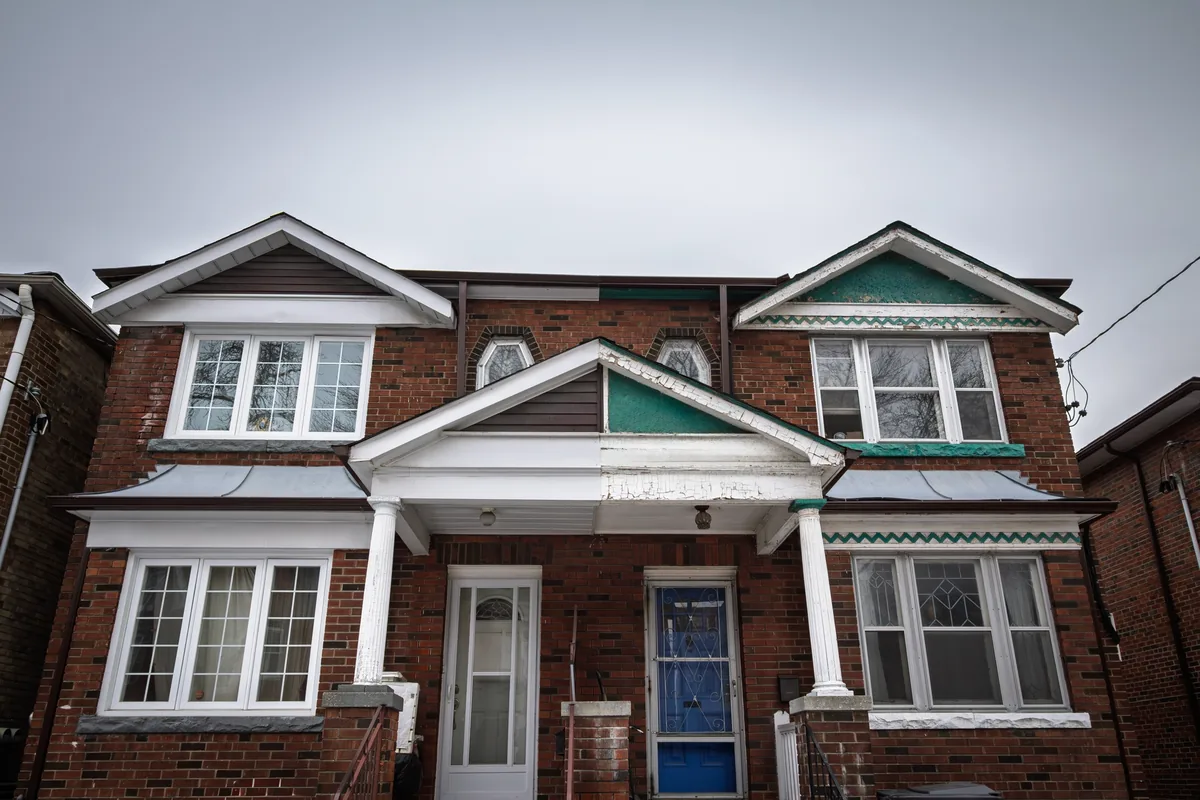

Missouri duplex regulations and licensing
Missouri does not put the rules for a two-unit rental in one place. They are spread across three chapters of the statutes, tied together at the front by a single definitions section, and then a fourth chapter — the human rights act — decides separately whether an owner living in one half is reached by it at all. That last question is counted in families, and the count it stops at is four. Everything else on this page follows from those two facts.
One definitions section, three chapters, and a ceiling that ignores your size
Missouri splits the material across three chapters and then binds them together at the front: § 441.005 declares one set of definitions for chapters 441, 534 and 535, so the deposit rules in chapter 535, the tenancy, occupancy and notice rules in chapter 441 and the possession actions in chapter 534 all run on the same words and none of them is complete read alone.
The operative text for deposits is Mo. Rev. Stat. § 535.300.3, .5 (RSMo 2018), and the first thing to notice about it is what it does not do. It does not scale. Two months’ rent is the ceiling on a duplex and it is the ceiling on a holding of any size, and every mechanism attached to it — the clock, the itemization, the damages remedy — reaches the owner of one small building on exactly the same terms. Owning two doors buys you no relief from any of it.
What the ceiling counts is a defined term rather than the money in the envelope, and that distinction decides more disputes than the number does — pet money mixed into the deposit ledger is how an owner ends up arguing about a limit and a clock that were never written to reach it.
The clauses a Missouri two-unit owner performs
- Notify before you inspect, not after. Give the tenant or the tenant’s representative reasonable notice in writing at the last known address, or in person, of the DATE AND TIME you will inspect the unit after the rental agreement ends to determine what to withhold, and hold it at a reasonable time — the tenant has an express statutory right to be present at the inspection you scheduled. Mo. Rev. Stat. § 535.300.5
- Take one of two exits inside thirty days of the date the tenancy terminates and do not improvise a third: return the full amount of the deposit, or furnish a written itemized list of the damages for which any portion is withheld AND deliver the balance with it. Mailing the statement and any payment to the tenant’s last known address is compliance by the statute’s own terms, so the address you hold at move-out is the one that discharges the duty. Mo. Rev. Stat. § 535.300.3(1), (2)
- Write the carpet-cleaning charge into the rental agreement BEFORE the tenancy, or lose it. Restoring the unit to its condition at the commencement of the tenancy is a permitted withholding with ordinary wear and tear excepted, but carpet cleaning is carved out on its own terms: the agreement must set the amount or fee AND must carry a provision notifying the tenant they may be liable for actual carpet-cleaning costs exceeding ordinary wear and tear, only amounts actually expended may be withheld, and you owe the tenant a receipt for the actual costs within thirty days of the end of the tenancy. Mo. Rev. Stat. § 535.300.4(2)
- Keep the pet money off the security-deposit ledger and name it for what it is. Missouri defines "security deposit" as any deposit of money or property, however denominated, furnished to secure performance of the rental agreement — and then excludes money or property denominated as a deposit for a pet from that term. Every mechanism in the section runs on the defined term, so a pet deposit is not what the two-month ceiling counts, not what the thirty-day clock releases, and not what the double-damages remedy measures; mixing it into the deposit is how an owner argues about a ceiling and a clock that were never written to reach it. Mo. Rev. Stat. § 535.300.8, read against § 535.300.1 and § 535.300.6
- Disclose in writing at or before the commencement of the tenancy both the person authorized to manage the premises and an owner or a person authorized to act for the owner for service of process and for receiving and receipting for notices and demands, keep it current, and know that the duty is enforceable against any successor landlord, owner or manager. Fail and the statute does not fine you — it converts you: a person who does not comply becomes the agent of each landlord for service of process AND for performing the landlord’s obligations under chapter 441 or chapter 535 and for expending the rent collected from the premises on them. Mo. Rev. Stat. § 535.185.1(1), (2), .2, .3
- Declare in writing to a prospective lessee that methamphetamine was produced on the premises if you have knowledge of it, and do it regardless of whether anyone was ever convicted for the production — the statute puts the disclosure on the owner, seller, landlord or other transferor at the point of renting as well as selling, and expressly says prior knowledge is disclosable whether or not the people involved were convicted. Mo. Rev. Stat. § 441.236 (the section carries no subdivisions; read in full)
Read that list once as the owner of a duplex rather than as the owner of a building, because several of those clauses arrive twice. The inspection duty attaches to the tenancy, so a duplex generates two notices, two scheduled walkthroughs and two tenants with a statutory right to be standing there while you look. The thirty-day exit attaches to the tenancy as well, so two halves turning over in the same month give you two clocks that start on their own dates and end in two separate itemizations — the statute never merges them on the grounds that it is one building.
The carpet-cleaning clause is a pre-tenancy requirement rather than a move-out one, which is why it so often exists in one lease and not the other. A second agreement drafted in a hurry for the other half is how an owner discovers the charge is recoverable upstairs and gone downstairs.
The management disclosure deserves a separate minute because its penalty is not a fine but a conversion. An owner who lets both halves and answers the phone themselves is both of the people the statute wants named, which is exactly why the disclosure gets skipped as too obvious to bother with.
What that means for you: Put the inspection in writing before you run it — Missouri gives the tenant the right to be present at the post-termination walkthrough and puts the duty to schedule it and to notify on you — then take one of two exits inside thirty days of termination: the whole deposit back, or a written itemized list of the damages withheld delivered with the balance. Keep the pet money out of that ledger entirely, because the statute writes it out of the defined term, and keep the carpet-cleaning charge inside the lease before you ever charge it.
Where the owner exemption sits, and what it never covers
The exemption opens by taking one prohibition back out of its own scope before it grants anything, and that prohibition is the one on discriminatory advertising. So the branch reaching an owner-occupied two-unit building does real work on screening and on the rest of the chapter, and none at all on how the vacancy is worded, where it is posted, or who is invited to answer it.
The classes are worth counting rather than assuming, because the statute splits them inside a single sentence: for housing the list runs to eight, and age sits on the employment side of it. Complaints are investigated by the Missouri Commission on Human Rights. What a complaint costs, and which part of the policy answers it, belongs to the tenant discrimination page. The carriers and the policy forms themselves are regulated by the Missouri Department of Commerce and Insurance.
Common Missouri duplex risks
Missouri property placement is a severe convective storm conversation first and a seismic one second, and the second is not a footnote. The State Emergency Management Agency describes thunderstorms carrying lightning, high winds and hail as frequent occurrences across the state through spring and summer, and the severe ones are defined by the hail, the wind and the tornado they produce — which is the list a standard property form answers for, along with the fire and the lightning behind it and the vandalism and malicious mischief that finds a unit standing empty between tenancies. The Department of Commerce and Insurance is direct about where that form stops. On flood it tells owners that homeowners policies generally do not offer protection against flood losses, that the exclusion sits under water damage, and that the coverage comes from the National Flood Insurance Program or from private carriers writing under arrangement with the Federal Insurance Administrator. On earthquake it is blunter still: your policy does not cover damage from an earthquake, the coverage has to be bought as an endorsement or as a stand-alone policy, and the department maintains a standing shopping guide and a periodic earthquake report because it treats significant portions of Missouri property owners as exposed to the New Madrid zone. The Missouri Geological Survey puts that zone in the southeast corner of the state and says earthquakes are more frequent there than elsewhere in Missouri — which is why an owner in the bootheel is making a different decision about the same endorsement than an owner in Platte County, and why the legislature wrote a placement-time disclosure duty that reaches inside an intensity line and stops at it. The third separate placement is a Missouri peculiarity: sinkhole collapse, which the statute defines as sudden settlement or collapse of the earth resulting directly from subterranean voids created by the action of water on limestone or similar rock, sits outside the ordinary form and is sold by the state residual market as its own standalone policy on its own application. An owner the standard market has turned away can apply through a licensed Missouri agent to the Missouri Property Insurance Placement Facility, the FAIR Plan, but the plan is explicit that its policies are actual cash value named-peril contracts with no replacement cost, that a diligent effort in the standard market comes first, and that liability, earthquake, flood and backup of sewers and sumps are not in the form at all.
Concentration is what a two-unit building adds to all of that. A hail or wind event does not reach half a roof, so the covered-peril claim you are most likely to have in Missouri is a whole-building claim by construction — one deductible, one repair schedule, both rents exposed to the same afternoon. It is the same policy a larger owner buys, with none of the averaging that makes a larger owner’s year look smooth.
Earthquake inside the seismic zone: what the statute actually obliges
Missouri’s answer to the seismic question is a New Madrid Seismic Zone earthquake-availability disclosure, and the shape of that answer is the part owners get wrong. It is a disclosure program. An owner who has read somewhere that Missouri requires earthquake disclosure will reasonably expect that something is going to be offered to them, and nothing in these sections requires that. Both legs read in full:
- Expect the carrier to put information about the availability of earthquake coverage in front of the applicant at placement here — the duty attaches to the ORIGINAL application for the property policy, and it is a duty to INFORM, not to include the coverage and not to offer it. Nothing in it obliges any insurer to write the earthquake risk. Where it reaches. the New Madrid Seismic Zone as defined by the United States Geological Survey in Missouri, drawn as the area susceptible to Modified Mercalli intensity VII or above from an earthquake occurring along the New Madrid Fault with a potential magnitude of 7.6 — an intensity line the statute states in substance, not an enumeration of counties Read with care. The section’s second leg is SPENT and must not be read as live: the renewal duty applied only to policies renewed from January 1, 1993 to December 31, 1993 and expired with that window. Only the original-application duty remains open. Mo. Rev. Stat. § 379.975
- Statewide, with no geography attached at all: every insurance company that insures property against earthquake loss — by policy, endorsement, rider or otherwise — must prepare and RETAIN a written disaster plan covering earthquakes, and that plan must include specific provisions for handling claims under its earthquake policies and endorsements. Mo. Rev. Stat. § 379.978
Outside the intensity line the earthquake sections of chapter 379 attach no placement-time duty of any kind. The statute names one area and says nothing about the rest of the state, and that silence is the absence of a DISCLOSURE duty rather than the absence of exposure — the Missouri Geological Survey records small earthquakes across Missouri and on faults beyond the New Madrid zone. Earthquake remains an elective separate placement everywhere in the state, inside the line and out of it.
For a duplex owner the practical consequence is short. Ask for the earthquake endorsement or the stand-alone policy by name at the original application, wherever in the state the building sits, and do not treat silence as an answer. The text is at Mo. Rev. Stat. § 379.975.
When the standard market will not write two units
Missouri’s insurer of last resort is the Missouri Property Insurance Placement Facility, the all-industry placement facility that administers the Missouri Basic Property Insurance Inspection and Placement Program and trades as the Missouri FAIR Plan. Basic property insurance for an owner who cannot get it in the standard market — and the shape of the contract matters more than the fact of it. The plan writes ACTUAL CASH VALUE NAMED-PERIL policies with no replacement cost, on a DP 00 01 for dwellings, answering for fire, lightning, explosion, windstorm, hail, riot or civil commotion, aircraft, vehicles, smoke, volcanic eruption, and vandalism and malicious mischief. It does not provide liability, earthquake, flood, or backup of sewers and sumps — so the general liability line a landlord policy normally carries is simply not in this form. Theft is available only by endorsement and only where contents, extended coverage and vandalism and malicious mischief are all already on the policy. Applications come through a Missouri licensed agent or broker rather than direct, a diligent effort to place the risk in the standard market comes first, and the plan tells its own producers to explain to the applicant that the coverage is inferior to what the standard market offers. Policies are issued for a term of one year. Sinkhole loss is available, but as a separate standalone actual cash value policy on its own application rather than as part of this form. Eligibility runs to one to four families for the dwelling policy — a property containing five or more families, or one used for business purposes, qualifies as commercial and moves to a Standard Property Policy CP 00 99 with its own limit and its own form, and the standalone sinkhole policy draws the same one-to-four-family line. Mo. Rev. Stat. §§ 379.810, 379.815(1), (2), 379.827.2, 379.840; Missouri FAIR Plan — “Coverages, Policy Forms, and Producer Forms” and “General Information and Coverages”
Two things in that description land harder on a two-unit building. The first is the valuation: an actual-cash-value named-peril contract with no replacement cost is a materially different promise from the form most owners think they hold, and on a single structure there is no second building in the schedule to absorb the difference. The second is the missing liability line — a landlord policy normally carries general liability as a matter of course, and this form does not carry it at all, so the whole of that program has to be solved somewhere else and solved deliberately.
Sinkhole collapse is the Missouri placement that surprises owners from other states, and it is not an endorsement question. The statute defines it as sudden settlement or collapse of the earth caused by underground voids that water has opened in limestone or similar rock, and the residual market sells it as its own standalone contract on its own application rather than as part of the dwelling form. It is not a rare condition either: the Department of Natural Resources reports that it has identified approximately 16,000 sinkholes in Missouri, that many more exist undocumented, and that the largest one it has recorded covers roughly 700 acres in western Boone County. On one building carrying two rents that is a single yes-or-no decision about the whole structure.
The distinctively two-unit exposure is everything the halves share. A supply run inside a party wall, one heating plant serving both sides, an original electrical panel feeding two units, a single roof and a single foundation: each of them is one component whose failure produces a two-tenancy loss. What that does to the structure is property coverage. What it does to the income while both halves are unusable is loss of rents, and on a duplex the limit you chose is standing in for the entire rent roll rather than a fraction of it.
In Missouri the perils a standard property form answers are Tornado, Straight-line wind, Hail, Lightning, Fire, and Vandalism and malicious mischief. Earthquake, Flood, and Sinkhole collapse are placements of their own, outside that form, and the coverage that responds once a covered loss happens is property coverage, loss of rents, and general liability.
Common Missouri duplex claims we see
Wind and hail lead by a distance, and on a two-unit building they arrive as one claim rather than as one unit’s claim. A storm that opens the roof opens the roof over both tenancies; the interior water that follows tracks down whichever side of the building the damage happened to be on, and the repair that fixes it is a single scope of work with a single deductible attached — and no half of the building still earning while that work is done.
Water from a shared system is the second, and it splits into two seasons. In summer it is a supply line or a heater serving both halves. In winter it is a freeze in a unit standing empty between tenancies, where nobody was there to notice the heat had failed and the pipe that let go was in a shared wall. Vandalism and malicious mischief belongs to that same empty half — the standard form answers for it, which is why the vacancy wording in the policy you hold is worth reading before the gap rather than during it.
Liability claims come off the parts of the lot neither lease hands to one tenant alone: the walk to the two front doors, the drive, the steps, the shared basement or laundry if there is one. General liability is the line that responds when somebody is hurt in one of those places, and we ask about them early because a two-unit building holds proportionally more shared ground than anything larger does — two households crossing the same short stretch of it every day.
Why Missouri duplex owners choose Rental Guard
Missouri is a state that fixes the occupancy standard by statute rather than leaving it to a local code — two persons per bedroom is presumed reasonable across Missouri, and a child born to the tenants during the course of the lease does not count against the limit — and on a duplex that rule does its work twice, once per unit, on a building where the two households are close enough that an occupancy dispute rarely stays hypothetical. Our appetite begins at a single rental house and stops at four dwelling units, so the four pillars sitting behind this page — landlord insurance, duplex insurance, triplex insurance and quadplex insurance — describe the whole of what we place rather than one corner of it. Every quote goes to a licensed agent we name on this site and is placed under the agency NPN in the footer.
Owner-occupied, or both units let
This question changes the most about a Missouri duplex, and it changes different things than owners expect. Living in one half does not make the other half less of a rental — the deposit statute, the inspection duty and the thirty-day clock all reach the tenancy you granted, whoever is on the other side of the wall. What it changes is which chapter of the human rights act reaches you, how the building goes to market, and what the income side of the policy is scoped to.
Missouri’s owner exemption is the LAST subsection of a long section whose title never mentions it, and it opens by carving one prohibition back out of itself. Subsection 13 of § 213.040 says nothing in the chapter — OTHER THAN the prohibitions against discriminatory advertising in subdivision (3) of subsection 1 — shall apply to two things. The first is the sale or rental of a single-family house by a private individual owner, and it is conditional twice over: the owner may hold an interest in no more than three single-family houses at any one time, and the house must be rented without a real estate broker, agent or salesperson, without the facilities of any person in the business of selling or renting dwellings, and without publication, posting or mailing of any advertisement. The second is rooms or units in dwellings containing living quarters occupied or intended to be occupied by no more than four families living independently of each other, where the owner actually maintains and occupies one of those living quarters as a residence — a FAMILY count, which reaches an owner-occupied duplex, triplex and fourplex alike and stops dead at the fifth. The twenty-four-month restriction inside the first branch attaches by its own text to a SALE where the selling owner neither resided in the house at the time nor was its most recent resident; it is not a limit on renting.
Two parts of that bear directly on a two-unit building. The second branch counts families living independently of each other rather than doors, and it requires the owner to actually maintain and occupy one of those living quarters as a residence — occupancy is a condition rather than a description, and it ends when you move out. The twenty-four-month restriction owners sometimes cite from the first branch belongs to a sale; it is not a limit on renting, and it is not attached to the branch that reaches an owner-occupied building.
The operative text is Mo. Rev. Stat. § 213.040.13, opening clause and (1)(a), (1)(b), (2), read against § 213.010(6), § 213.010(16)(a) and § 441.043.2(1)–(4), .4, and the carve-out that matters most to you is in the first line of that subsection rather than in the branch you went looking for.
What that means for you: Advertise as though no exemption existed, because on this statute advertising is the thing that both survives the exemption and destroys it — the advertising prohibition is carved back out at the top of subsection 13 so it reaches you either way, and publishing, posting or mailing any advertisement is itself a disqualifying condition that costs you the single-family branch outright. Then count the classes rather than assuming them: § 213.010(6) defines discrimination for this chapter as conduct taken because of race, color, religion, national origin, ancestry, sex, disability or familial status in housing, and puts age on the employment side of the same sentence, so the housing list is eight and age is not on it. Do not confuse the four-family housing exemption with the FIVE-ROOM one — § 213.010(16)(a) excludes from PLACES OF PUBLIC ACCOMMODATION an establishment inside a building with not more than five rooms for rent or hire that the proprietor actually occupies as a residence, which is a ROOM count about transient lodging and reaches no residential tenancy at all. And read § 441.043 as a limit on CITIES rather than a license for you: since August 28, 2025 no county or city may enact, maintain or enforce an ordinance prohibiting a landlord from refusing to rent because the person’s lawful source of income includes funding from a federal or other housing assistance program, restricting your ability to use or consider income-qualifying methods, credit scores, credit reports, eviction or property damage history or criminal history under your own customarily applied criteria, limiting the security deposit you may require, or requiring tenants to automatically receive a right of first refusal — while subsection 4 of the same section leaves a city free to prohibit discriminating against a tenant solely because that tenant receives veterans’ benefits.
If both units are let, the exemption question falls away and the building is straightforwardly rental property — every tenancy fully inside the chapter, and the whole of the rent roll standing behind one loss of rents limit. Owners do move between the two arrangements, and each move changes what the policy is covering and, on the fair-housing side, whether the exemption you were relying on is still yours. Tell us when it happens rather than at the following renewal.
Major Missouri duplex markets
- Kansas City. The metro straddles the state line, so the address on the lease — not the metro on the envelope — decides whether § 535.300 and § 213.040 are the statutes your two doors answer to; an owner holding one duplex here and one across the line is running a very small portfolio under two separate bodies of law.
- St. Louis. The earthquake-availability duty is drawn by ground-shaking intensity rather than by a list of counties, which means no eastern Missouri owner settles the question by naming the city they are in — you settle it at the original application, which is the only moment the duty attaches.
- Columbia. The largest sinkhole the state has documented sits in western Boone County, and sinkhole collapse is the one Missouri peril that is neither in the ordinary form nor bought as an endorsement to it — it is its own application and its own contract for the whole building.
- Springfield. Occupancy is where a two-unit building gets questioned most often, and Missouri fixes the standard by statute rather than leaving each city to write its own — so the answer for the tenant in the other half does not change when the municipal code does.
- Independence. Inside the Kansas City metro but well clear of the state line, so the Missouri answer is the only answer here — which makes the § 535.185 disclosure of who manages the building and who accepts service the whole of the paperwork, and on a self-managed duplex both of those people are you.
- O’Fallon. A duplex whose halves turn over in the same season gives you two inspections to schedule, two written notices to send and two thirty-day clocks running side by side, and the statute does not merge them because the building is one building.
- St. Peters. Where an owner lives in one half and lets the other, the fair-housing exemption in § 213.040.13 is counted in families rather than in doors, and the advertising prohibition is carved back out of it at the top of the subsection — so the exemption never reaches how the vacancy is advertised.
- St. Joseph. A market far enough from either anchor metro that placement can come down to who will look at a small residential building at all, which is where the residual route and its actual-cash-value named-peril form stop being theoretical.
How the Missouri answer differs from its neighbors
- Duplex insurance in Arkansas — Missouri’s neighbor at the southern end of the same seismic zone answers earthquake with a standing market-assistance mechanism whose participating insurers must accept every applicant carrying underlying dwelling cover, where Missouri’s statute obliges only that availability be put in front of the applicant at placement.
- Duplex insurance in Ohio — Ohio’s tiered ground-peril program makes an insurer include the coverage in one named set of counties and offer it in another, so the tier a building sits in decides what goes on the policy; Missouri’s tiered program stops at information and puts nothing on the policy anywhere.
- Duplex insurance in New Jersey — New Jersey draws its discrimination-act line at two units, so an owner-occupied two-family building is outside that act and a three-family one is not, while Missouri counts families instead and does not stop until the fifth.
Related reading
Missouri duplex insurance FAQs
How much deposit can I take on a Missouri duplex?
Two months’ rent is the ceiling, and it is the same ceiling whether you own this one duplex or a great many doors — Missouri’s deposit statute does not scale with the size of the holding the way some states’ do. What the ceiling counts is the defined term, and the definition is doing quiet work: money denominated as a deposit for a pet is written out of it, so pet money is neither inside the ceiling nor released by the clock that governs the rest.
Do I have to give my tenant notice before I inspect the unit?
Yes, and the notice is yours to send rather than theirs to request. After the rental agreement ends you give the tenant, or the tenant’s representative, reasonable written notice at the last known address — or notice in person — of the date and time you will inspect to determine what to withhold, and you hold it at a reasonable time. The tenant has an express statutory right to be present at the inspection you scheduled. On a duplex both halves get their own notice, because the duty attaches to the tenancy and you have two of them.
What is the thirty-day rule and when does the clock start?
It starts on the date the tenancy terminates, without anyone asking you to start it, and it ends in one of exactly two ways: the whole deposit back, or a written itemized list of the damages you are withholding for delivered together with whatever balance is left. There is no third exit. Mailing the statement and any payment to the tenant’s last known address discharges the duty by the statute’s own terms, which makes the address you hold at move-out worth confirming before they leave.
Can I charge for carpet cleaning after a tenant moves out of one half?
Only if you wrote it into that unit’s rental agreement before the tenancy began. Missouri permits restoring the unit to its condition at the start of the tenancy with ordinary wear and tear excepted, but carpet cleaning is carved out on its own terms — the agreement has to set the amount or fee and has to carry a provision telling the tenant they may be liable for actual carpet-cleaning costs exceeding ordinary wear and tear. Only amounts you actually spent may be withheld, and you owe the tenant a receipt for the actual costs within thirty days of the end of the tenancy. On a duplex the trap is a second lease that never got the clause.
I live in one unit of my duplex. Am I exempt from Missouri fair-housing law?
Partly, and the part that survives is the part most owners assume is covered. The owner exemption is the last subsection of § 213.040, and its second branch reaches rooms or units in a dwelling occupied by no more than four families living independently of each other where the owner actually maintains and occupies one of those living quarters as a residence — an owner-occupied duplex is inside it. But the subsection opens by carving the discriminatory-advertising prohibition back out of itself, so how you advertise the vacancy is reached either way. Advertise as though there were no exemption at all.
Does my duplex policy cover earthquake if I am in the New Madrid zone?
Not on the ordinary form. The Department of Commerce and Insurance says plainly that a policy does not cover damage from an earthquake and that the coverage has to be bought as an endorsement or as a stand-alone policy. What Missouri adds inside the seismic zone is a duty to INFORM at the original application, not a duty to insure and not a duty to offer — no insurer is obliged to write the earthquake risk anywhere in the state. Ask for the endorsement explicitly; do not wait for it to be offered.
Nobody will write my duplex. What is left?
The Missouri FAIR Plan, applied for through a Missouri licensed agent or broker rather than direct, after a diligent effort to place the risk in the standard market. Its dwelling policy draws its line at one to four families, so a two-unit building qualifies comfortably. Read what it does not do before you rely on it: actual cash value, named perils, no replacement cost, and no liability, earthquake, flood or backup of sewers and sumps in the form at all. The liability line a landlord policy normally carries has to be solved separately.
One side is empty between tenants. Does that change the policy?
It can, and the wording you hold decides it rather than any general rule. A building with one unit occupied and one standing empty is not the same thing as a building nobody lives in, but policies do not all draw that line in the same place, and vandalism and malicious mischief is precisely the peril that finds a unit standing empty. Tell us while the gap is still expected rather than after it has happened — half a duplex is half the income, which is a much larger share than a vacancy on a bigger building.
Get a Missouri duplex insurance quote
Send us the building and the policy you have now. and we will tell you which of the two clocks on your building is already running.
Get a Free Quote