
States we serve · North Dakota
North Dakota duplex insurance
One building, two leases, and a deposit statute that is as particular about where the money sits as it is about how much of it you may hold. That rule, and the fair-housing exemption an owner-occupied half does and does not earn you, are most of what follows.
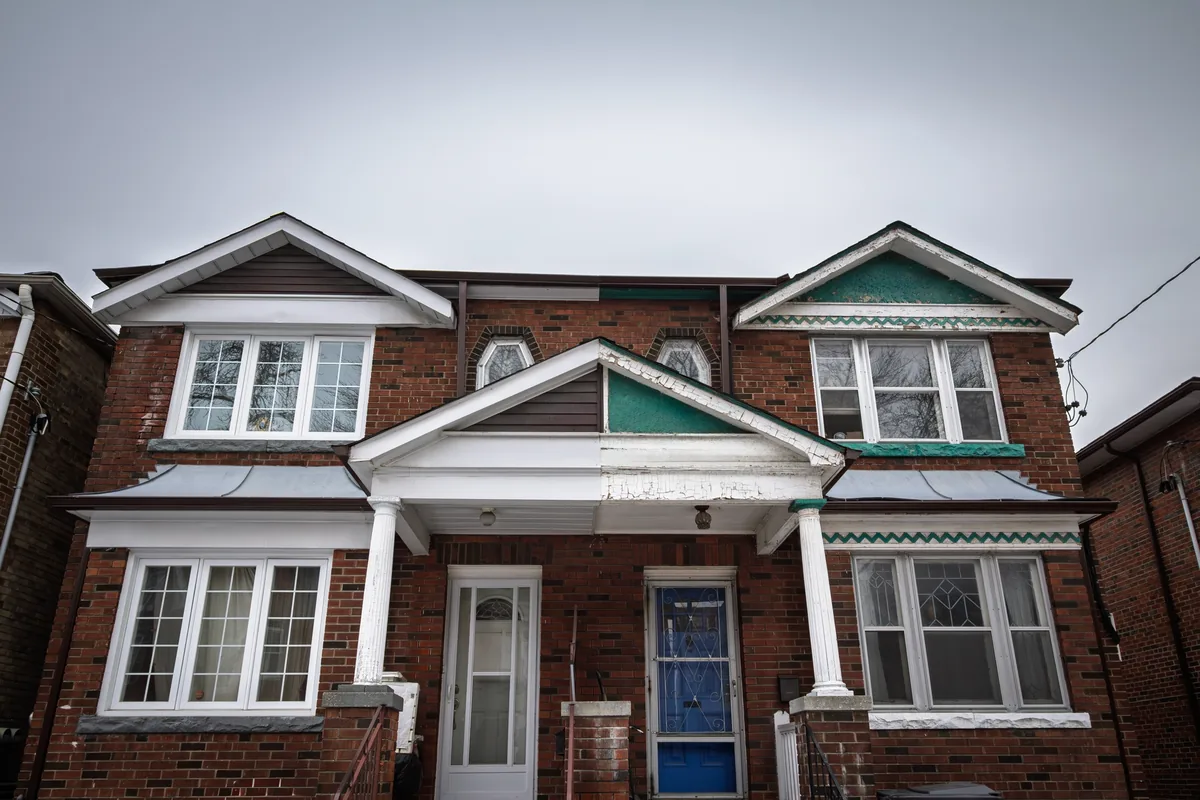

North Dakota duplex regulations and licensing
North Dakota keeps residential tenancy inside its general leasing chapter, and the section a two-unit owner meets first is the one on deposits. It is unusually particular — not only about the size of the sum you may take, but about the kind of account it has to live in for as long as you hold it.
North Dakota runs residential tenancy out of its general leasing-of-real-property chapter rather than a uniform act, and its deposit section is drawn broadly enough to reach any lessor of real property or a dwelling — the state and its political subdivisions included.
Under N.D.C.C. §§ 47-16-07.1(1), (3), 47-16-07.2, 47-16-20.1 the deposit rules run from how much you may take, through where the money lives and what proves the condition of the unit, to what happens to the balance if you sell the building with tenants in it. Read them in that order and one thing is conspicuous by its absence: nothing in the sequence counts doors. The ceiling, the account, the signed statement and the closeout clock reach a person with one duplex exactly as they reach a person with thirty. Where a duplex genuinely differs here is in the administration of two tenancies rather than in the rule that governs them, which is worth saying plainly rather than dressing up.
What North Dakota actually requires of you
- Bank the deposit rather than hold it. North Dakota does not merely tell you to return the money — it tells you where the money lives: a federally insured interest-bearing savings or checking account, for the benefit of the tenant, and the interest accruing on it is paid over WITH the deposit at termination. The one relief is duration, not effort: no interest is owed where the period of occupancy ran under nine months, and the account requirement is not relieved with it. N.D.C.C. § 47-16-07.1(1), read with the interest sentence in § 47-16-07.1(3)
- Cap the deposit at one month’s rent, "however denominated" — the phrase is the statute’s and it defeats renaming the charge. Only two exceptions exist and both are about the individual, not the unit: you may accept up to two months’ from a person convicted of a felony offense as an incentive to rent to them, and you may demand up to two months’ from a person with a judgment entered against them for violating the terms of a previous rental agreement. A pet security deposit is authorized separately, with its own ceiling, and is not a license to exceed the cap for anything else. N.D.C.C. § 47-16-07.1(1)(a), (b), read against the separate pet allowance at § 47-16-07.1(2)
- Sign the condition statement at the front of the tenancy, not after a dispute. The landlord provides a statement describing the condition of the facilities in and about the premises at the time of entering the rental agreement, and it must be agreed to AND signed by both of you. Do that and the statute makes it prima facie proof of the condition at the beginning of the agreement — the evidentiary work is done before you need it. N.D.C.C. § 47-16-07.2 (which carries no subdivisions)
- Itemize and mail within thirty days of BOTH termination of the lease and delivery of possession — the clock needs both events, not whichever comes first. Send the itemization, the amount due, and a written notice stating any amount still owed to you or the refund owed to the tenant, to the last address the tenant furnished you. Withhold without reasonable justification and the exposure is treble damages, not the sum withheld. N.D.C.C. § 47-16-07.1(3), with the treble-damages exposure at § 47-16-07.1(4)
- Re-time the closeout clock when a tenant terminates as a victim of domestic violence, and read the co-tenant question before you start counting — the trigger is not the same in a single-tenant unit and a shared one. Where the victim is the only tenant, deposit timing under the deposit section runs from the first day of the month following the date they vacate. Where other tenants remain bound by the lease, it does not run until the lease expires, which can be many months after the unit is walked. An owner who runs the ordinary vacate-date clock in the second case pays out early on a tenancy that is still live. N.D.C.C. § 47-16-17.1(8)(a), (b), which re-times § 47-16-07.1
- Hand the deposit and its accrued interest to the buyer at closing and confirm the transfer actually happened. The statute transfers the obligation to the grantee, but it does not relieve YOU until the money moves — and whoever holds the lessor’s interest when the lease ends is bound by the section whether or not they are the lessor who took the deposit. On a rental bought with tenants in place, the deposit is a liability you inherit, not a balance the seller keeps. N.D.C.C. § 47-16-07.1(5)
Two tenancies, one bank account, and clocks that start apart
None of the duties above scales down for a small building, and one of them scales awkwardly up from one unit to two. The account is a single obligation you satisfy once; the record-keeping inside it is per tenant. Two deposits accrue interest over two different spans, and the nine-month relief can apply to one side of the building and not to the other in the same year. Owners who run a duplex out of one checkbook generally discover this at the first closeout rather than at the first lease.
The closeout window is where a two-unit building differs most from a single rental, and it is arithmetic rather than a difference in the law. Thirty days runs from the later of termination and delivery of possession, so a duplex can have one window open while the other side has not begun to run at all — and the two are answered from the same records, in the same month, by the same person. There is also a smaller duty that took effect on August 1, 2025: no fee may be charged for accepting rent as cash, a check or a money order. On two tenancies that is two payment arrangements to look at rather than one.
The ceiling itself is a state-line question, and the neighbors do not draw it the same way. South Dakota caps at one month as well but lets the parties agree to more where special conditions pose a danger to maintenance of the premises. Minnesota attaches its deposit penalty not only to a late written statement but to never having offered the initial and move-out inspections its statute now requires. Wisconsin puts a rental owner’s deposit and disclosure duties in a consumer-protection administrative code rather than in the landlord-tenant statute alone. Owning across two of those borders means reading two rulebooks, not one with a regional accent.
Who enforces what, and where a complaint lands
Fair-housing complaints and insurance complaints go to two different bodies, and owners routinely send them to the wrong one. Housing discrimination is administered by the North Dakota Department of Labor and Human Rights, which the act itself names as the department charged with it. Carriers, forms and the conduct of a claim sit with the North Dakota Insurance & Securities Department, whose remit was widened to take in securities regulation effective July 1, 2025 under 2025 Senate Bill 2214. What a discrimination complaint costs to answer, and which part of a policy responds to it, belongs to the tenant discrimination page rather than to this one.
What that means for you: Open a federally insured interest-bearing savings or checking account and hold every deposit there for the tenant’s benefit rather than in your operating funds; keep the deposit itself at one month’s rent unless one of the two named exceptions applies; get the condition statement signed at lease signing, because it is the proof the statute says it is; then itemize and mail within thirty days of termination and delivery of possession, and stop charging any fee for accepting cash, a check or a money order — that last one has only been law since August 2025.
Common North Dakota duplex risks
North Dakota property placement is a severe-winter and severe-convective conversation, and the flood question — the one the state is best known for — is answered entirely outside the policy. The National Weather Service’s Grand Forks office explains the Red River of the North the way an underwriter would: the river runs north toward Canada and Hudson Bay, the valley slope is relatively flat so the flow of the Red is slow, and a spring melt that arrives while the downstream channel remains frozen backs water up behind localized ice jams that impede the flow and drive river levels higher. NOAA’s state climate summary reaches the same place from the data, calling the Red River Valley one of the most flood-prone areas in the United States for those two reasons together, its low gradient and its northward flow. None of it is a covered peril, and the Insurance & Securities Department says so in its own consumer material: most policies do not cover floods, and an owner buys that separately through the National Flood Insurance Program. What the standard form does answer for is the rest of a North Dakota year. The same climate summary describes winter storm systems arriving with heavy snows, high winds and low wind chills and treats a blizzard as an ordinary feature of the season rather than an outlier — which is the burst-pipe exposure of a unit standing empty between tenancies, and the snow a roof carries into March. In the warm months the summary’s most severe thunderstorms produce hail, tornadoes and damaging straight-line winds, and it notes wildfire becoming more common from mid-summer through early fall. The department’s own homeowners page names fire, wind and hail as what the structure is protected against. One structural piece of the placement picture is worth knowing before an owner goes looking for it: North Dakota keeps a property insurance placement facility on the statute books, but the chapter opens on a sunrise rather than an operating plan — the commissioner must hold a public hearing and find a lack of availability in the market before ordering it implemented — so an owner working a hard-to-place rental here is working the standard market, not a standing facility.
Two things in that follow a duplex owner around. The first is that the flood answer is a purchase decision rather than a policy question, and on a two-unit building it is decided for the whole address at once — one foundation, one elevation, two leases that cannot be split apart underneath it. The second is that the seasons here do not alternate so much as queue: one structure meets the winter storm, then the hail and the straight-line wind, then a wildfire season that runs to early fall — and it meets every one of them undivided, rather than as a set of buildings you could stage.
What is distinctively two-unit is how much of the building is shared. A duplex is more often one heating plant, one service entrance and one roof than it is two of each, and a failure on the shared side of that arrangement does not stop politely at a party wall. Property coverage answers what the water and the wind did to the structure; loss of rents answers the months neither half can be let while the one repair is scheduled. The drivers that do not change from state to state sit on the duplex insurance pillar.
In North Dakota the perils a standard property form answers are Fire, Hail, Straight-line thunderstorm wind, Tornado, Winter storm, and Wildfire. Placed separately, and not picked up by that form: Flood. The coverages that respond to a covered loss are property coverage, loss of rents, and general liability.
Common North Dakota duplex claims we see
The claim that defines this state on a two-unit building is a freeze. A unit standing empty between tenancies loses the one thing that was keeping its pipes above freezing — somebody living in it — and a supply line that lets go behind a party wall does not confine itself to the half nobody was renting. The occupied side comes out of service with the vacant one, and the owner is answering a repair schedule and a displaced tenant in the same week.
Wind and hail arrive differently. On a schedule of single rentals a hailstorm is a set of separate roofs with separate ages and separate outcomes; on a duplex it is one roof, one age and one decision, and both rents depend on how that decision goes. The same is true of a winter’s accumulated load. Nothing about it is worse than it would be on a larger building — it is simply undivided.
Injury claims in this climate are mostly about footing. A shared entry, a common stair and a drive that both households cross are surfaces somebody has to keep cleared, and the two leases rarely say who in enough detail to settle an argument afterwards. General liability is the coverage that answers an injury on the premises, which is why we ask early which parts of the ground both tenancies actually use.
Why North Dakota duplex owners choose Rental Guard
North Dakota is a state that makes an owner park every security deposit in a federally insured interest-bearing account held for the tenant’s benefit, and hand the interest over with the deposit unless the tenancy ran under nine months. That is a bookkeeping duty wearing a tenancy statute’s clothes, and it lands hardest on the owner with the fewest people to hand it to — which, on a duplex, is usually the owner alone. Buildings of one, two, three and four dwelling units are the whole of what we place, so a two-unit submission arrives at a desk that reads them all day rather than at the bottom of somebody’s file drawer. If the honest answer is that a building belongs with the landlord insurance approach rather than a two-unit one, we will say so. The agent who quotes it is named on this site and works under the agency NPN printed in the footer.
Owner-occupied, or both units let
This is the question that decides more about a North Dakota duplex than the building does, and it is worth answering precisely. If you live in one unit, half the address is your home and half of it is a rental, and those two things are underwritten from different starting points. Which markets will look at it changes. What the income side is scoped to changes, because only one rent is at risk. And the practical questions change with them — who holds keys, whether the entrance and the laundry are shared, whether there is a separate meter.
If both units are let, the building is straightforwardly rental property, and a single event reaches everything the address earns. Loss of rents does its heaviest work in that version, because there is no second half still producing income while the first is repaired.
North Dakota draws its owner-occupied line at exactly the span this brand writes, and then declines to carry it all the way. The sale-or-rental prohibitions and the sections after them do not apply to the rooms or units in a dwelling containing living quarters occupied by or intended to be occupied by not more than four families living independently of each other, where the owner maintains and occupies one of those living quarters as the owner’s residence — an owner-occupied duplex, triplex or fourplex, described in units rather than rooms. But the lift is written as an enumeration and the enumeration steps over the publication section: the ban on any notice, statement or advertisement indicating a preference, limitation or discrimination is never lifted, and neither is the separate intimidation-and-interference offense. The other exemption, for an owner of not more than three single-family houses, is narrower than it reads — it is forfeited by using a licensed broker or agent, forfeited by publishing an advertisement the publication section prohibits, limited to one sale or rental in a twenty-four-month period where the owner was not the most recent resident, and lost outright by owning any dwelling designed or intended for occupancy by five or more families. North Dakota also protects more people than the federal floor does, adding age, status with respect to marriage and status with respect to public assistance to the federal classes.
The shape of that is what to hold onto. The part of the act governing whether you rent to a person steps aside for an owner-occupied building of this size; the part governing how you say the unit is available does not. So an owner-occupied duplex in North Dakota can sit outside the sale-or-rental sections and still have every word it publishes measured against the publication section — and the separate offense of intimidating or interfering with someone exercising a right under the act is not lifted either. Because the lift is written in units, the sentence an owner-occupied duplex reads is the sentence an owner-occupied triplex or quadplex reads, and the surviving publication duty travels with it in each case. That is a fact about the North Dakota statute and nothing beyond it.
The operative text is N.D.C.C. § 14-02.5-09(1), (2), read against §§ 14-02.5-02, 14-02.5-03 and 14-02.5-45, and against the repealed housing sections of ch. 14-02.4, and it is worth reading before you screen anyone for the other half rather than after somebody complains about how you screened them.
What that means for you: Write every listing as though no exemption existed, because in the building most likely to qualify for one it genuinely does not — the owner-occupied duplex whose tenancy terms fall outside the act still has its advertising regulated word for word. And before you lean on the three-house exemption, count what else you own: a single building of five or more families anywhere in your holdings ends it, and so does handing the rental to an agent.
Owners move between the two arrangements — a few years in one half, then both sides let, sometimes back again when a family situation changes. Tell us on the day it happens rather than at the renewal after it. What the policy is covering changed when you handed over the keys to your own half, and the version of that conversation held in advance is short.
Major North Dakota duplex markets
- Fargo. The state’s largest city sits in the Red River Valley, where the flood question is the loudest thing about the address and the standard form answers none of it — and a duplex answers it once, for one foundation carrying two leases.
- Bismarck. The capital is where the regulator keeps its office, which matters less at placement than it does the day an owner has to answer correspondence about a two-unit building rather than about a schedule of them.
- Grand Forks. The forecast office that explains the spring behavior of the Red — a slow, north-running river backed up behind ice jams while the downstream channel is still frozen — is based here, and an owner of two units plans a melt season around it the same way an owner of twenty does.
- Minot. Winter is the peril that arrives every year rather than occasionally, and on a duplex one roof carries the snow over both rents, so the load is not something either tenancy can be insured out of separately.
- West Fargo. Hail is one of the perils the department names the structure as protected against, and on a two-unit building it arrives as a single roof claim with two households living underneath the repair.
- Williston. Far west of the valley the year still runs blizzard to thunderstorm to a wildfire season the state climate summary puts from mid-summer through early fall, and a duplex here meets the whole of that on one structure.
- Dickinson. Tornado and damaging straight-line wind are the summer end of the same climate story, and a two-unit owner reading a total-loss scenario is reading it for the entire rent the building produces rather than for a share of it.
- Mandan. A signed condition statement is the cheapest evidence North Dakota offers a rental owner, and on a duplex there are two of them to get signed at the front of two tenancies that rarely start in the same month.
Related reading
North Dakota duplex insurance FAQs
How large a security deposit can I take on my North Dakota duplex?
One month’s rent, and the statute says "however denominated" so that renaming the charge does not lift the ceiling. Two exceptions exist and both are written about the applicant: up to two months’ from a person convicted of a felony offense, as an incentive to rent to them, and up to two months’ from a person with a judgment entered against them for violating the terms of a previous rental agreement. A pet deposit is authorized separately, with its own ceiling.
Where does North Dakota make me keep the deposit?
In a federally insured interest-bearing savings or checking account, held for the benefit of the tenant — not in the account you run the building from. The interest that accrues is handed over together with the deposit at the end of the tenancy. The single relief is duration: where the period of occupancy ran under nine months no interest is owed, and the account requirement is not relieved along with it.
When is the itemization due after a tenant leaves my duplex?
Within thirty days of both termination of the lease and delivery of possession. The clock waits for the later of the two rather than starting at whichever happens first. Send the itemization, the amount due and written notice of any balance owed either way to the last address the tenant gave you. Withholding without reasonable justification exposes you to treble damages rather than to the sum withheld.
I live in one unit and rent the other. Does the fair-housing exemption cover me?
Partly, and the part it leaves behind is the part owners lean on. North Dakota lifts the sale-or-rental prohibitions and the sections after them for a dwelling of not more than four families where the owner occupies one of the living quarters. The enumeration steps over the publication section, so the ban on a notice, statement or advertisement indicating a preference is never lifted. The separate intimidation-and-interference offense is not lifted either.
Is duplex insurance a different product from landlord insurance?
No, and saying so plainly is more useful than dressing it up. The form is a landlord form and the building described on it has two dwelling units. What genuinely changes in North Dakota is the administration around it: two tenancies mean two deposits sitting in the interest-bearing account, two interest calculations and two closeout windows that need not open in the same month. The policy is not a separate product.
One side is empty between tenants. Is the building vacant?
One unit lived in and one standing empty is not a building nobody occupies, but policies do not all draw that line in the same place and the wording you hold decides it. In this climate the question has teeth, because an empty unit in January is where a supply line freezes. Raise it while the gap is still hypothetical. What replaces the stopped rent is set out on the loss of rents page.
I am selling the duplex with tenants in place. What happens to the deposits?
They move with the building. The obligation transfers to the grantee, and whoever holds the lessor’s interest when a lease ends is bound by the deposit section whether or not they are the lessor who took the money. It does not relieve you until the funds and the accrued interest have actually changed hands, so confirm the transfer at closing rather than assuming the settlement statement did it.
Get a North Dakota duplex insurance quote
Send us the building and the policy you have now. and we will tell you whether the deposits on both units are being held the way the statute asks.
Get a Free Quote