
States we serve · Minnesota
Minnesota duplex insurance
Two units, one roof, and a deposit statute that now counts an inspection you never offered as a reason to hand the money back twice. Most of what follows is that sequence, run once per door.
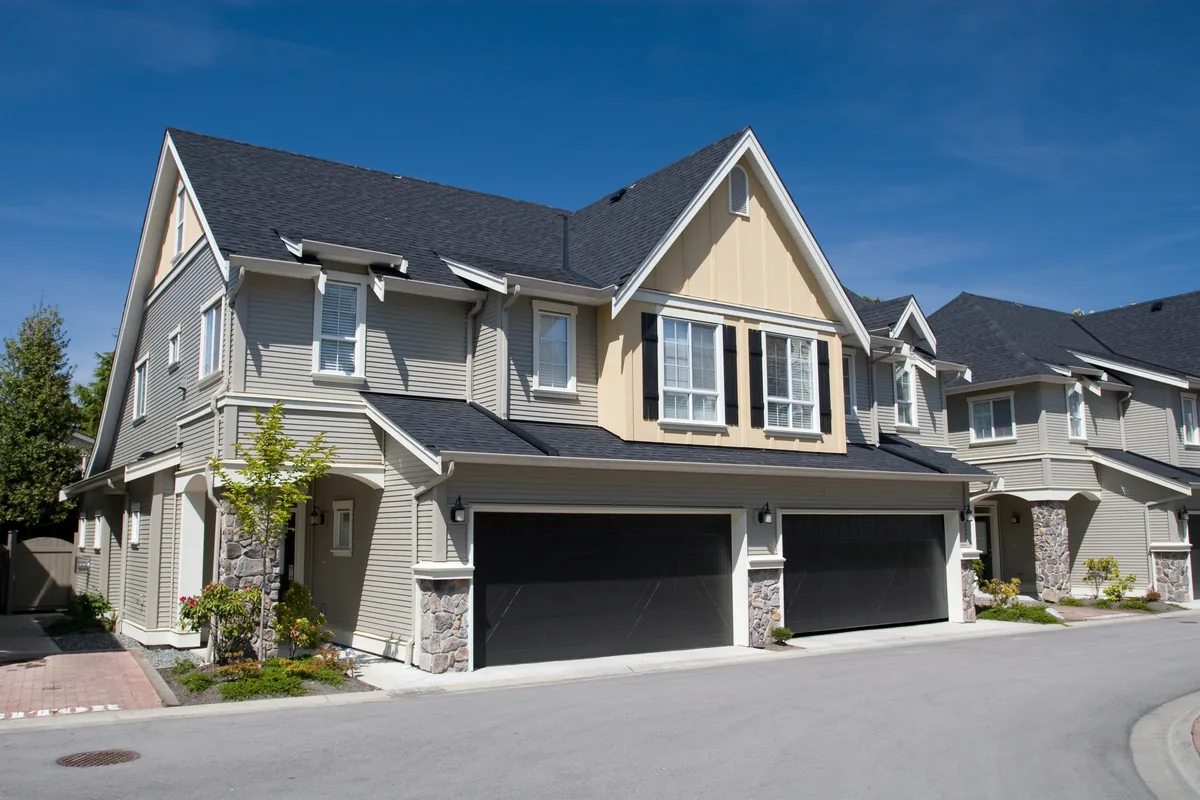

Minnesota duplex regulations and the deposit chain
Minnesota keeps a rental owner’s duties in one chapter and then wires them together, so a step skipped in the first two weeks of a tenancy turns into money owed at the end of it. On a building with two doors you run that wiring twice, and the two runs almost never share a calendar.
The deposit is a chain, and the newest link is an inspection
Chapter 504B, the landlord and tenant chapter, where the deposit section is a chain rather than a rule — the interest clock, the three-week accounting clock and a pair of inspections the landlord has to OFFER all hang off the same section, and a 2023 amendment made failing the inspections a deposit penalty in its own right.
Under Minn. Stat. § 504B.178, subds. 3 and 4; § 504B.182, subds. 1 and 2 the money is only one of the things on a clock. Interest accrues from the first day of the month after the deposit is paid in full, at one percent per annum, simple and noncompounded. The accounting — the deposit with its interest, or a written statement giving the specific reason for keeping any part of it — falls due three weeks after the tenancy terminates and after the tenant’s mailing address or delivery instructions reach you, and in five days instead where the tenant left because the building was condemned. Fail any of that and the withheld portion and its interest are owed over again, as a penalty.
What Minnesota actually requires of you
- Run the deposit’s interest clock yourself — it starts on the first day of the month after the deposit is paid in full and it stops on the last day of the month you comply with the return-and-statement subdivision, or on the day judgment is entered against you, whichever comes first. The rate is one percent per annum, simple and noncompounded, the deposit is not held in a fiduciary capacity, and interest below the statute’s de minimis dollar threshold drops out. Minn. Stat. § 504B.178, subd. 2
- Treat the tenant’s forwarding address as the second half of the trigger, not a courtesy — the three-week window runs from termination AND from receipt of the mailing address or delivery instructions. Posting the deposit or the written statement as first class mail, postage prepaid, correctly addressed to what the tenant gave you, inside the window is compliance. You may withhold only what is reasonably necessary to remedy rent and other money defaults or to restore the premises to their condition at the commencement of the tenancy, ordinary wear and tear excepted, and in any action about the deposit the burden of proving the reason is yours by a fair preponderance. Minn. Stat. § 504B.178, subd. 3(a)–(c)
- Offer both inspections in writing and keep the proof. At the commencement of the tenancy, or within fourteen days of the tenant occupying the unit, notify the tenant of the option to request an initial inspection; once either side gives notice to terminate, or before the lease term ends, notify the tenant in writing of the option to request a move-out inspection and of the right to be present at it, and hold it no earlier than five days before the end. A tenant who declines discharges you. Photographs or video with the tenant’s written acknowledgment can stand in for an inspection. A tenant cannot waive any of it, and failing to give the notice or to complete an inspection the tenant did request is one of the four listed triggers for the deposit penalty. Minn. Stat. § 504B.182, subds. 1(a)–(b), 2 and 4, read with § 504B.178, subd. 4(4)
- Add the nonoptional fees to the rent, label the total the Total Monthly Payment, and put it on the FIRST PAGE of the lease — then carry the same disclosure into every advertisement or posting for the unit, and say in both places whether utilities are in the rent or not. The penalty for getting this wrong is treble damages to the tenant plus the court’s discretion on attorney fees. Minn. Stat. § 504B.120, subds. 1 and 2
- Furnish the heat, do not merely install a system capable of it — the covenant runs at a floor temperature the statute fixes, in every place intended for habitation including kitchens and bathrooms, from the first of October to the end of April, and the only relief is a utility company requiring and instructing that the heat be reduced. This covenant, and the fitness, repair, pest-extermination and health-and-safety-code covenants beside it, cannot be waived or modified by either party, and a tenant-maintenance agreement cannot reach them or the common areas. Minn. Stat. § 504B.161, subd. 1(a)(5) and (b), subd. 2, as amended by Laws 2025, 1st Spec. Sess., ch. 11, § 1
- Give the notice before you enter and leave a note if the tenant was out. Entry needs a reasonable business purpose and a good faith effort at reasonable notice of not less than twenty-four hours; the notice has to specify a time or an anticipated window, and entry is confined to between eight in the morning and eight at night unless the tenant agrees otherwise. You may not make waiver of that notice a condition of entering into or keeping the lease. Enter without prior notice when the tenant is absent and you must leave a written disclosure of the entry in a conspicuous place inside. A violation is separately a violation of the covenants section. Minn. Stat. § 504B.211, subds. 2, 5 and 6
Read that list as a two-unit owner and the difficulty is repetition rather than complexity. Every item attaches to a tenancy, not to a building, so one duplex carries two deposits, two interest accruals and two inspection sequences. Finish the whole run for one side in June and it starts again from the top for the other in October, with nothing carried across but your own memory of it.
An owner who also holds a building over a state line should not assume the duty even lives in the same book. Wisconsin puts a rental owner’s deposit and disclosure duties in a consumer-protection administrative code written by its agriculture and consumer protection department rather than in the landlord-tenant statute alone.
The two inspections, and the owner most likely to skip them
A 2023 enactment added a whole section on inspections and, in the same article, added a fourth trigger to the deposit penalty for failing them — so this is not a tidy separate duty you can weigh on its own. Give no notice of the initial inspection, or fail to complete a move-out inspection the tenant asked for, and the consequence lands on the deposit. Neither notice can be waived, and a tenant who declines is the only thing that discharges you.
The owner least likely to send those notices is the one living on the other side of the party wall. Writing formally to somebody you saw at the shared bins this morning feels like theater. Sending it anyway is what keeps a disagreement about a deduction inside the statute rather than inside a hallway you both use — and the photographs or video with the tenant’s written acknowledgment that the section accepts in place of an inspection are the cheapest version of that record.
What that means for you: Notify the tenant of the initial inspection at the start of the tenancy or within fourteen days of the tenant occupying the unit, notify again in writing of the move-out inspection once either side gives notice to terminate, and then return the deposit with its statutory interest, or furnish a written statement showing the specific reason for withholding any part of it, within three weeks after the tenancy terminates and after the tenant’s mailing address or delivery instructions reach you — five days instead of three weeks where the tenant left because the building was condemned. Missing any of those makes you liable for the withheld portion and its interest a second time, as a penalty.
Living in half the building lifts almost nothing off you
Federal fair-housing law carries a narrow exemption for a small owner-occupied building, and owners arrive expecting Minnesota to carry a wider one. It does not. Minnesota draws two lines of its own, neither a general owner-occupied exemption, and the one that reaches a duplex releases a single protected class. The full posture, in the state’s own terms, is further down this page.
Enforcement sits with the Minnesota Department of Human Rights. What a complaint costs to run and which part of the policy answers it belongs to the tenant discrimination page. Carriers and forms are regulated by the Minnesota Department of Commerce.
Common Minnesota duplex risks
Minnesota property placement is a severe convective storm conversation first and a winter conversation second, and the legislature has written both into the insurance code. The state’s own hazard mitigation plan profiles hail, windstorm and tornado as three separate hazards rather than one, puts the damaging hail season between late spring and late summer with the heaviest concentration in midsummer, and records that the state’s worst hailstorms have repeatedly been counted among the costliest disasters in the country in the year they fell. A standard property form answers for that: hail on a roof and on siding, straight-line wind, tornado, and then the winter half — the weight of ice and snow on a roof, and pipes that freeze in a unit standing empty between tenancies, which the Commerce Department warns may not be covered where a building was left unoccupied without heat. Minnesota also treats hail as a peril an owner can build against rather than only insure against: the Fortified standard the statute recognizes is specifically the version that carries a hail supplement, an insurer must give a premium discount or a rate reduction to an owner who builds or retrofits to it, and the Strengthen Minnesota Homes program sits inside the Commerce Department to grant toward that retrofit. The standard form does not answer for flood, and Minnesota does not leave that to the fine print — every insurer has to send the policyholder an annual notice titled in large type saying the policy does not cover damage caused by flooding and pointing to the National Flood Insurance Program. Sewer and drain backup is an endorsement rather than a given, and earthquake is a separate placement. An owner the voluntary market will not take reaches the Minnesota FAIR Plan, the statutory insurer of last resort, which writes tenant-occupied dwellings alongside owner-occupied ones and may not decline a risk on neighborhood or area location or on an environmental hazard beyond the property owner’s control.
A hail event does not pick a side. One roof spans both units, so repairing it, replacing it, or building it back to the standard the statute rewards is a single decision taken for the whole structure — and the discount or rate reduction an insurer owes for that standard attaches to the building rather than to a lease. Two rents ride on one deck.
Where the standard market will not take it, Minnesota’s insurer of last resort is the Minnesota FAIR Plan. Basic property insurance for applicants who have not been able to place coverage in the standard market — the standard fire policy and the extended coverage endorsement, homeowners, cooperative housing and condominium unit owners insurance, builder’s risk, and vandalism and malicious mischief. The plan’s own material names tenant-occupied and seasonal dwellings alongside owner-occupied ones, and it accepts a vacant building only while it is being rehabilitated or is listed for sale. Automobile, commercial liability and manufacturing risks the commissioner excludes fall outside the definition entirely. The plan may not decline a risk on neighborhood or area location or on an environmental hazard beyond the property owner’s control, and it may not deny coverage for the condition of the property, or write it with a condition charge, without first inspecting at no cost to the applicant. The limit it will write is capped at the market value of the structures plus a reasonable addition for debris and demolition, determined under the broad evidence rule, and every submission needs county assessment documentation and recent color photographs of every structure before an offer is made. Minn. Stat. §§ 65A.32(4), 65A.33, subds. 3 and 4, 65A.34, subds. 1–5, 65A.36, subds. 1, 3 and 5, and 65A.29, subd. 4(1); Minnesota FAIR Plan producer and policyholder material
Flood and earthquake are bought outside that form or not at all, and a separate placement takes the whole structure or none of it. A duplex owner therefore makes the same call an owner of thirty units makes, on one building, with no way to stage it across a schedule.
The winter half of that paragraph exposes a two-unit building in a way a single let house is not. The covenant obliges you to furnish heat rather than to have installed a system that could, in every place intended for habitation, from the first of October to the end of April — and it runs to the unit with the tenant in it. The pipes that burst are usually in the other one. A vacancy on a duplex is half the building, and it is heated for reasons that have nothing to do with the lease.
Two coverages answer a burst line and they answer different questions. Property coverage pays to put the structure back. Loss of rents pays what the building stops earning while that work runs, and with one repair schedule and two leases interrupted there is nothing still producing to set against it.
In Minnesota the perils a standard property form answers are Hail, Windstorm and straight-line wind, Tornado, Weight of ice and snow, and Frozen pipes. Flood and Earthquake are written separately and are not picked up by that form, and the coverage that responds is property coverage, loss of rents, and general liability.
Common Minnesota duplex claims we see
The file we open most often on a Minnesota two-unit building starts on a roof in midsummer. Hail reaches every plane of it in one pass, so one date and one roof produce two interrupted leases, and if the repair takes the deck off neither half is habitable while it is open. A larger owner spreads that across a schedule. Here the schedule is the building.
The winter file is a frozen supply run in the half nobody was living in, traveling through the party wall into the half somebody was. It arrives with a second problem attached: the covenants on fitness, repair and heat are among the ones the statute says neither party may waive or modify, so the occupied side keeps its claim on you while the empty side is open to a contractor.
The liability file is usually snow. A duplex has one walk, one drive and one set of steps that both households cross, so a fall on the approach reaches the owner whichever lease the person who fell had signed. General liability is the coverage that responds when somebody is hurt on the premises, and the question we ask early is which of you is contracted to clear what, because on a two-door building it is usually written down nowhere.
Why Minnesota duplex owners choose Rental Guard
Minnesota is a state where the security deposit penalty is triggered not only by a late written statement but by never having offered the tenant the initial and move-out inspections the statute now requires, and a two-unit owner meets that in the most ordinary way available: one tenant leaves, and whether a deduction survives turns on a notice both parties thought was unnecessary at the time. That is a paperwork risk, not a catastrophe risk, and an owner with one building and no staff carries it alone. Buildings holding one, two, three or four dwelling units are the entirety of what this agency places. The agent who reads your submission is named on this site and works under the agency NPN printed in the footer.
Owner-occupied, or both units let
This decides more about a Minnesota duplex than the construction does. Live in one unit and the building is part home and part rental, and the halves are underwritten on different questions. Which markets will look at it changes. What the income side is scoped to changes, because only one rent is at risk. So do the ordinary facts we ask about: who holds keys, whether the entrance, the laundry and the meter are shared, and who clears the walk.
With both sides let, the building is rental property end to end and a single loss reaches every dollar it earns. That is the version where loss of rents does the heaviest work, because no part of the structure is still producing income while the rest is repaired.
Minnesota draws two lines and neither is a general owner-occupied exemption. The first is a ROOM count, not a unit count: a resident owner or occupier of a one-family accommodation renting a room or rooms inside it is outside the real-property discrimination section — and only as to sex, gender identity, marital status, status with regard to public assistance, sexual orientation and disability, which leaves race, color, creed, religion, national origin and familial status binding on that owner. It never reaches a purpose-built duplex at all. The second is a UNIT count and it lands squarely on this brand’s span: an owner-occupied building containing four or fewer dwelling units is outside the familial status prohibition — and outside nothing else. Every other protected class still binds a one-to-four owner-occupied building, and that includes the disability duties, because an earlier section defines refusing a reasonable modification at the tenant’s expense and refusing a reasonable accommodation as discrimination FOR PURPOSES OF the section the exemption carves out of. A later section then puts conditions on the familial-status exemption itself: eviction from, or denial of continuing tenancy in, an exempt unit on familial-status grounds is only exempt where a year has run since the familial status commenced and six months’ prior written notice has been given, unless the ground is nonpayment, damage, disturbance of other tenants or another lease breach.
For an owner-occupied duplex the practical reading is short. The four-or-fewer line releases familial status and releases nothing else, so every other class in the chapter still governs how you advertise the other half, what you put on an application form and what you ask at a showing. The disability duties in particular do not move, because they are written into the section the exemption carves out of rather than alongside it.
None of that travels. Michigan draws its owner-occupied line at two families rather than four, so a resident owner of a three-unit building there sits inside state acts the federal line would have let out. Connecticut splits by protected class instead — two units generally, four as to familial status.
The operative text is Minn. Stat. § 363A.21, subds. 1(2) and 2(a); § 363A.09, subd. 1(1)–(3); § 363A.10, subd. 1(1)–(2); § 363A.22, and the four-or-fewer sentence is best read beside the sections it depends on rather than on its own.
What that means for you: Read the four-or-fewer line as reaching one protected class and stop there. Write every listing, application form, record and inquiry as though no exemption existed — the advertising and application prohibition sits in the same section, so it drops away only for familial status and stays in force for every other class, and its adults-only proviso protects you only where you reasonably believe the familial-status provisions genuinely do not apply to the unit. Permit the reasonable modification and make the reasonable accommodation in an owner-occupied duplex, triplex or fourplex; no exemption in this chapter reaches those duties for a multi-unit building. And if you are relying on the familial-status exemption to end a tenancy, count the year and serve the six months’ written notice first.
Owners move between the two positions — a few years occupying one half, then a move out and both sides let. Tell us at the point the second lease is signed rather than at the renewal that follows it. What the policy is scoped to has changed, and the income side is the part that changes most.
Major Minnesota duplex markets
- Minneapolis. The disclosure owners miss is the advertising half rather than the lease half: the nonoptional fees are added to the rent and labeled as the total in any posting for the unit, so the side you are marketing sits under the same rule as the side already let.
- St. Paul. Entry notice is where living in the building gets awkward: twenty-four hours, a stated time or an anticipated window, and a call between eight in the morning and eight at night — owed to a tenant you may pass on the shared steps daily. The notice is what separates your two roles in the record.
- Rochester. Turnover on a duplex is half the income at once, so the move-out sequence matters more than the calendar suggests: the written offer goes out when either side gives notice, and the inspection is held no earlier than five days before the end.
- Bloomington. The state’s insurer of last resort keeps its office in this city, and its own material names tenant-occupied dwellings alongside owner-occupied ones. Where condition is the obstacle, it inspects at no cost before it may decline on that ground or attach a condition charge.
- Duluth. Winter exposes a two-unit owner twice over: weight of ice and snow reaches one roof over two households, and the covenant obliges you to furnish heat rather than merely install a system for it, in every place intended for habitation, from the first of October to the end of April.
- Brooklyn Park. Hail is a peril Minnesota lets an owner build against rather than only insure against, and on a duplex that retrofit is one roof decision taken for both leases — the standard the statute names carries a hail supplement, and an insurer owes a discount or a rate reduction to an owner who meets it.
- Woodbury. Every insurer sends an annual notice, in large type, saying the policy does not answer for flood and pointing the owner at the federal program. On a two-unit building the reply to it is one decision about one structure, with no part that could be left out.
- Plymouth. Deposit interest is the duty owners run in their heads and get wrong: it starts the first day of the month after the deposit is paid in full, stops when the return-and-statement duty is met, and a duplex carries two accruals on dates that never line up.
Related reading
Minnesota duplex insurance FAQs
How long do I have to return the deposit on my Minnesota duplex?
Three weeks after the tenancy terminates and after the tenant’s mailing address or delivery instructions reach you — both, not either. Five days instead where the tenant left because the building was condemned. Inside that window you send the deposit with its interest, or a written statement giving the specific reason for withholding any part of it, and posting it first class, postage prepaid, correctly addressed to what the tenant gave you is compliance. Miss it and you owe the withheld portion and its interest a second time, as a penalty.
What are the two inspections, and do they really apply to a two-unit building?
They apply to the tenancy, so yes. At the start of the tenancy, or within fourteen days of the tenant occupying the unit, you notify the tenant of the option to request an initial inspection. Once either side gives notice to terminate, you notify the tenant in writing of the option to request a move-out inspection and of the right to be present at it, and it is held no earlier than five days before the end. A tenant who declines discharges you, and photographs or video with the tenant’s written acknowledgment can stand in for an inspection. None of it can be waived.
I live in one unit and rent the other. Does that change my fair-housing position?
Only for one protected class. Minnesota lifts the familial-status prohibition for an owner-occupied building containing four or fewer dwelling units, and lifts nothing else. Every other protected class in the chapter still binds you, and so do the disability duties, because an earlier section defines refusing a reasonable modification at the tenant’s expense and refusing a reasonable accommodation as discrimination for purposes of the very section the exemption carves out of. There is a second line about renting rooms inside a one-family accommodation, and it does not reach a duplex.
One side is empty over the winter. What am I exposed to?
Frozen pipes, and the answer is not automatic. The Commerce Department’s own warning is that damage may not be covered where a building was left unoccupied without heat, and on a duplex the empty half shares its plumbing runs and its structure with the half that is still let. Separately, the covenant obliging you to furnish heat runs from the first of October to the end of April and is one of the covenants the statute says neither party may waive or modify. Tell us before the vacancy rather than during it.
Is duplex insurance a different product from landlord insurance?
No. It is a landlord policy written on a building holding two dwelling units, placed with the same markets and carrying the same four coverages. What genuinely differs in Minnesota is that the statutory sequence above runs once per tenancy, so a two-door building runs it twice on two schedules, and that a single roof carries two rents — one hail event, one repair, and nothing left earning while the work runs. Those differences are real. The form is not a different animal.
My duplex was refused in the standard market. What is left?
The Minnesota FAIR Plan, the statutory insurer of last resort. Its own material names tenant-occupied dwellings alongside owner-occupied ones, and it may not decline a risk on neighborhood or area location, or on an environmental hazard beyond the owner’s control. Where the condition of the building is the obstacle it has to inspect at no cost to you before it declines on that ground or writes with a condition charge. Send us the declination and the county assessment paperwork together.
Do I have to give notice before entering the other half of my own building?
Yes. Entry needs a reasonable business purpose and a good faith effort at reasonable notice of not less than twenty-four hours, the notice has to specify a time or an anticipated window, and entry is confined to between eight in the morning and eight at night unless the tenant agrees otherwise. You cannot make waiver of that notice a condition of the lease. If you enter while the tenant is out and gave no prior notice, leave a written disclosure of the entry somewhere conspicuous inside.
Get a Minnesota duplex insurance quote
Send us the building and the policy you have now. and we will tell you what the vacancy on one side does to the cover on the other.
Get a Free Quote