
States we serve · Oregon
Oregon duplex insurance
One building, two tenancies, and a wildfire argument the Legislature moved off a state map and onto private models. Most of what follows is about running the same duties twice under one roof.
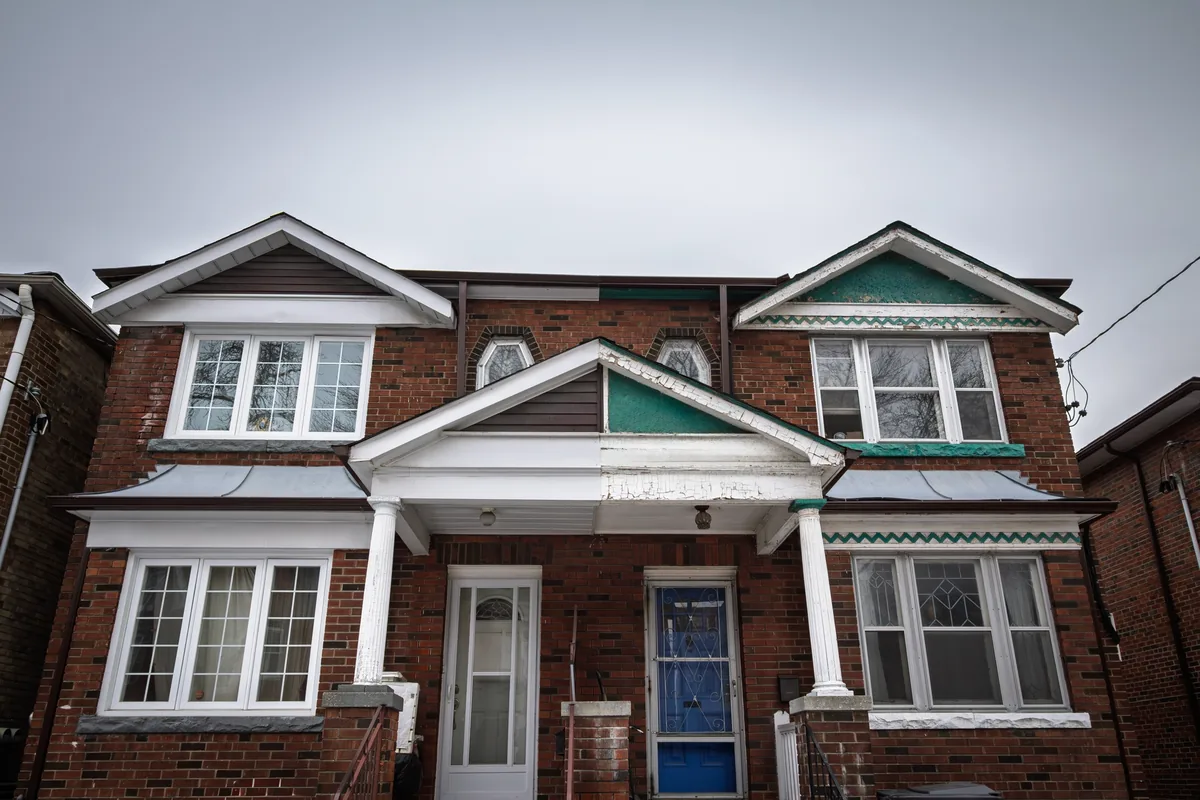

Oregon duplex regulations and licensing
Oregon puts its rental duties in the tenancy — what you hand an applicant, how you may take money, when you must account for it — and it has been busy revising them. The duties a two-unit owner works under today come from the standing chapter, from a 2025 act that rewrote how a hold deposit is taken, and from a 2026 act in force since June that reaches how rent may be collected and how applications must be accepted. On a duplex none of that arrives once. It arrives per tenancy, which means you run the same sequence twice, on two clocks that almost never line up.
Everything you are holding is one accounting, and it lands quickly
The Oregon Residential Landlord and Tenant Act, ORS chapter 90, where a last month’s rent deposit is a security deposit by definition and the hold deposit taken before the lease answers to its own section.
That definition is the part owners misread. Money labeled as the last month’s rent is not a category of its own that sits outside the accounting; it is a deposit, and it carries the deposit duties with it. Money taken before there is a lease answers to a different section again. The operative text is at ORS 90.300(1), (12)–(13), read with ORS 90.147(2), and the two things worth fixing in your head are that the clock starts when the tenancy terminates and the tenant delivers possession — not on the day the keys reappear — and that the deposit and the prepaid rent are accounted for separately rather than netted into one figure.
It is worth knowing that other states set this up completely differently, because an owner who learned the rules elsewhere will import the wrong instinct. In Arkansas the security-deposit subchapter switches off entirely for an owner whose household and entities hold five or fewer dwelling units, so a small owner there can sit outside the statute altogether. Work from the Oregon section you are actually under, and treat any version of the rule that scales with how much you own as something you would have to find in the text before relying on it.
What Oregon actually requires of you
- Accept a check. You may not require a tenant to pay by debit card, credit card, electronic check or tenant portal, and if you turn down a payment the tenant offers you may not then charge a late fee or terminate for nonpayment of that rent. Or Laws 2026 ch. 23 (SB 1523) § 3(1)–(3)
- Post a printable copy of your rental application on your own website if you take applications through a tenant portal — or send one within seven days of a written request — and process the applications that arrive outside the portal alongside the ones that come through it. Or Laws 2026 ch. 23 (SB 1523) § 2(1)
- Hand the applicant a written statement of the rent, the fees, the deposits, the terms of the agreement to execute and the conditions for refunding or retaining the money before you take a hold deposit — and take one only after you have approved the application, never before. ORS 90.297(2), as amended by Or Laws 2025 ch. 392 (HB 3521) § 1
- Write the carpet-cleaning clause into the rental agreement before the tenancy starts, and be able to show the carpet was cleaned or replaced after the previous tenancy and before this tenant took possession — without both, and without a machine built for the job, the deduction has no statutory footing. ORS 90.300(7)(c)(A)(i)–(iii)
- Apply the last month’s rent deposit to the last month’s rent the moment either side gives a termination notice, the two of you agree to end the tenancy, or a term tenancy runs out — then account for and refund whatever you did not apply. ORS 90.300(9)–(10)
- Date the first certificate of occupancy before you set a rent increase — a unit certified less than fifteen years before the notice sits outside the annual cap, and the notice must state the facts supporting that exemption alongside the amount of the increase, the new rent and the effective date. ORS 90.323(3)(c), (5)(a)
Two of those bite before a tenancy exists at all, which is the phase a two-unit owner is least likely to have a process for. The application has to be reachable outside whatever software you use, and reachable on request. The hold deposit comes after the approval and after a written statement of what the money is for, never before. A third runs through the whole tenancy rather than in front of it: you have to be able to take a check, so the informal arrangement a small owner drifts into — one portal, one method, take it or leave it — is the arrangement the 2026 act rules out, and turning down a payment a tenant offers costs you the late fee and the termination that would otherwise follow.
Two more are documents rather than behavior. The carpet-cleaning deduction has to be written into the rental agreement before the tenancy starts and backed by proof the carpet was cleaned or replaced after the previous tenancy — which, on a building where you turn over one side while the other stays put, means keeping two separate paper trails that never share a date. And the first certificate of occupancy is the document that decides whether the annual rent cap reaches your increase notice at all; the notice has to state the facts supporting the exemption, so the certificate has to be findable before you write it, not after.
Where those duties live is itself a state-by-state question rather than a settled one. Wisconsin puts a rental owner’s pre-tenancy duties in a consumer-protection administrative code written by its agriculture and consumer protection department rather than in the landlord-tenant statute alone, so an owner reading only the statute there reads half the obligation. Oregon keeps its in chapter 90 and in the session laws that amend it — which is why the citations above mix ORS numbers with act and section numbers that have not been folded into the published edition yet.
What that means for you: Account for every dollar you are holding — security deposit, last month’s rent deposit and prepaid rent alike — within thirty-one days of the tenancy terminating and the tenant delivering possession, and give the deposit and the prepaid rent separate accountings; the clock runs from delivery of possession as the Act defines it, not from the day the keys come back.
Who enforces what, and where a complaint goes
Two different bodies matter and they do not do the same job. Fair-housing complaints about how you selected or treated the household in the other half are handled by the Oregon Bureau of Labor and Industries, Civil Rights Division, which is where a Formal Charge issues on a fair-housing finding. What a complaint costs to defend, and which part of a policy answers for it, belongs to the tenant discrimination page rather than to this one. Carriers, forms and rates are a separate matter entirely and sit with the Oregon Division of Financial Regulation, the division inside the Department of Consumer and Business Services whose statutes reach that department’s director rather than a commissioner.
Common Oregon duplex risks
Wildfire sets Oregon property placement, and the argument now runs on private models alone: the Legislature repealed the statewide wildfire hazard map, while the statute barring insurers from underwriting off a state-published map survives it — and that statute, like the wildfire notice rules beside it, reaches only what Oregon defines as homeowner insurance, a term the statutory definition says does not cover an owner’s interest in rental property. Windstorm and hail, the weight of ice and snow, and volcanic eruption all sit inside the standard named-peril schedule. Earthquake does not: the Cascadia subduction zone is a separate placement, written with a percentage deductible taken off the amount of coverage rather than off the loss, and it excludes tsunami, landslide and volcanic eruption even where a quake sets them off. Flood is its own placement through the National Flood Insurance Program or a private flood market, and earth movement is excluded outright. Owners the voluntary market will not take can reach the Oregon FAIR Plan Association, the state’s last-resort property writer.
Read that last point slowly if you live in half the building. The protection against underwriting off a state-published map is drawn around a defined term, and the definition puts an owner’s interest in rental property outside it — so the policy on a building you let is not the policy the protection was written for. A duplex where you occupy one unit and rent the other is the case that sits across the line, and this page is not going to tell you which side it lands on. Put the question to your carrier in writing, before a renewal rather than after a notice, and keep the answer.
Where the voluntary market will not write it, Oregon’s insurer of last resort is the Oregon FAIR Plan Association. Named-peril property insurance at actual cash value for the risks the voluntary market will not take — dwellings, mobile homes, farms and commercial property. Oregon’s statute calls the product essential property insurance rather than basic property insurance, and the plan offers no all-risk form, no replacement cost, no liability and no theft; on the dwelling form the extended-coverage perils, windstorm and hail among them, are an optional purchase rather than part of the base. Vacant buildings are ineligible, and so is anyone who can still be written in the regular market. Its dwelling eligibility reaches Dwelling buildings at one location designed for use by one to four families, eligible in all protection classes and not used for any business purpose, so a two-unit building is inside the program rather than an edge case for it. Oregon FAIR Plan Association dwelling program eligibility and Basic Form peril schedule; ORS 735.005(3), 735.035
What that eligibility does not do is hand you the cover you had. A named-peril form at actual cash value, with the extended-coverage perils sold as an addition and no liability at all, is a floor to build on rather than a placement to stop at — and the building underneath it is one structure that both of your rents depend on. Owners who end up there usually assemble the rest around it, which is a set of decisions taken once for the whole building because there is no half of it you could sensibly leave out.
Earthquake and flood are their own purchases here and they behave differently from one another. Before you buy earthquake cover, ask which figure the percentage deductible attaches to, because a duplex is insured as one structure and the answer is not the size of the loss. Flood is a separate market decision again, and on a valley or riverside lot it is the placement most often deferred and least often revisited.
The exposure that is genuinely about the number two is everything the building shares. One roof plane, one crawlspace, one service entrance, sometimes one water heater: each is a single component whose failure arrives in both units on the same day. Repairing the structure is property coverage; replacing what stops arriving while neither half can be lived in is loss of rents, and on a two-unit building that is the entire rent roll rather than a percentage of it.
In Oregon the perils a standard property form answers are Wildfire, Windstorm and hail, Weight of ice and snow, and Volcanic eruption. Earthquake and Flood are written separately and are not picked up by that form, and the coverage that responds is property coverage, loss of rents, and general liability.
Common Oregon duplex claims we see
Water is the routine one, and on a two-unit building it is routine in a particular way. A failure in a component the two halves share does not divide itself between them: it follows the framing, the floor assembly and the shortest path down. An owner with a corridor of units treats that as one unit out of many and reschedules around it. With two, the schedule is the building’s schedule, and there is nothing left over that is still earning while the work happens.
Winter produces the second pattern, and it is why the covered-peril list here reads the way it does. Ice and snow loading a roof, and the limb that comes down with it, damage a roof plane rather than a unit — and a duplex has one roof plane. The follow-on water and the days without heat then reach households on both sides of the wall from a single event, which is a very different conversation from a wildfire loss, where the outcome is usually the whole building and there is no partial version to plan around.
Liability claims come off the ground everybody crosses: the shared walk, the shared stair, the drive, the step down from a porch that serves both doors. General liability is the part of the policy that answers an injury claim on the premises, and on a duplex it is worth settling early which surfaces both households actually use — because on a small building the answer is usually “most of them”, and an arrangement nobody wrote down is the one that gets argued about afterwards.
Why Oregon duplex owners choose Rental Guard
The state fact that shapes this book is blunt: Oregon is Oregon protects homeowner policies from wildfire-map underwriting and then defines homeowner insurance to exclude an owner’s interest in rental property, which puts a landlord’s dwelling policy outside the protection. An owner with one two-unit building meets that on a single address, with no schedule to spread it across and no volume to argue with. We write one to four dwelling units and nothing beyond that line, which is why a two-unit building is ordinary work here rather than an exception — landlord insurance for a single rental house, duplex insurance for two, triplex insurance for three, and quadplex insurance for four. Every quote goes to a licensed agent we name on this site, placed under the agency NPN in the footer.
Owner-occupied, or both units let
This is the question that decides the most about an Oregon duplex, and it decides it on two separate axes at once. On the insurance side, a building you half occupy is part residence and part rental, which changes which markets will look at it, what the income side of the policy is scoped to, and — in this state particularly — whether a wildfire-underwriting protection written around homeowner insurance has anything to say about your building. On the tenancy side it changes almost nothing, and that asymmetry is where owners get caught.
If both units are let, the building is straightforwardly rental and one loss reaches the whole of what it earns. That is the version where loss of rents carries the most weight, since there is no occupied half quietly paying while the other is repaired.
Oregon’s owner-occupied carve-out is a room, not a building. ORS 659A.421(8) reaches the renting of space within a single-family residence the owner actually maintains and occupies as a primary residence where all occupants share some common space, and even there it lifts only the sex, sexual orientation, gender identity and familial status grounds, and only for the acts listed at (2)(a) to (d) and (f). A duplex has separate units and no shared common space, so the subsection does not touch it.
Owners who have read about the federal small-building exemption, or who have owned in a state that copied it, arrive expecting more shelter than that sentence gives them. They are not imagining the difference. Michigan draws its owner-occupied fair-housing line at two families rather than the federal four, so a resident owner of a two-unit building there sits inside a state exemption that an Oregon owner of the same building does not have. Two identical buildings, two states, opposite answers — which is exactly why the state you are actually in is the only one worth reading.
The operative text is ORS 659A.421(8), read with (1)(d) and (2), and it repays reading in full before you screen anybody for the other half. Living next door does not lower the standard; if anything it raises the value of a written process, because the record is the only thing that will look neutral later.
What that means for you: Read the subsection before you lean on it: if the second unit has its own door and its own kitchen you are outside the carve-out entirely, and source of income is a protected class in Oregon, so a housing-assistance payment cannot be the reason you decline an applicant.
Owners also move between the two arrangements — occupy for a few years while a mortgage settles, then let both sides. In Oregon that is not only a change to what the policy covers; it is a change to which of the state’s wildfire provisions your building was ever inside. Tell us when it happens rather than at the renewal after it, and we will re-ask the placement questions from the top rather than assuming the last answer still holds.
Major Oregon duplex markets
- Portland. Older eastside two-unit stock commonly runs one supply line and one panel through the whole building, so a condition an inspector writes up is a condition of both halves at once, and the wooded slopes on the west side put the same modest building inside the fuel picture that drives placement here.
- Salem. The weight of ice and snow sits on the covered side of an Oregon property form, and in the valley that is not a theoretical entry on a schedule — a loaded roof plane, or the limb that comes down onto it, is a repair both tenancies wait on together.
- Eugene. In a university city the tenancy calendar is the academic one, so both halves of a two-unit building can come up for renewal inside the same few weeks — the version of turnover an owner of two units feels hardest, because there is no third tenancy carrying the month.
- Gresham. East-county stock skews postwar and low, so a two-unit building there usually sits under one roof plane with one attic run above both units, and water that starts in one half rarely agrees to stop at the dividing wall.
- Hillsboro. Newer west-side construction is where the first certificate of occupancy stops being a filing detail and starts deciding whether the annual rent cap reaches your notice at all, and the date belongs in your file before you write the increase rather than after a tenant questions it.
- Bend. A high-desert building sits inside the wildland edge whatever its size, and with the state hazard map repealed the argument over that address now runs on private models — which is not a thing a two-unit owner can negotiate with, only plan around.
- Medford. Southern Oregon fire seasons are what most often produce the declination or the non-renewal letter that sends a small residential building to the last-resort market, and the dated letter you are handed is the document that starts that placement rather than a formality to file.
- Springfield. Across the river from Eugene and sharing its tenancy calendar, the stock here runs older and lower, and a single-level two-unit building concentrates the plumbing, the crawlspace and both rents into one structure.
Related reading
Oregon duplex insurance FAQs
I live in one half of my Oregon duplex. Does the deposit accounting still apply to the other half?
Yes. The duty attaches to the tenancy, not to how far away you live from it. Account for everything you are holding from that tenant — the security deposit, a last month’s rent deposit, and prepaid rent — within thirty-one days of the tenancy terminating and the tenant delivering possession, and give the deposit and the prepaid rent separate accountings. Sharing a wall with the person you owe the accounting to makes the paperwork feel unnecessary and makes a disputed deduction considerably more awkward.
Does Oregon’s owner-occupied exemption cover my duplex?
The subsection is written around a single-family residence the owner maintains and occupies as a primary residence where all occupants share some common space, and it lifts only certain grounds and only certain acts. A duplex has separate units and no shared common space. Read ORS 659A.421(8) itself before you rely on any part of it, and note that source of income is a protected class in Oregon, so a housing-assistance payment cannot be the reason you decline an applicant.
Can I take a deposit from an applicant before I decide whether to rent to them?
Not a hold deposit. Oregon requires the approval first: you take a hold deposit only after you have accepted the application, and before you take it you hand the applicant a written statement of the rent, the fees, the deposits, the terms of the agreement you expect them to execute, and the conditions on which the money is refunded or kept. That sequence changed with the 2025 amendment to ORS 90.297 and applies to deposits received on or after 1 January 2026.
Can I require rent through a portal on a two-unit building?
No. You may not require a tenant to pay by debit card, credit card, electronic check or tenant portal, and if you turn down a payment a tenant offers you, you cannot then charge a late fee or terminate for nonpayment of that rent. If you take applications through a portal you also have to post a printable application on your own website, or send one within seven days of a written request, and process what arrives outside the portal alongside what comes through it. Both duties are in force under the 2026 session law.
My duplex is new. Is it outside the annual rent cap?
That turns on the date of the first certificate of occupancy, not on how the building was marketed or when you bought it. A unit certified less than fifteen years before the notice sits outside the cap, and the notice itself has to state the facts supporting the exemption alongside the amount of the increase, the new rent and the effective date. Find the certificate and its date before you write the notice — the exemption is something you assert in the notice, so the document has to exist first.
A carrier declined my duplex over wildfire. What now?
The Oregon FAIR Plan Association is the state’s last-resort property writer, and its dwelling eligibility reaches buildings at one location designed for use by one to four families, in all protection classes, not used for any business purpose. What it hands you is narrower than a standard form: named perils at actual cash value, no all-risk form, no replacement cost, no liability and no theft, and on the dwelling form the extended-coverage perils are an optional purchase rather than part of the base. Send us the declination or non-renewal letter before the date on it, and expect the placement to be built in layers rather than bought whole.
One side is between tenants. Does that make the building vacant?
The last-resort market treats a vacant building as ineligible, and forms in the voluntary market draw the occupancy line in their own words rather than in one shared definition. A building with one unit lived in and one standing empty is not obviously either thing, and on a two-unit building the empty half is half the rent roll rather than a rounding error. Tell us while the gap is still hypothetical instead of after it opens, and what replaces the stopped rent is set out on the loss of rents page.
Is duplex insurance a separate product from landlord insurance?
It is the same landlord policy, written on a building that happens to hold two dwelling units. Saying otherwise would be inventing a difference to make a page look useful. What is genuinely different is arithmetic and concentration: one structure, one deductible, one repair schedule, and two rents that stop together. In Oregon it is also a wildfire placement argued on private models, and a set of chapter 90 duties that arrive per tenancy — so a two-unit owner runs them twice on two different clocks.
Get an Oregon duplex insurance quote
Send us the building and the policy you have now. and we will start with the two questions that decide the rest: who lives in the other half, and where the building sits.
Get a Free Quote