
States we serve · Utah
Utah duplex insurance
Two dwelling units on one foundation, in a state whose deposit remedy waits for a notice the renter has to serve and whose most active fault runs beneath the corridor most of this rental stock stands in. Both of those land on one structure carrying two leases.
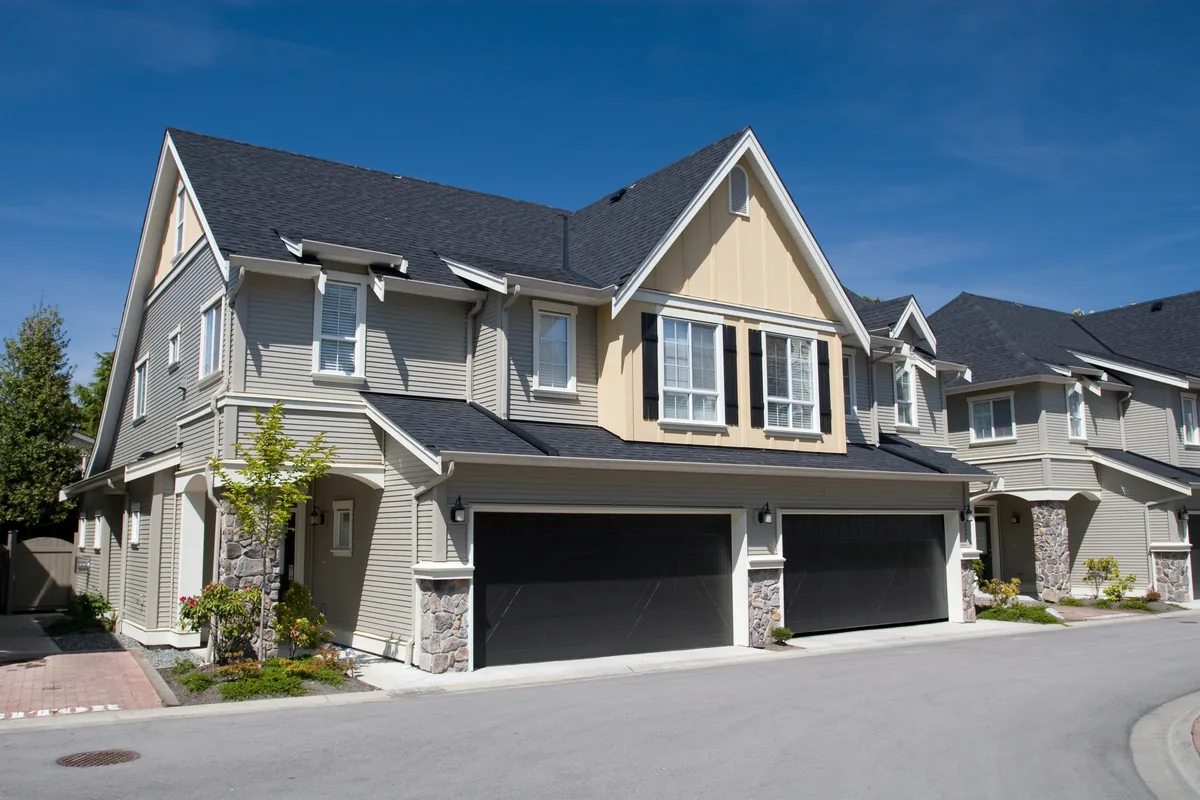

Utah duplex regulations and licensing
Utah keeps real-estate and property-management licensing in Title 61, Chapter 2f, and § 61-2f-202.5 answers the question most two-unit owners are actually asking: an owner or lessor acting on real estate the individual owns needs no license, and neither does a member of the property owner’s immediate family. Collect the rent on your own duplex yourself and that chapter is not about you. It becomes about you the moment somebody else runs the building — § 61-2f-201(1)(d) gates the property-management license to conduct on or after January 1, 2027, which is reason enough to look again at a management arrangement already in place.
What Utah does regulate closely is the tenancy, and it does it across two chapters rather than one. On a building with two doors that distinction earns its keep, because each duty below attaches to a tenancy while the thing carrying both tenancies is a single structure you own once.
The deposit rule runs on a notice, not on a calendar
Two chapters split the job. Title 57, Chapter 17, Residential Renters’ Deposits, governs the money — deposit, prepaid rent, itemization and the tenant’s notice that unlocks a remedy. The Utah Fit Premises Act at Title 57, Chapter 22 governs condition, entry and everything an owner must put in writing before taking a fee. Read two subsections before relying on either: § 57-22-3(4) lets any duty in the Fit Premises Act be allocated to a different party by explicit written agreement signed by the parties, and § 57-22-4(9) tells a renter that an owner’s failure on the entry, disclosure, refund, fee, inventory and identification subsections is neither an excuse for the renter’s own compliance nor a cause of action against the owner.
Under Utah Code § 57-17-2; § 57-17-3(2), (3), (5); § 57-17-5(3); § 57-22-3(4); § 57-22-4(3), (4), (6), (9); § 57-22-5.1(3) the money side has a shape most owners have backwards. Nothing in the deposit chapter begins running when the renter hands back the keys. It begins when the renter serves the notice the code prints as a form — TENANT’S NOTICE TO PROVIDE DEPOSIT DISPOSITION — and from that service you have five business days to produce the deposit balance, the prepaid-rent balance and the written itemization together. A renter who never serves it is not entitled to the statutory relief at all.
Read the unit of time twice. Business days are not calendar days, so a departure landing beside a weekend moves your deadline without moving a single date on your calendar. And on a two-unit building the two halves run unrelated clocks: the notice belongs to the renter who served it, and whether the other unit is occupied, empty or mid-turnover has nothing to do with when your five days expire.
The other half of the deposit rule is a timing rule of a different kind. Utah permits a non-refundable share, and permits it only where the renter was told so in writing at the moment the money changed hands. Section 57-17-2 is a single undivided sentence carrying no subdivisions, which is worth knowing precisely because there is nowhere inside it for a late disclosure to hide.
What Utah actually requires of you
- State in writing that any part of the deposit is non-refundable at the time you take the deposit — not later in the lease packet and not in the move-out letter. Utah lets a deposit be made non-refundable, but only where there is a written agreement and only where the renter was told so when the money changed hands. Utah Code § 57-17-2 (the section is a single undivided sentence and carries no subdivisions)
- Answer a tenant’s served TENANT’S NOTICE TO PROVIDE DEPOSIT DISPOSITION inside five business days with the deposit balance, the prepaid-rent balance and the written itemization — the tenant’s service starts this clock, not the move-out, and a tenant who never serves the notice is not entitled to the statutory relief at all. Utah Code § 57-17-3(5), read with (3)(a)–(b) and (4); § 57-17-5(3)
- Disclose in writing before you accept an application fee or any other payment from a prospective renter: a good-faith estimate of the rent and of each fixed non-rent expense, the type of each use-based non-rent expense, the day the unit is scheduled to be available, the criteria you will apply to criminal history, credit, income, employment and rental history, and the process for getting money back. Utah Code § 57-22-4(3)(a)(i)–(v)
- Return all money a prospective renter paid you within five business days of their written demand where the rental agreement’s amount differs from your good-faith estimate or adds a use-based expense you never disclosed — their demand has to land within five business days of receiving the agreement and before they sign or take possession. Utah Code § 57-22-4(4)(a)–(b)
- Provide one of the three condition records the act names before the rental agreement is entered: a written inventory of the unit’s condition excluding ordinary wear and tear, a form the renter completes and returns within a reasonable time after occupancy, or an opportunity to walk the unit. One route, chosen deliberately, before signature. Utah Code § 57-22-4(6)(a)–(c)
- Refuse the perpetrator a copy of the key once you have installed or rekeyed a lock at a crime-victim renter’s request — the duty holds notwithstanding the rental agreement and holds even where that perpetrator is a renter named on it, and it is the perpetrator who must petition a court to get access back. Utah Code § 57-22-5.1(3)(d), read with (3)(a)–(c) and (3)(e)
Three of those clauses run before the renter has signed anything, which is unusual — most of what an owner remembers about landlord law happens at the end of a tenancy. The pre-fee disclosure at § 57-22-4(3) is the one that changes behavior on a small building. Before you accept an application fee you have to put in writing a good-faith estimate of the rent and of each fixed non-rent expense, the type of each use-based expense, the day the unit is scheduled to be available, the criteria you will apply to criminal history, credit, income, employment and rental history, and how money comes back. A duplex is filled one door at a time, out of a conversation rather than a queue, and that is exactly the setting where a written disclosure gets skipped for feeling too formal.
Its companion at § 57-22-4(4) turns the estimate into something with teeth. Where the agreement you hand a prospective renter differs in amount from your good-faith estimate, or adds a use-based expense you never disclosed, they may demand every payment back in writing — their demand landing within five business days of receiving the agreement and before they sign or take possession — and you return it within five business days of the demand. The estimate is therefore not a marketing figure. It is the number the refund right measures against.
The condition record at § 57-22-4(6) deserves a decision rather than a habit. The act names three routes — a written inventory of the unit’s condition excluding ordinary wear and tear, a form the renter completes and returns within a reasonable time after occupancy, or an opportunity to walk the unit — and it wants one of them in place before the rental agreement is entered. An owner running two tenancies out of one building drifts easily into two different records taken two different ways, and a deduction argued a year later is worth no more than whichever record that half of the building happens to carry.
The lock, the key and the wall you share
Section 57-22-5.1(3) is short, and it is the clause most likely to reach a duplex without warning. A renter who is a victim of a crime may require you to install a new lock at their own cost; you may rekey or replace it, and you may keep a key. Then comes the part to know in advance: you shall refuse the perpetrator a copy of the key, and that duty holds notwithstanding the rental agreement — including where the perpetrator is a renter named on it. Restoring access is a petition the perpetrator makes to a court, not a judgment call that rests with you.
On a building with two doors the households are one wall apart and the people involved may already know each other by name. That softens nothing and creates no discretion. Follow the subsection as written, in writing, and tell us early — how a policy responds to anything arising out of that sequence is a question worth asking before the sequence starts rather than during it.
One structural provision sits underneath all of the above. Section 57-22-3(4) lets any duty in the Fit Premises Act be allocated to a different party by explicit written agreement signed by the parties — a genuine lever on a building where the owner occupies one half and a renter the other, and a genuine hazard where the allocation is assumed instead of written. And § 57-22-4(9) tells the renter something an owner should read too: an owner’s failure on the entry, disclosure, refund, fee, inventory and identification subsections is neither an excuse for the renter’s own compliance nor a cause of action against the owner.
What that means for you: Put the non-refundable share of the deposit in writing at the moment you take the money, disclose the rent estimate and your screening criteria before you accept an application fee, document the unit’s condition by one of the three routes the Fit Premises Act names, and treat a tenant’s served deposit-disposition notice as a five-business-day clock rather than as a complaint.
Who enforces fair housing here, and who regulates the policy
Two different bodies, and owners routinely mix them up. A complaint about who was allowed to rent the other half of your duplex goes to the Utah Antidiscrimination and Labor Division, Utah Labor Commission — the division’s own Fair Housing Unit administers and enforces the Utah Fair Housing Act, and a complaint filed there is automatically filed with HUD under a cooperative agreement, so a state filing is not a smaller filing. Coverage for an allegation of that kind is its own subject and is set out on the tenant discrimination page. The carriers and the forms themselves answer to the Utah Insurance Department.
Common Utah duplex risks
A standard property form answers for fire and lightning — which is how a wildfire loss gets paid — for the wind and hail of the thunderstorm season and the downslope canyon wind that comes off the Wasatch and the Oquirrh, and for the weight of ice and snow a bench-country winter leaves on a roof. Two perils sit outside that form, and the Insurance Department says so in its own words: flood and earthquake damage are not covered in a typical homeowners or renter’s policy. Earthquake is the exposure that shapes this state, because the Geological Survey puts the Wasatch fault zone — Utah’s longest and most active fault, broken into segments — along the base of the range beneath the same corridor that holds the Salt Lake, Davis, Weber and Utah County rental stock, and names the Hurricane fault in the south as another of the state’s most active. An owner who buys the separate earthquake placement should read the deductible before the limit: the Department warns that it is written as a share of the dwelling coverage limit rather than as a share of the loss, that it applies separately to dwelling, personal property and loss of use, and that a waiting period runs before the policy answers at all. Flood is the second placement, and the Department’s caution is that most of the flooding here in recent years has fallen outside the state’s special flood hazard area — so the map is not the underwriting question. Landslide, mudslide and earth movement travel with the shaking and with the post-fire burn scar, and the Department points owners to a difference-in-conditions form for that group rather than to an endorsement riding on the base policy.
Two lines in that read differently on a building holding two dwelling units. The first is the earthquake deductible. Written as a share of the dwelling coverage limit rather than as a share of the loss, it is sized against the whole structure — and a duplex is one structure, whichever half the shaking makes unusable. The second is that the deductible applies separately to dwelling, personal property and loss of use — not one retention taken once, but three attaching to three different parts of the placement. Which line on your own declarations answers for stopped rent is a declarations question, and the mechanism behind it is set out under loss of rents.
The placement itself is a whole-building decision. There is no version of a duplex where you buy the earthquake exposure for one half and leave the other out: one foundation, one roof, one address, and the fault segment underneath does not stop at the party wall. The difference-in-conditions route the Department names for the flood, mudslide and earth-movement group works the same way — one decision, made once, for the structure both rents depend on. What the shaking does to that structure is property coverage; what it does to the income while both halves are unusable is loss of rents, and there is no third tenancy left carrying you through the repair.
Away from the fault it is the winter that fills the ordinary claim file. Weight of ice and snow sits on the covered list because a bench-country roof genuinely holds it, and one roof over two units means a load problem is never half a problem. Downslope canyon wind behaves the same way: it arrives at a building, not at a unit. What separates a duplex from a single rental house here is not the peril at all — it is that the same event has two leases underneath it.
The perils a standard property form answers in Utah are Wildfire and other fire and lightning; Wind, including downslope canyon wind; Hail and severe thunderstorm; and Weight of ice and snow. Outside that form sit Earthquake; Flood and surface water; and Landslide, mudslide and earth movement, which the Department routes to a difference-in-conditions form rather than to an endorsement riding on the base policy. The coverages that answer a loss on a two-unit building are property coverage, loss of rents, and general liability.
Common Utah duplex claims we see
Roof first, and water from above second. Snow that sits, thaws and refreezes at the eaves works on the covering of the whole building; when it finally gets in, it gets into whichever unit lies beneath the failure, and on a two-unit building that is one half of the rent roll rather than a small share of it. The claim is one claim on one roof, and the repair schedule keeps both tenancies waiting on it.
Freeze losses cluster in the half nobody is living in. A unit between tenancies through a Utah winter, with the heat turned down to keep the bill honest, is the recurring shape. Whether that condition changes anything under the contract you hold is a wording question with no general answer, and it is a far cheaper question in October than in February.
Then the ground everybody crosses. On a duplex the walk, the drive, the shared stair and the parking apron are used by two households and cleared by whoever the lease says clears them — which, on a great many two-unit leases, is nobody in particular. A Utah winter turns that omission into a weekly exposure rather than an annual one. When somebody comes down on that apron and brings a claim, the coverage in the file is general liability, and the first thing we ask about a two-unit building is which surfaces both tenancies cross and whose job the shovel is.
Why Utah duplex owners choose Rental Guard
Utah is the state where a renter’s deposit remedy stays shut until the renter serves a notice the code prints as a form, after which the owner’s answering clock runs in business days rather than calendar days. That is a procedural fact rather than a dramatic one, and it is precisely the kind a small owner gets wrong, because it inverts the intuition that a deadline starts when the renter leaves. We place residential rentals of one, two, three and four dwelling units and we stop there: the landlord, duplex, triplex and quadplex pillars set out what changes across that range and what does not, and the same four coverages sit under every one of them. A two-unit submission is therefore not the small end of anything here. The agent who reads what you send is licensed, named on this site, and working under the agency NPN printed in the footer.
Owner-occupied, or both units let
This is the question that decides the most about a Utah duplex, and Utah answers it in a way that catches owner-occupants out — because the exemption people have heard about is not written around the building at all.
The private-owner exemption at § 57-21-3(1) turns on how many single-family dwelling units the owner holds, not on how many doors sit in one building: it lifts the chapter from a single-family dwelling unit sold or rented by its owner only while that owner does not own an interest in four or more single-family dwelling units held for sale or lease at the same time, does not retain a real estate broker or salesperson, and — subsection (1)(d) — does not use a discriminatory housing practice under § 57-21-5(2) in the sale or rental. The chapter defines "dwelling" at § 57-21-2(15) but never defines the phrase that exemption is written around. The second exemption, at § 57-21-3(3), reaches only the rental of a room in a single-family dwelling by an owner-occupant of a dwelling designed for occupancy by four or fewer families, and it opens by excepting § 57-21-5(2) from its own reach. So the advertising and application-form rule stands whichever exemption an owner is counting on. It also matters which classes the rule names: § 57-21-5(1) and (2) run on race, color, religion, sex, national origin, familial status, source of income, disability, sexual orientation and gender identity, and § 57-21-2(25) defines source of income as the verifiable condition of receiving federal, state or local assistance, or being a tenant receiving rental assistance or rent supplements.
Three things in that repay slowing down for. The first exemption counts single-family dwelling units the owner holds: an interest in four or more of them, held for sale or lease at the same time, closes it. That is a question about what you own across everything, not about how many doors your building has. The second exemption is much narrower than its reputation — it reaches the rental of a room in a single-family dwelling by an owner-occupant, and letting a whole second unit to a household of its own is not the letting of a room, whatever else is true about the arrangement. Its four-or-fewer-families clause describes the dwelling the owner occupies; it is not a permission running to every building of that size.
The third is the condition both exemptions carry. Subsection (1)(d) makes the first unavailable to an owner who uses a § 57-21-5(2) practice in the sale or rental, and the second opens by excepting § 57-21-5(2) from its own reach. So the advertising and application rule stands on both sides of the line, and that is a practical instruction rather than a legal nicety: write the advertisement and the application form for the other half of your duplex as though no exemption existed, because leaning on one is exactly what makes the wording of the advertisement matter.
It matters, too, which classes § 57-21-5 names. Source of income is among them, and § 57-21-2(25) defines it as the verifiable condition of receiving federal, state or local assistance, or being a tenant receiving rental assistance or rent supplements. An applicant for your second unit who is paying with a supplement is an applicant in a protected class in Utah, and a screening rule that turns them away at the door is a decision § 57-21-5 has something to say about.
The operative text is Utah Code § 57-21-3(1)(a)–(d), (3); § 57-21-5(1), (2), (6)(b); § 57-21-2(15), (24), (25); § 57-21-8(1), (3)(a), and it is worth reading before you advertise the other half rather than afterwards.
What that means for you: Count your single-family units across the whole portfolio rather than the doors in one building before you assume § 57-21-3(1) reaches you, keep the advertisement and the application form clean either way because both exemptions are conditioned on § 57-21-5(2), read an applicant on a voucher or a rent supplement as an applicant in a protected class, and file or answer with the Antidiscrimination and Labor Division’s Fair Housing Unit rather than waiting for a federal filing.
Utah is not the only shape this takes, and the differences are wide enough to matter if you own across a state line. New Jersey draws its fair-housing line at two units in the building itself, so the count there is of doors rather than of holdings. Wisconsin grants no owner-occupied building exemption at all, and asks instead whether you share the dwelling unit with the renter. Arkansas moves the counting onto the money: an owner holding no more than five dwelling units across a household and its entities is outside the Arkansas deposit statute altogether — the mirror image of Utah, where the deposit chapter turns on what the renter serves rather than on what the owner holds.
Owners also move between the two arrangements. You occupy one half for a few years, then let both. What the income side of the policy is scoped to changes at that moment, and so does the fair-housing arithmetic above, because what you own and what you occupy are both inputs to it. Tell us when it happens rather than at the renewal after it.
Major Utah duplex markets
- Salt Lake City. Salt Lake County heads the corridor list the fault mapping runs beneath, and a duplex here stands on one foundation across whichever segment it happens to sit on — so the separate earthquake placement is settled once for the structure and cannot be split between the two tenancies inside it.
- West Valley City. The downslope canyon wind comes off both ranges and reaches a valley-floor duplex as a whole-building event, and an owner here who has allocated a maintenance duty by handshake rather than by the explicit signed agreement § 57-22-3(4) requires finds that out during the repair rather than before it.
- Provo. Utah County is on that same corridor list, and a two-unit building here fills one door at a time — which makes the pre-application-fee disclosure at § 57-22-4(3) a routine part of an owner’s year rather than an occasional formality.
- Sandy. Bench-side stock takes the canyon wind and the snow that arrives with it, and on a duplex the drive and the parking apron the two households share are the surfaces a lease most often forgets to assign to anybody.
- Ogden. Weber County is on the list too, and a hard winter puts wind and snow load on the roof as one event rather than two; one roof over two dwelling units means a covering failure is never a partial failure of what the building earns.
- St. George. The south is governed by the Hurricane fault rather than by the Wasatch segments, which the Survey names among the state’s most active as well — an owner who read the earthquake question along the Front and applied the answer down here has answered a different question.
- Layton. Davis County completes that list alongside Salt Lake, Weber and Utah, and a duplex here is the building where the deposit machinery gets used twice a year rather than once: the five-business-day clock belongs to whichever renter served the notice, and the other half of the building is not part of the calculation.
- Logan. North of the four-county run the corridor description names, the winter rather than the fault is what fills the claim file, and a two-unit building carries a whole season of roof load over two leases signed on two different dates.
Related reading
Utah duplex insurance FAQs
When does the clock on my Utah duplex deposit actually start?
When the renter serves you the notice, not when they hand back the keys. Utah prints the notice as a form — TENANT’S NOTICE TO PROVIDE DEPOSIT DISPOSITION — and once it is served you have five business days to produce the deposit balance, the prepaid-rent balance and the written itemization. A renter who never serves it is not entitled to the statutory relief at all. Business days are not calendar days, so a move-out beside a weekend moves your deadline without moving anything on the calendar.
Can I make part of the deposit non-refundable?
Utah allows it, and it allows it on one condition of timing: there has to be a written agreement, and the renter has to be told at the time the money changes hands. Section 57-17-2 is a single undivided sentence with no subdivisions, which is worth knowing because there is nowhere in it for a later disclosure to live. A non-refundable share explained for the first time in the lease packet, or in the move-out letter, is not what that section describes.
I live in one unit and rent the other. Am I exempt from the Utah Fair Housing Act?
Read the two exemptions before you assume either reaches you, because neither is written around a two-unit building. The first, at § 57-21-3(1), counts single-family dwelling units the owner holds and closes once the owner has an interest in four or more of them held for sale or lease at the same time. The second, at § 57-21-3(3), reaches the rental of a room in a single-family dwelling by an owner-occupant. Letting a whole second unit to a household of its own is not the letting of a room. And both are conditioned on § 57-21-5(2), so the advertisement and the application form are governed either way.
One side is empty over the winter. What should I tell you?
Tell us before the gap starts. A unit standing empty between tenancies through a Utah winter, often with the heat turned down to save the bill, is a set of facts a policy may treat differently from an occupied building, and the wording you actually hold is what decides it rather than any general rule. This matters more on a duplex than on a larger building because the empty half is half of everything the building earns. That conversation costs nothing in October.
Do I need a license to manage my own duplex in Utah?
Section 61-2f-202.5 puts an owner or lessor acting on real estate the individual owns outside the licensing requirement, and it does the same for a member of the property owner’s immediate family. So running your own two-unit building is not the licensed activity. The chapter becomes relevant when somebody else runs it for you: § 61-2f-201(1)(d) gates the property-management license to conduct on or after January 1, 2027, which is worth a look at any management arrangement you already have in place.
A renter in one half was the victim of a crime and wants the locks changed.
Section 57-22-5.1(3) covers exactly this. The renter may require a new lock at their own cost; you may rekey or replace, and you may keep a key. The clause to know in advance is (3)(d): you shall refuse the perpetrator a copy of the key, and that duty holds notwithstanding the rental agreement — including where the perpetrator is a renter named on it. Getting access back is a petition the perpetrator makes to a court, not a decision that rests with you. On a building where the two households are one wall apart, decide none of this in the moment.
Is duplex insurance a separate product from landlord insurance?
It is the same policy written on a building that holds two dwelling units, and it is worth saying that plainly rather than inventing a distinction. The four coverages are the same four and the markets are the same markets. What is genuinely different in Utah is arithmetic rather than product: one structure sits over one fault segment and carries two leases, so a single covered event reaches everything the building earns, and the deposit and disclosure machinery runs separately for each tenancy on a building you own once.
How much of the earthquake question can I settle before I buy?
Most of it, and the Insurance Department has published the parts that surprise owners. The separate earthquake placement carries a deductible written as a share of the dwelling coverage limit rather than as a share of the loss; it applies separately to dwelling, personal property and loss of use; and a waiting period runs before the policy answers at all. On a duplex the dwelling limit covers both halves, so that deductible is sized to the whole structure whichever half is unusable. Read those three lines on your own declarations before you read the limit.
Get a Utah duplex insurance quote
Send us the building and the policy you have now. and we will read the earthquake placement and the deposit machinery with you before the winter does it for us.
Get a Free Quote