
States we serve · Virginia
Virginia duplex insurance
Two units, one roof, and a Commonwealth that draws one fair-housing line through the building you live in and a second one through everything you own. More of what follows is about those two lines than about the structure.
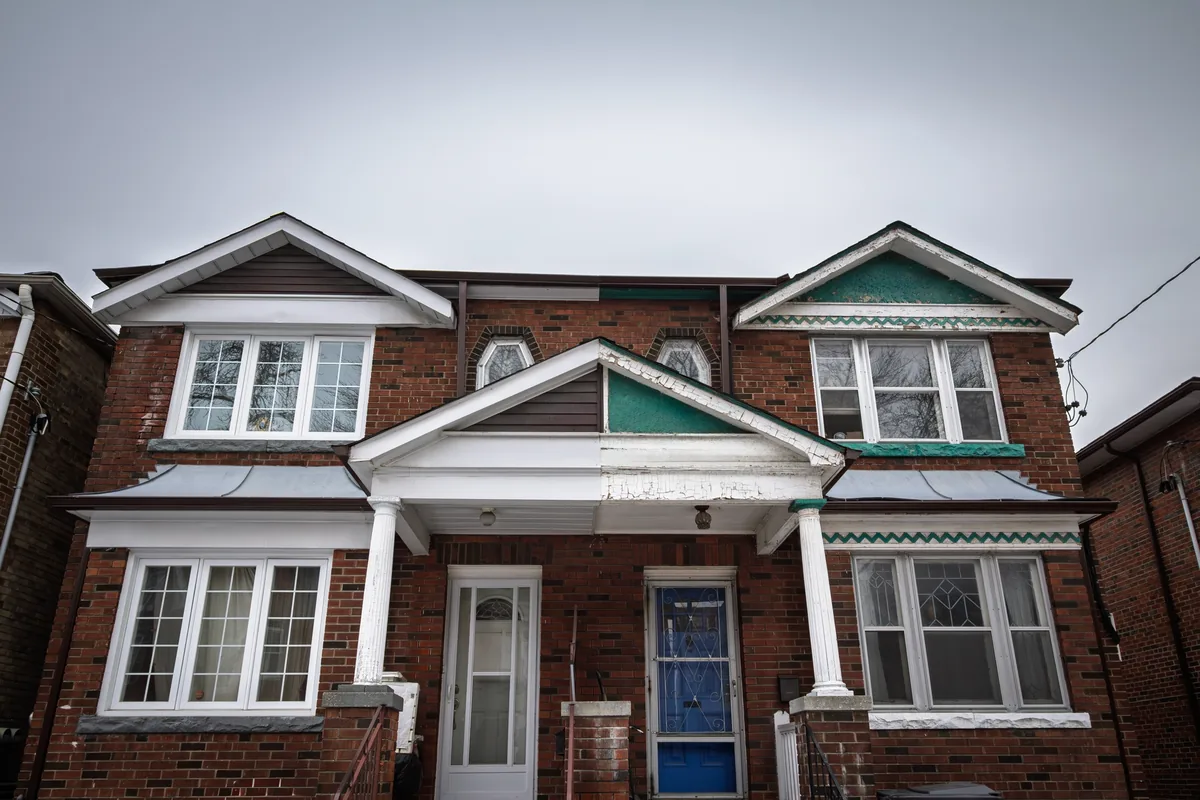

Virginia duplex regulations and licensing
Two bodies of law decide most of what a Virginia duplex owner has to do, and only one of them looks at the building. The residential landlord and tenant act runs the deposit on written inspections and fixed windows. The fair-housing chapter draws two exemption lines in one section — and the second of those counts something that is nowhere on your lot.
The deposit is settled against two written inspections
The Virginia Residential Landlord and Tenant Act reaches every single-family and multifamily dwelling unit in the Commonwealth, and it settles the deposit against two written inspections rather than against memory.
Under Va. Code §§ 55.1-1201(B), 55.1-1214(A), 55.1-1226(A), (G) the money is not the part that trips owners up — the record is. The tenancy opens with an itemized written report of the damage that is already there, handed to the tenant, who then gets a short window to write back disputing it. It closes with an inspection the tenant is entitled to attend, which means you have to tell them so in writing before it happens. What you can deduct at the end is what those two documents will carry.
What Virginia actually requires of you
- Walk the unit and hand the tenant an itemized written report of the damage already there within five days of occupancy — once their own five-day window to object in writing closes, your report is the record. Va. Code § 55.1-1214(A)
- Put the tenant’s right to be present at your move-out inspection in writing the moment you ask them to vacate, or within five days of their notice that they are leaving — then set the inspection inside seventy-two hours of delivery of possession. Va. Code § 55.1-1226(G)
- Send a written, itemized notice within thirty days each time you settle on a deduction during the tenancy rather than saving it for the end — the duty lifts only for a deduction determined inside the last thirty days of the agreement. Va. Code § 55.1-1226(E)
- Keep two years of itemized deduction records for each tenant, and open that tenant’s records to them, their agent or their attorney during normal business hours. Va. Code § 55.1-1226(F)(1)–(2)
- Confirm the provider is licensed or approved by the Virginia State Corporation Commission before you accept damage insurance in place of a deposit, and that its per-claim limit is no less than the deposit you would have required — then expect the tenant to be able to switch back to cash at any time without your consent. Va. Code § 55.1-1226(I)(1), (3), (J)
- Cut one check payable to all the tenants on the agreement; where none of them leaves a forwarding address, hold the money and remit it to the State Treasurer as unclaimed property once a year has run from the end of the forty-five-day period. Va. Code § 55.1-1226(B)
A duplex runs that whole sequence once per half. The two tenancies rarely start or finish together, so a five-day move-in report on one side and a forty-five-day disposition on the other can both be running in the same week out of the same building, with different dates attached to each. Owners who keep one folder per building rather than one per agreement are the ones who find a date they cannot evidence.
Two of the clauses above are easy to read past and expensive to get wrong. If you take damage insurance instead of cash, the provider has to be licensed or approved by the commission, the per-claim limit has to be at least the deposit you would otherwise have held, and the tenant can go back to cash whenever they like without asking you. And where an agreement has more than one tenant on it, the refund is a single check to all of them — which on a duplex means one check per agreement, not one per building.
Virginia also lets you settle a deduction while the tenancy is still running rather than banking every item until the end, and it attaches a written notice and a thirty-day clock to each time you do. Owners read that as an administrative nuisance; it is closer to the opposite, because an item raised and documented while the tenant is still there is an item the tenant had a chance to answer. The duty relaxes only for something you determine in the last thirty days of the agreement, which is precisely when a disputed item is hardest to substantiate. Alongside it sits a two-year retention duty, and a tenant, their agent or their attorney may come and read their own file during business hours — so the record is written to be read by the person it is about, not only by you.
Two exemption lines, and only one of them looks at your building
Federal fair-housing law carries a narrow carve-out for a small owner-occupied building, and owners generally arrive having read about that one. Virginia keeps an owner-occupied line of its own at four families, so a two-unit building you live in sits under where the Commonwealth draws it. That much behaves the way people expect.
The second line in the same section behaves differently, and it is the one worth slowing down for. It measures the rental dwelling units you hold across the whole Commonwealth rather than the units in this building, and it reaches through a business entity at more than a ten percent interest — so units you own with other people, somewhere else, are inside the same count. A duplex is a small building; it is not automatically a small holding, and only one of those two facts is what the subsection asks about.
What that asks of a Virginia owner is a running schedule rather than an assumption: every rental dwelling unit you hold in the Commonwealth, plus every unit sitting inside an entity you have a stake in, with the size of that stake written next to it. The number is easy to keep current and awkward to reconstruct later, and it moves on transactions that have nothing to do with this building — a second duplex two counties away, or a minority share taken in a family entity that holds units elsewhere. An owner who can state the figure on the day it is asked for is in a different position from one who has to go and work it out.
Neither exemption reaches how you advertise. Whichever one you are relying on, the wording of a notice or a posting is governed, which is why screening the single tenant on the other side of your wall runs on the same written process you would use on a much larger book. Enforcement sits with the Virginia Fair Housing Office. What a complaint costs to answer, and which part of the policy pays for answering it, is set out on the tenant discrimination page. Carriers and forms are regulated by the Virginia State Corporation Commission Bureau of Insurance.
Common Virginia duplex risks
A standard property form answers for fire, lightning, wind, hail and the weight of ice and snow, with tropical and named-storm wind across Hampton Roads and the Eastern Shore and severe convective storm inland driving the placement conversation; the Bureau of Insurance notes that many insurers apply a separate deductible to wind, hail or named storms, written either as a flat amount or as a percentage of the amount of coverage on the dwelling. Flood, surface water and storm surge sit outside that form entirely — the Bureau states that policies issued in Virginia generally do not provide coverage for them — and are their own placement through the National Flood Insurance Program or a private flood market, which is the live question in the tidal blocks of Norfolk, Portsmouth and Virginia Beach and along the James, the York and the Rappahannock. Earthquake is likewise a separate purchase, and the Bureau says a policy generally provides no coverage of any type for it. Owners the voluntary market turns away apply to the Virginia Property Insurance Association, which writes basic property insurance on qualified property at a fixed location anywhere in the Commonwealth — and which does not write liability on a tenant-occupied dwelling at all.
For a two-unit owner the wind deductible is the sentence to read twice. It attaches to the structure, so where it is written as a share of the amount of coverage on the dwelling it is calculated on the whole building rather than on the half the damage happened to be in. One roof, one dwelling amount, one deductible — and both agreements sitting behind it.
Where the voluntary market will not write it, Virginia’s insurer of last resort is the Virginia Property Insurance Association, the state’s FAIR Plan. Dwelling and commercial property coverages on qualified property at a fixed location anywhere in the Commonwealth. The FP-1 form settles at actual cash value rather than replacement cost, does not name water damage or accidental discharge of liquids or steam among its perils, and carries no additional living expense; theft, replacement cost and ordinance-and-law come only as endorsements underwriting has to agree to. The gap that matters to an owner is liability — the association does not offer it on a tenant-occupied dwelling, and a non-owner-occupied dwelling does not qualify for it. Virginia Property Insurance Association producer FAQ, read in full; Va. Code § 38.2-2701 definition of “qualified property”
Read that last clause before you treat the association as a solution rather than a component. It answers for the building; it does not answer for a claim brought against you by somebody hurt on the walk, and a dwelling with a tenant in it is exactly the case it declines to take that part of. An owner placed there still needs general liability written somewhere, and arranging that after the property side has bound is the harder order to do it in.
The other clause to read closely is how the association’s form settles. It pays actual cash value rather than replacement cost, and replacement cost is an endorsement underwriting has to agree to rather than something the form starts with. On a two-unit building put up decades before its current owner bought it, the distance between those two numbers is not a rounding difference — it is the difference between a roof being replaced and a roof being depreciated. Theft and ordinance-and-law sit in the same endorsement category, and ordinance-and-law is the one that answers for the extra cost when a rebuild has to meet a code the original construction never met. None of that makes the association the wrong answer for a building the voluntary market has turned down. It makes it an answer you want to have read first.
The rest of what makes a Virginia two-unit building its own conversation is behind the walls. Older stock through the tidewater cities and the older river towns was frequently divided into two dwellings without dividing what serves them: one service entrance, one water heater, one stack. A failure at any of those does not stay in the half it began in, and what it costs to put the structure back is property coverage while the rent that stops during the work is loss of rents — with no third unit still earning while the repair runs.
In Virginia the perils a standard property form answers are Named-storm and hurricane wind, Hail and severe convective storm, Weight of ice and snow, and Fire and lightning. Flood, surface water and storm surge; and Earthquake are written separately and are not picked up by that form, and the coverage that responds is property coverage, loss of rents, and general liability.
Common Virginia duplex claims we see
The claim that defines the tidewater half of this state is wind. A named storm lifts covering off one roof, water follows it down through both halves, and the repair is a single scope of work with a single deductible applied to it. Owners who have only ever carried a building where the deductible was a flat figure are surprised by how the share-of-dwelling version behaves on a structure they think of as two small units.
The second claim is the one that gets refused, and the refusal is usually about which water it was. Water arriving through a hole the storm made in the envelope and water arriving across the ground are answered by different instruments, and the Bureau is direct that policies issued here generally do not answer for the second. In the tidal blocks of Norfolk and Virginia Beach, and along the James and the York, that distinction decides whether a two-unit owner has one placement or two.
Inland the pattern changes with the season rather than the storm track. Hail and straight-line wind through the piedmont, and the weight of ice and snow on an older valley roof, produce a slower kind of loss: a compromised roof, then a supply line in an unheated wall, then damage in a half nobody was standing in. Where the two dwellings share the original plumbing and the original panel, the fault is in one place and the damage is in two.
Liability claims come off the ground both households cross — the front walk, the shared drive, the steps up to the second door, the strip where the bins go. General liability answers a claim of injury on the premises, and on a two-unit building we ask early which of those surfaces either agreement actually hands to a tenant, because that question is usually answered by habit rather than by the lease.
Why Virginia duplex owners choose Rental Guard
Virginia is the state whose fair-housing source-of-funds exemption stops at four rental units — and more than a ten percent interest in a fifth, held anywhere in the Commonwealth through any entity, ends it, and a two-unit owner sits close enough to that line to need to know exactly where it runs. Every building this agency places has one, two, three or four dwelling units in it and nothing larger — the single rental home, the duplex, the three-unit building and the four-unit building — so a Virginia duplex file is ordinary work here rather than something that has to be argued into a market. We will also tell you when a Virginia rule runs in your favor and when the next purchase takes it away. Quotes are placed by a licensed agent this site names, under the agency NPN carried in the footer.
Owner-occupied, or both units let
Whether you live behind one of the two doors decides more about a Virginia duplex than the structure does. If you occupy one half, part of the building is your home and part of it is a rental, and those are underwritten as different things. Which markets will look at it changes. What the income side is scoped to changes, because only one agreement is producing rent. So do the ordinary questions — separate meters, separate entrances, who holds which keys, whether the laundry is yours or shared.
If both halves are let, the building is straightforwardly rental property and every dollar it earns depends on the same roof, the same service entrance and the same deductible. That is the version where loss of rents does its heaviest work, since nothing is still earning while the structure is being repaired.
Either way, the submission wants the same handful of facts stated plainly rather than implied: which half you occupy if you occupy one, whether the two dwellings have their own meters and their own entrances, what the two agreements say about the yard, the drive and the laundry, and whether anybody is living there under an arrangement that was never written down. A duplex where a relative occupies the second half without an agreement is an ordinary situation, and it is one an underwriter would rather hear from you at the quote than infer from a loss.
Virginia keeps the owner-occupied line at four families under § 36-96.2(B) but runs a second, unrelated line for source of funds — that one counts an owner’s rental dwelling units across the whole Commonwealth rather than in the building, and reaches through a business entity at more than a ten percent interest. Neither exemption touches the advertising ban.
That posture is not the one every state takes, which is worth knowing if you own in more than one. New Jersey draws its discrimination line at two units rather than at the federal four, so an owner-occupied two-family dwelling falls outside the act there — except as to publicly assisted housing. Florida follows the federal four-unit owner-occupied line. Tennessee narrows in a different dimension again — its landlord-tenant act reaches only counties above a population threshold, so where the building stands decides whether the act applies at all. Virginia is the one that asks how much you hold.
The operative text is Va. Code § 36-96.2(B), (I); § 36-96.3(A)(3), and the subsection worth reading slowly is the one about units held elsewhere.
What that means for you: Count your Virginia rental units, not the units in the building, before assuming any source-of-funds exemption reaches you, and keep every advertisement and notice inside the law whichever exemption you are relying on.
The count that matters here moves when you buy, not when you move. A second Virginia duplex takes you to four rental units, which is the top of where that line is drawn, and a minority stake in an entity holding anything else can take you past it without your ever having bought a building outright. Tell us when the holdings change rather than at the following renewal — it changes what we are placing and what you are relying on.
Major Virginia duplex markets
- Norfolk. Ghent and Colonial Place carry a genuine two-unit housing stock rather than converted singles, and the tidal streets around them are where the difference between what the property form answers for and what has to be placed separately stops being theoretical.
- Richmond. The Fan and Church Hill hold older row-built housing where the second unit is stacked above the first rather than beside it, so a roof or a stack that fails is a whole-building repair and both agreements are inside it.
- Virginia Beach. A named-storm deductible written as a share of the amount of coverage on the dwelling is the number that moves most here, and on one structure holding two agreements there is no second building to spread it across.
- Alexandria. Old Town and Del Ray two-unit dwellings are old enough that original service entrances and original plumbing still turn up in the walls between the halves, which is the finding that makes a small building harder to place than its footprint suggests.
- Arlington. Owner-occupied halves are common along the corridors here, and an owner living behind one of the two doors changes which markets will look at the building and what the income side of the policy is scoped to.
- Newport News. Shipyard and base hiring keeps two-unit demand steady through the peninsula, and the same weather that makes Hampton Roads a named-storm conversation puts a flood question on buildings that never sat on the water.
- Roanoke. Away from the tidal counties the driver is severe convective storm and the weight of ice and snow on an older roof, and a two-unit building in the valley carries both of those on a single structure.
- Charlottesville. University-adjacent two-unit buildings turn both halves over on the same calendar, which puts two move-out inspections, two written dispositions and two re-lets into one short window every year.
Related reading
Virginia duplex insurance FAQs
Does the Virginia Residential Landlord and Tenant Act reach a two-unit building?
Yes. The act does not sort buildings by how many doors they have — it reaches the dwelling unit, so both halves of a duplex are inside it whether you live in one of them or let both. What that gets you is a settled procedure: an itemized report at the start, an inspection at the end the tenant may attend, and a written disposition on a fixed clock.
I live in one half and rent the other. Does that exempt me from Virginia fair-housing law?
Virginia keeps its owner-occupied line at four families, so a two-unit building you occupy sits under where the statute draws that one. It is narrower than it sounds. The advertising rule survives the exemption entirely, so what you publish and how you word it are governed either way, and the second exemption in the same section does not turn on this building at all.
What is the source-of-funds exemption counting, if not my building?
Your rental dwelling units anywhere in the Commonwealth. It is a count of what you hold, not of what stands on one lot, and it reaches through a business entity at more than a ten percent interest — so a share of an LLC that holds units elsewhere is inside the count. Two duplexes put you at four units, which is the top of it.
What do I actually have to do at move-in and move-out?
Three things, in order. Hand the tenant an itemized written report of existing damage within five days of occupancy. Put their right to attend your move-out inspection in writing when the tenancy is ending, and hold that inspection within seventy-two hours of getting possession. Then deliver the itemized disposition inside forty-five days. On a duplex you run all of it twice.
My duplex was declined. What does the Virginia FAIR plan actually give me?
Basic property insurance on qualified property, which a two-unit building can be. Read the form before you rely on it: it settles at actual cash value, it does not name water damage among its perils, and there is no additional living expense. The gap that matters most to a landlord is liability — the association does not write it on a tenant-occupied dwelling.
Why does my Virginia policy have a separate deductible for wind?
Because many insurers writing here apply one, and the Bureau of Insurance says so in its own consumer guidance. It sits apart from the deductible that answers for everything else and is written either as a flat amount or as a share of the amount of coverage on the dwelling. On one roof over two agreements it applies once, to the whole structure.
Do I need a different kind of policy for a duplex than for a single rental house?
No, and the honest answer is worth more than a manufactured one. It is a landlord policy on a building with two dwelling units. The same four coverages answer and the same markets write it. What Virginia adds is real enough on its own: a wind deductible applied once to a structure carrying two agreements, and a fair-housing count that looks past the building.
Get a Virginia duplex insurance quote
Send us the building and the policy you have now. and we will tell you which side of the fair-housing count your holdings sit on.
Get a Free Quote