
States we serve · Wyoming
Wyoming duplex insurance
One structure, one roof, and a rental statute that attaches nearly everything it asks to the tenancy rather than to the building — so the second door doubles the paperwork without giving you a second place to put the risk.
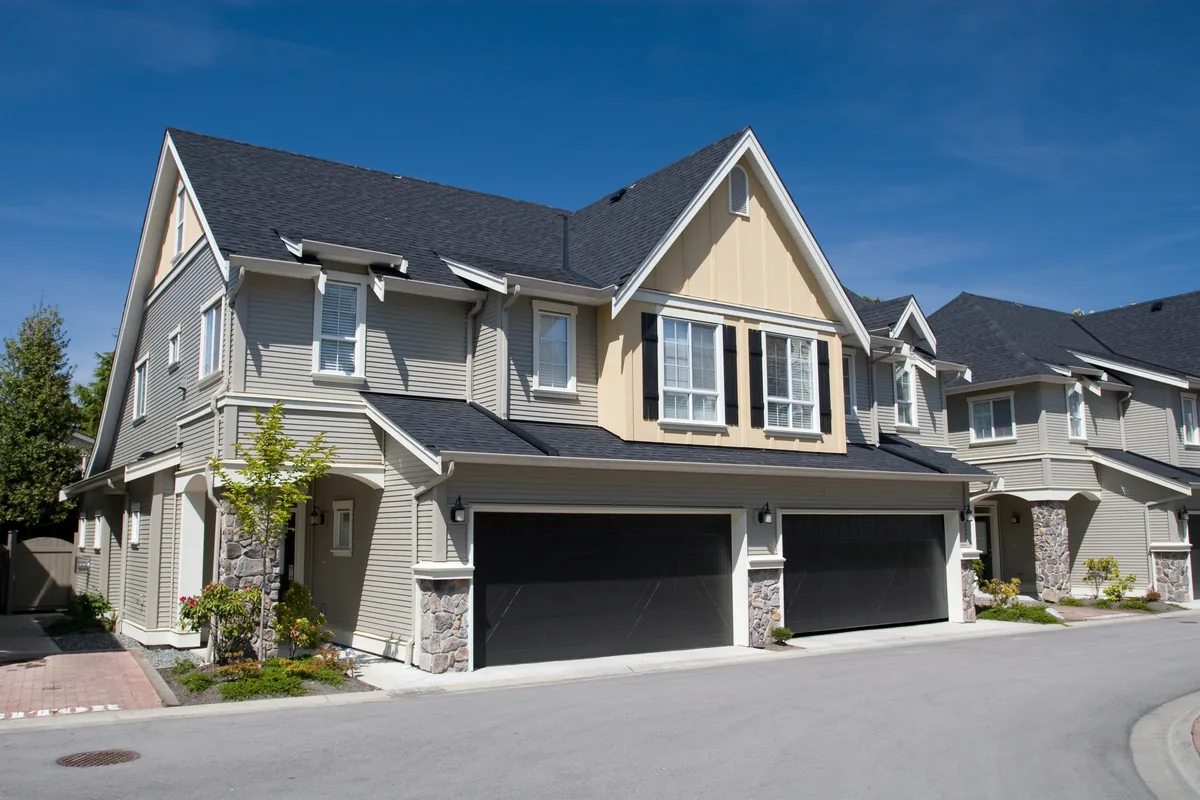

Wyoming duplex regulations and licensing
What Wyoming legislates about renting is the money and the paper, and it files the rules in an unexpected place: the Residential Rental Property Act sits inside the code of civil procedure rather than in a property title, which tells you the legislature was writing for the day the parties end up in front of a judge. Almost every duty in it fastens to a rental agreement and to an individual renter. On a duplex you hold two of each inside one structure, and that is the whole of what changes.
The lease is the instrument here — and you have two of them
Wyoming’s rental law is a Residential Rental Property Act filed inside the code of civil procedure, and the article lets its own duties be reassigned or modified by explicit signed agreement.
Set out at Wyo. Stat. §§ 1-21-1202(d), 1-21-1207, 1-21-1208(a)–(b), 1-21-1209, that reassignment power is the unusual feature of this state, and it behaves oddly on a two-unit building. The article lets a duty move to a different party or be otherwise modified, but only by explicit written agreement signed by the parties — so the reach of the change is the reach of the document. Two halves of one building can therefore sit in two different legal positions: an inherited form on one side leaving every default exactly where the article put it, and a negotiated agreement on the other. Nothing about the shared roof pulls them back together.
Which means the first job on a Wyoming duplex is not a coverage question at all. It is reading both agreements side by side and finding out whether you are running one set of rules or two. Owners who have never done that are, in this state, declining an option the legislature deliberately left open — and doing it unevenly across a building they insure as one thing.
What Wyoming actually requires of you
- State in the rental agreement whether any portion of the deposit is nonrefundable, then put that same fact in the renter’s hand in writing at the moment the deposit is taken — the section demands the disclosure in both places, not either one. Wyo. Stat. § 1-21-1207
- Date-stamp the renter’s new mailing address the day it arrives: the deposit and itemization are due on the later of thirty days after termination or fifteen days after that address reaches you, and a damaged unit pushes the whole period out by a further thirty days. Wyo. Stat. § 1-21-1208(a)
- Hold any utilities deposit separately identified from the security deposit and run it on its own calendar — it refunds within ten days of the renter’s satisfactory showing that the utility charges are paid, and is applied to the outstanding utility debt where no showing comes within forty-five days. Wyo. Stat. § 1-21-1208(b)
- Collect the deposit ledger at closing when you buy an occupied building: whoever holds the owner’s interest at termination is bound by the nonrefundable-notice and deposit-return sections, whether or not that person took the money. Wyo. Stat. § 1-21-1209
- Serve the abandoned-property notice before you clear anything of value out of a vacated unit — certified mail to the address the renter furnished in writing for that purpose, personal delivery under Rule 4, or publication in a newspaper published or widely circulated in the county. Wyo. Stat. § 1-21-1210(a)(i)(A)–(C)
- Elect in writing, within a reasonable time of the renter’s noncompliance notice, if a repair would cost more than is reasonable against the rent charged or the nature of the property: refusing the repair means terminating the agreement and allowing no less than ten nor more than twenty days to find substitute housing. Wyo. Stat. § 1-21-1203(d)
What that means for you: Draft the lease as the operative instrument — W.S. 1-21-1202(d) lets any duty in the article be assigned to a different party or modified by explicit written agreement signed by the parties — and disclose any nonrefundable portion of the deposit twice, once in the agreement and again in the renter’s hand at the moment you take the money.
Run that list twice and the shape of a two-unit file becomes obvious. Two agreements carrying the nonrefundable statement. Two receipts handed over at two different moments. Two forwarding addresses arriving on two different days, each starting its own clock. Two utilities ledgers, if you take those, each on a calendar of its own. None of it is harder than a single rental house; there is simply twice as much of it per structure, and it is the doubling rather than the difficulty that catches people out.
Who regulates the company, and who does not
None of the above is insurance regulation, and the two files are worth keeping apart. Company licensing, the forms and the rate filings belong to the Wyoming Department of Insurance, which is also where a policyholder writes when a company will not answer them. What the department cannot do is tell a company to want a particular building. Appetite is a commercial decision taken one address at a time, which is why a non-renewal so often reads as though a rule has been broken when none has.
What a complaint about how a unit was advertised or who was offered it costs to answer, and which part of a policy responds to it, belongs to the tenant discrimination page rather than to this one.
Common Wyoming duplex risks
Wyoming property placement opens with wind, and the wind that drives it is not primarily the thunderstorm kind. The state’s regional hazard planning describes widespread non-thunderstorm high wind behind cold-frontal passages through the cooler months as the source of most high-wind events, holding over large areas for hours at a stretch, with severe-thunderstorm straight-line wind and tornado as the shorter, sharper second class. Hail follows: the southeast counties sit in the corridor those plans call Hail Alley, shared with adjacent Colorado and Nebraska. Then wildfire in the wildland-urban interface, and heavy snow and ice load on roofs. Flood is its own placement through the National Flood Insurance Program or a private flood market, and earthquake is a separate purchase.
Read that against a building with two doors and the arithmetic changes in one direction only. A frontal high-wind event that works fasteners loose along a roof edge for hours is working on the single covering both tenancies live under. Hail arrives on one date and lands on one roof. Snow and ice load is a question about the structure that carries both units, not about a covering over one of them. There is no version of any of these where half the building is affected and half is not, which is the honest difference between two units in one structure and two units at two addresses — and it is the difference the triplex and quadplex pillars carry further up the same continuum.
Wildfire behaves the same way and is scored at the address rather than at the county line. Defensible space, roof covering, what is stored against the wall and under the deck: a duplex answers those questions once, for both households, and a single modest building on the wrong side of that assessment meets the same underwriting response a much larger one does.
The distinctively two-unit exposure is the shared system. A supply run inside a party wall, one water heater serving both halves, one panel feeding two units — each is a single point of failure producing a two-unit loss. What that does to the structure is property coverage; what it does while both halves are unusable is loss of rents, and on a duplex that limit is standing behind the entire rent roll rather than a slice of it.
One roof over two tenancies still runs on one property form, and in Wyoming what that form answers is High wind, Hail, Wildfire, and Snow and ice load. Flood and Earthquake stay outside it — each is a purchase of its own — and where the form does respond, the parts of it that pay are property coverage, loss of rents, and general liability.
Common Wyoming duplex claims we see
The winter freeze is first, and on a two-unit building it has a specific shape. A unit between tenancies with the heat turned down, a supply line in the wall the two halves share, and a cold snap that finds it. The pipe belongs to a wall rather than to a tenancy, so the water goes both ways — the occupied side loses ceilings and the empty side loses whatever was left of its re-letting schedule. Between renters, heat staying on is not a courtesy to whoever comes next. On a duplex it is the difference between a plumbing bill and a claim that takes the whole building out of service.
Roof claims run second and arrive in the two shapes owners conflate. Hail is an event with a date on it and the argument that follows is almost always about valuation rather than about damage. Wind is cumulative, and a long frontal event can leave damage that reads as age until somebody gets on a ladder. Either way there is one roof, one claim and one repair schedule, and when the county has just been through the same weather that schedule is set by contractor availability rather than by you.
Liability claims come off the ground the two households share: the walk both use, the exterior stair, the drive, the place the bins stand. Wyoming adds ice to all of it — a walk that thawed at noon and refroze by four, cleared by whoever was asked to clear it. General liability answers a claim of injury on the premises, and on a duplex the first question is usually which parts of the lot neither lease handed to anybody in particular.
Why Wyoming duplex owners choose Rental Guard
Wyoming is a state that governs rentals through a Residential Rental Property Act in its civil-procedure code, and whose fair housing act defines the enforcing authority administering it by reference to a federal acceptance not yet made, and a two-unit owner meets the whole of that on one building with nobody in between. Our book runs from a single rental house up to a fourplex, so a duplex sits well inside it rather than out at an edge. Most owners we do this for hold one structure and two leases and have no leverage anywhere in the transaction; what an agency is worth to them is having already read the article and the act before the question came up. Every quote goes to a licensed agent we name on this site, placed under the agency NPN in the footer.
Owner-occupied, or both units let
This decides more about a Wyoming duplex than the building does, and it is worth answering precisely rather than roughly. Live in one unit and the structure is partly a home and partly a rental, which are underwritten differently: which markets will look at it changes, and what the income side is scoped to changes with it, because only one rent is actually exposed. Then the practical questions follow — who holds keys, whether the entrance, the laundry and the drive are shared, whether the heat and the water are separately controlled.
Let both halves and the building is straightforwardly rental property with the whole rent roll standing behind a single loss. That is the version where loss of rents does the most work, because nothing is still earning while the repair runs.
Wyoming lifts its fair housing act for a building of not more than four families where the owner occupies one of the living quarters — but the lift reaches W.S. 40-26-103 and 40-26-105 through 40-26-109 only, and leaves § 40-26-104 in force, so the advertising ban still binds the exempt owner. The separate exemption for an owner of not more than three single-family houses is forfeited outright by owning any dwelling designed or occupied for five or more families, by using a broker, or by running an advertisement § 40-26-104 would prohibit.
That is the part owner-occupants most often get backwards. The lift is real and it is partial: what it releases is the tenancy side, and what it leaves standing is the wording of what you publish. So the advertisement for the half you are letting is governed in the very building whose terms of tenancy have just been let out from under the act — and living next door to the applicant makes a written screening standard more useful rather than less, because you will be explaining your reasoning to somebody you then share a wall with.
The operative text is Wyo. Stat. § 40-26-110(a)–(b), read against § 40-26-104, and the cross-reference in it is the part worth reading before you advertise the other half.
What that means for you: Keep the listing language clean even in an owner-occupied fourplex: the four-family exemption never reached the notice-and-advertisement section, so the words in the ad are regulated in the very building whose tenancy terms are not.
Owners move between the two arrangements more often on a duplex than on anything else — occupy for a few years, then move out and let both sides. Tell us when that happens rather than at the renewal after it. It changes what the policy is covering and what the income side is scoped to, and it costs a phone call in advance against an argument afterwards.
Major Wyoming duplex markets
Wyoming markets are small, far apart and run by different employers, so the placement follows the building rather than the county. A house divided into two units is a duplex submission in Riverton exactly as it is in Cheyenne, even though almost nothing else about the two towns is alike.
- Laramie. Albany County two-unit buildings let on the University of Wyoming calendar put both tenancies inside the same fortnight of move-out, so the vacancy question is asked about the whole structure at once rather than about a share of it — and at this elevation the empty half is empty through the part of the year the roof and the pipes are working hardest.
- Cheyenne. Laramie County sits in the hail corridor the regional hazard plans share with adjacent Colorado and Nebraska, and a duplex answers a hail date with one roof rather than with several. The roof covering, its age and how it has already been repaired are settled before anything else on the submission, because that single covering stands over the whole of what the building earns.
- Casper. Natrona County tenancy moves with an energy payroll, and two units in one building are frequently let to households on the same cycle — which means the turnover is correlated rather than independent, and the re-letting risk a wider schedule spreads across addresses lands here on a single one.
- Riverton. Fremont County carries older in-town houses that were made into two units, and the first underwriting question is whether the heat, the water and the electrical service were genuinely duplicated at conversion or merely divided. A divided system is one failure that reaches both tenancies, and it is asked about before the square footage is.
- Evanston. Uinta County sits on the Interstate 80 corridor near the Utah line, and a good deal of its two-unit stock is held by owners who are not in the county on the night a supply line freezes. Who holds keys, who checks the unlet half in January, and how far the responding fire department has to come are the questions that decide how this one is written.
- Jackson. Teton County is where the owner-occupied half is the ordinary arrangement rather than the exception, with the other side let to someone working locally. That changes which markets will look at the building and what the income side is scoped to, because only one rent is actually at risk and the policy has to be written knowing which one.
- Cody. Park County tenancy runs on a season, and a two-unit building here commonly carries one half let by the season and the other let for the year — two tenancy calendars under one roof, two sets of paperwork on different dates, and an income side that has to be scoped to both rather than to an average of them.
Neighboring states we also write
- Duplex insurance in Idaho — a state exclusion that stops at two families living independently, so an owner living in one half sits outside the state prohibition altogether, and one that switches off the advertising paragraph the Wyoming lift leaves standing.
- Duplex insurance in Colorado — no general owner-occupied exemption at all: the carve-out at § 24-34-502(8)(a)(II) runs to familial status only, so an owner in half a Colorado duplex is inside the part on everything else.
- Duplex insurance in Utah — a private-owner exemption counted in single-family dwelling units held across the whole portfolio rather than in doors inside one building, so what else you own decides whether it reaches you.
Related reading
Wyoming duplex insurance FAQs
Both halves emptied the same month. Is that one deposit deadline or two?
Two, and they will rarely fall on the same day. Wyo. Stat. § 1-21-1208(a) sets the deadline at the later of thirty days after the tenancy terminates or fifteen days after that renter’s new mailing address reaches you, and a damaged unit pushes the whole period out by a further thirty days. Every one of those triggers belongs to an individual renter. Two renters who hand back keys in the same week can post forwarding addresses a fortnight apart, and one of the two units can be damaged while the other is not. Keep a dated line per side rather than a date for the building.
Where does the nonrefundable disclosure have to appear on a two-unit building?
In both places, for each tenancy. Wyo. Stat. § 1-21-1207 requires the rental agreement to state whether any portion of the deposit is nonrefundable, and separately requires the renter to be given that fact in writing at the time the deposit is taken. A duplex has two rental agreements and two moments when money changes hands, which is four occasions rather than one. An owner who wrote a good clause into the lease for the upstairs unit and handed over no receipt downstairs has done part of what the section asks in one tenancy and part of it in the other.
I bought the duplex with both sides occupied. Am I liable for deposits I never received?
Yes. Wyo. Stat. § 1-21-1209 binds whoever holds the owner’s interest in the premises when a tenancy terminates to the nonrefundable-notice and deposit-return sections, whether or not that person took the money. On a duplex that is two ledgers you are inheriting, not one, and they can be in different states of repair. Ask for both in writing at closing, reconcile each against the agreement it belongs to, and treat a seller who can produce only one as a priced item rather than a formality.
I live in one half. Does the Wyoming Fair Housing Act still reach the side I rent?
Partly, and the part that survives is the part owners forget. Wyo. Stat. § 40-26-110(b) lifts the act for a building of not more than four families where the owner occupies one of the living quarters — but the lift reaches § 40-26-103 and §§ 40-26-105 through 40-26-109 only. Section 40-26-104, which bans discriminatory notices, statements and advertisements, is not on that list and continues to bind. So how you word the advertisement for the other half is regulated even where the terms of that tenancy have been released.
One side stands empty over the winter. Does that make the building vacant?
One unit lived in and one standing empty is not the same thing as a building nobody occupies, but policies do not all draw that line in the same place and the wording you hold is what decides it. It matters more on a duplex than on a larger building, because the empty half is half of everything the structure earns. It matters more again in Wyoming, where an unheated unit and a January cold snap are a combination the loss history is full of. Tell us while the gap is still hypothetical rather than after it opens. What replaces the stopped rent is set out on the loss of rents page.
The leases came with the building. What can I actually change?
More than in most states, and that is the genuinely unusual thing here. Wyo. Stat. § 1-21-1202(d) allows a duty the article imposes to be assigned to a different party or otherwise modified, but only by explicit written agreement signed by the parties. Because the instrument is the agreement, a duplex can end up with the two halves sitting in different places — one side on an inherited form that leaves every default where the article put it, the other on something a previous owner negotiated. Read both against the statute before you renew either.
Is duplex insurance a different product from landlord insurance?
No, and saying so plainly is more use than dressing it up. It is a landlord policy on a building with two dwelling units in it, the same coverages apply, and the same markets write it. What genuinely differs in Wyoming is that the statutory paperwork attaches to the tenancy rather than to the building, so a second door doubles the disclosures, the clocks and the ledgers without adding a second structure to spread a loss across. Those are real differences. The policy is not a different animal.
Get a Wyoming duplex insurance quote
Send us the building and the policy you have now. and send both leases with it — half of what this state asks of you is written into them.
Get a Free Quote