
States we serve · Arizona
Arizona duplex insurance
Two units, one roof, and a state that does grant the resident owner an exemption a duplex sits inside — then narrows it from a different chapter of the code. More of what follows is about the duties the act hands you than about the building.
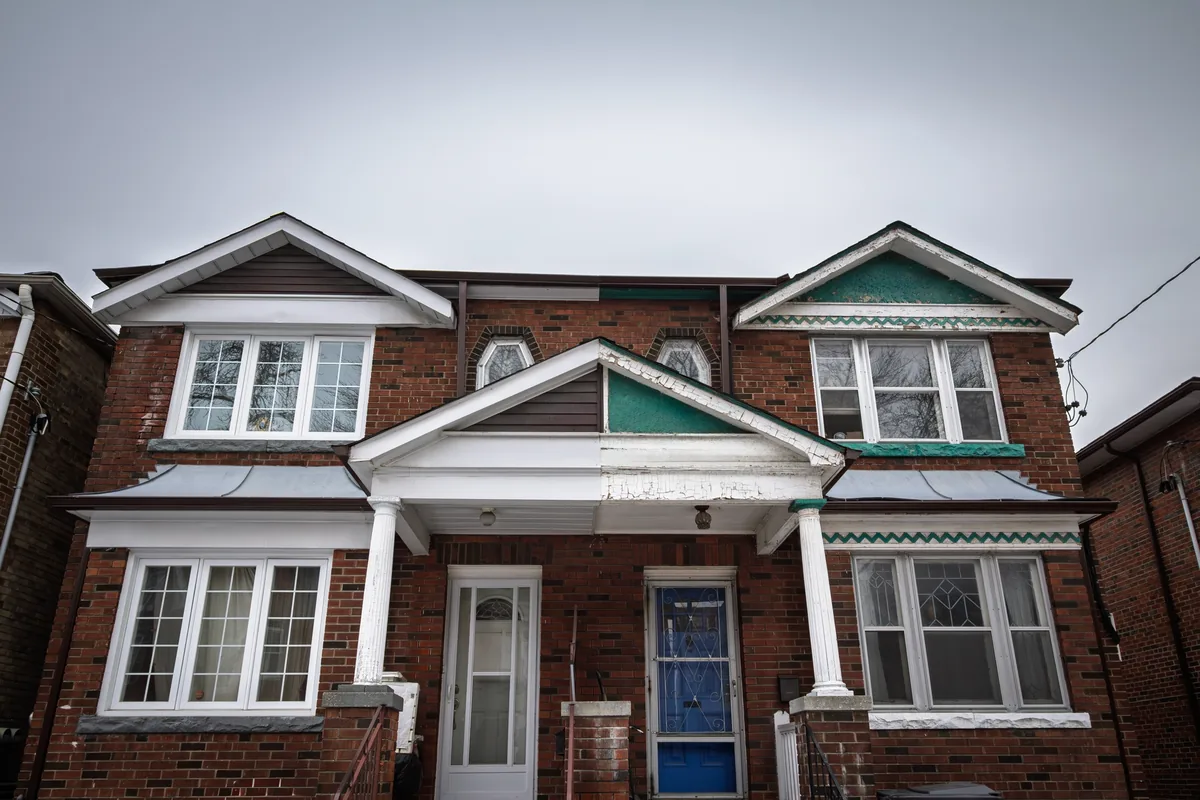

Arizona duplex regulations and landlord obligations
Arizona front-loads a tenancy. Most of what the residential landlord and tenant act asks of a two-unit owner happens in the first hour of a lease and in the two weeks after one ends, and almost none of it waits for the tenant to ask. On a duplex you run the whole of it twice, on dates that rarely line up, for two households who can compare notes across a shared wall.
The move-in packet, and a ceiling that counts prepaid rent
Arizona loads the FRONT of a tenancy with a paper packet the landlord has to hand over rather than be asked for — a signed lease, a move-in damage form, written notice of the tenant’s right to attend the move-out inspection, and a written pointer to where the act itself can be read.
Under A.R.S. §§ 33-1321(A)–(E), 33-1322(A)–(D) the amount you may hold is capped at one and a half months of that unit’s rent, and the phrase the statute uses is security, however denominated. Prepaid rent is inside the ceiling, not beside it. A tenant may volunteer more than that in advance; you may not demand or receive it. Any fee you intend to keep has to be designated nonrefundable in writing, because what you have not designated is refundable by operation of the subsection.
Two leases means two ceilings, each measured against its own unit’s rent rather than against the building’s income. That sounds obvious and it is the arithmetic owners get wrong most often, usually by writing one figure into both leases after re-letting one side at a different rent.
What Arizona actually requires of you
- Hand over three documents on move in, not one: a signed copy of the lease, a move-in form for specifying any existing damages to the dwelling unit, and WRITTEN notification that the tenant may be present at the move-out inspection. Then, if the tenant asks, tell them when that inspection will happen. The only relief from the joint walkthrough is a material-and-irreparable-breach eviction where you have reasonable cause to fear violence or intimidation. A.R.S. § 33-1321(C)
- Cap everything you hold at one and a half months’ rent — Arizona counts PREPAID RENT inside the ceiling, "security, however denominated", so a lease that stacks last month’s rent on top of a deposit can breach it without the word deposit appearing twice. A tenant may still volunteer more than one and a half months in advance; you may not demand or receive it. And state the purpose of every nonrefundable fee in writing, because anything you have not designated nonrefundable is refundable by operation of the subsection. A.R.S. § 33-1321(A), (B)
- Count the closeout clock in BUSINESS days and start it from three events together. Fourteen days, excluding Saturdays, Sundays and other legal holidays, after termination of the tenancy AND delivery of possession AND demand by the tenant, deliver an itemized list of all deductions with the amount due — mailed first class to the tenant’s last known place of residence unless the tenant has made other arrangements in writing. Miss it and the tenant recovers the property and money due plus damages equal to TWICE the amount wrongfully withheld. A.R.S. § 33-1321(D), (E)
- Put the act itself in the tenant’s hands in writing at or before the tenancy commences — Arizona requires you to inform the tenant that the Arizona residential landlord and tenant act is available on the Arizona department of housing’s website — alongside the name and address of the person authorized to manage the premises and of an owner or a person authorized to receive service of process. Fail on any of the three and you become an agent of each landlord not only for service but for PERFORMING the landlord’s obligations and spending all rent collected from the premises on them. A.R.S. § 33-1322(A), (B), (D)
- Treat COOLING as habitability, not as an amenity. Arizona writes reasonable air-conditioning or cooling into the same fit-premises paragraph as reasonable heat, wherever such units are installed and offered and when seasonal weather conditions require it, and it gives that duty its own remedy section: a tenant on reasonable notice may procure the service and deduct its actual reasonable cost from rent, recover the diminution in fair rental value, or take substitute housing and stop paying rent for the period of your noncompliance. A lease term contrary to that section is void. A.R.S. § 33-1324(A)(6); § 33-1364(A), (E)
- Give every tenant, existing and new, bedbug educational materials, and never sign a lease on a unit you know carries a current infestation. Read the exclusion before you decide this does not reach you: subsection D takes the landlord and tenant of a SINGLE FAMILY RESIDENCE out of the section entirely, so the duty switches on at the second dwelling unit and stays on for every building above it. A.R.S. § 33-1319(A)(1), (A)(2), (D)
Two of those duties land differently on a two-unit building
Cooling is the first. Arizona treats it as habitability rather than as an amenity, and the remedy section attached to it lets a tenant procure the service and deduct its cost, claim the drop in fair rental value, or take substitute housing and stop paying rent for the period of noncompliance. Where one condenser or one plant serves both halves, a single failure hands both tenants the same set of options at the same moment — and a lease clause written against that section is void, so it cannot be drafted around.
The bedbug section is the second, and its scope is the surprising part: it takes the landlord and tenant of a single family residence out of its reach entirely. A duplex is not one, so the educational-materials duty and the bar on leasing a unit you know is currently infested both apply to you and would not apply to the same owner renting out a house.
What that means for you: Hand the tenant the whole move-in packet at move in — the signed lease, the move-in form for specifying existing damages, and the written notice that they may be present at the move-out inspection — cap everything you hold, prepaid rent included, at one and a half months’ rent, put in writing the purpose of any fee you intend to keep, and then run the closeout on business days rather than calendar days: fourteen days excluding Saturdays, Sundays and legal holidays after termination, delivery of possession and the tenant’s demand, to deliver an itemized list of every deduction with whatever is due.
Where a fair housing complaint actually lands
Arizona does grant a resident owner an exemption, and the section below sets out its exact shape. The narrowing worth knowing first is not in the fair housing article at all. A.R.S. § 33-1317(A) makes it a petty offense to refuse a dwelling because a person has a child, or to advertise a restriction against children by sign, placard, written or printed notice or newspaper publication — and subsection (G) keeps the owner-occupied four-family qualification off that subsection, confining it to the restrictive-covenant one. Complaints under the fair housing article go to the Civil Rights Division of the Arizona Attorney General’s Office. Which part of a policy answers such a complaint, and what defending one involves, is set out on the tenant discrimination page. Carriers and forms are regulated by the Arizona Department of Insurance and Financial Institutions.
Common Arizona duplex risks
Arizona property placement is a wildfire conversation before it is anything else, and the state’s own insurance regulator says so on its consumer pages rather than leaving an owner to infer it. The Department of Insurance and Financial Institutions writes that residential property premiums are rising across the state and not only in wildfire-prone country, that owners in wildfire-prone country may face nonrenewal and then struggle to find replacement coverage, and that what drives the underwriting is wildland-urban interface encroachment, local building codes and a dry winter followed by a monsoon climate. Arizona also gives the exposure a standing statutory audience: a fire insurance review task force sits inside the Department, chaired by its director and vice-chaired by the state forester, and it is fed the Department’s own aggregated premium and coverage data together with the consumer complaints about nonrenewal, cancellation and premium increases tied to fire risk, with a report due to the governor and both chambers each December. A standard property form answers for the fire itself, and for the rest of what the monsoon brings — the National Weather Service defines that season across the southwestern offices and puts damaging outflow winds, dust storms, lightning, hail, tornadoes and flash flooding inside it — so wind, hail, lightning and a tree coming down on a roof are all on the covered side. Flood is not, and the Department is explicit that flood damage is not covered by the standard property form and has to be placed separately through the National Flood Insurance Program; it is equally explicit that flood risk often RISES after a fire, which is the sequence that catches an owner who watched the burn scar form uphill and assumed the danger had passed with the smoke. Earthquake is a separate placement too, and so is the ground movement that is more particular to this state than shaking is: the Arizona Geological Survey maps earth fissures as open ground fractures opened by the tensional stress of land subsidence, and it defines that subsidence as the surface sinking because the support beneath it was pumped out as groundwater — a fissure was exposed during freeway construction east of Phoenix and the reactivation of another has repeatedly damaged county roads in Cochise County, and none of it is a peril the standard form responds to.
Every one of those is scored on an address rather than on a schedule. That is the part small owners misread: a single duplex on the desert edge answers the same wildland-urban interface question a whole portfolio answers, and it answers it with nothing to spread the outcome across. One building, one score, two rents behind it.
Flood and ground movement are bought once or not at all here. There is no portion of a two-unit structure you could sensibly leave out of a separate placement, so the question is never which half to protect — it is whether the burn scar uphill and the fissure map underneath have changed the answer since the last renewal.
What is distinctively two-unit is the shared system. In most states that argument is about plumbing. In Arizona the system that matters most is the one carrying a statutory duty behind it: cooling. A condenser serving both halves is a single point of failure that produces a habitability problem in two households at once. What it does to the structure is property coverage; what it does while a unit cannot lawfully be occupied is loss of rents, and on a duplex the income at risk is half the building at best and all of it at worst.
In Arizona the perils a standard property form answers are Wildfire, Windstorm, Hail, Lightning, and Falling objects. Flood, Earth fissure and land subsidence, and Earthquake are written separately and are not picked up by that form, and the coverage that responds is property coverage, loss of rents, and general liability.
Common Arizona duplex claims we see
The claim we see most on Arizona two-unit buildings is monsoon wind. An outflow gust lifts covering off one roof, and because that roof is one roof, the water that follows it reaches both units through the same opening. Hail arrives the same way. The repair is a single scope of work and the rent interruption is rarely confined to the side the damage started on.
Cooling failures are the claim that surprises owners, because they arrive as a tenancy problem before they arrive as a policy one. A compressor stops in July, two households invoke the same remedy section, and the owner is answering a rent abatement and a repair bill together. Where the system is duplicated rather than shared, only one side of the building is in that position.
Liability claims come off the ground nobody has exclusive use of — the drive, the walk, the mailboxes, the wash. General liability answers an injury claim on the premises, and on a two-unit building we ask early which surfaces both tenancies cross, because that is the map a defense is built from.
Why Arizona duplex owners choose Rental Guard
Arizona is a state whose residential cancellation-and-nonrenewal article draws its own line at not more than four dwelling units, so an owner nonrenewed on the condition of the premises gets thirty days to remedy it and another thirty on payment of premium — while the fifth unit moves the same building into the commercial article, which carries no cure right at all. For an owner of two units the practical effect is that a nonrenewal on the condition of the premises has to give you time to put the condition right, and then more time on the premium — a sequence worth knowing about before a notice arrives rather than after. Our own book runs to residential rental buildings of one to four dwelling units — an appetite question rather than a legal one — so a two-unit building is not its thin end. Every quote is handled by a licensed agent named on this site and placed under the agency NPN in the footer.
Owner-occupied, or both units let
This is the question that decides more about an Arizona duplex than the construction does, and Arizona is one of the states where the answer genuinely changes your legal position rather than only your underwriting. Living in one half changes which markets will look at the building, what the income side is scoped against, and — here — which prohibitions reach the half you let.
Arizona draws its owner-occupied line at a dwelling whose living quarters are occupied or intended to be occupied by no more than four families living independently of each other, where the owner maintains and occupies one of those quarters as a residence — and unlike the states that carve the advertising ban back out, Arizona does not. The exemption lifts sections 41-1491.14 through 41-1491.21, and that span is the entire statutory definition of a discriminatory housing practice, publication of discriminatory notices and advertisements included. The separate single-family exemption is narrower and conditional: it reaches an owner holding an interest in no more than three single family houses at a time who rents without a broker, agent or salesperson, and it is FORFEITED by publishing a prohibited advertisement rather than merely coexisting with one. Its twenty-four-month limit reads on sales and rentals alike, but only where the owner was not the house’s most recent resident.
Read that span carefully before relying on it. It is unusually wide — wide enough to cover the publication rules that most states keep back — and its width is exactly why the separate children provision in the landlord and tenant act does the work an owner assumes the fair housing article is doing. Being inside an exemption in one title says nothing about a duty written in another.
Neighboring grids draw the same line differently, which is the fastest way to see that this is an Arizona answer and not a general one. A Nevada duplex owner has a second condition to satisfy — a twelve-month transaction count sitting alongside the occupancy test, which an owner who re-lets both sides can fail while still living on site. Texas exempts the resident four-family owner only partly, never lifting its advertising section at all. And Colorado narrows its carve-out to familial status alone, so an owner-occupied duplex there is outside the part on that ground and inside it on every other.
The operative text is A.R.S. §§ 41-1491.02(A)(1), (A)(2), (B); 41-1491(7); 41-1491.06(B); 33-1317(A), (E), (F), (G), and the subsections are worth reading in order rather than in summary.
What that means for you: Do not read the fair housing exemption as permission to advertise a preference, because the narrowing sits in a different title and it is criminal. The article itself says it does not affect a requirement of nondiscrimination in any other state law, and the landlord and tenant act carries one: knowingly refusing to rent a dwelling because a person has a child or children, or advertising a restriction against children by sign, placard, written or printed notice or newspaper publication, is a petty offense — and the owner-occupied four-family qualification in that section reaches only its restrictive-covenant subsection, never the refusal-and-advertising subsection. So write every listing as though no exemption existed, keep any occupancy rule you publish at or above the two-persons-per-bedroom figure the same section presumes reasonable statewide, and adopt and publish it before the event rather than after — a tenant who is refused can sue for injunctive relief, actual damages, costs, fees and, where the refusal is found intentional, a civil penalty of three times the monthly rent.
Owners move between the two positions — occupy one side for a few years, then let both. That transition changes the underwriting and the exemption at the same moment, and the exemption goes the day the occupancy does. Tell us on the way out, not at the renewal after it.
Major Arizona duplex markets
- Phoenix. The monsoon arrives as outflow wind, dust and lightning before it arrives as rain, and a two-unit building takes all of it on one roof — so the storm that stops one tenancy stops the other on the same afternoon and is repaired on one schedule.
- Tucson. Older two-unit stock here frequently runs both halves off one cooling plant, and Arizona writes cooling into the fit-premises duty rather than treating it as an amenity — which makes a single compressor the difference between one habitability problem and two.
- Mesa. This is the ground east of Phoenix where an earth fissure was exposed during freeway construction, and fissure and subsidence sit outside what a standard property form answers for — a distinction an owner meets once, for the whole structure.
- Tempe. Dense infill duplexes put the drive, the walk, the mailboxes and often the laundry inside ground that belongs to neither tenancy exclusively, and that shared ground is where a two-unit liability claim usually starts.
- Chandler. Newer two-unit construction is where the shared-or-duplicated question is genuinely open: one panel or two, one water heater or two, one condenser or two. Which answer the building gives decides whether a failure is one claim or a whole-building one.
- Glendale. West Valley hail and straight-line wind score a duplex on its roof rather than on its rent roll, so the small building and the large one meet the same underwriting question about deck age and covering.
- Scottsdale. Owner-occupied halves are common here, which puts a large share of two-unit owners squarely inside the state exemption written around a resident owner — and being inside it changes nothing about the advertising rule in the landlord and tenant act.
- Surprise. Growth on the open desert edge of the northwest Valley is exactly the wildland-urban interface encroachment the Department names as an underwriting driver, and one modest building is scored on its own address just as a large schedule is.
Related reading
Arizona duplex insurance FAQs
I live in one half of my Arizona duplex. Does the fair housing exemption reach me?
On the face of the article, yes. Arizona lifts it for a dwelling whose quarters are occupied or intended for no more than four families living independently, where the owner maintains and occupies one of them as a residence. A duplex with you in one half is inside that description. What the exemption does not do is settle how you may advertise the other half.
So can I say I would rather not rent to a family with children?
No, and this is where owners are most often caught out. The bar lives in a different chapter: A.R.S. § 33-1317(A) makes it a petty offense to refuse a dwelling because a person has a child, or to advertise a restriction against children by sign, placard, written or printed notice or newspaper publication. Subsection (G) keeps the owner-occupied four-family qualification off that subsection entirely.
How much can I hold from each side of the duplex?
One and a half months of that unit’s rent, and Arizona counts prepaid rent inside the ceiling rather than beside it — the statute says security, however denominated. A lease that asks for a deposit plus last month’s rent can breach it without the word deposit appearing twice. A tenant may volunteer more; you may not demand or receive it.
When does the deposit have to go back?
Fourteen days, excluding Saturdays, Sundays and other legal holidays — and the clock starts only once three things have all happened: the tenancy terminated, possession was delivered, and the tenant demanded the money. Deliver an itemized list of every deduction with whatever is due. Miss it and the tenant recovers what is owed plus damages equal to twice the amount wrongfully withheld.
Do the bedbug rules apply to a two-unit building?
They do. Arizona’s bedbug section takes the landlord and tenant of a single family residence out of its reach in subsection (D), and a duplex is not one — so the duty to give every tenant, existing and new, bedbug educational materials applies, as does the bar on signing a lease for a unit you know is currently infested.
Is the air conditioning my problem or the tenant’s?
Yours, as a matter of habitability rather than goodwill. Arizona writes reasonable cooling into the same fit-premises paragraph as reasonable heat, wherever such units are installed and offered and when the season requires it, and gives it a dedicated remedy section. A lease term written contrary to that section is void, so it cannot be drafted around.
Is duplex insurance a different product from landlord insurance?
It is the same policy on a building with two dwelling units in it, and saying otherwise would be selling you a distinction that does not exist. The same four coverages apply and the same markets write it. What genuinely changes in Arizona is that the duties above run twice on dates that rarely line up, and that one structure carries both rents.
Get an Arizona duplex insurance quote
Send us the building and the policy you have now. and we will read the move-in packet through with you before the next tenancy starts.
Get a Free Quote