
States we serve · Nevada
Nevada duplex insurance
Two doors, one structure, and a state that puts most of its demands on the owner into the lease rather than into the policy. The deposit arithmetic, the disclosure and the clocks are the parts worth settling before a tenant signs.
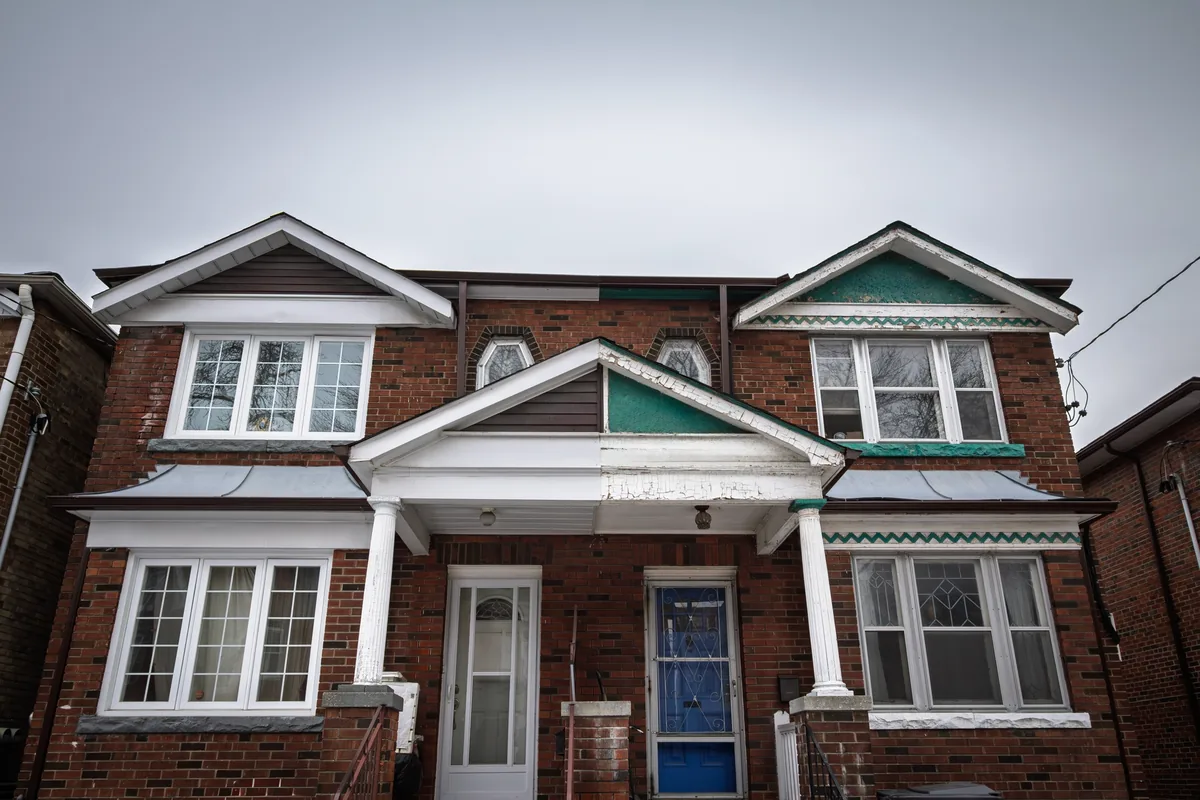

Nevada duplex regulations and licensing
Nearly every duty on this page attaches to a tenancy rather than to you as an owner — the document you hand a tenant, the money you hold while they live there, and the hours you have once something in the unit stops working. The first thing worth knowing about them is that they are not all in the same chapter of the code.
Nevada splits the landlord’s rulebook across two chapters that read like one and are not: chapter 118A is the Residential Landlord and Tenant Act and carries the deposit, habitability, notice and remedy duties, while chapter 118 is a different instrument that carries the Nevada Fair Housing Law and the abandonment provisions — and chapter 118A tells you at the front which tenancies it does not reach at all.
The disclosure your lease has to open with
Nevada requires a lawful-occupancy disclosure at the top of the first page of a rental agreement, set in a font at least two times larger than anything else in the document, where the agreement covers a structure of not more than four units and you sign it yourself. The requirement lifts where your authorized agent signs instead and that agent holds a property-management permit under chapter 645. The operative text sits at Nev. Rev. Stat. §§ 118A.200(4), (6), (7), (10), 118A.242(1), (4), (6), and the four-unit reach is a definition internal to that section rather than a rule about how buildings are insured.
Two practical notes on the drafting. The disclosure has two halves and both have to appear — the presumptions NRS 205.0813 and 205.0817 raise about lawful occupancy, and the statement that the agreement is valid and enforceable against both parties whether or not those presumptions are rebutted. And the subsection numbering moved: the definition sat at subsection 7 before the 2025 amendment and sits at subsection 10 after it, so a template carried over from an older lease may cite a subsection that now says something else.
What Nevada actually requires of you
- Print the lawful-occupancy disclosure at the top of the first page of the agreement, in a font at least two times larger than any other font in it, whenever the lease covers a structure of not more than four units and is not signed by an authorized agent of yours who holds a chapter 645 property-management permit. The disclosure has to say both halves: that NRS 205.0813 and 205.0817 raise rebuttable presumptions the tenant does not have lawful occupancy unless the agreement is notarized or permit-signed and carries your current address and telephone number, and that the agreement is valid and enforceable against both sides whether or not it is. Nev. Rev. Stat. § 118A.200(4), read with the § 118A.200(10) definition
- Cap the deposit, the surety bond and the last month’s rent as one combined total, not three: the amount or value of all of them together may not exceed three months’ periodic rent. Treat any payment, deposit, fee or charge earmarked for unpaid rent, for damage beyond normal wear, or for cleaning as a security deposit whatever the lease calls it, and never write it as nonrefundable — the only nonrefundable charge the chapter permits is a reasonable one for cleaning, and any other nonrefundability clause or waiver of the tenant’s rights under the section is void as contrary to public policy. Nev. Rev. Stat. §§ 118A.242(1), (8); 118A.240(1)
- Return the balance with an itemized written accounting inside thirty days of the tenancy ending, delivered in hand at the place rent is paid or mailed to the tenant’s present or last known address. Miss it and the exposure doubles by statute: you are liable for an amount equal to the entire deposit AND for a further sum the court fixes up to the entire deposit again, weighed on your good faith, the course of conduct between you and the tenant, and the harm caused. Nev. Rev. Stat. § 118A.242(4), (6), (7)
- Hand the deposits over in writing before you record the deed on any dwelling unit you sell — either transfer the remaining balance to your successor in writing, or notify the successor in writing that you returned it — and tell the tenant in writing the successor’s name, address and telephone number and that the balance moved. Your buyer then has no choice on the other side: the successor shall accept the deposit or surety bond and shall not demand an additional one from that tenant during the term of the rental agreement. Nev. Rev. Stat. § 118A.244(1)(a), (2), (3)
- Never bill the tenant for a deductible or copayment under a home-protection policy or a service contract to get repair work done that the habitability duty already puts on you — the bar is written into the section by name, and it covers any fee or charge for any repair, maintenance task or other work you owe. The one carve-out runs the other way: you may charge for a condition caused by the deliberate or negligent act or omission of the tenant, a household member, or someone on the premises with the tenant’s consent. Nev. Rev. Stat. § 118A.290(4), (5), read with § 118A.290(1)(i)
- Run the essential-items clock the moment written notice of an air-conditioning, heat, water, electricity, gas or door-lock failure reaches you: you have forty-eight hours, not counting a Saturday, Sunday or legal holiday, to remedy it or use best efforts. Past that the tenant may buy the service and deduct the actual reasonable cost from rent, withhold rent as it falls due without incurring late fees or notice charges, recover damages measured by the diminution in fair rental value, or move into comparable housing — in which case rent on the unit fully abates and you owe the excess cost of the substitute. Nev. Rev. Stat. § 118A.380(1)(a)–(d)
One ceiling, not three — and one clock at the end
The instinct on the money is to treat the deposit, a surety bond and a prepaid last month as three separate buckets with three separate limits. Nevada adds them together and puts a single ceiling of three months’ periodic rent over the total. The label on a charge decides nothing either: a payment aimed at unpaid rent, at damage beyond normal wear, or at cleaning is a security deposit however the lease describes it, and calling it nonrefundable does not make it so. A reasonable cleaning charge is the only nonrefundable item the chapter allows.
States differ on whether that ceiling holds still. Pennsylvania steps its deposit ceiling down as a tenancy ages and moves the money into a regulated escrow account once it has been held past its second anniversary — see Pennsylvania duplex insurance — where Nevada sets one combined ceiling and leaves it there for the life of the tenancy.
At the other end there is one deadline rather than a sequence of them. Thirty days from the end of the tenancy, itemized in writing, delivered in hand where rent is paid or mailed to the tenant’s present or last known address. Miss it and the statute does not merely order the deposit returned — it exposes you to that amount again, at the court’s discretion, weighed on your good faith and on how the two of you dealt with each other.
That single clock is worth appreciating for what it is not. Michigan runs a chain of deposit deadlines instead, each started by a different event and the last of them a court filing rather than a letter — see Michigan duplex insurance. In Nevada there is one date to diary, and the penalty for missing it is arithmetic.
What that means for you: Print the lawful-occupancy disclosure at the top of the first page of every lease you sign yourself on a building of four units or fewer, in a font at least twice the size of any other font in the agreement, then set the rent in that lease as one all-in figure — a single number representing the maximum total periodic rent including every mandatory fee — because charging above that figure is now separately actionable, and hold the deposit, any surety bond and the last month’s rent together against one three-month ceiling rather than three separate ones.
Who enforces the housing rules, and who regulates the policy
Two different bodies sit behind the two halves of this page. A housing complaint under the Nevada Fair Housing Law is routed to the Nevada Equal Rights Commission, which is named for that purpose by the chapter’s own definition section. What a complaint costs an owner, and which part of a policy responds to one, belongs to the tenant discrimination page rather than here. Carriers, forms and the notices they send you are regulated by the Nevada Division of Insurance.
Common Nevada duplex risks
Nevada is the placement where the state’s own risk ranking and the standard property form disagree about which hazards matter. Nevada’s Enhanced State Hazard Mitigation Plan puts exactly three natural hazards in its high-risk band — earthquake, flood and wildfire — and two of the three are separate placements. Earthquake is the one an owner tends to discount and should not: the plan opens that profile with the sentence “Nevada is earthquake country,” records that fifteen of seventeen counties have experienced historical earthquake damage or surface faulting, and locates the highest hazard in the state along the Walker Lane belt, the band of strike-slip and normal faulting that runs down Nevada’s western border through the Reno, Sparks and Carson City corridor and accommodates about a fifth of the Pacific–North American plate boundary motion. Flood is separate as well, and in Nevada it is rarely the river kind the word suggests — the plan describes flash floods in arroyos that are normally dry and on alluvial fans, cloudburst storms centered over tributary basins from late spring to early fall, ground stripped by wildfire feeding the runoff, and a Great Basin that drains inward to playas and sinks rather than to any ocean. That leaves wildfire as the high-risk hazard the property form actually answers for, and the plan is specific that Nevada wildfire is not a forest story: sagebrush and cheatgrass carry it, downslope Great Basin valley heating dries the fuel and drives it, and interface fires reach communities in the drier fall and winter as readily as in the traditional season. Around wildfire the form answers for windstorm and hail, for the microburst a collapsing thunderstorm drops, and for winter storm and extreme cold, all of which the plan rates below its top band. Extreme heat is the exposure that never reads as a property peril and still costs an owner rent: the tenancy act makes ventilating and air-conditioning facilities part of habitability where the landlord supplies them, names air-conditioning an essential item, and gives an owner a window measured in hours — excluding weekends and legal holidays — to remedy or make best efforts before a tenant may deduct the cost from rent, withhold rent without late charges, or take comparable housing while rent on the original unit fully abates. On the availability side, what the insurance code provides is a standing power rather than a standing plan: on a finding after a hearing that essential insurance coverage is not readily available in the voluntary market in any part of the state, and that the public interest requires it, the Commissioner may promulgate plans by regulation, or call on insurers to prepare plans for approval, to place risks equitably entitled to coverage that cannot otherwise obtain it. Two live timing rules matter more to a Nevada owner than any of that. A newly issued policy is open: the grounds that limit midterm cancellation do not bind until a policy has been in effect at least seventy days or has been renewed, and the Division has issued a bulletin addressing an increase in reports of insurers canceling newly issued homeowner policies late in that window on the strength of a property inspection, urging carriers to inspect before binding where practicable and to stop relying on late-window inspections as a cancellation basis. At the other end, renewal is a right: a policyholder is entitled to renewal on the terms then applied to similarly situated persons unless the insurer mails or delivers notice of intention not to renew before the expiration date — sixty days ahead on a commercial or business policy and thirty on everything else — with a written explanation of the specific reasons attached, and an insurer that misses the notice owes the insured a policy on terms identical to the expiring one.
Two of the three hazards Nevada’s own plan ranks highest are bought separately from the property form or not at all, and a two-unit building answers both questions at once: one foundation on one fault setting, one lot draining one way, and two leases riding on the result. There is no version of that purchase that protects one tenancy and leaves the other.
The two timing rules in the paragraph above are the ones to act on rather than file. If a newly issued policy is canceled inside its first seventy days, send us the notice the day it arrives — the Division has published guidance on that exact practice, and a late-window inspection is not the same thing as an inspection done before binding. If a non-renewal notice arrives instead, the specific reasons have to be attached to it in writing, and the notice period is sixty days on a commercial or business policy and thirty on everything else.
In Nevada the perils a standard property form answers are Wildfire, Windstorm and hail, Microburst, and Winter storm and extreme cold. Earthquake and Flood are written separately and are not picked up by that form, and the coverage that responds is property coverage, loss of rents, and general liability.
Common Nevada duplex claims we see
Wind arrives here as an event rather than a season. A thunderstorm collapses, drops a microburst, and the damage is to the envelope of one structure that two households are living inside — roof covering, a rooftop unit off its curb, fascia, a carport. What it costs to put the structure back is property coverage; what it costs while the units are unusable is loss of rents, and with two leases in one building the second number moves fast.
Water splits into two files that look alike and are not. A supply line that lets go in a cold snap along the Reno, Sparks and Carson City corridor is the property form’s problem and is frequently a two-unit loss, because the run that failed was never divided at the wall. Cloudburst water arriving across an alluvial fan is the separate placement, and the distinction is decided by where the water came from rather than by what the inside of the building looks like afterwards.
Then there is the file that never becomes an insurance claim at all and still costs an owner money. The air conditioning dies in July. Written notice reaches you, the forty-eight-hour window opens, and if it closes without a remedy or best efforts the tenant’s options are all rent-side: buy the service and deduct it, withhold rent without incurring a late fee, claim the diminution in fair rental value, or move to comparable housing while the rent on the unit fully abates and you cover the difference. Half a two-unit rent roll can stop over a part on back order, and every remedy on that list runs against the rent rather than through a claim.
Liability on these buildings tends to come off the ground rather than out of the units — the drive both leases use, the path to the meters, the steps down from a shared landing. General liability is the line that responds when somebody is hurt on ground the building shares, and the question we ask early is who was entitled to be standing where it happened.
Why Nevada duplex owners choose Rental Guard
Nevada is a state where the lease for a structure of not more than four units has to open with a lawful-occupancy disclosure set in type at least twice the size of anything else in the agreement, unless the person who signed it holds a property-management permit, and a two-unit lease sits squarely inside that description. The owner on the other end of it is usually one person with one building and no leverage in a market — which is the owner a specialist agency is actually built for. Nothing above four dwelling units goes into our book at all, so a two-unit submission here is ordinary rather than marginal, and we would rather tell you that the paperwork is the risk than pretend the form is exotic. Quotes are placed by a licensed agent this site names, under the agency NPN printed in the footer.
We place one to four dwelling units and we route by door count: a single rental house under landlord insurance, two doors under duplex insurance, three under triplex insurance, and four under quadplex insurance. If you buy the building next door, tell us which of those it is and we will move the placement with it.
Owner-occupied, or both units let
Living in one half of the building changes two conversations at once, and they are easier to keep straight if you treat them as separate. The insurance conversation is about which markets will look at the risk, what the income side is scoped to when only one rent is exposed, and the ordinary practicalities — keys, entrances, whether the meters are split. The legal conversation is about an exemption Nevada does not file where you would look for it.
Nevada does not file its owner-occupied exemption under an exemption heading — it hides it inside the DEFINITION of “dwelling,” four sections ahead of the prohibitions it limits. NRS 118.060(2)(b) takes rooms or units in dwellings containing living quarters occupied or intended to be occupied by not more than four families living independently of each other outside the definition, but only on two conditions read together: the owner actually maintains and occupies one of the living quarters as a residence, AND the owner has not within the preceding twelve-month period participated as the principal in three or more transactions involving the sale or rental of any dwelling or any interest in one, or as an agent — other than in selling a personal residence — in two or more such transactions. The second condition is a TRANSACTION COUNT, not an occupancy test, and it is the half an owner who turns units regularly loses first; a duplex owner who re-lets both sides and helps on a third deal inside a year is outside the exemption while still living on site. A separate subsection takes the sale of a single-family house by an owner who neither resided there at the time of sale nor was its most recent resident outside the definition unless there is more than one such sale in any twenty-four-month period, and paragraph (a) of the same subsection reaches an owner-sold or owner-rented single-family house only where the owner holds no more than three of them and used no licensed broker, broker-salesperson or salesperson.
The half of that test worth re-reading is the second one, because it is not about the building at all. It counts what you did over a twelve-month window, and an owner can satisfy it in one year and fail it in the next without moving out of anything or filing a form.
States that look similar on the surface draw this line in very different places. New Jersey sets its Law Against Discrimination exemption at two units rather than the federal four, so there the unit count alone can decide it — see New Jersey duplex insurance. Nevada reaches four families living independently and then attaches a condition that has nothing to do with how many doors the building has.
The operative text is Nev. Rev. Stat. § 118.060(2)(a), (2)(b), (3), read against § 118.100(3) and § 118.020(1), and it repays a slow reading before you screen anyone for the other half.
What that means for you: Write every listing, notice and advertisement as though no exemption reached you, because the advertising prohibition is the one that reaches back: NRS 118.100(3) bars any notice, statement or advertisement indicating a preference, limitation or discrimination and then redefines its own “dwelling” to INCLUDE the house, room or unit that subsection 2 or 3 of NRS 118.060 just excluded — the exemption never touches what you publish. Then count your transactions over the preceding twelve months before relying on the exemption for anything else, and write to Nevada’s protected classes rather than the federal list, because NRS 118.020(1) and NRS 118.100 run past it to sexual orientation and to gender identity or expression as well as race, religious creed, color, national origin, disability, ancestry, familial status and sex.
If both units are let, the exemption question closes and the whole of what the building earns is exposed to one event, which is the arrangement where loss of rents carries the most weight. Tell us when you stop occupying a half, and tell us again when the second half goes back on the market. Who lives behind each door is a question we ask for the placement, and it is separately a question the statute asks for its own reasons — the answers happen to be the same sentence, and the two questions are not.
Major Nevada duplex markets
- Las Vegas. Heat is the exposure that never reaches a property form and still reaches the rent: where you supply the air conditioning it is habitability, the statute names it an essential item, and a two-unit building can have that clock running behind both doors in the same week.
- Henderson. The flood that matters in this part of the state is the flash kind the plan describes on alluvial fans and in washes that are dry most of the year, and a duplex sits on one fan or it does not — the placement decision is made once for everything under the roof.
- North Las Vegas. A collapsing thunderstorm drops a microburst the property form answers for, and the cloudburst runoff that follows it downhill is a separate purchase; on one structure carrying two leases the two answers arrive on the same afternoon from the same storm.
- Reno. The Walker Lane belt runs down the state’s western border through here, which is where the plan locates Nevada’s highest earthquake hazard — and a two-unit building shares one foundation, so the shake question is answered for both tenancies or for neither.
- Sparks. Nevada wildfire is a sagebrush and cheatgrass story rather than a forest one, driven downslope into the interface and reaching communities in the drier fall and winter as readily as in the traditional season, and it is the high-risk hazard the property form does answer for.
- Carson City. Winter storm and extreme cold sit a band below the state’s top three and still produce the loss an owner here actually files, and the same essential-items clock that runs on air conditioning runs on heat, water and electricity when the temperature goes the other way.
Related reading
Nevada duplex insurance FAQs
How much can I hold on a Nevada duplex tenancy?
Add it up as one number rather than three. The security deposit, any surety bond and the last month’s rent together may not exceed three months’ periodic rent, and the ceiling is on the combined amount or value of all of them. Anything you collect that is earmarked for unpaid rent, for damage beyond normal wear or for cleaning is a security deposit whatever the lease calls it, so a fee named something else still counts against the same ceiling. Nev. Rev. Stat. §§ 118A.242(1), (8) and 118A.240(1).
What happens if I miss the thirty-day accounting?
The exposure doubles by statute. You owe an amount equal to the entire deposit, and a court may add a further sum up to the entire deposit again, weighed on your good faith, the course of conduct between you and the tenant, and the harm caused. The thirty days run from the end of the tenancy, and the itemized written accounting has to be handed over at the place rent is paid or mailed to the tenant’s present or last known address. Nev. Rev. Stat. § 118A.242(4), (6), (7).
Does the lawful-occupancy disclosure apply to my two-unit lease?
Yes, where the lease covers a structure of not more than four units and you sign it yourself. It goes at the top of the first page, in a font at least twice the size of any other font in the agreement, and it has to say both halves of the rule — that NRS 205.0813 and 205.0817 raise rebuttable presumptions against the tenant’s lawful occupancy unless the agreement is notarized or signed by a permit holder and carries your current address and telephone number, and that the agreement binds both sides either way. The requirement lifts where your authorized agent signs it instead and that agent holds a chapter 645 property-management permit. Nev. Rev. Stat. § 118A.200(4), read with the § 118A.200(10) definition.
I live in one unit and rent the other. Does Nevada exempt me?
Possibly, and the test has a second half most owners never reach. Nevada does not write the exemption under an exemption heading; it takes certain owner-occupied buildings out of the definition of “dwelling” at NRS 118.060(2)(b), and only where two conditions hold together — you actually maintain and occupy one of the living quarters as a residence, and you have not in the preceding twelve months been the principal in three or more sale or rental transactions, or an agent in two or more. The second is a count of your dealings, not a test of where you sleep. And the advertising prohibition is written to reach you regardless: NRS 118.100(3) puts the excluded house, room or unit back inside its own definition of “dwelling”.
The air conditioning failed in one unit. How long do I have?
Forty-eight hours from the tenant’s written notice, not counting a Saturday, Sunday or legal holiday, to remedy it or to use best efforts. Air conditioning is named among the essential items alongside heat, water, electricity and door locks. Past the window the tenant may buy the service and deduct the actual reasonable cost from rent, withhold rent as it falls due without incurring late fees or notice charges, recover damages measured by the diminution in fair rental value, or take comparable housing — in which case rent on the unit fully abates and you owe the excess cost of the substitute. Nev. Rev. Stat. § 118A.380(1)(a)–(d).
Can I bill the tenant for the deductible on a home-protection policy?
No. The habitability section bars it by name: you may not require the tenant to pay a deductible or copayment under a policy of insurance for home protection or under a service contract, and the bar covers any fee or charge for any repair, maintenance task or other work the habitability duty already puts on you. The one thing that runs the other way is fault — a condition caused by the deliberate or negligent act or omission of the tenant, a household member, or someone on the premises with the tenant’s consent. Nev. Rev. Stat. § 118A.290(4), (5).
Is there a separate Nevada policy form for a two-unit building?
No, and it is better said flatly than dressed up. The form is the landlord form, and the four core coverages behind it do not change. What Nevada changes is the paperwork wrapped around it — the disclosure the lease opens with, the one combined deposit ceiling, the thirty-day accounting, and a forty-eight-hour clock on essential items that a hot July can start on either side of the wall. Those are the parts worth getting right before a tenancy begins.
Get a Nevada duplex insurance quote
Send us the building and the policy you have now. and we will read the lease clauses that decide what the policy is actually sitting behind.
Get a Free Quote