
States we serve · Texas
Texas duplex insurance
Two units, one roof, and three separate placement conversations depending on where in Texas the roof stands. That address question is the longest part of what follows; after it come the duties chapter 92 attaches to each tenancy, and what changes if one of the two units is yours.
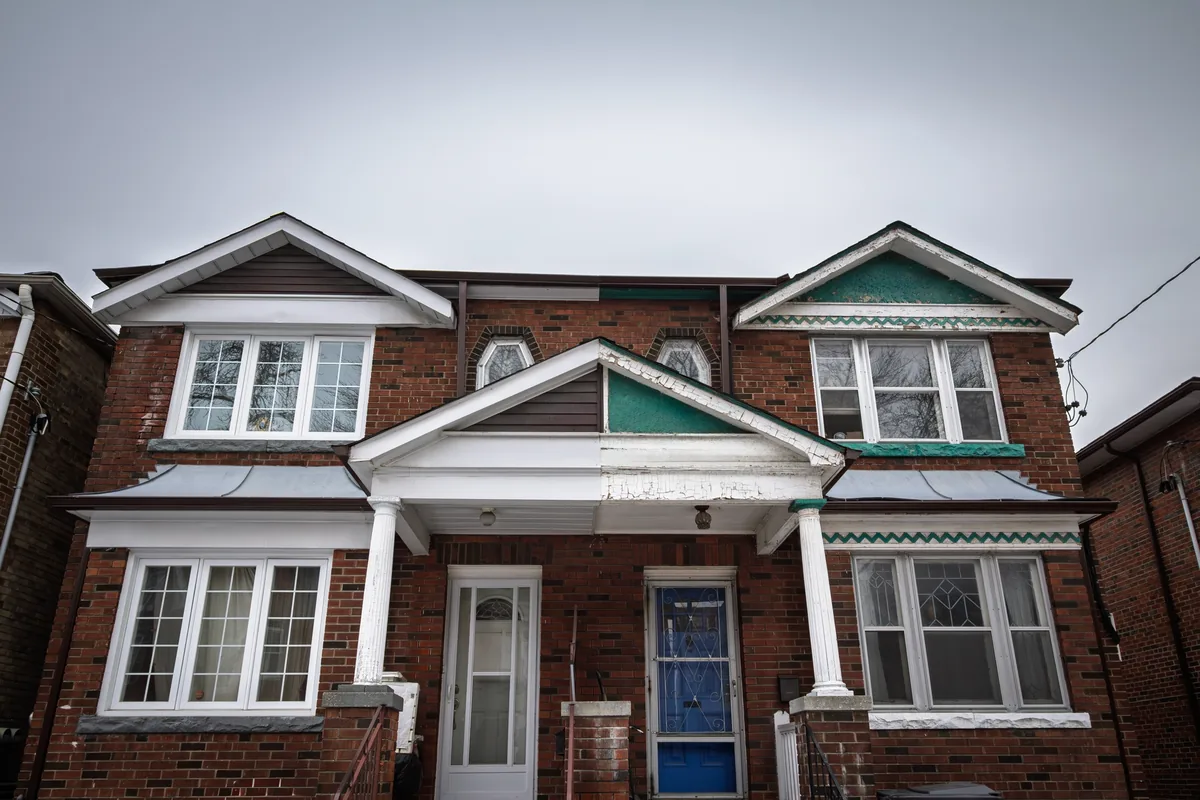

Texas duplex regulations and licensing
Carriers, forms and rates in Texas answer to the Texas Department of Insurance. What reaches a two-unit owner directly is Property Code chapter 92, which governs the end of each tenancy — and on a duplex those endings arrive one at a time, on a building whose other half is still occupied and still earning while you argue about the first.
The deposit clock is started by a document, not by the keys
Texas gates the whole deposit accounting on a document the tenant has to hand the owner, and once the clock that document starts has run, the presumption runs against the owner.
Under Tex. Prop. Code §§ 92.103(a), 92.107(a)–(b), 92.109(c)–(d) the duty to refund and the duty to describe what you kept both sit suspended until the tenant hands you a written statement of a forwarding address. Nothing you do makes that document appear, and the tenant’s claim on the money survives however long it takes to arrive. What you can control is asking for it as part of the move-out rather than remembering it two weeks later.
On a two-unit building the suspension is easy to misread, because the half you can see tells you nothing about it. Keys come back, one side stands empty, the repair starts — and the accounting clock has not begun. Where you occupy the other half it gets sharper still: you are the person a former neighbor now has to mail a document to, and whatever you propose to deduct will be argued over a wall you are standing behind. Photographs and dates settle that; shared recollection between former neighbors does not.
What Texas actually requires of you
- Start from the written forwarding statement rather than from the returned keys: § 92.107(a) suspends both the duty to refund and the duty to describe damages until the tenant hands one over, and § 92.107(b) keeps the tenant’s right to the money alive throughout the wait. Tex. Prop. Code § 92.107(a)–(b)
- Post the refund or the accounting rather than relying on hand delivery, and keep the proof — Texas presumes you performed on time if it went into the United States mail postmarked on or before the day it was due. Tex. Prop. Code § 92.1041
- Itemize in writing even when you believe the exception covers you: it lifts only where the tenant owed rent at surrender and there is no controversy over how much, and a bad-faith failure to describe and itemize forfeits both the right to withhold any part of the deposit and the right to sue that tenant for damage to the building. Tex. Prop. Code §§ 92.104(c), 92.109(b)
- Count the thirtieth day after surrender as the day the argument turns — the miss alone presumes bad faith, and bad-faith retention costs a hundred dollars plus three times the sum wrongfully withheld plus the tenant’s attorney fees, on top of a burden of reasonableness you carry whether or not anyone alleges it. Tex. Prop. Code § 92.109(a), (c)–(d)
- Put a different key, card or combination on every keyed security device at your own expense within seven days of each tenant turnover date — the day a new tenant moves in after the last occupant is out — on a single-family house, duplex or triplex as much as on a living unit inside a larger project. Tex. Prop. Code §§ 92.156(a), 92.151(15), 92.152(b)
- Set in boldface or underline the two lease clauses Texas will not enforce in plain type: the one requiring advance notice of surrender before a refund is owed, and the one letting you charge a rekeying cost against the deposit of a tenant who left in breach. Tex. Prop. Code §§ 92.103(b), 92.156(e)
One of those clauses names the building outright. The rekeying duty attaches to the tenant turnover date — the day a new tenant moves in after the last occupant is out — and it reaches a single-family house, a duplex and a triplex on the same terms as a living unit inside a larger project. A duplex with staggered leases therefore produces two of those seven-day windows, started independently, on one roof and at your own cost; where you live in one half, one. Walk the building now and write down every keyed device on it, because seven days is not long enough to go hunting for the gate lock and the laundry-room key.
What that means for you: Treat the tenant’s written forwarding statement as the switch rather than the move-out date — until it arrives your duty to refund and to describe damages is suspended — then work backwards from the thirtieth day after surrender, because missing that day presumes you acted in bad faith and you already carry the burden of showing any amount you kept was reasonable.
Common Texas duplex risks
Texas is three placement conversations rather than one. Along the Gulf the driver is hurricane and named-storm wind, and inside the area the commissioner has designated the standard property form commonly excludes windstorm and hail outright — that peril moves to the Texas Windstorm Insurance Association, which will not ordinarily take a building without a windstorm certificate of compliance — one resting on a licensed engineer’s sealed work where the improvement is finished, or a qualified inspector’s where it is still under way — and which, on a structure built or altered since the statute’s cut-off date and standing in a storm-wave flood zone where federal flood cover can be had, may not issue or renew at all until proof of that flood policy is in hand. North and central Texas is a hail and severe convective storm market instead, where the argument is the wind-and-hail deductible and how roof settlement is measured. Statewide, a hard freeze is its own exposure — burst supply lines, saturated ceilings and the rents that stop while units stand unusable. Flood and storm surge are never on the property form and are their own placement through the National Flood Insurance Program or a private flood market; earthquake is a separate purchase. Owners the admitted market will not take can reach the Texas FAIR Plan Association, which writes throughout the state but is barred from writing wind and hail on any risk the coastal association could take.
Which of those three conversations you are in is settled by one address, and a two-unit owner has exactly one address to be settled by. There is no building in another part of the state quietly balancing this one out, which is what separates a duplex from a book of buildings spread across several weather regimes at once. Duplex insurance carries that concentration everywhere; Texas is where it costs the most to ignore, because the three conversations barely overlap.
The windstorm territory, and the rent it is not required to replace
Where the property form drops windstorm and hail, the peril does not disappear — it moves to the Texas Windstorm Insurance Association and becomes a second policy on the same roof. The statute draws that territory in two layers, and they do different things.
-
The association must make windstorm and hail insurance available to an applicant here whose building is insurable property and who has been declined once by an authorized insurer actually writing that cover — and its policy is not required to answer for loss of use where the loss is loss of rent or rental value, so the wind placement and the rent-continuation placement are two different problems. Tex. Ins. Code §§ 2210.003(3), 2210.202(a), 2210.208(a), (f)(1)
Counties the statute enumerates here: Aransas, Brazoria, Calhoun, Cameron, Chambers, Galveston, Jefferson, Kenedy, Kleberg, Matagorda, Nueces, Refugio, San Patricio, Willacy.
The commissioner designates the territory and may designate part of a county, so the enumerated counties are not the edge of it: the designation as the association states it currently reaches the fourteen first tier coastal counties plus the part of Harris County east of State Highway 146.
Membership is an administrative act, not a fixed roster — the commissioner may revoke a designation after ten days’ notice and a hearing, and the association may ask in writing that a designation be revoked once cover is no longer unavailable there.
-
Nothing is required of anyone here today, but the commissioner may bring any of it inside after ten days’ notice and a hearing on a finding that wind and hail cover is not reasonably available — these counties are the reserve the coastal territory can grow into rather than a settled outside. Tex. Ins. Code §§ 2210.003(10)–(11), 2210.005(a)
Counties the statute enumerates here: Bee, Brooks, Fort Bend, Goliad, Hardin, Harris, Hidalgo, Jackson, Jim Wells, Liberty, Live Oak, Orange, Victoria, Wharton.
Harris County sits in this tier by name and is already partly designated, so a second tier county is not the same thing as an undesignated one.
Between them the two definitions name twenty-eight counties, and the statute reaches no further. Dallas, Fort Worth, Austin, San Antonio, El Paso and Lubbock are named in neither, so windstorm and hail stay on the ordinary property form there and the association has no role at all — which is why a North Texas hail conversation and a Gulf coast wind conversation are different placements rather than two versions of one.
The operative chapter is Insurance Code chapter 2210, and it is worth reading the first tier again for the clause that matters most to a two-unit owner. The association’s policy is not required to answer for loss of use where the loss is loss of rent or rental value. The wind that lifts the roof is one placement; the rent that stops underneath it is another, and the second one has to come from somewhere the wind policy has no duty to reach. A duplex offers no partial version of that problem — both leases sit inside one envelope — so loss of rents is a question to settle while the roof is still on.
Two of the association’s conditions are worth turning into a task this week rather than a discovery next year. The certificate of compliance is the first: a hail re-roof arranged quickly by a crew that filed nothing is found out at the wind renewal, when there is no sealed engineering work to produce and no way to manufacture it after the fact. The flood condition is the second — where it applies, the flood policy has to be in hand before the wind policy will issue, so the two purchases are ordered rather than parallel. Neither of them is property coverage on the ordinary form, and a small owner usually learns that at the quote instead of at the claim.
Where the admitted market will not take the building, the statewide insurer of last resort is the Texas FAIR Plan Association. Residential property insurance anywhere in the state for a risk two authorized insurers have declined, on deliberately limited forms — its own coverage summary lists damage from the weight of ice, snow or sleet and freezing of plumbing, heating and air-conditioning systems among the perils it does not answer for, which is the gap that bites in a Texas hard freeze. It may not write windstorm and hail on a risk the coastal windstorm association is eligible to take, so a building in the designated catastrophe area needs both placements rather than one. Tex. Ins. Code §§ 2211.051(a), 2211.151, 2211.156; Texas FAIR Plan Association, Coverage & Eligibility
Two sentences in there land hard on a two-unit building. The freeze exclusions are the first: one supply run inside a party wall, or one water heater sitting on the shared side of it, is the ordinary way a Texas freeze reaches both halves in the same hour — and freezing of plumbing and heating systems is named among the perils that form does not answer for. The second is the bar on wind and hail wherever the coastal association could take the risk. A Gulf coast duplex is therefore not choosing between the two programs; it is assembling one policy out of both of them, with flood bought separately alongside.
In Texas the perils a standard property form answers are Hail, Tornado, Straight-line wind, and Freeze and burst pipes. Flood and storm surge, Earthquake, and Coastal windstorm and hail are written separately and are not picked up by that form, and the coverage that responds is property coverage, loss of rents, general liability.
Common Texas duplex claims we see
The freeze claim is the one that finds two-unit buildings specifically. A supply line inside a shared wall, or a single heater serving both sides, gives way overnight and the water crosses a partition that was never built to stop it. On a larger building that is one tenancy out of several. Here it is routinely both, on one repair schedule, and loss of rents is doing all of the work rather than part of it.
Hail is the other volume claim, and on a duplex it arrives as a single event with a single deductible attached to a single roof. Owners who have priced the deductible against one unit’s rent are surprised by how it reads against a whole building. The mechanics here are the mechanics of any landlord policy; what two units change is how much of the income each event removes and how quickly the repair queue after a regional storm matters to you.
Liability claims come off the parts of the lot the leases never divide. The drive, the walk to the mailboxes, the strip between the two doors and the meter side of the building belong to the structure rather than to either tenancy, and general liability is the section read when somebody is hurt there. It is worth telling us early which of those the two households actually cross, because on a duplex the answer is usually all of them.
Why Texas duplex owners choose Rental Guard
Texas is the state whose coastal windstorm pool must cover wind-driven rain and loss of use yet is expressly not required to cover loss of rent, which leaves rent continuation a separate placement from the wind itself, and a two-unit owner meets that split on one building with nothing else earning while it is fixed. Every building this agency places has between one and four dwelling units in it, so a two-unit submission is an ordinary file here rather than something a market has to be talked into. We will also say plainly which parts of this are not special: the policy on a duplex is a landlord policy written on a building with two dwelling units, the same four coverages apply, and the same markets quote it. What Texas genuinely changes is which programs the building is eligible for and which of them will answer for the rent. Every quote goes to a licensed agent we name on this site, placed under the agency NPN in the footer.
Owner-occupied, or both units let
This is the question that decides more about a Texas duplex than the construction does. If one of the units is yours, the building is half home and half rental, and those halves are underwritten differently — which markets will look at it, what the income side is actually scoped to replace, whether the entrances, drive and laundry are shared, whether the meters are separate.
If both units are let, the building is straightforwardly rental property and one event reaches the whole of what it earns. That is the version where the rent-continuation gap in the coastal program stops being a technicality and becomes the reason to put a figure on the rent side deliberately rather than by default.
Texas exempts an owner who keeps and occupies one of the living quarters in a building holding no more than four families, but only partly: § 301.041(a) lifts the refusal, inspection, neighborhood-inducement and disability sections and never § 301.022, so an exempt owner still may not advertise a preference.
Read the second half of that carefully, because it is where owner-occupants are caught out. The carve-out is conditional on you keeping and occupying one of the living quarters — it is not a property of the building, and it goes the day you move out and let both sides. And even while it holds, it never lifts section 301.022. An owner inside the exemption still may not publish a statement of preference or limitation about the half being rented. The safest habit is to write every advertisement as though none of it were lifted, because as to the words you use, none of it is.
Note also what the section is written on: a building holding no more than four families, with the owner in one of the quarters. The same provision reaches an owner-occupied triplex or quadplex on the same terms. Enforcement of the act sits with the Texas Workforce Commission Civil Rights Division. What a complaint costs to answer, and which section of the policy pays for answering it, belongs on the tenant discrimination page rather than here.
The operative text is Tex. Prop. Code §§ 301.041(a), 301.022, 92.010(a)–(b)(1).
What that means for you: Set your occupancy standard from the bedroom count rather than from who the occupants are — the statutory ceiling is three adults per bedroom, and it yields wherever fair housing law requires a higher rate.
Owners move between the two arrangements more often on a duplex than on anything else — occupy for a few years, then move out and let both sides. Tell us when that happens rather than at the renewal after it. It changes what the policy is covering, what the income side is scoped to, and whether that carve-out is still yours.
Major Texas duplex markets
These are chosen for what the two-unit stock in each place does to a placement rather than for size. What a duplex costs to insure is mostly a question about the building and only secondarily about the county, and the duplex insurance pillar carries that half of it.
- Houston. The designated windstorm territory reaches the part of Harris County east of State Highway 146 and stops, so two duplexes on opposite sides of that road are assembled as different policies — one with the wind still on the property form, one with the wind moved out to the association and the rent left behind.
- Corpus Christi. Nueces is enumerated in the first of the statute’s two tiers, and a single two-unit building reaches the association off one declination rather than needing a book of them — but it reaches it needing a certificate of compliance on work a small owner has often arranged personally.
- Dallas. North Texas is a hail and severe convective storm market, so the live argument on a two-unit building here is the wind-and-hail deductible: one roof, one deductible, and both leases sitting under it rather than one line of a schedule.
- Fort Worth. Older near-north two-unit stock frequently runs one water heater and one attic across both halves, which is the condition that converts a single freeze night into a claim on the whole building instead of on a unit of it.
- San Antonio. Owner-occupied two-unit buildings are ordinary through the older blocks close to downtown, which puts section 301.041(a) directly in play — an owner who keeps and occupies one of the living quarters is partly inside the carve-out and still fully bound by the advertising section.
- El Paso. Neither of the statute’s two county lists names El Paso, so windstorm and hail stay on the ordinary property form and the association has no part to play — the placement question out here is the wording of the one policy rather than which programs to stack.
Related reading
The same two questions, answered differently three states over
- Duplex insurance in Florida — a state that splits earth movement into cover that must be provided and cover that must merely be offered, and whose owner-occupancy line follows the federal four-unit rule rather than drawing its own.
- Duplex insurance in New Jersey — where the discrimination line falls at two units rather than four, so an owner-occupied two-family building sits outside the act entirely instead of half inside it.
- Duplex insurance in Connecticut — a deposit statute reaching any property with one or more residential units, and a fair-housing exemption that changes width depending on which protected class is being alleged.
Texas duplex insurance FAQs
My duplex is in Houston. Do I need a separate windstorm policy?
Harris County is the one that proves the county list cannot answer this. Harris is named in the statute’s second tier — the reserve the commissioner may bring inside after notice and a hearing — and yet part of it is designated already, the part lying east of State Highway 146. So one Houston duplex can need the wind moved out to the association while another Houston duplex keeps it on the ordinary property form. Send us the street address rather than the county name, and we will tell you which of the two the building is.
The association will repair the building. Will it replace the rent while both units stand empty?
Not necessarily, and this is the clause worth reading twice. Section 2210.208 requires the association’s policy to cover wind-driven rain and loss of use, but subsection (f)(1) expressly does not require it to cover loss of use where the loss is loss of rent or rental value. The building repair and the rent continuation are therefore two separate problems. On a two-unit building the second one is the whole of the income rather than a share of it, so it is worth solving before a storm season rather than during one.
How many declinations do I need before either program will look at me?
The two thresholds are different, which surprises people who assume a single residual-market door. Inside the designated area the coastal association works off one declination, by an authorized insurer actually writing that cover. The Texas FAIR Plan Association works off two, and writes anywhere in the state. Keep every declination letter you are sent instead of filing it away as bad news — it is the paperwork that opens whichever door applies, and a two-unit owner clears these thresholds on one building rather than needing a book of them.
A hard freeze burst a line in the party wall. Does the FAIR Plan form pay for it?
Read the form before you assume so. The Texas FAIR Plan Association’s own coverage summary lists freezing of plumbing, heating and air-conditioning systems, and damage from the weight of ice, snow or sleet, among the perils it does not answer for. That is exactly the shape of a Texas freeze loss on a duplex, where one supply run or one water heater commonly serves both halves. If the building is on the plan, this is the gap to ask about specifically, by name, at renewal.
I live in one half and rent the other. Does the Texas Fair Housing Act still reach me?
Partly, and the part it keeps is the one owners most often trip over. Section 301.041(a) exempts an owner who keeps and occupies one of the living quarters in a building holding no more than four families — but it lifts the refusal, inspection, neighborhood-inducement and disability sections only, and never section 301.022. So an exempt owner still may not publish a statement of preference or limitation about the other half. Write the advertisement as though nothing were lifted, because as to that section nothing is.
When does the thirty-day deposit clock actually start on a Texas duplex?
Not when the keys come back. Section 92.107(a) suspends both the duty to refund and the duty to describe damages until the tenant gives you a written statement of a forwarding address, and 92.107(b) keeps the tenant’s claim on the money alive throughout that wait. Once it arrives, the thirtieth day after surrender is the day the argument turns. Ask for the forwarding statement as part of the move-out, and post the accounting rather than handing it over — section 92.1041 presumes you performed on time if it went into the mail postmarked on or before the due date.
Do I really have to rekey a duplex between tenants?
Yes, and the statute names the building type rather than leaving you to reason it out. Read together, sections 92.156(a), 92.151(15) and 92.152(b) put a different key, card or combination on each keyed security device at your own expense within seven days of the tenant turnover date, and they reach a single-family house, a duplex or a triplex as much as a living unit inside a larger project. Two staggered tenancies in one duplex therefore produce two of those windows, started independently. And if your lease charges rekeying against the deposit of a tenant who left in breach, section 92.156(e) wants that clause in boldface or underlined — plain type will not carry it.
Get a Texas duplex insurance quote
Send us the building and the policy you have now. and we will tell you whether the wind on that roof belongs on the property form or somewhere else entirely.
Get a Free Quote